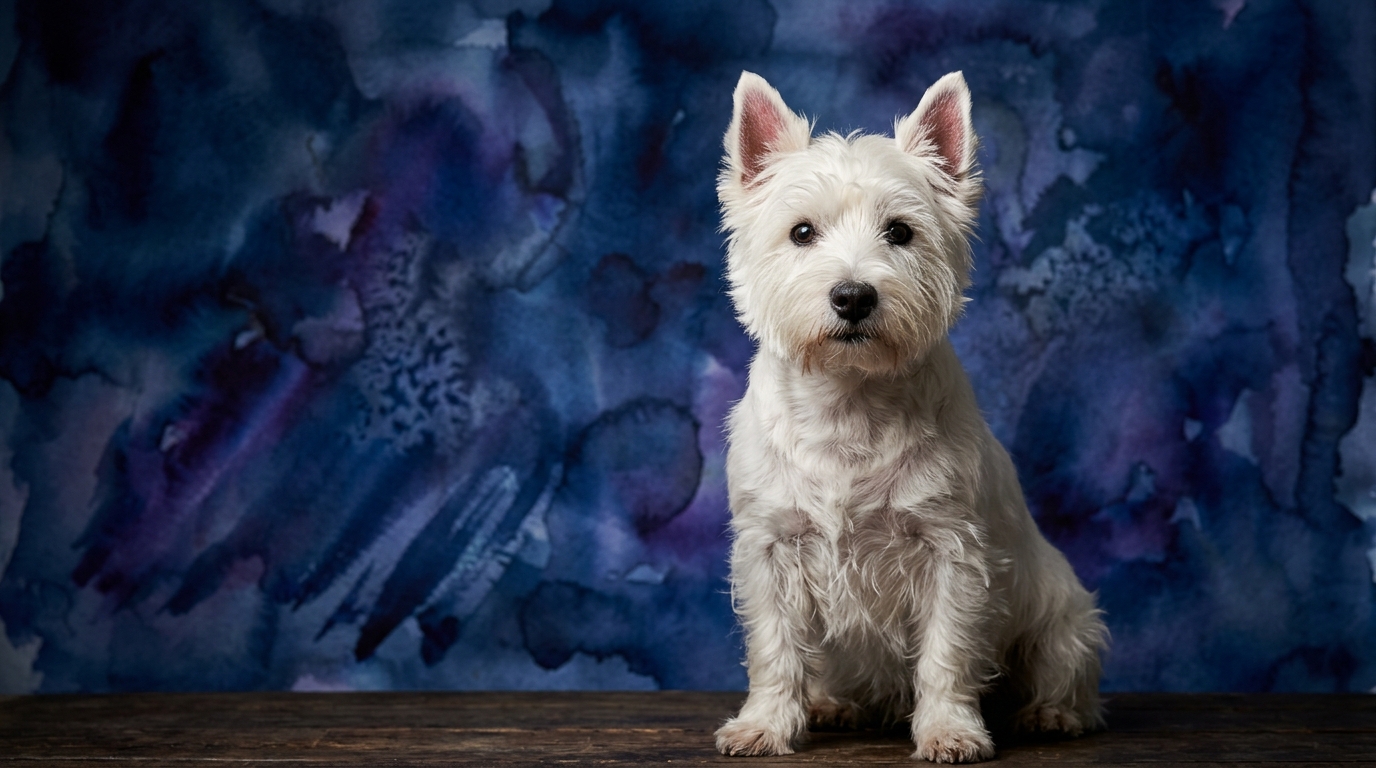

Side-by-Side Cognitive Profile: Westie vs. Lhasa Apso
The Cosmic Pet Pet IQ Lab evaluates canine cognition across five critical dimensions, providing a granular view of each breed's mental strengths. For the West Highland White Terrier, ranked #47 by Coren for working and obedience intelligence, their profile reflects a terrier's inherent drive and adaptability. Their Problem Solving is rated at 3/5, indicating a capacity to independently navigate challenges, often with a tenacious spirit typical of their hunting heritage. Training Speed also scores 3/5, suggesting a willingness to learn, though sometimes tempered by their independent streak. Social Intelligence, at 3/5, points to their ability to form bonds and understand human cues within their immediate family. Instinctive Drive, also 3/5, manifests in their natural inclination to dig, chase, and explore. Most notably, their Memory stands at an impressive 4/5, signifying a strong ability to retain commands, routines, and experiences over time.
The Lhasa Apso, with a Coren rank of #68, presents a cognitive profile shaped by centuries as vigilant guardians in the high Himalayas. Their Problem Solving is also 3/5, but this manifests more in observational assessment and strategic decision-making related to their territorial instincts rather than active pursuit. Training Speed, like the Westie, is 3/5, yet this often requires a more patient approach, as Lhasas are known for their discerning and self-reliant nature. Social Intelligence, at 3/5, highlights their capacity for deep, though often selective, bonds with their chosen human companions. Their Instinctive Drive, 3/5, is predominantly expressed through their acute watchfulness, alert barking, and territorial awareness. In contrast to the Westie, the Lhasa Apso's Memory is rated 3/5, indicating a solid ability to recall information but perhaps with less long-term retention for complex sequences compared to their terrier counterpart.
Where the West Highland White Terrier Excels Cognitively
The West Highland White Terrier undeniably holds an edge in the realm of memory, scoring 4/5 compared to the Lhasa Apso's 3/5. This superior recall means Westies are often quicker to solidify complex command sequences and retain learned behaviors over extended periods. For owners, this translates into a companion who can master a broader repertoire of tricks and obedience cues with greater efficiency, and who is less likely to 'forget' their training after a period of inactivity. Their strong memory also aids in navigation and remembering specific locations or routes, which can be beneficial for adventurous outings.
Furthermore, the Westie's higher Coren rank of #47 suggests a general propensity for working and obedience intelligence that surpasses the Lhasa Apso's #68. While both breeds share a 3/5 score in Problem Solving, the Westie's terrier background often means their problem-solving is geared towards active engagement with their environment. They might more readily figure out how to retrieve a hidden toy or navigate a new obstacle course, driven by their inherent curiosity and desire to 'get the job done.' This proactive mental approach, combined with their excellent memory, positions them well for activities requiring sequential thought and quick application of learned solutions.
Where the Lhasa Apso Exhibits Unique Cognitive Strengths
While the Lhasa Apso may not surpass the Westie in specific IQ scores, their unique cognitive profile shines through their historical purpose and breed temperament. Their 3/5 score in Problem Solving, though numerically equal to the Westie, manifests differently. Lhasas excel in observational problem-solving, demonstrating a keen ability to assess situations, identify potential threats or changes in their environment, and act as discerning guardians. Their intellect is less about active pursuit and more about strategic vigilance, making them adept at 'reading' a room or a new person, and deciding how to respond.
The Lhasa Apso's 3/5 Social Intelligence, while matching the Westie's, often translates into a deeper, more nuanced bond with their chosen family members. They are known for their discerning nature, forming strong attachments but often requiring time and discernment before fully trusting outsiders. This selective social intelligence means they are highly attuned to the emotional states and routines of their inner circle, offering a quiet, perceptive companionship. Their Instinctive Drive (3/5) is a cognitive strength in its focus on territorial awareness and alertness; they process environmental cues with a specific purpose, contributing to their reputation as excellent watchdogs whose mental faculties are constantly engaged in monitoring their surroundings.
Training Dynamics: Westie vs. Lhasa Apso
When it comes to ease of training, the West Highland White Terrier generally presents a slightly more straightforward path for owners, largely due to their superior memory (4/5) and higher Coren rank (#47). Their ability to retain commands and routines with greater efficiency means that once a concept is grasped, it tends to stick. However, their 3/5 Training Speed and inherent terrier independence mean they are not automatons; they require consistent, positive reinforcement methods and an owner who can make training engaging. A Westie will often challenge boundaries or display selective hearing if they perceive a task as uninteresting or if they sense a lack of conviction from their handler. Early socialization and consistent boundary setting are crucial to channel their mental energy effectively.
The Lhasa Apso, with their Coren rank of #68 and 3/5 Training Speed, demands a different approach. Their independent and discerning nature means they often need to understand the 'why' behind a command or perceive its value before complying. They are not as eager to please as some breeds and can be quite stubborn if training is inconsistent, harsh, or boring. Patience, fairness, and positive reinforcement are paramount. Lhasas respond best to handlers who earn their respect through clear communication and consistent expectations, rather than force. While they may take longer to master certain commands, once they commit to a behavior, their consistency can be remarkable, provided the training is maintained. Their guarding instincts also mean that early and extensive socialization is vital to ensure their discerning social intelligence develops into appropriate interactions with strangers.
Cognitive Fit: Active vs. Relaxed Lifestyles
For owners with an active lifestyle, the West Highland White Terrier offers a vibrant cognitive match. Their 3/5 problem-solving and instinctive drive, combined with their 4/5 memory, mean they thrive on mental stimulation and physical engagement. They are excellent candidates for agility, obedience, and scent work, where their tenacity and recall can be put to good use. Owners who enjoy teaching new tricks, exploring varied environments, and providing consistent training challenges will find a Westie a highly rewarding companion. Their cognitive makeup benefits from a structured daily routine that includes opportunities for both physical exercise and mental puzzles, preventing boredom and channeling their keen intellect constructively.
The Lhasa Apso, while not sedentary, is generally better suited for owners who appreciate a more relaxed pace but still value mental engagement. Their cognitive strengths lie in observation and discerning judgment, making them content with regular, moderate walks and a stable home environment where they can fulfill their role as vigilant companions. Owners who enjoy quiet companionship, appreciate a watchful presence, and are willing to engage in gentle, consistent training will find the Lhasa Apso's unique intellect rewarding. They thrive in homes where their independent spirit is respected, and their social intelligence is nurtured through deep bonds with their family, rather than constant high-energy activities. Their problem-solving skills are often engaged in monitoring their surroundings, making them a superb choice for those seeking a perceptive, loyal, and observant companion.
The Verdict
Choose the West Highland White Terrier if you seek an engaging, trainable companion who excels in memory and enjoys a variety of learning activities, thriving with an owner who provides consistent mental and physical stimulation. Their proactive problem-solving and excellent recall make them ideal for structured training and interactive play.
Opt for the Lhasa Apso if you value a discerning, loyal guardian who thrives on a stable routine and offers deep, selective companionship, appreciating an owner who respects their independent spirit and watchful nature. Their observational intellect and deep social bonds make them a unique, perceptive presence in the home.
🧠 Find Your Pet's IQ Score
Our Pet IQ Lab assessment covers 25+ tests across 5 cognitive dimensions — personalized to your breed.
Take the Full IQ Test →Frequently Asked Questions
Do Westies or Lhasas excel more in dog sports?
Westies, with their higher Coren rank and superior memory (4/5), generally excel more in dog sports like agility and obedience. Their terrier drive and capacity for retaining complex sequences make them more naturally inclined towards competitive activities requiring rapid learning and execution.
How do their problem-solving skills differ in a home environment?
A Westie's 3/5 problem-solving often manifests as actively figuring out how to get a toy from under furniture or opening a cabinet. A Lhasa Apso's 3/5 problem-solving, in contrast, might be more about assessing who is at the door, deciding if a new object is safe, or determining the best spot to observe their territory.
What training methods are best for each breed's cognitive profile?
For Westies, positive reinforcement with varied, engaging tasks works well, leveraging their memory and natural curiosity. For Lhasas, consistent, patient, and fair positive reinforcement is crucial, as they respond best when they respect their handler and understand the value of the command, rather than simply complying.