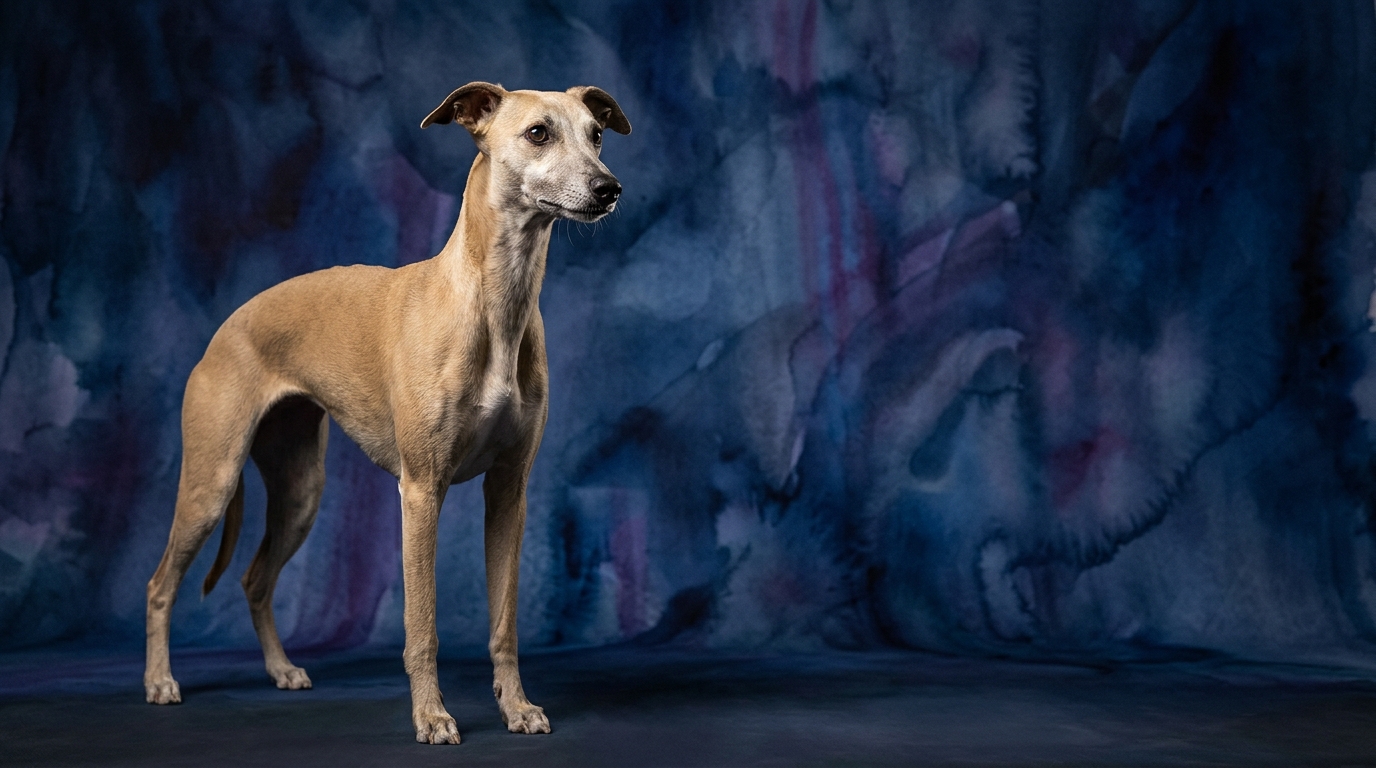

Side-by-Side IQ Profile: Whippet vs. English Toy Spaniel
At The Cosmic Pet Pet IQ Lab, we assess canine cognition across five key dimensions to provide a nuanced understanding of each breed's mental makeup. The Whippet, a sighthound, holds a Coren rank of #51, indicating a moderate working and obedience intelligence. Its profile includes Problem Solving 3/5, Training Speed 2/5, Social Intelligence 4/5, Instinctive Drive 5/5, and Memory 3/5. This suggests a dog capable of moderate independent thought and strong social bonding, driven by powerful innate instincts, yet potentially slower to pick up obedience commands.
In contrast, the English Toy Spaniel, a companion breed, is not Coren-ranked, reflecting its primary role as a lapdog rather than a working or obedience competitor. Its cognitive scores are largely balanced: Problem Solving 3/5, Training Speed 3/5, Social Intelligence 3/5, Instinctive Drive 3/5, and Memory 3/5. This balanced profile indicates a dog with average cognitive abilities across the board, less prone to extreme drives or unique intellectual quirks, making for a generally predictable and amiable companion. While both breeds share a similar capacity for problem-solving and memory, their divergent scores in training speed, social intelligence, and instinctive drive paint very different pictures of their inner workings.
The Whippet's high social intelligence, combined with its profound instinctive drive, points to a dog that forms deep bonds with its family but is also keenly aware of its environment and the subtle cues within its pack. Its moderate problem-solving and memory scores suggest it can navigate complex situations and retain learned experiences, but it might not be the quickest study in formal obedience. The English Toy Spaniel, with its consistent 3/5 across most categories, demonstrates a more uniform cognitive approach. Its moderate social intelligence means it enjoys companionship without the Whippet's intense pack-oriented awareness, and its average instinctive drive makes it less prone to chasing or independent hunting behaviors, simplifying life for many owners. The key differentiator here is often the *intensity* of these traits, even when the raw score appears similar.
Where the Whippet Wins Cognitively
The Whippet's cognitive strengths primarily lie in its exceptional instinctive drive and elevated social intelligence. A remarkable 5/5 in instinctive drive means this breed possesses an innate, powerful urge for chasing and running, a direct inheritance from its sighthound lineage. This isn't just a physical trait; it's a profound cognitive orientation, influencing how they perceive the world, their reactions to movement, and their motivation. This drive makes them incredibly athletic and focused on pursuit, a cognitive advantage for activities requiring swift, decisive action and immense stamina.
Furthermore, the Whippet's 4/5 social intelligence indicates a keen awareness of social dynamics and a deep capacity for bonding. They are adept at reading human emotions and subtle body language, often forming strong, almost intuitive connections with their primary caregivers. This advanced social acumen allows them to integrate smoothly into family life, offering companionship that feels genuinely reciprocal and understanding. While they might not be the fastest learners for arbitrary commands, their social perceptiveness means they often understand intentions and routines without needing explicit instruction, adapting to household rhythms with minimal fuss, provided their physical needs are met.
Where the English Toy Spaniel Wins Cognitively
The English Toy Spaniel's cognitive advantages are rooted in its balanced and moderate nature, particularly its Training Speed of 3/5 and its lower Instinctive Drive of 3/5 compared to the Whippet. While a 3/5 training speed isn't top-tier, it represents a more consistent and potentially less frustrating learning curve than the Whippet's 2/5. This breed is generally more amenable to traditional training methods, often eager to please and less distracted by external stimuli, making them more straightforward to teach basic obedience commands and house manners. Their attention is more easily captured and held, facilitating a smoother training process for the average owner.
Crucially, the English Toy Spaniel's moderate instinctive drive means they are less compelled by deep-seated urges to chase or roam. This cognitive characteristic translates to a dog that is typically content with indoor living and less prone to bolting after squirrels or other small animals. Their problem-solving abilities (3/5) are directed more towards understanding their immediate environment and human interactions rather than devising strategies for pursuit. This lack of intense independent drive makes them cognitively less demanding in terms of environmental management and easier to integrate into a relaxed, companion-focused lifestyle, where their mental energies are primarily directed towards social engagement rather than fulfilling an ingrained predatory sequence.
Which is Easier to Train and Why
When comparing ease of training, the English Toy Spaniel generally presents a more straightforward experience for the typical owner due to its Training Speed of 3/5 versus the Whippet's 2/5. The English Toy Spaniel's moderate instinctive drive and social intelligence mean it is often more focused on its human during training sessions. They tend to be more biddable and less prone to independent thinking or distraction by environmental stimuli like movement or scent, making them more receptive to repetitive command-and-reward sequences. Their primary motivation often stems from a desire for human attention and affection, which is easily leveraged in positive reinforcement training.
The Whippet, while possessing high social intelligence, has a lower training speed and a powerful instinctive drive (5/5). This means while they understand social cues well, their independent hound nature and strong chase instinct can make them less inclined to follow commands if something more stimulating, like a perceived quarry, catches their attention. Their speed and autonomy are wired into their cognitive framework; convincing a Whippet to 'stay' when a rabbit bolts across the field requires significant, consistent work to override deep-seated behavioral impulses. Training a Whippet often requires creativity, patience, and understanding of their sighthound mentality, rather than just rote memorization of commands, as their cognitive processing prioritizes instinct over immediate human directives in certain contexts.
Which Suits Active Owners vs. Relaxed Owners
The Whippet's cognitive profile, particularly its 5/5 instinctive drive and 4/5 social intelligence, makes it an ideal match for active owners who understand and can cater to its need for bursts of intense physical activity and deep social connection. These dogs thrive on opportunities to run freely in secure areas, fulfilling their innate drive for speed and chase. Their moderate problem-solving and memory, combined with lower training speed, mean they are not mentally taxing in complex obedience but require an owner who appreciates their independent spirit and provides outlets for their physical energy. Owners who enjoy long walks, secure off-leash play, or even dog sports like lure coursing will find a Whippet's cognitive and physical needs align perfectly with their lifestyle, leading to a contented and well-adjusted companion.
Conversely, the English Toy Spaniel, with its balanced 3/5 scores across most cognitive dimensions and moderate instinctive drive, is exceptionally well-suited for relaxed owners seeking a devoted and generally low-maintenance companion. Their moderate social intelligence means they enjoy being close to their people without demanding constant attention or extensive social activities outside the home. Their balanced problem-solving and memory, coupled with a slightly higher training speed, make them easy to live with and train for household manners, requiring less intensive mental stimulation than a working breed. Owners who prefer gentle strolls, cozy evenings at home, and a dog whose primary joy is companionship will find the English Toy Spaniel's cognitive makeup perfectly complements a quieter, more sedentary lifestyle, as their mental energy is primarily focused on their human family and comfortable surroundings.
The Verdict
Choose the Whippet if you appreciate a dog with a profound instinctive drive for speed and a deep, intuitive social bond, and you can provide regular, safe opportunities for high-intensity exercise.
Opt for the English Toy Spaniel if you seek a balanced, biddable companion with moderate drives, easy trainability, and a strong preference for a relaxed, home-centric lifestyle.
🧠 Find Your Pet's IQ Score
Our Pet IQ Lab assessment covers 25+ tests across 5 cognitive dimensions — personalized to your breed.
Take the Full IQ Test →Frequently Asked Questions
Do Whippets need a lot of mental stimulation?
Whippets benefit from mental engagement that caters to their sighthound nature, such as puzzle toys or scent work, but their primary cognitive need is often physical exertion. While their problem-solving and memory are moderate, they are not a breed that typically requires constant complex mental tasks, preferring to expend energy physically and then relax deeply.
Are English Toy Spaniels good for first-time dog owners?
Yes, English Toy Spaniels can be an excellent choice for first-time dog owners due to their balanced cognitive profile. Their moderate training speed and lower instinctive drive make them generally easier to manage and train for basic obedience, reducing the potential for frustration and fostering a positive initial dog ownership experience.
How does social intelligence differ between these two breeds?
The Whippet's 4/5 social intelligence indicates a highly perceptive and deeply bonded companion, often keenly attuned to family dynamics and subtle cues. The English Toy Spaniel's 3/5 social intelligence means they are affectionate and enjoy companionship but might be less intensely focused on human emotional states or broader social structures, making them more universally amiable without demanding deep, nuanced social interaction.