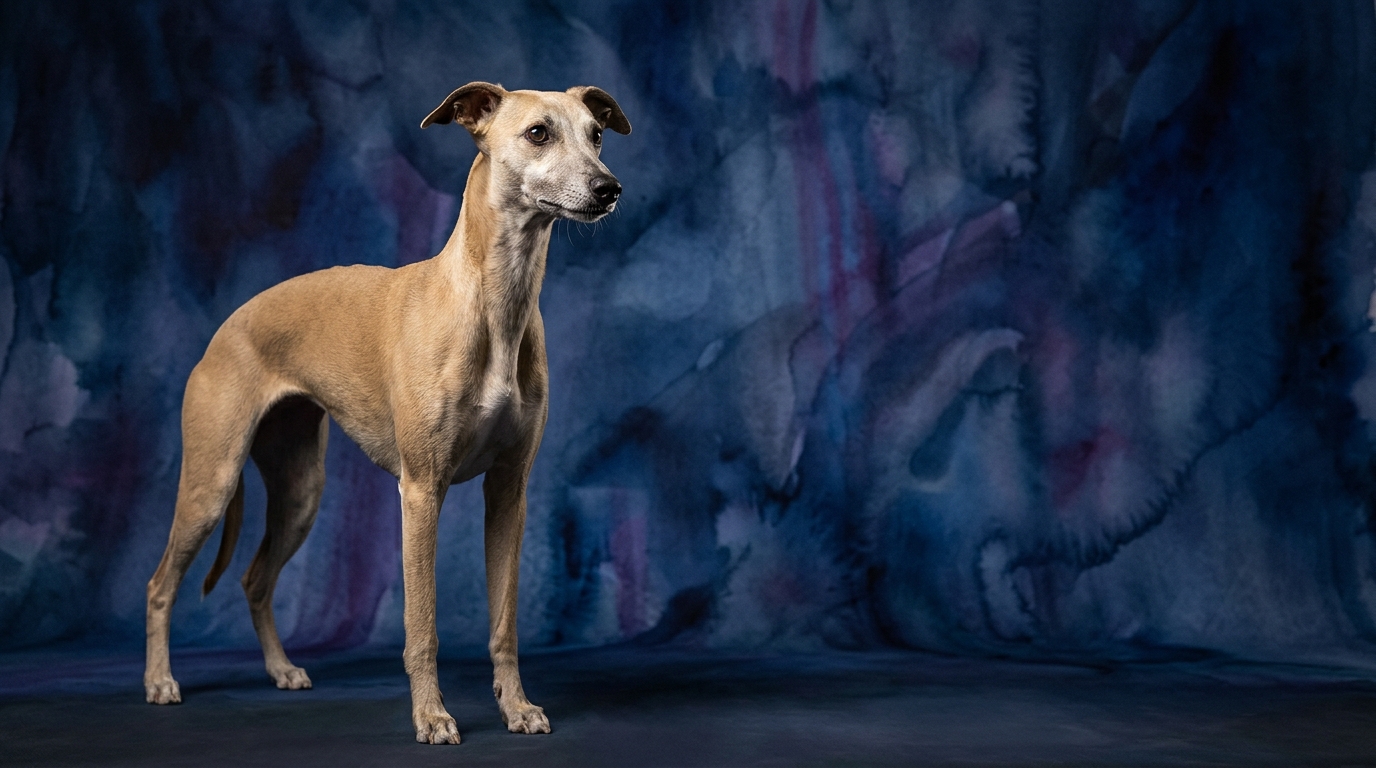
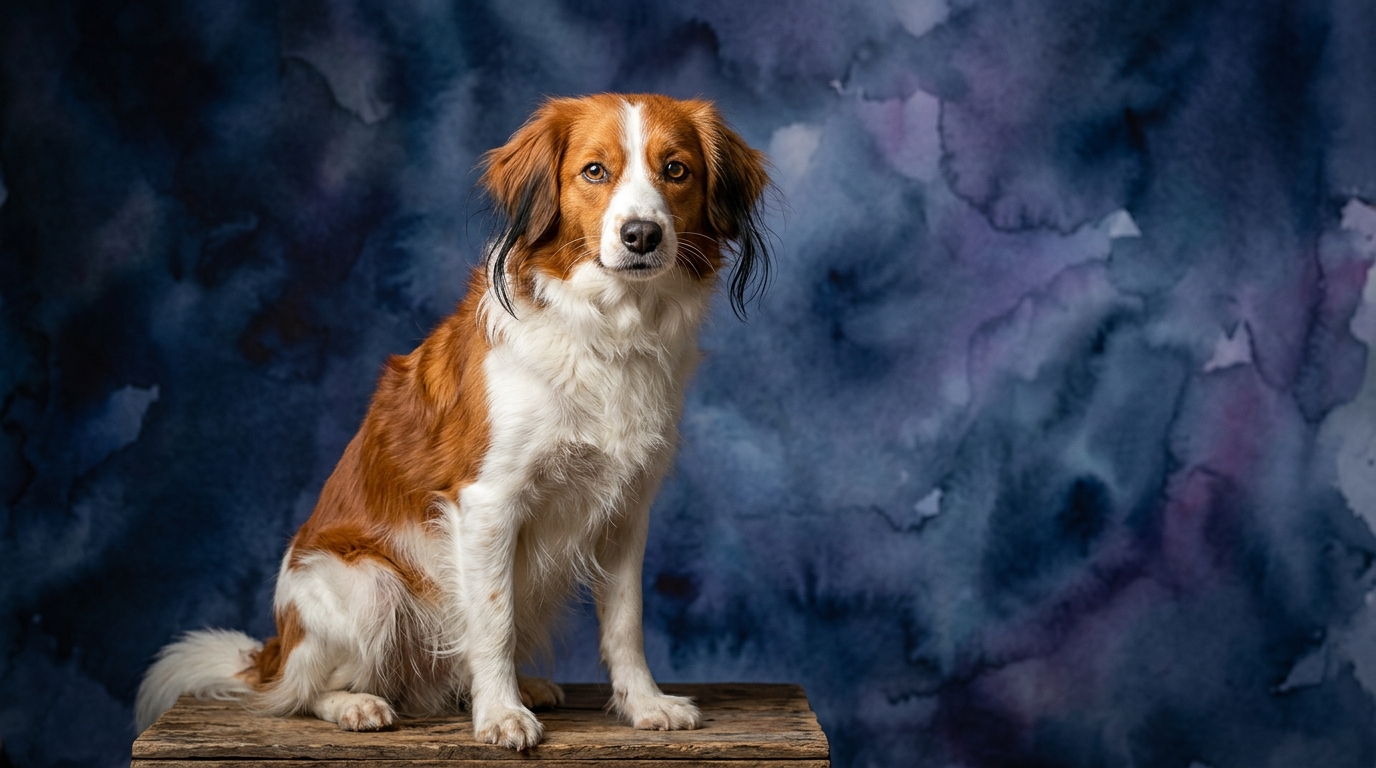
Side-by-Side IQ Profile
The Whippet, ranked #51 by Coren, presents a unique cognitive blueprint. Their problem-solving ability scores a moderate 3/5, indicating they can navigate challenges but aren't typically devising complex schemes. Training speed is noted at a slower 2/5, suggesting patience and consistent positive reinforcement are key. Where Whippets truly shine is in social intelligence, achieving an impressive 4/5, making them highly attuned to human emotions and subtle cues. Their instinctive drive is exceptionally high at 5/5, reflecting their deep-seated sighthound urge to chase. Memory registers at a solid 3/5, allowing recall of learned behaviors and experiences.
The Kooikerhondje, while not Coren-ranked, offers a more balanced cognitive profile. Their problem-solving ability aligns with the Whippet at 3/5, demonstrating moderate capacity for figuring things out. A key difference emerges in training speed, where the Kooikerhondje scores a 3/5, suggesting a quicker grasp of new commands and a cooperative learning temperament. Social intelligence stands at 3/5, indicating they are generally responsive but perhaps less acutely sensitive than Whippets. Instinctive drive also scores 3/5, reflecting a moderate working drive without the Whippet's intense chase focus. Their memory, like the Whippet's, is rated at 3/5, allowing for reliable recall.
Where Whippet Wins Cognitively
The Whippet's cognitive strengths distinctly lie in two critical areas. Foremost is their exceptional social intelligence, scoring 4/5 compared to the Kooikerhondje's 3/5. This higher score translates into profound sensitivity to human moods and body language, making Whippets incredibly empathetic companions. They are adept at forming deep, intuitive bonds, often content to simply be near their humans, reading the room with subtle accuracy. This nuanced understanding allows them to integrate seamlessly into family dynamics, responding not just to commands but to unspoken emotional currents.
Additionally, the Whippet's instinctive drive, rated at a commanding 5/5, represents a specialized cognitive triumph. While this intense pursuit drive can present training challenges, it's also the engine behind their unparalleled speed and agility in activities like lure coursing. This drive isn't merely physical; it's a highly focused cognitive state, allowing for precise tracking and lightning-fast reactions to moving objects. For owners channeling this drive into appropriate outlets, it signifies a remarkable capacity for focused, high-performance activity unique to their sighthound heritage.
Where Kooikerhondje Wins Cognitively
The Kooikerhondje demonstrates its cognitive advantage primarily in its training speed, scoring a 3/5 compared to the Whippet's 2/5. This higher aptitude for learning new commands and routines indicates a more eager and cooperative disposition in structured training. Owners will likely find the Kooikerhondje quicker to pick up complex sequences and more receptive to consistent instruction, making them potentially more versatile for various dog sports and obedience work. This quicker learning curve suggests an inherent desire to work alongside humans, a trait deeply embedded in their sporting dog ancestry.
Furthermore, while not a specific 'win' in a single dimension, the Kooikerhondje's more balanced cognitive profile across problem-solving (3/5), social intelligence (3/5), instinctive drive (3/5), and memory (3/5) offers a distinct advantage in adaptability. This consistency suggests a dog capable of engaging effectively in a wider array of tasks without being overwhelmingly dominated by a single instinct, making them amenable to diverse living situations and activities.
Which is Easier to Train and Why
When evaluating ease of training, the Kooikerhondje generally presents a more straightforward path. Their training speed of 3/5 indicates they are relatively quick to grasp new concepts and respond to cues. Originating as duck tolling dogs, Kooikerhondjes were bred to work cooperatively with hunters, displaying a natural inclination towards biddability and a desire to please. This historical context means they often possess an inherent willingness to engage in structured learning and respond positively to consistent, reward-based methods. Their moderate instinctive drive (3/5) also means they are less likely to be overwhelmingly distracted by environmental triggers compared to the Whippet.
Conversely, the Whippet, with a training speed of 2/5, can be more challenging for novice trainers. While certainly trainable, their sighthound independence means they might not always see the immediate value in performing a command. Their extremely high instinctive drive (5/5) for chasing is a significant factor; a fleeting squirrel can instantly override commands, demanding meticulous proofing and strong recall. Whippets require patient, creative training that taps into their sensitive nature and makes learning feel like a collaborative, rewarding experience.
Which Suits Active Owners vs Relaxed Owners
For truly active owners, both breeds offer distinct pathways, though the Kooikerhondje might be more consistently engaging. The Kooikerhondje, as a sporting dog, thrives on consistent mental and physical stimulation. Owners who enjoy activities like dog sports (agility, obedience, flyball), hiking, or regular retrieving games will find a willing and eager partner in a Kooikerhondje, whose moderate instinctive drive (3/5) and faster training speed (3/5) make them adaptable to various tasks requiring sustained focus and cooperation. They enjoy having a job and benefit from daily engagement that challenges both their body and mind.
Whippets, on the other hand, suit owners who appreciate intense bursts of activity followed by significant periods of calm. While they possess an extreme instinctive drive (5/5) and require opportunities for full-speed running, often in a secure, fenced area or via lure coursing, they are famously "45 mph couch potatoes" indoors. Relaxed owners providing these essential outlets for their chase instinct will find a wonderfully placid and affectionate companion at home. Their high social intelligence (4/5) makes them excellent, sensitive housemates content to lounge by their owner's side.
The Verdict
Choose a Whippet if you desire a deeply sensitive, affectionate companion capable of incredible athletic bursts, and you are prepared to manage their powerful chase instinct with secure environments and patient training.
Opt for a Kooikerhondje if you seek a biddable, engaging partner for cooperative activities and dog sports, valuing a balanced cognitive profile and quicker learning curve in a consistently active home.
🧠 Find Your Pet's IQ Score
Our Pet IQ Lab assessment covers 25+ tests across 5 cognitive dimensions — personalized to your breed.
Take the Full IQ Test →Frequently Asked Questions
Are Whippets good with children given their high social intelligence?
Whippets' high social intelligence (4/5) often makes them very gentle and perceptive with children, understanding subtle cues. However, their strong chase drive means supervision is crucial, especially with fast-moving toddlers, to prevent accidental knocking or overstimulation.
Does the Kooikerhondje's lack of Coren ranking mean they are less intelligent?
Not at all; Coren's ranking primarily assesses "working and obedience intelligence" based on a survey of obedience judges. The Kooikerhondje's absence simply means it wasn't widely assessed by that specific methodology, not that it lacks cognitive abilities.
How do their moderate problem-solving scores (3/5 for both) manifest in daily life?
A 3/5 problem-solving score means both breeds can figure out basic puzzles, like opening simple latches or navigating familiar environments. They are capable of learning routines and adapting to minor changes but are unlikely to be master escape artists or devise complex strategies independently.