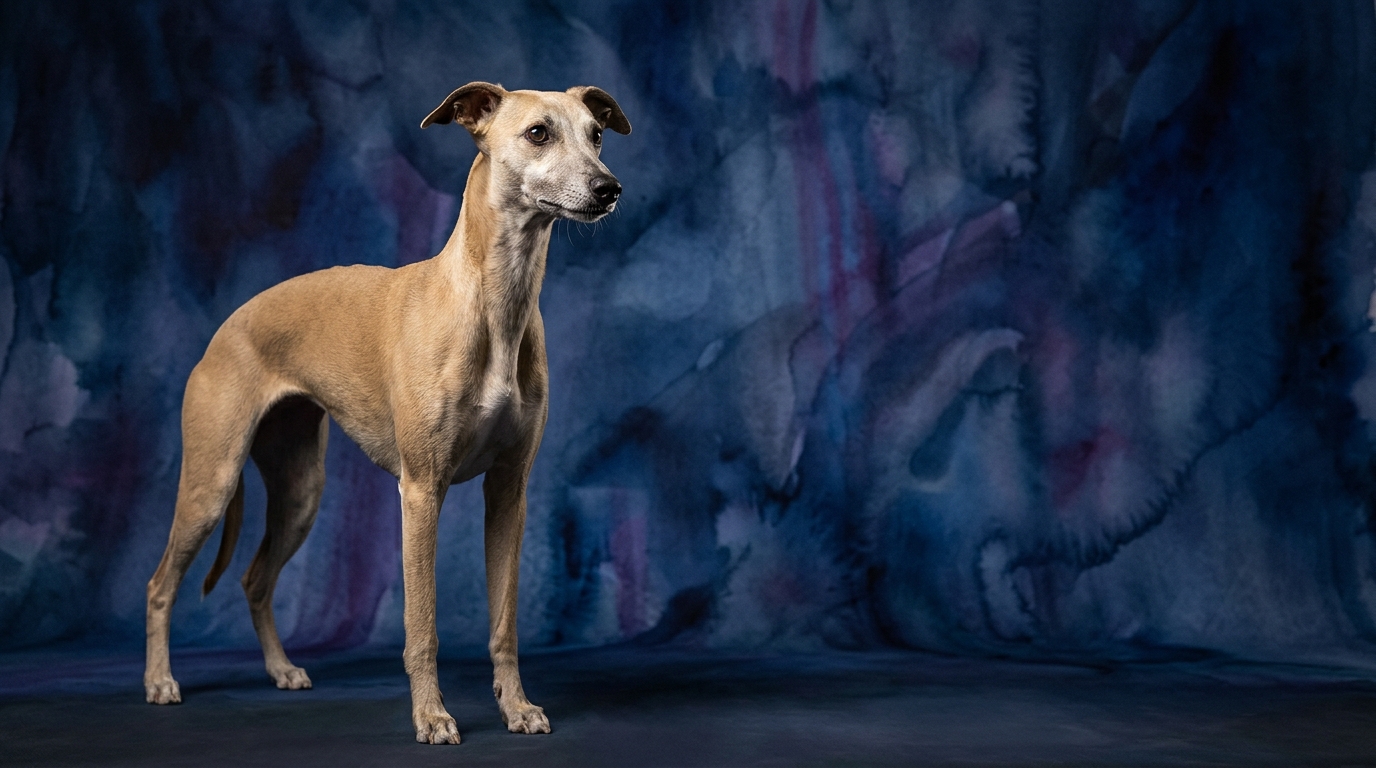
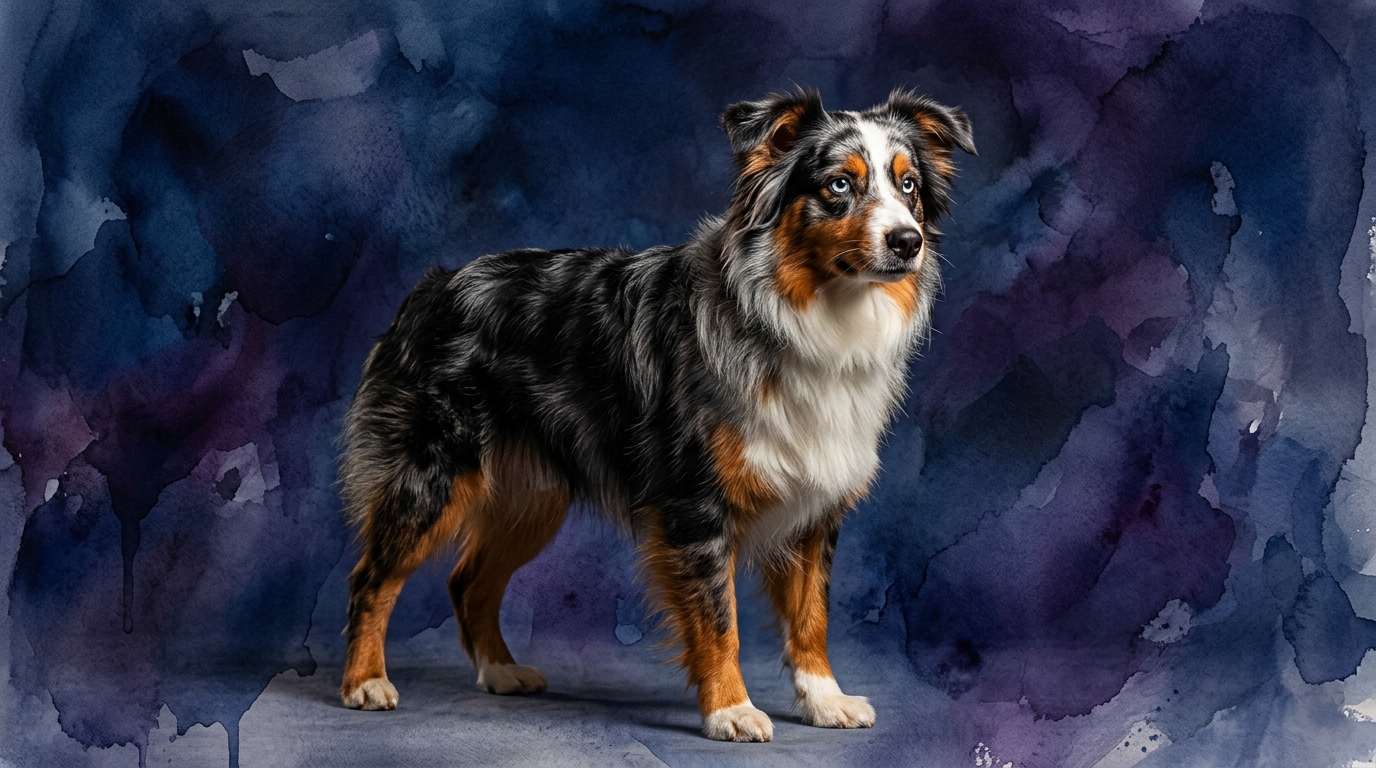
Side-by-Side IQ Profile: Whippet vs. Miniature American Shepherd
The Whippet, a sighthound breed, registers a Coren rank of #51, placing them in a respectable position for working and obedience intelligence. Their Cosmic Pet Pet IQ Lab profile reveals a Problem Solving score of 3/5, indicating an average capacity for navigating novel situations, often relying on their keen senses rather than complex deduction. Training Speed is rated 2/5, suggesting they may require more repetition and motivation to learn new commands compared to some other breeds. Where they truly shine is in Social Intelligence, scoring 4/5, reflecting a deep sensitivity to human emotions and subtle cues. Their Instinctive Drive is a powerful 5/5, primarily manifesting as an intense chase and prey drive, while their Memory stands at 3/5, enabling them to recall learned behaviors and experiences adequately.
The Miniature American Shepherd, originating from a herding background, is not included in Coren's traditional ranking, but their IQ profile offers clear insights into their cognitive makeup. They share a Problem Solving score of 3/5 with the Whippet, demonstrating a similar foundational ability to adapt to new challenges. However, the MAS shows an advantage in Training Speed, scoring 3/5, which points to a greater eagerness and aptitude for learning and executing commands. Their Social Intelligence is 3/5, indicating a solid connection with their human companions, though perhaps less nuanced than the Whippet. Instinctive Drive for the MAS is rated 3/5, primarily expressed as a herding instinct and a desire for structured activity, and their Memory also registers 3/5, providing a comparable capacity for recall.
Where the Whippet Wins Cognitively
The Whippet's most pronounced cognitive advantage lies in their superior Social Intelligence, scoring 4/5 compared to the Miniature American Shepherd's 3/5. This higher social acuity means Whippets are often exceptionally attuned to their human companions' moods and body language, displaying a profound empathy and a subtle responsiveness to emotional shifts. This sensitivity fosters a very deep, quiet bond, making them excellent companions for individuals who appreciate a dog capable of reading unspoken cues.
Another significant cognitive win for the Whippet is their Instinctive Drive, which registers a compelling 5/5, vastly exceeding the MAS's 3/5. This drive is almost entirely focused on chasing and pursuing perceived prey, a legacy of their sighthound heritage. While this requires careful management in certain environments, it represents an incredibly powerful, focused cognitive resource for tasks requiring bursts of speed and determined pursuit, showcasing a singular, intense purposefulness in their actions that is unmatched by the MAS.
Where the Miniature American Shepherd Wins Cognitively
The Miniature American Shepherd demonstrates a clear cognitive edge in Training Speed, scoring 3/5 compared to the Whippet's 2/5. This indicates that MAS dogs generally pick up new commands and routines more quickly and with fewer repetitions. Their herding background has ingrained a desire to work cooperatively with a handler, making them inherently more biddable and focused during training sessions, eager to please and execute tasks.
While both breeds share a 3/5 score for Problem Solving and Memory, the MAS often applies these capacities within a framework of utility and partnership. Their instinctive drive, rated 3/5, is a versatile herding instinct that can be channeled into various dog sports and tasks, allowing them to solve problems collaboratively with their owner, such as navigating agility courses or learning complex sequences, where their memory for patterns and sequences is highly beneficial. This cooperative application of their cognitive skills provides a distinct advantage in structured learning environments.
Which is Easier to Train and Why
The Miniature American Shepherd is generally easier to train due to their higher Training Speed (3/5) and inherent biddability. Their herding ancestry has cultivated a strong desire to engage with and respond to human direction, meaning they are often more focused on their handler during training sessions. This breed typically thrives on having a "job" and finds satisfaction in learning and performing tasks, which translates into a more consistent and enthusiastic training partner, making them more forgiving for novice trainers.
In contrast, the Whippet's Training Speed of 2/5 means they require more patience and creative motivation. Their sighthound nature prioritizes independent action and chasing over strict obedience, especially if their powerful 5/5 instinctive drive is triggered by movement. While Whippets are sensitive and eager to please those they love, their focus can be easily diverted by environmental stimuli, and they may decide a command isn't worth their effort if a more enticing chase opportunity presents itself. Training success with a Whippet often relies on making sessions fun, short, and highly rewarding to maintain their engagement against their independent streak.
Which Suits Active Owners vs. Relaxed Owners
For owners who prefer a relaxed home environment but can provide intense bursts of exercise, the Whippet can be an ideal fit. Despite their powerful 5/5 instinctive drive for speed, Whippets are often described as "45 mph couch potatoes," content to lounge indoors for much of the day after a proper sprint. They thrive on secure, fenced areas where they can unleash their incredible speed, satisfying their drive in short, exhilarating bursts. Owners must be prepared to manage their strong prey drive, ensuring safety around smaller animals and during off-leash excursions.
The Miniature American Shepherd, with its herding background and more balanced 3/5 instinctive drive, requires a more consistently active and engaged owner. These dogs are built for work and thrive on mental and physical stimulation that goes beyond simple walks. They excel in dog sports like agility, obedience, and flyball, and benefit immensely from structured activities that challenge their problem-solving skills and provide a sense of purpose. Owners seeking a constant companion for outdoor adventures, long hikes, and regular training sessions will find the MAS a more suitable and enthusiastic partner.
The Verdict
Choose a Whippet if you appreciate a sensitive, elegant companion who offers quiet companionship indoors but requires dedicated, safe opportunities to fulfill their powerful instinct for speed and chase outdoors.
Opt for a Miniature American Shepherd if you seek a highly trainable, versatile partner eager for consistent engagement, structured activities, and a "job" to do, providing both mental and physical challenges.
🧠 Find Your Pet's IQ Score
Our Pet IQ Lab assessment covers 25+ tests across 5 cognitive dimensions — personalized to your breed.
Take the Full IQ Test →Frequently Asked Questions
Is a Whippet good for apartment living?
Yes, Whippets can adapt well to apartment living. Despite their speed, they are generally calm indoors and do not require a large yard, provided they receive daily opportunities for secure, high-intensity exercise like sprinting in a fenced area.
How much exercise does a Miniature American Shepherd need?
Miniature American Shepherds require a significant amount of daily exercise, including both physical activity and mental stimulation. Aim for at least 60-90 minutes of vigorous activity, such as brisk walks, runs, dog sports, or training sessions, to keep them content and prevent boredom.
Are Miniature American Shepherds good with other pets?
Miniature American Shepherds generally get along well with other pets, especially if socialized from a young age. Their herding instinct may lead them to "herd" other animals, but this is usually harmless and can be managed with proper training and supervision.