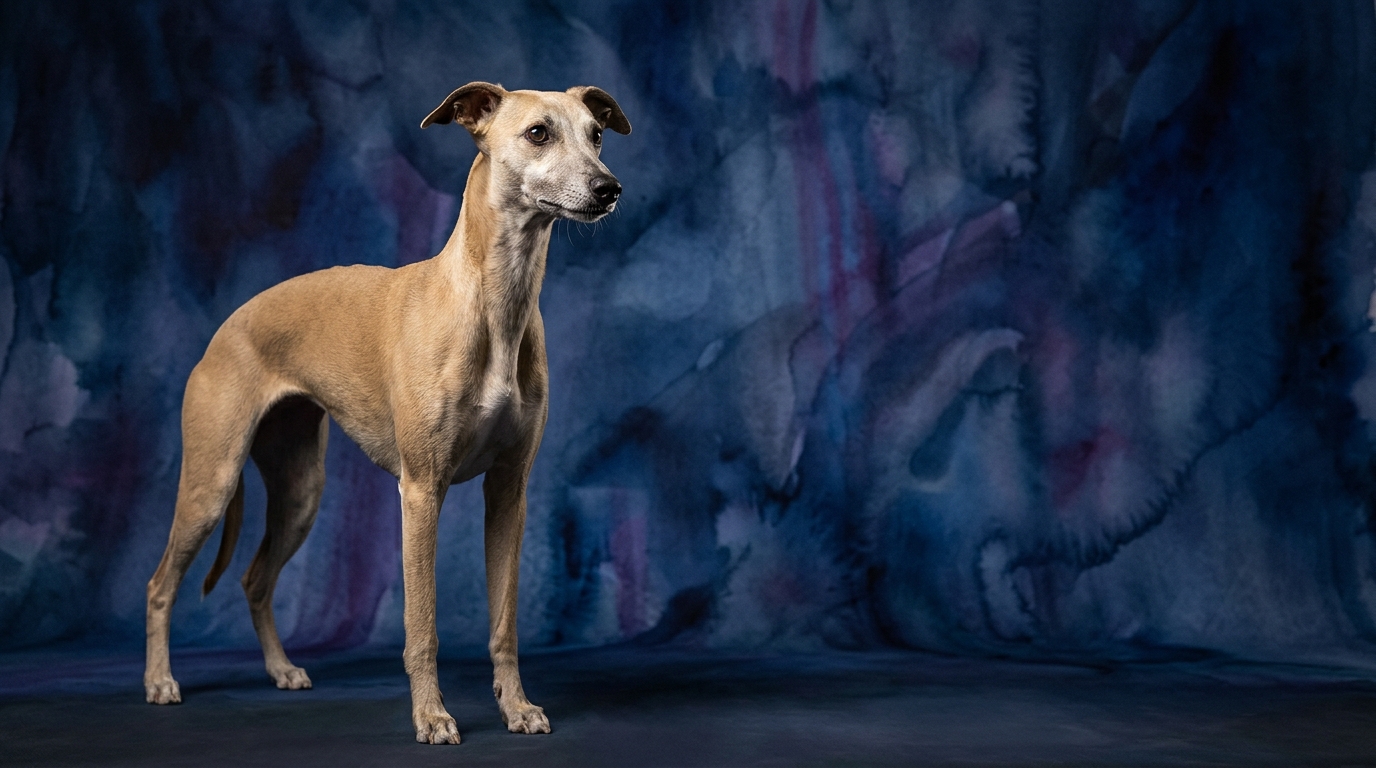

Side-by-Side IQ Profile: Whippet vs. Redbone Coonhound
The Cosmic Pet IQ Lab assesses five key cognitive dimensions, offering a nuanced view of a breed's mental landscape. For the Whippet, a sighthound with a Coren ranking of #51, we observe a Problem Solving score of 3/5, indicating a moderate capacity for navigating novel challenges, often with a practical, goal-oriented approach. Their Training Speed is 2/5, suggesting that while they can learn, it requires patience and consistent motivation. Social Intelligence shines at 4/5, highlighting their attunement to human emotions and social cues. Instinctive Drive, particularly their prey drive, is exceptionally high at 5/5, a defining trait of their sighthound heritage. Memory is solid at 3/5, allowing them to retain learned behaviors and experiences.
In contrast, the Redbone Coonhound, a dedicated scenthound without a specific Coren ranking, presents a balanced cognitive profile. Their Problem Solving ability is also 3/5, often manifesting in their methodical approach to tracking and scent puzzles. Training Speed registers at 3/5, indicating a slightly quicker grasp of commands and routines compared to the Whippet. Social Intelligence stands at 3/5, showing good engagement with their human companions and pack but perhaps with a more independent streak. Instinctive Drive, centered around their powerful scenting abilities, is rated 3/5, a persistent rather than explosive drive. Their Memory, crucial for tracking complex scent trails, is also 3/5, ensuring they recall learned tasks and past experiences effectively.
Where the Whippet Wins Cognitively
The Whippet's most pronounced cognitive advantages lie in its exceptional Social Intelligence and formidable Instinctive Drive. With a 4/5 Social Intelligence score, Whippets demonstrate a profound sensitivity to human moods and intentions. They often seem to anticipate their owner's desires, showing a nuanced understanding of social dynamics within the household. This translates to a dog that is deeply connected, often seeking physical closeness and offering comfort, making them highly empathetic companions. Their ability to read subtle cues means they can be remarkably responsive in familiar social contexts, fostering a strong, almost intuitive bond with their chosen people.
Furthermore, the Whippet's 5/5 Instinctive Drive, while sometimes challenging in a domestic setting due to their powerful chase instinct, is a testament to their specialized cognitive prowess. This isn't just a physical attribute; it's a deeply ingrained mental program for pursuit. Their minds are wired for rapid processing of visual stimuli and instantaneous decision-making during a chase, showcasing incredible focus and determination in their natural domain. This cognitive specialization makes them unmatched in activities like lure coursing, where their visual acuity and explosive drive are put to optimal use, demonstrating a unique form of 'working intelligence' for speed and pursuit.
Where the Redbone Coonhound Wins Cognitively
The Redbone Coonhound carves its cognitive niche with a superior Training Speed, scoring 3/5 compared to the Whippet's 2/5. This indicates a more receptive and efficient learning process for new commands and routines. While not necessarily eager to please in the same way a retriever might be, Redbones possess a pragmatic approach to learning, especially when tasks are structured and reward-driven. Their minds are adept at forming associations between actions and consequences more readily, making the initial stages of obedience training often smoother and less repetitive than with a Whippet. This trait makes them generally more straightforward to guide through basic manners and specific working commands.
Their cognitive strength also lies in their sustained focus on scent-based problem-solving. While their Instinctive Drive is rated 3/5, it's a persistent, methodical drive, enabling them to systematically follow complex scent trails for hours. This requires a unique cognitive endurance and an advanced ability to filter environmental distractions while concentrating on a specific olfactory input. Their memory for scent patterns and their capacity for sequential problem-solving in the field truly set them apart, demonstrating a specialized intelligence finely tuned for their tracking purpose.
Which is Easier to Train and Why
When evaluating ease of training, the Redbone Coonhound generally holds an advantage over the Whippet. The Redbone's Training Speed score of 3/5 signifies that they typically absorb new commands and routines more readily, requiring fewer repetitions to solidify learned behaviors. Their instinctive drive, while potent for tracking, is often more manageable in a training context, allowing them to maintain focus for longer periods without becoming overwhelmed by external stimuli. They respond well to positive reinforcement and clear, consistent instruction, often motivated by food or the opportunity to engage in scent work.
The Whippet, with a Training Speed of 2/5, requires more patience and creative motivation. While they are sensitive and eager to please in a social context (Social Intelligence 4/5), their intense Instinctive Drive (5/5) means that any moving object or perceived prey can instantly override learned commands. This makes impulse control a critical, and often challenging, aspect of Whippet training. Owners must be prepared for sessions that might need more variety and higher-value rewards to keep their attention, and they often need extensive proofing in distracting environments. While their social intelligence can aid in building a strong training bond, their inherent drive requires a dedicated and understanding approach to harness effectively.
Which Suits Active Owners vs. Relaxed Owners
The choice between a Whippet and a Redbone Coonhound hinges significantly on an owner's lifestyle and activity preferences. Whippets are often mislabeled as entirely 'relaxed,' but they are better described as 'burst athletes.' They thrive with short, intense periods of exercise – think 20-30 minutes of full-speed sprinting or lure coursing – followed by extended periods of quiet relaxation, often curled up on a couch. Their high Instinctive Drive requires appropriate outlets for chasing, but outside of these bursts, they are remarkably calm and low-key indoors. They suit owners who can provide dedicated, high-intensity exercise sessions but otherwise appreciate a quiet, affectionate, and relatively undemanding housemate.
Redbone Coonhounds, on the other hand, require a more consistent and sustained level of activity. Their 3/5 Instinctive Drive, rooted in scent work, means they benefit from long, meandering walks, hikes, or opportunities for nose work and tracking games. They are not typically sprinters like Whippets but possess remarkable endurance and a persistent desire to explore with their noses. They are an excellent fit for active owners who enjoy spending hours outdoors, exploring trails, or engaging in canine sports like scent work or agility. A Redbone needs mental stimulation that taps into its natural tracking abilities, making them less suitable for purely relaxed owners who prefer minimal outdoor engagement.
The Verdict: When to Choose Each Breed
The Verdict
Choose a Whippet if you desire a deeply affectionate companion who needs intense bursts of exercise but is otherwise a calm, sensitive presence indoors, thriving on close social bonds.
Opt for a Redbone Coonhound if you're an active owner who loves outdoor adventures, enjoys engaging in consistent, stimulating activities like hiking or scent work, and appreciates a dog with a robust, persistent drive.
🧠 Find Your Pet's IQ Score
Our Pet IQ Lab assessment covers 25+ tests across 5 cognitive dimensions — personalized to your breed.
Take the Full IQ Test →Frequently Asked Questions
Are Whippets suitable for apartment living?
Yes, Whippets can adapt well to apartment living due to their calm indoor demeanor. Provided they receive their essential daily bursts of high-intensity exercise, they are generally quiet and content companions within smaller spaces.
Do Redbone Coonhounds bark a lot?
Redbone Coonhounds are known for their distinctive 'baying' vocalization, particularly when on a scent trail or alerting. While not constant barkers, they can be quite vocal, making consistent training crucial to manage their expressions in a home environment.
Which breed is generally better with children?
Both breeds can be good with children, but their approaches differ. Whippets, with their higher social intelligence, are often gentle and patient, forming sensitive bonds. Redbone Coonhounds are typically sturdy and tolerant, enjoying play but perhaps with less nuanced social cues, requiring supervision with very young children.