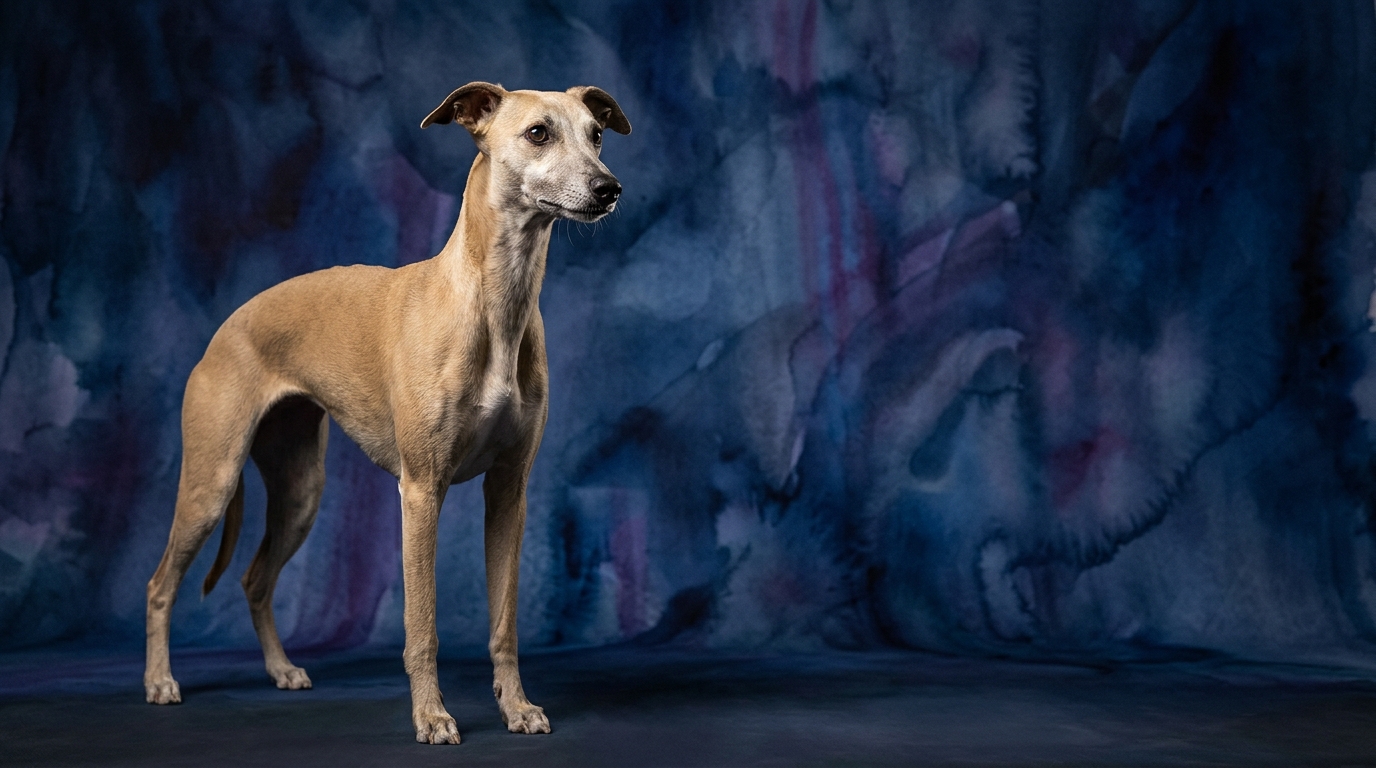

Side-by-Side IQ Profile: Whippet vs. Spinone Italiano
At The Cosmic Pet Pet IQ Lab, we analyze five key dimensions of canine cognition to provide a comprehensive understanding of each breed's mental makeup. The Whippet, a sighthound ranked #51 by Coren, and the Spinone Italiano, a sporting dog, each bring a unique set of cognitive strengths to the table.
Whippet (Hound, Coren rank #51): Problem Solving (3/5): Whippets are pragmatic problem-solvers, adept at navigating their environment for personal comfort or access to resources. They'll quickly ascertain the warmest spot on the couch or the easiest way to retrieve a dropped treat, demonstrating intelligence geared towards practical, self-serving solutions rather than complex abstract challenges. Training Speed (2/5): Their ability to learn is present, but Whippets often exhibit a sighthound's independent streak, leading to perceived 'selective hearing.' They understand commands but may choose to comply only if sufficiently motivated, requiring consistent, positive reinforcement and enticing rewards to achieve reliable responses. Social Intelligence (4/5): This is a standout trait. Whippets are remarkably attuned to human emotions and subtle social cues, often anticipating moods and offering quiet, intuitive companionship. This deep sensitivity fosters profound bonds, making them exceptionally empathetic and comforting family members. Instinctive Drive (5/5): The Whippet's powerful sighthound prey drive is their dominant instinct. Any small, fast-moving object triggers an intense, singular focus on pursuit, demanding secure containment and careful management to ensure safety and prevent escapades. Memory (3/5): They possess a good memory for routines, familiar people, and the layout of their home environment. Whippets recall learned behaviors and pleasant experiences, though consistent reinforcement is key to overcoming their independent nature in command recall.
Spinone Italiano (Sporting, Not Coren-ranked): Problem Solving (3/5): Spinones approach problems methodically and with perseverance. While not always swift, their thoughtful process often leads to success, particularly in tasks related to their sporting purpose like locating hidden objects or navigating varied terrain with a considered approach. Training Speed (3/5): Generally eager to please and cooperative, Spinones learn new commands at a steady pace. Their earnest disposition makes them receptive to training, absorbing information well with consistent positive reinforcement, resulting in a more straightforward and rewarding learning experience. Social Intelligence (3/5): Spinones are friendly, devoted, and form strong family bonds. They interact well with humans and other animals, displaying a balanced and amiable social demeanor that makes them reliable and affectionate companions, though perhaps less overtly sensitive than the Whippet. Instinctive Drive (3/5): Rooted in their versatile gun dog heritage, Spinones have strong drives for scent work, pointing, and retrieving. Crucially, this drive is typically more controlled and collaborative than a sighthound's, meaning they are bred to work *with* a handler, making their instincts more manageable in a companion setting. Memory (3/5): They exhibit a solid memory for commands, routines, and scent profiles. Their ability to retain learned behaviors and information supports their trainability and capacity for complex, multi-step tasks over time with regular practice.
Where the Whippet Wins Cognitively
The Whippet's cognitive profile reveals distinct strengths, particularly in their advanced social intelligence, scoring 4/5 compared to the Spinone's 3/5. This manifests as an almost uncanny ability to read and respond to human emotions and subtle cues, making them profoundly empathetic companions. They often seem to anticipate their owner's needs for comfort or companionship without being explicitly asked, a nuanced form of social cognition that fosters exceptionally deep bonds. Furthermore, while challenging, the Whippet's intense instinctive drive (5/5) represents a peak cognitive specialization in pursuit. This singular focus on a moving target, executed with incredible speed and agility, showcases a highly refined, instinctual processing system dedicated to a specific task, unparalleled in its domain.
Where the Spinone Italiano Wins Cognitively
The Spinone Italiano excels in areas that prioritize cooperation and a balanced application of their drives. Their training speed, at 3/5 compared to the Whippet's 2/5, indicates a greater eagerness and consistency in learning, making them generally more straightforward to teach. This stems from a foundational biddability and a desire to work alongside their human. Cognitively, the Spinone's more balanced instinctive drive (3/5) is a significant advantage for adaptability. While still possessing strong hunting instincts, they are less singularly focused on chase and more inclined towards collaborative tasks like tracking and retrieving, allowing for a broader range of engaging activities and easier integration into diverse family routines without constant management of overwhelming prey drive. This balanced drive reflects a cognitive flexibility valuable for a versatile companion.
Which is Easier to Train and Why
When evaluating ease of training, the Spinone Italiano generally presents a more straightforward experience than the Whippet. The Spinone's higher training speed score (3/5) and inherent eagerness to please contribute significantly to their trainability. They possess an earnest disposition and a desire to collaborate, often approaching training sessions with a focused willingness to learn and comply. Their instinctive drive, while present, is typically more controlled and oriented towards working *with* a handler, making them more receptive to direction and less prone to independent decision-making. In contrast, the Whippet's training speed (2/5) is hampered by their sighthound independence and a propensity for 'selective hearing.' While they understand commands, their powerful instinctive drive (5/5) to chase can easily override obedience, especially in stimulating environments. Training a Whippet requires immense consistency, patience, and the use of high-value rewards to motivate them to choose compliance over their natural inclinations. Their social intelligence helps in building rapport, but their independent spirit means they often require more creative and persistent methods to achieve reliable responses.
Which Suits Active Owners vs. Relaxed Owners
Both breeds present unique profiles for different owner lifestyles. For active owners, the choice hinges on the *type* of activity preferred. A Whippet thrives on intense, short bursts of speed in a securely fenced area, followed by extensive lounging. Owners who enjoy brisk walks, lure coursing, or have access to large, safe spaces for them to gallop freely will find the Whippet a rewarding companion. However, their high prey drive demands vigilance during outdoor activities. For owners seeking more consistent, moderate activity, the Spinone Italiano is an excellent match. They enjoy long walks, hiking, and activities that engage their scenting and retrieving instincts, making them ideal partners for exploring trails or participating in dog sports like agility or obedience that require sustained focus. They possess the stamina for a full day out but are less about explosive sprints. For more relaxed owners, both breeds can adapt to a quiet home life, but with caveats. The Whippet is renowned for being a '45-mph couch potato,' content to snuggle for hours after their exercise needs are met. Their social intelligence means they deeply value companionship. A Spinone, while calm indoors, still requires a consistent routine of mental and physical engagement to prevent boredom. A 'relaxed' owner for a Spinone might be someone who enjoys daily leisurely strolls and interactive playtime, rather than someone who expects minimal activity. The Spinone’s earnest nature means they thrive when given a purpose, even if it's just being a devoted presence during daily errands.
The Verdict
If you cherish a deeply sensitive, emotionally attuned companion who will sprint like the wind outdoors and cuddle intensely indoors, and you are prepared to manage their powerful chase instinct with consistent, positive reinforcement, then the Whippet is an ideal choice.
Conversely, if you seek a steady, cooperative, and earnest companion for outdoor adventures, particularly those involving scent work or retrieving, and appreciate a dog with a balanced drive that is generally easier to motivate in training, then the Spinone Italiano will be an excellent fit for your home.
🧠 Find Your Pet's IQ Score
Our Pet IQ Lab assessment covers 25+ tests across 5 cognitive dimensions — personalized to your breed.
Take the Full IQ Test →Frequently Asked Questions
Are Whippets good with children given their social intelligence?
Whippets generally have a high social intelligence and are often gentle and affectionate with children, particularly those they are raised with. Their sensitive nature means they thrive in calm environments, so supervision is always recommended with very young, boisterous kids to ensure mutual respect.
Can a Spinone Italiano live in an apartment?
While Spinones are calm indoors, their need for consistent exercise and mental stimulation means apartment living is possible but requires dedicated effort from their owners. Daily long walks, playtime, and engaging activities are essential to keep them content and prevent boredom-related behaviors in a smaller space.
How do their problem-solving skills differ in everyday life?
A Whippet's problem-solving often focuses on comfort and self-interest, like finding the best napping spot or subtly nudging for attention. A Spinone, with the same problem-solving score, tends to apply their intellect more methodically to purposeful tasks, such as figuring out how to retrieve a toy from a tricky spot or learning a new game that involves multiple steps.