
Side-by-Side Cognitive Profiles
The Cosmic Pet Pet IQ Lab provides a detailed framework for understanding canine intelligence across five critical dimensions. Examining these scores for the Whippet and Toy Fox Terrier reveals their inherent cognitive leanings, shaped by their breed histories and purposes.
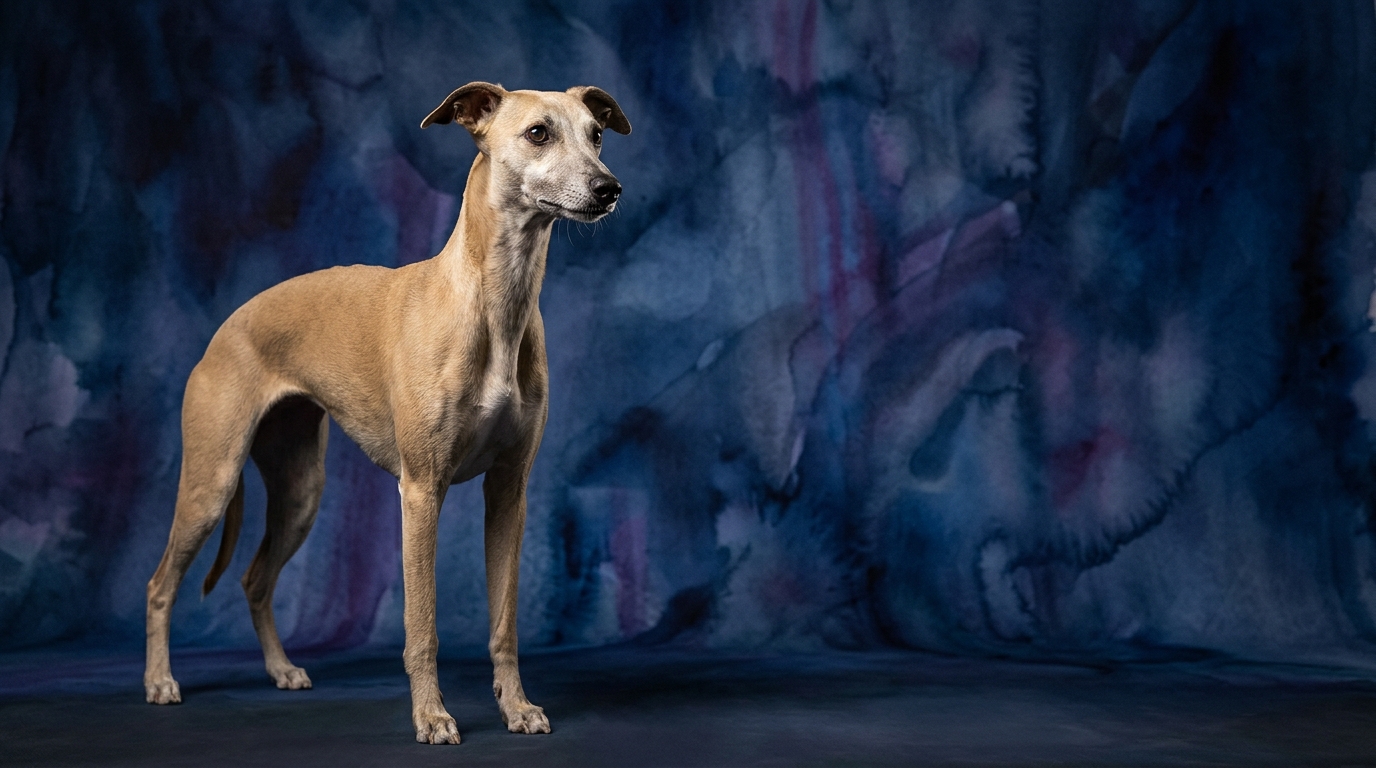
The Whippet, a breed recognized by its Coren rank of #51, exhibits a Problem Solving score of 3/5, indicating an average capacity for navigating moderately complex tasks but not necessarily a drive to seek out intellectual puzzles. Its Training Speed is rated at 2/5, suggesting that while capable of learning, it requires consistent, patient instruction to grasp new commands effectively. Where the Whippet truly shines is in Social Intelligence, scoring 4/5, reflecting a keen ability to interpret human cues and adapt within social contexts, often forming deep, empathetic bonds. Its Instinctive Drive is a formidable 5/5, signifying a powerful, inherent urge to chase and pursue, a defining characteristic of sighthounds. Finally, its Memory is rated 3/5, meaning it retains learned experiences and routines adequately.
In contrast, the Toy Fox Terrier, which does not have a Coren rank, presents a slightly different cognitive blueprint. It also scores 3/5 in Problem Solving, demonstrating a similar capacity for moderate task resolution, often applying a characteristic terrier tenacity to challenges. Its Training Speed is 3/5, indicating a good aptitude for learning and a generally quicker response to engaging training methods. The Toy Fox Terrier’s Social Intelligence is 3/5, suggesting it engages adequately in social interactions and understands basic human cues, though perhaps with less nuance than the Whippet. Its Instinctive Drive is 3/5, reflecting a moderate prey drive typical of terriers, but significantly less intense than a sighthound’s overwhelming urge. Like the Whippet, its Memory is 3/5, providing functional retention for routines and commands.
Where the Whippet Excels Cognitively
The Whippet's superior Social Intelligence (4/5 compared to the Toy Fox Terrier’s 3/5) stands out as a significant cognitive advantage. This higher score means Whippets often display a more refined understanding of human emotions and subtle social dynamics within a household. They might be more attuned to slight shifts in an owner's mood or the general atmosphere, often responding with a comforting presence or a gentle, non-verbal acknowledgment, indicating a deeper processing of interpersonal cues. This makes them exceptionally empathetic and intuitive companions.
Furthermore, the Whippet’s unparalleled Instinctive Drive (5/5 versus 3/5) represents a unique cognitive strength, especially for owners interested in specific activities. While this powerful drive can present training challenges in everyday contexts, it becomes a distinct advantage in pursuits like lure coursing or competitive straight racing. In these scenarios, the Whippet's entire cognitive apparatus is geared towards the pursuit, demonstrating an exceptional mental 'lock-on' capability and unwavering focus on the target. This isn't merely physical speed, but a deep-seated mental programming for the chase, making them unmatched in these specialized fields.
Where the Toy Fox Terrier Shows Cognitive Strengths
The Toy Fox Terrier demonstrates a cognitive edge in its Training Speed (3/5 compared to the Whippet’s 2/5). This slight but meaningful difference suggests the Toy Fox Terrier generally picks up new commands and routines with greater alacrity. Their inherent eagerness to engage in interactive learning and their terrier enthusiasm often translate into quicker processing of associations between commands and desired actions, making them more immediately responsive during training sessions. This quicker learning curve can be rewarding for owners who enjoy teaching a variety of tricks and obedience tasks.
Another cognitive strength of the Toy Fox Terrier lies in the versatility offered by its moderate Instinctive Drive (3/5). While still possessing a terrier's typical drive, this level is more manageable and redirectable than the Whippet's intense 5/5 drive. This cognitive flexibility allows the Toy Fox Terrier to adapt to a wider range of activities and mental challenges that don't solely revolve around the primal urge to chase. They can engage more readily in puzzle toys, scent work, or agility, where the drive is present but can be channeled into diverse forms of mental stimulation, making them a more versatile participant in various learning and play scenarios.
Training Dynamics: Whippet vs. Toy Fox Terrier
When considering ease of training for general obedience and varied tasks, the Toy Fox Terrier typically presents as the more straightforward student. Its Training Speed of 3/5 indicates a good aptitude for learning, meaning it generally grasps new concepts and commands with reasonable efficiency. Coupled with a moderate Instinctive Drive (3/5), the Toy Fox Terrier is less likely to be completely overwhelmed by environmental distractions, such as squirrels or fast-moving objects, when an owner is attempting to focus its attention on commands. Their inherent terrier zeal often fuels an eagerness to please and engage in interactive learning, responding particularly well to positive reinforcement and dynamic training games.
The Whippet, conversely, can be more challenging to train for consistent obedience, especially in distracting environments. Its Training Speed of 2/5 signifies that it requires considerable patience, consistency, and often more repetitions to solidify new commands. Furthermore, the Whippet’s powerful Instinctive Drive of 5/5 means that when an opportunity for chase arises, its cognitive focus on that primal urge can easily override learned commands. While Whippets are sensitive and respond best to gentle, positive methods, successful training demands a deep understanding of their sighthound nature, requiring handlers to create highly engaging training sessions and carefully manage their environment to maintain focus on the handler rather than a fleeting target.
Matching Breeds to Lifestyles: Active vs. Relaxed Owners
Both the Whippet and the Toy Fox Terrier can suit active owners, but their activity needs manifest differently due to their distinct cognitive profiles. The Whippet, despite its reputation as a calm house dog, requires regular bursts of intense physical activity to satisfy its high instinctive drive and physical capabilities. Owners who enjoy activities like lure coursing, long sprints in secure, fenced areas, or fast-paced games of fetch will find the Whippet an exceptionally rewarding companion, as its cognitive makeup thrives on the opportunity to express its sighthound instincts. Their social intelligence also means they deeply appreciate shared activities.
For more relaxed owners, the Whippet can still be a good fit, provided their intense exercise requirements are met with structured, brief, and powerful outlets rather than constant, moderate activity. Their high social intelligence means they are often content to be quiet, affectionate companions indoors. The Toy Fox Terrier, while energetic, has a moderate instinctive drive and can often be satisfied with varied playtime, regular walks, and mental stimulation through training and puzzle toys. Its slightly higher training speed and adaptability make it a good fit for owners who enjoy teaching tricks and engaging in interactive but perhaps less physically demanding activities, making it suitable for owners who might prioritize intellectual engagement and varied companionship over sustained, high-intensity physical exertion.
The Verdict: When to Choose Each Breed
The Verdict
Choose a Whippet if you appreciate a deeply sensitive, socially intelligent companion that thrives on intense, albeit brief, physical exertion, and you are prepared to manage a powerful chase instinct with understanding and appropriate outlets.
Opt for a Toy Fox Terrier if you desire a lively, adaptable companion who enjoys varied training and interactive play, offering a slightly quicker learning curve and a more manageable instinctive drive for diverse activities and intellectual engagement.
🧠 Find Your Pet's IQ Score
Our Pet IQ Lab assessment covers 25+ tests across 5 cognitive dimensions — personalized to your breed.
Take the Full IQ Test →Frequently Asked Questions
Is a Whippet difficult to train due to its low training speed?
Whippets can require more patience and consistency due to their 2/5 training speed, meaning they learn at a deliberate pace. Their strong instinctive drive also means training needs to be highly engaging and practiced in various environments to overcome distractions, but they are sensitive and respond best to positive, gentle methods.
Which breed is better suited for apartment living?
Both breeds can adapt well to apartment living with proper exercise. Whippets are often described as '45-mph couch potatoes,' being calm and quiet indoors after their bursts of intense activity. Toy Fox Terriers are also small and can thrive in apartments, provided their mental and physical stimulation needs are met through regular walks and interactive play.
Do Toy Fox Terriers bark a lot due to their terrier nature?
Toy Fox Terriers can be vocal, as their 3/5 instinctive drive often includes an alert component, leading them to bark at novel sights or sounds. While not all are excessive barkers, it's a common terrier trait that can be managed with consistent training focusing on 'quiet' commands and desensitization to triggers.