
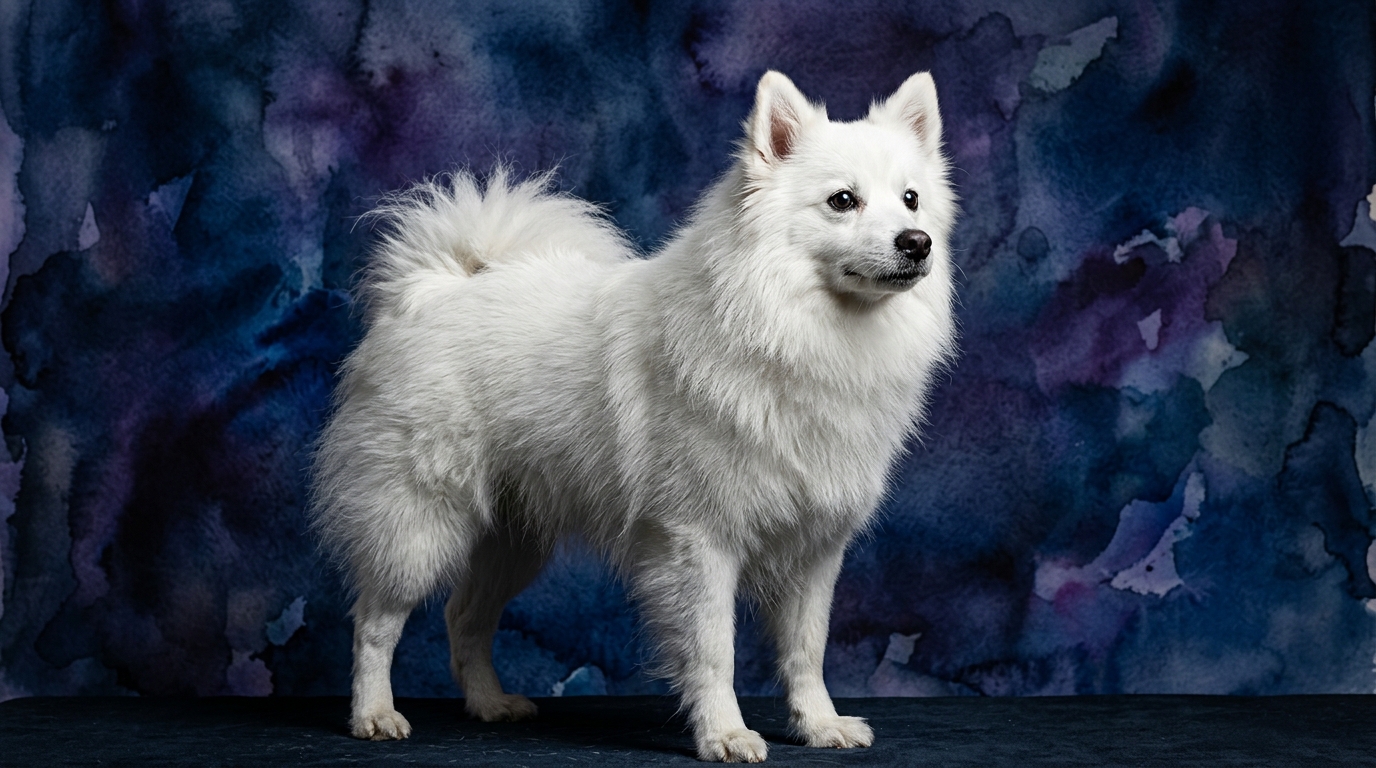
Side-by-Side IQ Profile: Wire Fox Terrier vs. American Eskimo Dog
Despite both breeds scoring 3/5 across all five cognitive dimensions in The Cosmic Pet Pet IQ Lab, their unique breed histories mean these scores play out distinctly. Understanding these nuances is key to appreciating their individual cognitive strengths.
For the **Wire Fox Terrier**, a 3/5 in **Problem Solving** reflects their innate ability to navigate complex environments, often involving intricate tunnels or challenging terrain, to pursue quarry. Their problem-solving is characterized by tenacity and a trial-and-error approach, driven by an independent hunting instinct. A **Training Speed** score of 3/5 indicates they learn new commands at a moderate pace, often understanding quickly but requiring consistent, engaging reinforcement to maintain focus and compliance; their learning curve is influenced by their independent nature, making repetition and reward-based methods crucial. Their **Social Intelligence** at 3/5 means they possess a moderate understanding of social cues, particularly within their established 'pack,' be it human or canine, often translating into assertive communication and a clear understanding of social hierarchies, though they might prioritize their own objectives. An **Instinctive Drive** of 3/5 highlights their strong, hardwired impulses for digging, chasing small animals, and vocalizing; these drives are not merely physical actions but deeply ingrained cognitive patterns, influencing their focus and decision-making. Finally, a **Memory** score of 3/5 signifies a moderate capacity to retain learned behaviors, commands, and past experiences, remembering training sessions and routines, but also recalling which independent actions yielded desirable outcomes, sometimes making them seem forgetful of rules.
The **American Eskimo Dog** also scores 3/5 in all dimensions, but through a different lens. Their 3/5 in **Problem Solving** reflects adeptness at understanding human intentions and figuring out how to elicit desired responses, whether it's opening a treat cabinet or performing a complex trick sequence, often with a social or performance-oriented goal. A **Training Speed** of 3/5 means they generally learn new commands at a moderate pace, often eager to please and responsive to positive reinforcement; their training speed is bolstered by their desire for interaction and attention, making them receptive to varied instructional methods. Their **Social Intelligence** at 3/5 exhibits a moderate understanding of human emotions and social dynamics, often adapting their behavior to maintain harmony or gain affection, allowing them to integrate well into family life and respond sensitively to their owner's mood. An **Instinctive Drive** of 3/5 manifests as strong inclinations for vocalizing (barking, howling), vigilance, and an inherent desire to be active participants in family activities; these are not merely physical expressions but cognitive predispositions towards alert behavior and social engagement. Their **Memory** score of 3/5 demonstrates a moderate memory for commands, routines, and the sequences involved in tricks or learned behaviors, retaining positive and negative associations with people and places, aiding in their adaptability within a household.
Where the Wire Fox Terrier Wins Cognitively
The Wire Fox Terrier's cognitive profile, shaped by centuries of independent hunting, offers distinct advantages. Their 3/5 Problem Solving score particularly shines in tasks requiring sustained effort and self-directed solutions. They excel at figuring out intricate puzzles or navigating complex environments to reach a specific objective, often driven by an internal 'hunt' motivation rather than external prompting. This breed's independent decision-making allows them to assess novel situations and act on their own initiative, making them adept at exploring and adapting without constant human guidance. Furthermore, their cognitive strength lies in quickly assessing and adapting to diverse physical environments, identifying potential 'prey' zones, and formulating strategies to access them, a testament to their instinctive drive.
Where the American Eskimo Dog Wins Cognitively
The American Eskimo Dog, with its history as a companion and performer, showcases different cognitive strengths. Their 3/5 Social Intelligence makes them exceptionally adept at reading and reacting to human cues, allowing them to understand subtle shifts in mood and intention. This social acuity fosters a highly responsive companionship, as they often adjust their behavior to maintain positive interactions and harmony. Eskies also demonstrate a particular cognitive talent for sequential learning, excelling at chaining together multiple commands or tricks in a specific order. This makes them natural performers, capable of executing intricate routines that demand both memory and precise timing. Their vigilance and alertness are also cognitive triumphs, as their system is highly tuned to detect environmental changes, process sensory information quickly, and effectively communicate potential anomalies to their family.
Which is Easier to Train and Why
While both breeds score 3/5 in Training Speed, their underlying motivations dictate different training experiences. The American Eskimo Dog is generally perceived as easier to train for obedience and trick work due to their inherent desire to please their human companions and strong social drive. They thrive on positive reinforcement, praise, and interactive sessions, seeing training as a bonding activity. Their cognitive inclination towards social engagement makes them more receptive to human direction and eager to learn new behaviors that earn them attention. In contrast, the Wire Fox Terrier’s 3/5 training speed is often tempered by their independent and often stubborn nature. Bred to work autonomously, they may understand a command quickly but choose to comply only if it aligns with their current interest or if the reward is highly compelling. Training a Wire Fox Terrier requires immense patience, creativity, and a consistent approach that makes them believe training is their idea or incredibly fun. Their high prey drive and tendency for independent problem-solving mean they can be easily distracted and require more effort to maintain focus on handler-led tasks. Therefore, for an owner seeking a more straightforward training experience focused on compliance and sequential learning, the American Eskimo Dog often presents a less challenging path.
Cognitive Profiles for Active vs. Relaxed Owners
For active owners who relish outdoor adventures and engaging their dog in mentally stimulating activities, the Wire Fox Terrier is an ideal match. Their cognitive profile, with its strong instinctive drive and problem-solving tenacity, means they require ample physical exercise combined with challenges that tap into their independent spirit, such as agility, earthdog trials, or complex scent games. They thrive with owners who can provide consistent, varied enrichment to prevent boredom and channel their sharp minds constructively, embracing their spirited nature.
The American Eskimo Dog, while certainly enjoying activity, can adapt more readily to slightly less demanding routines, making them a better fit for owners seeking a more relaxed yet engaged companion. Their social intelligence and desire to be part of the family mean they are content with regular walks, interactive play sessions, and being included in daily household activities. They are excellent for owners who appreciate a vigilant companion that enjoys learning new parlor tricks and thrives on consistent human interaction rather than constant high-intensity physical challenges, valuing their keen social awareness.
The Verdict
Choose a Wire Fox Terrier if you appreciate an independent, tenacious problem-solver and are prepared to engage their sharp mind and strong instincts with consistent, creative training and adventurous activities.
Opt for an American Eskimo Dog if you desire a socially astute, eager-to-please companion who thrives on human interaction, enjoys learning tricks, and will be a vigilant, vocal member of your family.
🧠 Find Your Pet's IQ Score
Our Pet IQ Lab assessment covers 25+ tests across 5 cognitive dimensions — personalized to your breed.
Take the Full IQ Test →Frequently Asked Questions
Do Wire Fox Terriers and American Eskimo Dogs learn at the same pace?
While both breeds score 3/5 in Training Speed according to The Cosmic Pet Pet IQ Lab, their motivations differ. American Eskimo Dogs are often more eager to please, potentially making them appear quicker to grasp and comply with commands, especially with positive reinforcement. Wire Fox Terriers learn at a moderate pace but require more compelling motivation and consistency due to their independent nature.
Which breed is better at solving puzzles or engaging with interactive toys?
Both breeds score 3/5 in Problem Solving, but their approach varies. Wire Fox Terriers excel at puzzles requiring tenacity and independent thought, often driven by a 'hunt' instinct. American Eskimo Dogs are also adept, frequently solving puzzles that involve manipulating objects or figuring out human-centric solutions through observation.
How do their social intelligence scores of 3/5 manifest differently?
A Wire Fox Terrier's social intelligence often involves understanding pack dynamics and asserting their place, sometimes with an independent streak. An American Eskimo Dog's 3/5 social intelligence typically means they are attuned to human emotions and social cues, adapting their behavior for harmonious interaction and seeking approval and connection.