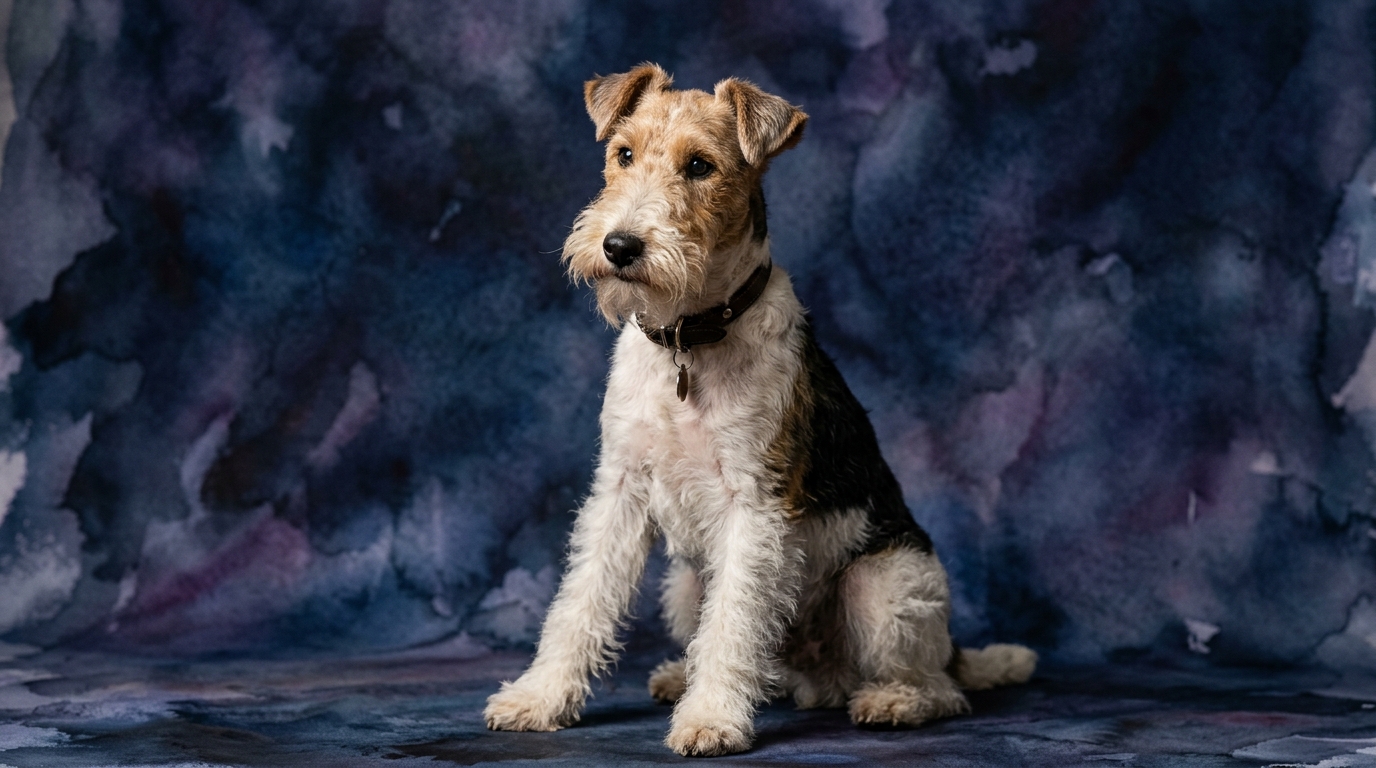

Side-by-Side IQ Profile
The Cosmic Pet Pet IQ Lab provides a standardized framework to evaluate canine cognition. Let's explore how the Wire Fox Terrier and Japanese Chin, both with a 3/5 rating across all dimensions, uniquely express these abilities.
Wire Fox Terrier IQ Profile
Problem Solving (3/5): The Wire Fox Terrier demonstrates practical problem-solving, adept at navigating physical challenges like accessing hidden areas or bypassing obstacles. Their approach is hands-on, persistent, and driven by environmental curiosity.
Training Speed (3/5): They learn commands at a moderate pace, but their independent nature often requires consistent, engaging methods to capture and hold their attention, as repetitive drills without purpose may be met with stubbornness.
Social Intelligence (3/5): Wire Fox Terriers show moderate social intelligence, understanding family dynamics and cues. However, their focus often shifts to their own objectives if environmental stimuli are present, engaging socially on their own terms.
Instinctive Drive (3/5): A defining characteristic, this manifests as a powerful urge to chase, dig, and explore, an inheritance from their vermin hunting history. This drive is a core cognitive lens influencing their focus and motivation.
Memory (3/5): They exhibit solid memory for learned behaviors, routines, and experiences. This aids their navigation, recalling where interesting things were found or which boundaries were previously tested.
Japanese Chin IQ Profile
Problem Solving (3/5): The Japanese Chin's problem-solving centers on social challenges or achieving comfort. They excel at figuring out how to gain human attention or secure a prime lap spot through subtle cues and charming behaviors.
Training Speed (3/5): Learning at a moderate pace, Chins respond best to gentle, positive reinforcement, thriving on praise and connection. Their sensitive nature means harsh corrections can be counterproductive, leading to withdrawal.
Social Intelligence (3/5): Highly refined, especially within their immediate family, they are acutely attuned to human emotions, vocal inflections, and body language, often anticipating needs. This makes them exceptional, though reserved with strangers.
Instinctive Drive (3/5): This drive is primarily directed towards companionship and comfort. It manifests as a profound need for close proximity, warmth, and social interaction, forming the core of their motivation and cognitive focus.
Memory (3/5): Chins demonstrate good memory for social interactions, routines, and human preferences. They recall actions that elicit rewards or disapproval, contributing to harmonious relationships and household navigation.
Where Wire Fox Terrier Wins Cognitively
Despite identical IQ scores, the Wire Fox Terrier's cognitive strengths excel in independent action and environmental mastery. Their 3/5 problem-solving, fueled by a 3/5 instinctive drive, translates into exceptional resourcefulness with physical challenges. A Wire Fox Terrier might effortlessly figure out how to open a gate or retrieve a toy, demonstrating persistent, hands-on exploration. Their intelligence here is about applying learned skills to new, similar environmental obstacles, often making independent decisions without direct human guidance. Their 3/5 memory aids this practical intelligence, recalling past successes in outsmarting barriers.
Where Japanese Chin Wins Cognitively
Conversely, the Japanese Chin's cognitive strengths, while similarly rated, manifest in a distinctly social and nuanced manner. Their 3/5 social intelligence allows them to excel at reading subtle human emotional states and intentions, intuitively sensing mood changes and offering comfort. Their 3/5 problem-solving often targets social goals, like strategically gaining attention or using charm for treats. They adeptly navigate household dynamics, remembering individual preferences with their 3/5 memory. The Chin's cognitive prowess lies in adapting to and influencing their social environment, demonstrating deep interpersonal understanding within their family.
Which is Easier to Train and Why
Both breeds share a 3/5 training speed, but 'ease' of training is profoundly shaped by their inherent differences. Training a Wire Fox Terrier is a dynamic negotiation. Their 3/5 instinctive drive, especially prey instinct, means easy distraction by environmental stimuli. Their independent nature often questions commands misaligned with immediate interests. Success demands immense consistency, engaging methods, and a trainer able to maintain focus amidst distractions. Conversely, training a Japanese Chin, while also requiring consistency, demands gentleness. Their 3/5 social intelligence makes them sensitive to harsh tones, thriving on positive reinforcement and a strong bond. While lacking intense environmental distractions, a Chin can show subtle stubbornness if unmotivated. Neither is universally 'easier'; it depends entirely on the trainer's style and ability to leverage each breed's unique cognitive and motivational profile.
Which Suits Active Owners vs Relaxed Owners
The application of their cognitive scores directly dictates suitability for active versus relaxed owners. The Wire Fox Terrier, with its 3/5 instinctive drive and problem-solving, flourishes with ample physical and mental stimulation. Their cognitive energy demands outlets for exploration, investigation, and structured challenges. An active owner enjoying walks, agility, or scent work will find an eager companion. They need opportunities to channel curiosity; without them, problem-solving might target undesirable activities. The Japanese Chin, conversely, with its 3/5 social intelligence and companionship drive, suits relaxed owners. Contentment stems from close human interaction, gentle play, and a comfortable home. While appreciating short walks, their primary need is social engagement and proximity. Their cognitive efforts focus on understanding and interacting with their social world, demanding less strenuous physical activity and more emotional connection.
The Verdict
Choose the Wire Fox Terrier if you are an active, adventurous owner prepared to channel a spirited companion's independent mind and strong investigative drives into engaging activities and consistent training.
Choose the Japanese Chin if you seek a devoted, sensitive companion who thrives on close human connection, appreciates a calm home environment, and will engage your social intelligence with charming subtlety.
🧠 Find Your Pet's IQ Score
Our Pet IQ Lab assessment covers 25+ tests across 5 cognitive dimensions — personalized to your breed.
Take the Full IQ Test →Frequently Asked Questions
Do Wire Fox Terriers and Japanese Chins learn at the same pace?
Both breeds are rated 3/5 for training speed, indicating a moderate learning pace. However, their motivations and sensitivities differ, meaning the 'ease' of training depends heavily on the trainer's approach and the individual dog's personality.
Which breed is better at understanding human emotions?
While both have 3/5 social intelligence, the Japanese Chin's cognitive strengths lean towards a more nuanced understanding of human emotional states and social cues within the home environment. The Wire Fox Terrier's social intelligence is more direct, often focused on interaction on its own terms.
Does their similar IQ score mean they are equally suited for all tasks?
No, identical overall IQ scores don't mean identical aptitude for tasks. Their cognitive strengths are applied differently; Wire Fox Terriers excel at environmental problem-solving, while Japanese Chins shine in social problem-solving and emotional attunement.