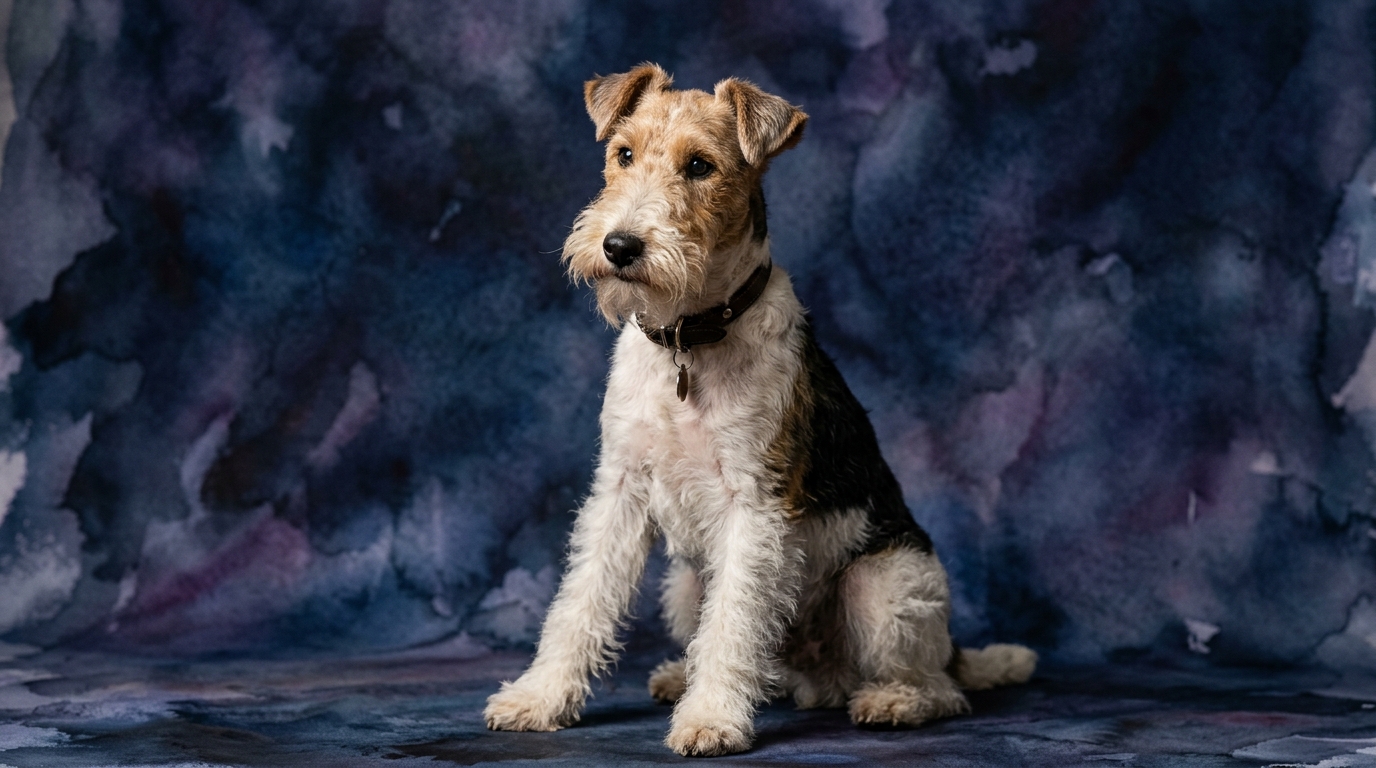
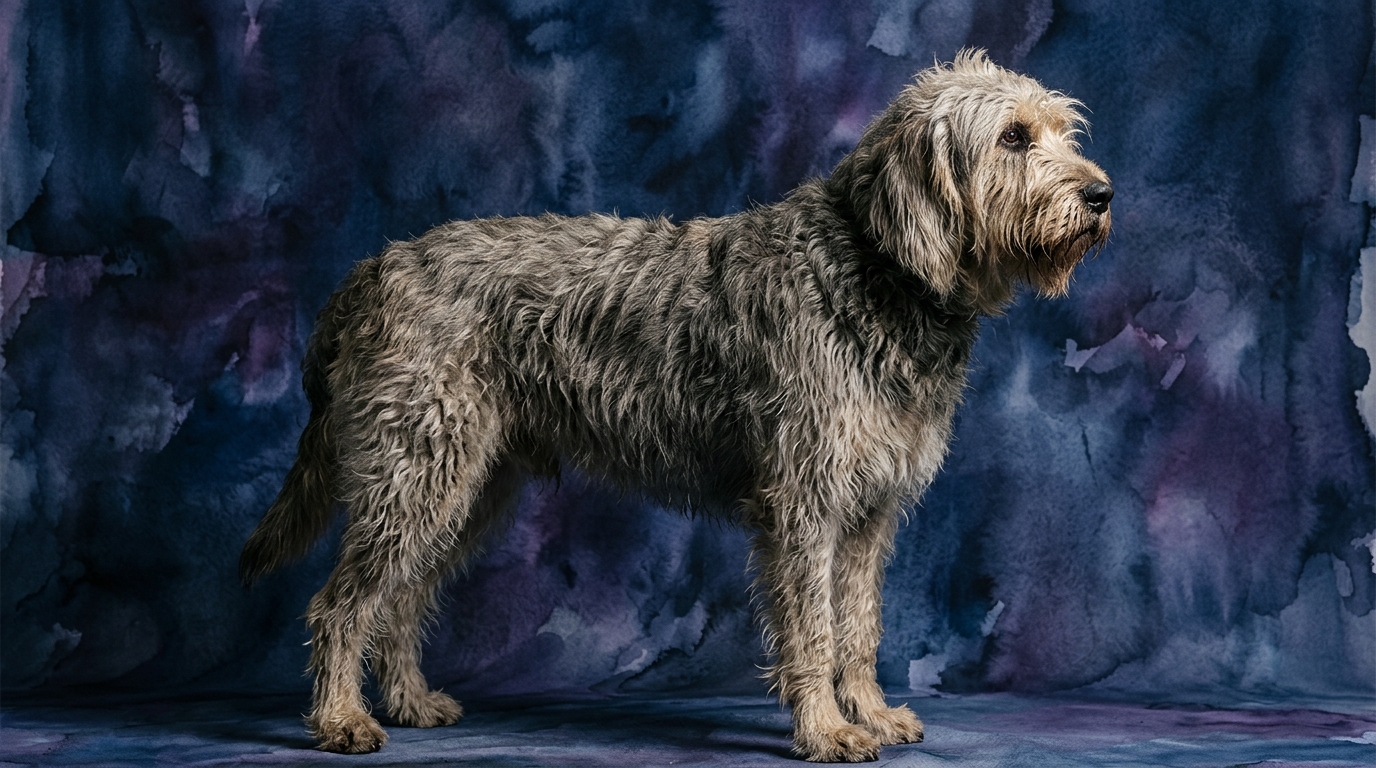
Side-by-Side IQ Profile: Wire Fox Terrier vs. Otterhound
A true terrier, the Wire Fox Terrier's 3/5 Problem Solving reflects their capacity to independently strategize and overcome obstacles, often requiring quick decisions in confined spaces, a legacy of vermin hunting. Their Training Speed, also 3/5, indicates a breed that learns new commands at a moderate pace, but whose independent spirit demands consistency and engaging methods. Social Intelligence at 3/5 points to a dog forming strong bonds and reading human cues, yet maintaining self-reliance typical of its working heritage. An Instinctive Drive of 3/5 is evident in their persistent hunting focus and eagerness to explore. Their Memory, at 3/5, allows them to recall learned tasks and associate experiences, though selectively applied when instinct takes over.
The robust Otterhound, a hound, demonstrates 3/5 Problem Solving through methodical tracking, navigating complex scent trails and environmental challenges with endurance. Their Training Speed of 3/5 suggests they absorb training over time, particularly when aligned with natural inclinations, though their scent-driven nature can challenge focus. Social Intelligence at 3/5 reflects an amiable, cooperative nature, thriving in a family or pack environment and often seeking companionship. Their Instinctive Drive, a solid 3/5, is powerfully expressed in relentless pursuit of scent. Memory at 3/5 enables them to retain vast “scent maps” and recall training, provided lessons are reinforced and engaging.
Where the Wire Fox Terrier Wins Cognitively
The Wire Fox Terrier's cognitive strengths shine in scenarios demanding quick, independent thinking and adaptability. Their Problem Solving, while 3/5, often manifests as rapid assessment of immediate situations, like accessing hidden toys or circumventing barriers, a legacy of their vermin-hunting past. This breed excels at tasks requiring mental and physical agility, making split-second decisions. Their instinctive drive, also 3/5, channels into focused, energetic bursts, allowing quick switching between tasks. This mental nimbleness, combined with moderate memory, enables recall of distinct commands applied in dynamic, changing environments. They learn through self-discovery and trial-and-error, often arriving at solutions via persistent, individual effort.
Where the Otterhound Wins Cognitively
The Otterhound's cognitive prowess is most evident in sustained focus and nuanced environmental interpretation, particularly through scent. Their 3/5 Problem Solving isn't rapid, but a methodical, persistent approach to complex challenges like deciphering intricate scent trails. This breed's instinctive drive, also 3/5, is a deep-seated, unwavering commitment to a task once engaged, allowing tireless scent following. Their memory, also 3/5, is adept at storing and recalling a vast library of olfactory information, creating detailed mental maps. This allows them to “read” the world through their nose. The Otterhound's social intelligence, rated 3/5, also contributes to a patient, cooperative disposition within a group, making them adept at working alongside humans or other dogs in shared pursuits.
Which is Easier to Train and Why
When considering ease of training, Wire Fox Terriers and Otterhounds present distinct profiles. The Wire Fox Terrier, with 3/5 Training Speed and independent problem-solving, learns commands relatively quickly, especially with engaging games. However, their strong-willed nature means they might “opt out” if a task is uninteresting or a distraction arises. They require consistent, creative, and firm trainers who make training a dynamic mental challenge. Conversely, the Otterhound's 3/5 Training Speed is influenced by their powerful scent drive. While possessing cooperative social intelligence, their attention can be profoundly diverted by interesting smells, making consistent focus a primary hurdle. They respond well to patient, positive reinforcement and methods integrating natural tracking abilities. Neither breed is inherently “easier,” but requires different training philosophies: Wire Fox Terriers benefit from varied, stimulating lessons, while Otterhounds thrive with consistent, reward-based training acknowledging their olfactory world.
Which Suits Active Owners vs. Relaxed Owners
Choosing between a Wire Fox Terrier and an Otterhound largely hinges on an owner's lifestyle. The Wire Fox Terrier, with agile problem-solving and persistent instinctive drive, suits active owners enjoying varied activities like agility or exploratory hikes. Their need for mental stimulation means owners must offer creative outlets for their intellect and energy. They thrive with owners appreciating an independent personality and interactive play. In contrast, the Otterhound, with methodical problem-solving and profound scent drive, suits active owners drawn to outdoor adventures focused on exploration and scent work. Their activity is less about speed and more about endurance and thorough investigation. They require owners providing ample opportunities for sniffing and trailing, perhaps through scent games, and who appreciate a more laid-back but robust companion once exercised. Neither breed is ideal for genuinely “relaxed” owners seeking minimal interaction or exercise.
The Verdict
Select the Wire Fox Terrier if you seek an agile, independent, and mentally sharp companion eager for varied, challenging activities and capable of quick, self-reliant problem-solving. This breed thrives with owners who can channel their energetic drive and quick wit into engaging, consistent training and interactive play.
Opt for the Otterhound if you desire a scent-driven, good-natured, and robust companion for extensive outdoor adventures, valuing methodical exploration and a strong, unwavering instinctive drive. This breed is best for owners who appreciate a patient, amiable nature and are prepared to accommodate a profound love for tracking and sniffing.
🧠 Find Your Pet's IQ Score
Our Pet IQ Lab assessment covers 25+ tests across 5 cognitive dimensions — personalized to your breed.
Take the Full IQ Test →Frequently Asked Questions
Do Wire Fox Terriers and Otterhounds require similar amounts of mental stimulation?
While both breeds have a 3/5 rating for most cognitive aspects, their stimulation needs differ in quality. Wire Fox Terriers thrive on varied, quick-paced mental challenges and independent problem-solving, whereas Otterhounds are more engaged by sustained scent-based activities and methodical exploration.
How does their social intelligence rating of 3/5 manifest differently in these two breeds?
For the Wire Fox Terrier, 3/5 social intelligence often means a strong bond with their primary human, but also a degree of self-reliance and independence, sometimes leading to selective hearing. The Otterhound's 3/5 social intelligence typically translates to a more generally amiable, cooperative nature, often enjoying the company of both humans and other dogs in a pack-like setting.
Given their identical problem-solving scores, are they equally adept at learning new tricks?
Their 3/5 problem-solving scores suggest a moderate capacity for learning, but their approach differs. Wire Fox Terriers might figure out a new trick through quick trial-and-error and independent thought. Otterhounds, conversely, might learn through more patient, consistent repetition, especially if the trick can be tied into their natural tracking or foraging instincts, often taking longer to fully internalize.