
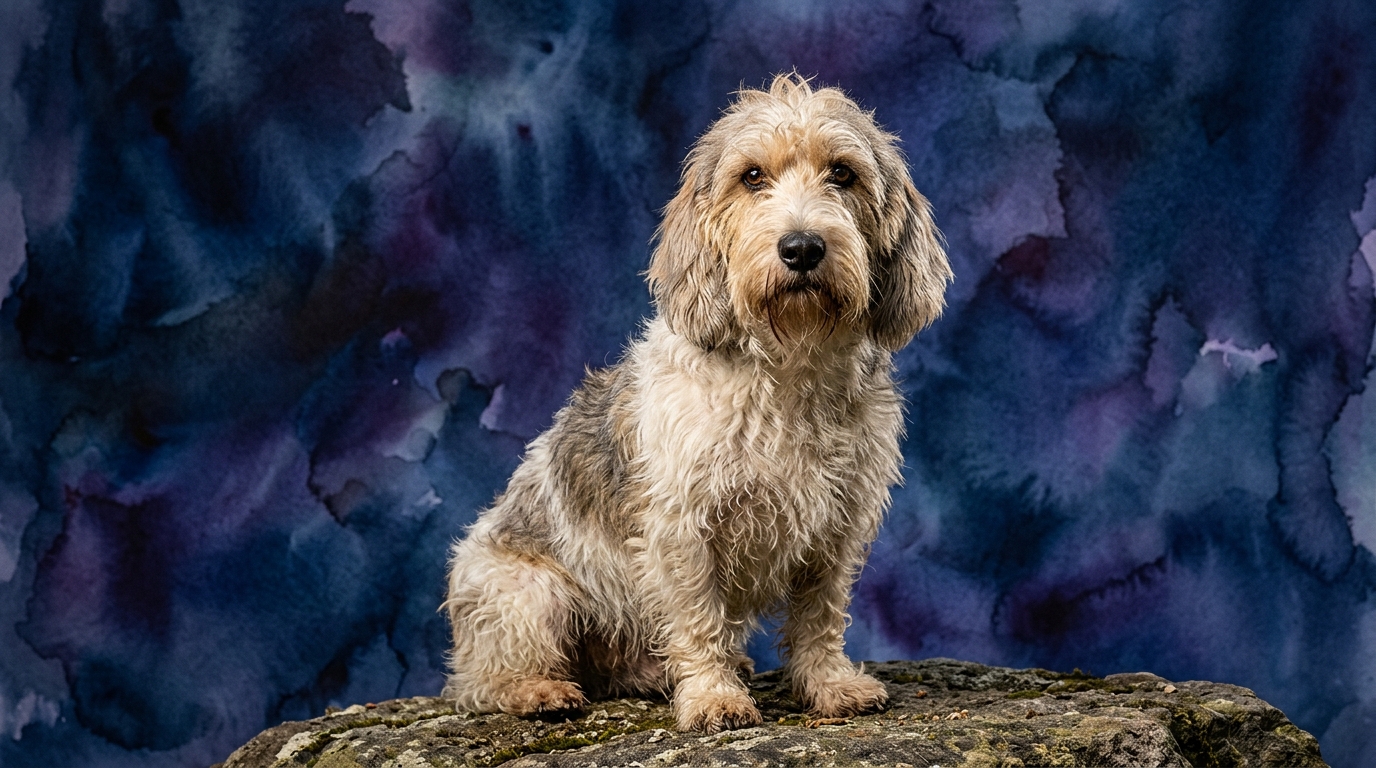
Side-by-Side IQ Profile: Wire Fox Terrier vs. Petit Basset Griffon Vendéen
**Wire Fox Terrier (WFT)**
**Problem Solving (3/5):** This score reflects a terrier's knack for independent thought and resourceful action. A Wire Fox Terrier often displays cleverness in navigating obstacles, whether outsmarting a gate latch or devising a strategy to retrieve a hidden toy. Their problem-solving isn't typically about intricate logic but rather quick, often physical, solutions to immediate challenges, driven by a desire to achieve a goal.
**Training Speed (3/5):** Wire Fox Terriers are often quick to grasp new commands, but their training speed is tempered by a strong independent streak and low tolerance for repetitive drills. They learn efficiently when engaged and motivated, yet their terrier tenacity means they might choose to comply only if they perceive value in the interaction, making consistent, positive reinforcement crucial.
**Social Intelligence (3/5):** Their social intelligence often manifests as a keen awareness of their human family's moods and routines, allowing them to adapt their behavior to fit household dynamics. While they typically bond deeply with their core family, their inherent wariness of strangers or other animals can mean they require careful socialization to channel their perceptive nature into appropriate interactions.
**Instinctive Drive (3/5):** The Wire Fox Terrier's instinctive drive is powerfully rooted in its historical role as a vermin hunter. This translates into a potent prey drive, an urge to dig, and a propensity to bark at perceived intruders or anything that moves with intriguing speed. This 3/5 score indicates a significant, often irrepressible, natural inclination that requires consistent management and appropriate outlets.
**Memory (3/5):** Wire Fox Terriers possess a solid memory for commands, routines, and the locations of interesting things, like squirrel routes or buried treasures. This memory aids in their ability to navigate their environment and recall learned behaviors, though their independent nature might sometimes override their recollection of a "no" command if a more compelling instinct arises.
**Petit Basset Griffon Vendéen (PBGV)**
**Problem Solving (3/5):** For the Petit Basset Griffon Vendéen, problem-solving is often intertwined with their primary instinct: scent work. A PBGV might excel at following a complex scent trail, navigating varied terrain, and overcoming minor physical obstacles to reach the source of an intriguing smell. Their problem-solving is less about abstract reasoning and more about persistent, methodical tracking, using their nose as their primary tool.
**Training Speed (3/5):** PBGVs learn at a moderate pace, but their training speed is heavily influenced by their environment and motivation. While generally eager to please their human companions, their powerful sense of smell can be an overwhelming distraction, making consistent focus challenging. Training success often hinges on making lessons fun, engaging, and highly rewarding, especially in distracting outdoor settings.
**Social Intelligence (3/5):** PBGVs are typically known for their cheerful, outgoing disposition and their ability to integrate well into a family pack. Their social intelligence allows them to form strong bonds and often display a charming, sometimes boisterous, interaction style with both familiar people and friendly strangers. They are generally adept at reading social cues within their immediate "pack," though their enthusiasm can sometimes be overwhelming.
**Instinctive Drive (3/5):** The PBGV's instinctive drive is almost entirely dominated by their incredible olfactory capabilities. A 3/5 score here reflects an extremely powerful urge to track, sniff, and explore the world through scent, often accompanied by their characteristic "happy go lucky" bay. This drive is so profound that it frequently overrides other considerations, guiding their every exploration.
**Memory (3/5):** PBGVs exhibit a strong memory, particularly for scent profiles and the routes they have followed. They can recall the location of favored sniffing spots or the path of an interesting scent from a previous outing. This memory, combined with their instinctive drive, allows them to build a detailed mental map of their scented world, which can sometimes lead them astray if not managed.
Where the Wire Fox Terrier Wins Cognitively
The Wire Fox Terrier often demonstrates a quicker, more reactive form of cognitive agility. Their problem-solving, rated 3/5, frequently manifests in rapid, independent decisions when facing novel situations that don't involve scent. For instance, a WFT might more readily figure out how to open a cupboard door or manipulate a complex puzzle toy through trial and error, displaying a tenacious, self-directed approach. Their terrier wit allows them to think on their feet and adapt to changing circumstances with a decisive, rather than exploratory, mindset, making them more adept at tasks requiring immediate, non-olfactory intellectual engagement.
Where the Petit Basset Griffon Vendéen Wins Cognitively
The Petit Basset Griffon Vendéen's cognitive strengths lie in their unparalleled sensory processing, specifically their olfactory intelligence. While both breeds score 3/5 in instinctive drive and memory, the PBGV's manifestation of these traits is profoundly scent-centric. They possess an extraordinary ability to discriminate between a myriad of smells, follow faint trails over long distances, and retain a detailed memory of complex scent profiles. This specialized form of intelligence allows them to "read" their environment in a way a Wire Fox Terrier cannot, making them superior in tasks requiring sustained focus on a specific sensory input, like scent work or tracking.
Which is Easier to Train and Why
Neither breed is typically described as "easy" to train, but the nature of their training challenges differs significantly. The Wire Fox Terrier, despite a 3/5 training speed, can be quite stubborn and independently minded. They learn quickly when motivated and engaged, but their low tolerance for repetition and strong prey drive mean they require creative, consistent training that feels like a game; otherwise, they might decide there are more interesting things to do. Their challenge lies in maintaining focus and convincing them that cooperation is more rewarding than self-direction. The Petit Basset Griffon Vendéen, also with a 3/5 training speed, often presents a different hurdle: extreme distractibility due to their powerful scent drive. While generally good-natured and eager to please, a compelling smell can completely override any learned command, making off-leash reliability particularly difficult. Training a PBGV requires immense patience, competing with their nose, and often utilizing their love for food or toys to maintain attention. For an owner who can consistently outwit a terrier's independence, the WFT might *feel* quicker to pick up new tricks indoors. However, for an owner who can manage scent distractions and patiently work with a hound's natural inclinations, the PBGV can be equally rewarding, albeit with different methods and expectations for outdoor reliability. Overall, the WFT might be slightly more responsive to varied training approaches, provided the trainer can keep them mentally stimulated and prevent boredom.
Which Suits Active Owners vs. Relaxed Owners
Both the Wire Fox Terrier and the Petit Basset Griffon Vendéen are best suited for active owners, though their activity needs differ in nature. The Wire Fox Terrier, with its boundless energy and terrier drive, requires an owner who can provide rigorous daily exercise, including brisk walks, vigorous play sessions, and mental challenges like agility or earthdog trials. They thrive on adventure and need consistent engagement to prevent boredom and destructive behaviors. A relaxed owner would quickly find a WFT overwhelming. The Petit Basset Griffon Vendéen also needs significant activity, particularly opportunities for scent exploration. While they might appear more relaxed indoors after a good outing, their strong instinctive drive (3/5) means they require daily "sniffaris" or structured scent work to satisfy their natural urges. An owner who enjoys long, meandering walks where the dog can follow its nose, or who is interested in dog sports like tracking or barn hunt, would be ideal. Neither breed is a couch potato; both demand an owner committed to fulfilling their specific physical and mental stimulation requirements.
The Verdict
Choose the Wire Fox Terrier if you appreciate a quick-witted, independent companion who excels at problem-solving through tenacious self-direction and thrives on varied, engaging mental and physical challenges.
Opt for the Petit Basset Griffon Vendéen if you are captivated by a cheerful, scent-driven explorer who finds immense joy in detailed olfactory investigation and you are prepared to manage their powerful nose with patience and consistent positive reinforcement.
🧠 Find Your Pet's IQ Score
Our Pet IQ Lab assessment covers 25+ tests across 5 cognitive dimensions — personalized to your breed.
Take the Full IQ Test →Frequently Asked Questions
Do Wire Fox Terriers and PBGVs make good family pets?
Both breeds can be excellent family pets with proper socialization and training. Wire Fox Terriers bond closely with their family but require consistent boundaries, while PBGVs are typically cheerful and outgoing, usually enjoying interactions with children and other pets if introduced carefully.
Are these breeds suitable for apartment living?
While both breeds are adaptable, apartment living for either requires significant commitment to daily exercise and mental stimulation outside the home. Their energy levels and instinctive drives mean a small space needs to be compensated with ample outdoor activity and engagement.
What are the biggest training challenges for each breed?
For the Wire Fox Terrier, the main challenge is their independent streak and potential for stubbornness, requiring creative, engaging training to prevent boredom. For the Petit Basset Griffon Vendéen, their overwhelming scent drive is the biggest hurdle, making off-leash reliability difficult and requiring training to compete with environmental distractions.