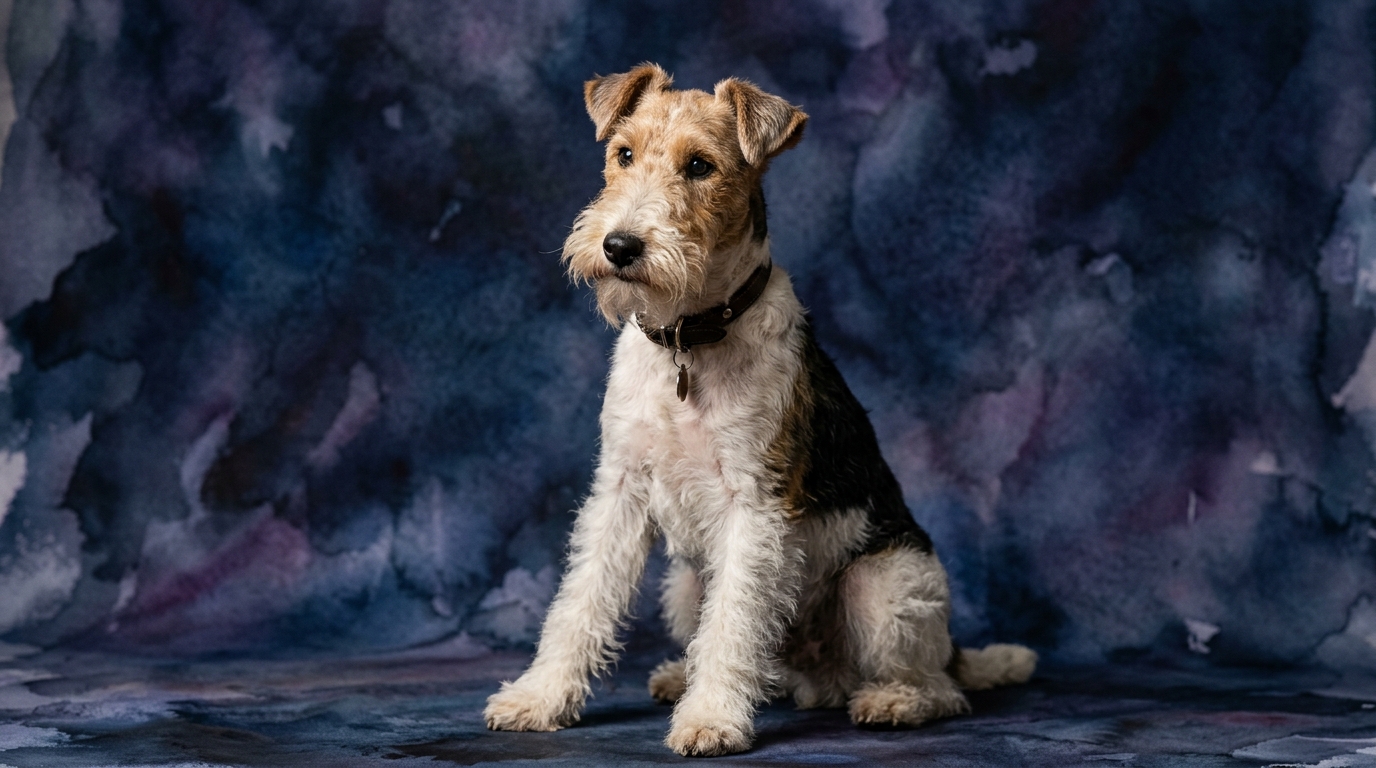

Side-by-Side IQ Profile: Wire Fox Terrier vs. Polish Lowland Sheepdog
The Cosmic Pet IQ Lab assesses canine intelligence across five critical dimensions, offering a nuanced view beyond simple obedience. For both the Wire Fox Terrier and the Polish Lowland Sheepdog, each dimension registers a solid 3/5, indicating competent and adaptable cognitive abilities, though their manifestations differ significantly due to their ancestral roles.
The Wire Fox Terrier’s Problem Solving ability (3/5) often manifests as resourceful ingenuity in pursuit. These dogs excel at strategizing how to access tight spaces, dig under obstacles, or outmaneuver small prey, demonstrating a quick, independent thought process when presented with a challenge that aligns with their drive. Their Training Speed (3/5) reflects a capacity to grasp new commands and routines effectively, but this is tempered by an independent streak and a strong prey drive that can lead to distractions. Success often depends on making training engaging and rewarding, tapping into their innate curiosity. Social Intelligence (3/5) in a Wire Fox Terrier involves keen observation of human cues, particularly when it comes to collaborative activities like games or walks, yet they can be assertive in their interactions with other dogs or when guarding resources. Their Instinctive Drive (3/5) is profoundly rooted in their terrier heritage, marked by an intense desire to hunt, dig, and bark, often with a tenacious focus on a perceived quarry. Memory (3/5) allows them to retain complex sequences of commands, remember specific locations of interest (like squirrel nests), and recall past interactions, both positive and negative, influencing future behavior.
The Polish Lowland Sheepdog’s Problem Solving ability (3/5) is typically expressed through their strategic approach to managing flocks. This includes cleverly navigating complex terrain to gather errant sheep, assessing environmental changes, and adapting their herding techniques, showcasing a thoughtful and methodical intellect. Their Training Speed (3/5) indicates a good aptitude for learning new tasks and commands, though they can sometimes exhibit a deliberate, almost contemplative, approach to processing information. Patience and consistent positive reinforcement are often more effective than demanding repetition, as they prefer to understand the 'why' behind a command. Social Intelligence (3/5) is a hallmark of the PONS, allowing them to read human emotions and intentions with remarkable accuracy, forming deep bonds with their family. They are also adept at understanding social dynamics within a household, though they can be reserved or watchful around strangers. Their Instinctive Drive (3/5) is primarily focused on herding and guarding. They possess a strong desire to keep their 'flock' (family) safe and accounted for, often exhibiting a watchful, protective nature and territorial awareness. Memory (3/5) enables them to recall intricate routines, remember specific members of their 'flock,' and retain a vast array of commands and spatial information vital for their working roles, allowing for consistent performance over time.
Where the Wire Fox Terrier Shines Cognitively
While both breeds hold similar scores, the Wire Fox Terrier's cognitive strengths distinctly emerge in scenarios demanding quick, independent decision-making and agile problem-solving within a dynamic environment. Their terrier lineage has honed an ability to rapidly assess a situation and devise an immediate course of action, particularly when it involves pursuit or navigating complex physical obstacles. This manifests as a superior quickness in reacting to stimuli, such as a scurrying critter, and an inventive knack for overcoming immediate barriers, like finding the weakest point in a fence or digging under a perceived barrier. Their problem-solving isn't about long-term strategy but rather instantaneous, effective improvisation to achieve a specific, often instinct-driven, goal.
Where the Polish Lowland Sheepdog Excels Cognitively
The Polish Lowland Sheepdog's cognitive advantages become apparent in situations requiring thoughtful observation, strategic planning, and nuanced social perception. Their herding background has cultivated a mind that can process multiple variables simultaneously, such as the positions of various 'flock' members and the overall goal of movement. This translates into a remarkable capacity for spatial awareness and the ability to anticipate outcomes, allowing them to make calculated decisions rather than impulsive ones. Their social intelligence also allows for a deeper understanding of group dynamics and human moods, enabling them to adapt their behavior to maintain harmony and fulfill their protective role more effectively. They excel at tasks requiring patience and a methodical approach to achieve a long-term objective.
Training: Wire Fox Terrier vs. Polish Lowland Sheepdog Responsiveness
When it comes to ease of training, the Wire Fox Terrier presents a different set of considerations compared to the Polish Lowland Sheepdog, primarily due to their intrinsic behavioral drivers. Wire Fox Terriers possess a quick wit and can learn commands rapidly, but their independent nature and strong prey drive mean they require constant engagement and creative training methods. They can become bored or distracted if training isn't stimulating or if they perceive a more interesting 'quarry' nearby. This often translates to a need for shorter, more frequent training sessions that feel like a game, coupled with robust impulse control exercises to manage their chase instincts. Their assertiveness also means they respond best to clear, consistent leadership, rather than harsh methods that can lead to stubbornness.
The Polish Lowland Sheepdog, conversely, often approaches training with a thoughtful earnestness and a desire to partner with their human. While they may not exhibit the same lightning-fast reactions as the terrier, their social intelligence and innate desire to work for their family can make them highly responsive to patient, positive reinforcement. They thrive on understanding the purpose behind a command and appreciate consistency. However, their reserved nature and tendency towards independent thought as a herding dog means they can appear stubborn if they don't understand the request or if the training lacks structure. They require a gentle, encouraging hand and ample time to process new information, ultimately leading to a deeply ingrained and reliable understanding of commands.
Ideal Owners: Active Pursuits vs. Thoughtful Companionship
The Wire Fox Terrier is an ideal match for active owners who thrive on outdoor adventures and appreciate a dog with boundless energy and a spirited personality. They require significant daily physical exercise that goes beyond a simple walk, benefiting greatly from vigorous play, structured agility, earthdog trials, or long hikes that allow them to explore and satisfy their natural curiosity. Their independent streak also means they need owners who are prepared to provide consistent mental stimulation to prevent boredom, which can lead to destructive behaviors. Owners who enjoy engaging in dog sports or who have the time and energy to channel the terrier's sharp wit and drive will find a highly rewarding companion.
The Polish Lowland Sheepdog, while also requiring substantial exercise, appeals to owners who value a thoughtful, devoted companion and are prepared for a consistent routine that includes purposeful activity. They excel with long, exploratory walks, herding activities, or obedience training that engages their mind and body. While they can be active, their energy is often more focused and less frenetic than a terrier's. They are well-suited for owners who appreciate a dog with a strong protective instinct, are committed to regular grooming of their shaggy coat, and can provide patient, consistent guidance. They thrive in homes where they feel like an integral part of the family, often preferring to be near their people after their exercise needs are met, making them suitable for owners who enjoy a blend of activity and relaxed companionship.
The Verdict
Choose the Wire Fox Terrier if you seek a bold, energetic companion for active pursuits, appreciate a dog with a strong, independent will, and can provide consistent, engaging training to channel their spirited drive.
Opt for the Polish Lowland Sheepdog if you desire a thoughtful, devoted companion willing to engage in structured activities, and can provide patient, consistent guidance while appreciating their natural guarding instincts and social sensitivity.
🧠 Find Your Pet's IQ Score
Our Pet IQ Lab assessment covers 25+ tests across 5 cognitive dimensions — personalized to your breed.
Take the Full IQ Test →Frequently Asked Questions
Are Wire Fox Terriers good family dogs?
Wire Fox Terriers can be excellent family dogs, especially with older children who understand their energetic play and boundaries. Their independent nature means they thrive with clear leadership, consistent socialization, and plenty of mental and physical stimulation.
Do Polish Lowland Sheepdogs bark a lot?
Polish Lowland Sheepdogs are naturally watchful guardians, so they may bark to alert their family to perceived threats or strangers approaching their territory. Consistent training and early socialization can help manage this instinct, teaching them appropriate times to vocalize.
How much exercise does each breed need?
Both breeds require significant daily exercise. Wire Fox Terriers thrive on vigorous play, structured walks, and digging opportunities to satisfy their prey drive, while Polish Lowland Sheepdogs benefit from long walks, purposeful activities, or dog sports that engage their herding instincts and thoughtful nature.