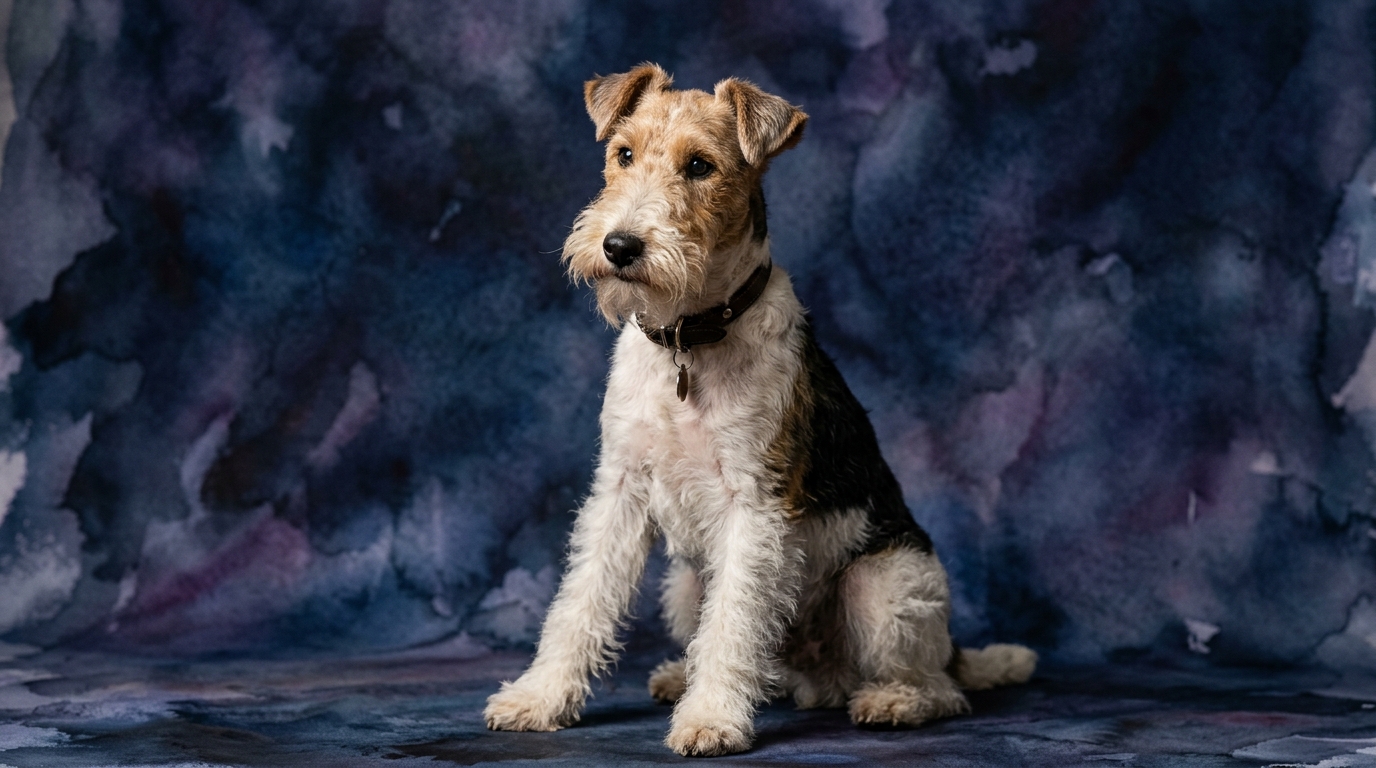

Side-by-Side IQ Profile: Unpacking the 3/5 Scores
The Cosmic Pet Pet IQ Lab evaluates canine intelligence across five key dimensions, each rated on a scale of 1 to 5. Both the Wire Fox Terrier and the Tibetan Terrier consistently score a 3/5 in every category, suggesting a baseline of moderate cognitive ability that is neither exceptional nor deficient. However, the *application* and *expression* of these scores are deeply informed by their respective breed histories and innate temperaments.
For Problem Solving (3/5), this indicates both breeds possess a moderate capacity to navigate new situations, overcome obstacles, and figure out how to achieve a goal. For the Wire Fox Terrier, this often translates to inventive strategies for pursuing small prey or escaping enclosures, a legacy of its terrier roots. For the Tibetan Terrier, problem-solving might manifest in understanding complex household routines or subtly manipulating situations to gain attention or comfort.
Training Speed (3/5) suggests that both breeds are capable of learning new commands and behaviors at a moderate pace, requiring consistent, clear instruction rather than rapid-fire assimilation. The Wire Fox Terrier’s learning speed is often tempered by its independent spirit and strong prey drive, meaning it learns quickly what it deems valuable. The Tibetan Terrier, while attentive to its family, can possess a streak of independent thought that requires patience and positive reinforcement to channel its moderate learning capacity effectively.
Social Intelligence (3/5) points to a moderate ability to understand and respond to human cues and social dynamics. The Wire Fox Terrier, while affectionate with its family, often displays a more independent social style, comfortable with its own company but also engaging playfully. The Tibetan Terrier, bred for companionship and watchfulness, typically exhibits a more nuanced social awareness within its family unit, often attuned to emotional shifts and household harmony, yet can be reserved with strangers.
Instinctive Drive (3/5) signifies a moderate level of innate, hardwired behaviors. For the Wire Fox Terrier, this score strongly reflects its deep-seated terrier instincts for digging, chasing, and vocalizing, remnants of its pest control heritage. These drives are not overwhelming but require appropriate outlets. The Tibetan Terrier's 3/5 instinctive drive leans more towards its historical role as a companion and guardian, manifesting in alertness, territorial awareness, and a strong desire to be near its people, rather than intense prey pursuit. This drive contributes to its role as an excellent alert system.
Finally, Memory (3/5) indicates a moderate ability to recall past experiences, learned commands, and routines. Both breeds can remember training, household rules, and specific people or places. For the Wire Fox Terrier, memory aids its hunting strategies and ability to navigate familiar territories. For the Tibetan Terrier, memory underpins its strong bond with family, its recall of preferred routines, and its ability to distinguish between familiar and unfamiliar visitors.
Where the Wire Fox Terrier's Cognition Shines
Despite identical numerical scores, the Wire Fox Terrier’s cognitive strengths are distinctly colored by its terrier lineage. Its 3/5 in problem-solving is often applied with a tenacious, single-minded focus when presented with a challenge related to its innate drives. Imagine a Wire Fox Terrier faced with a puzzle toy: its moderate problem-solving capacity, combined with a strong instinctive drive to 'get' the reward, often results in persistent, inventive attempts. This isn't necessarily a faster solution, but a more determined and physically engaged approach to figuring things out. Their moderate memory also aids in recalling successful strategies for hunting or navigating complex terrain, making them adept at remembering where 'treasure' might be hidden or how to outmaneuver a perceived obstacle. Their social intelligence, while moderate, allows them to quickly assess which humans are most likely to engage in playful antics or outdoor adventures, aligning their social interactions with their energetic disposition.
Where the Tibetan Terrier's Cognition Excels
The Tibetan Terrier, while sharing the same 3/5 scores, demonstrates cognitive strengths that align with its role as a revered companion and watchdog. Its moderate social intelligence is often expressed with greater sensitivity and a deeper understanding of household dynamics. A Tibetan Terrier might use its 3/5 problem-solving to subtly communicate its needs or desires to its owner, perhaps by strategically placing a toy or nudging a hand, rather than through boisterous demands. Their memory (3/5) supports their strong attachment to routines and people, allowing them to recall specific family members' habits and preferences, fostering a sense of security and predictability within the home. This moderate memory is also crucial for their role as an alert dog, remembering who belongs and who doesn't. Their instinctive drive, while also 3/5, is channeled more towards vigilance and protective instincts rather than prey pursuit, making them astute observers of their environment and quick to alert their family to anything unusual.
Training Dynamics: A Tale of Two Approaches
With both breeds scoring 3/5 in training speed, neither is inherently 'easier' to train, but the *approach* required for success differs significantly due to their underlying temperaments and drives. The Wire Fox Terrier's moderate training speed is often challenged by its independent nature and high instinctive drive. They learn quickly, but often on their own terms, requiring an owner who can make training feel like an engaging game or a challenging puzzle. Their tenacious spirit means they might test boundaries, necessitating consistent, firm, and positive reinforcement-based methods. Distractions, especially those that trigger their prey drive, can make focused training sessions challenging. Success with a Wire Fox Terrier often comes from owners who understand how to channel their energy and intelligence into productive tasks, preventing boredom and destructive behaviors.
The Tibetan Terrier, despite the same 3/5 training speed, often responds well to training that is built on a foundation of trust and companionship. While they can be independent thinkers and possess a moderate stubborn streak, their strong social intelligence and desire to be part of the family make them generally more amenable to obedience work when motivated by praise and connection. Their moderate instinctive drive means they are less likely to be derailed by external stimuli compared to a terrier. However, their sensitivity means harsh corrections are counterproductive, potentially leading to withdrawal. Owners need patience and a gentle, consistent hand, focusing on positive reinforcement to encourage their moderate learning pace and build a willing partnership.
Matching Breeds to Lifestyles: Active vs. Relaxed Owners
The Wire Fox Terrier is undeniably a breed for active owners. Its moderate instinctive drive, combined with its boundless energy and moderate problem-solving capacity, means it thrives on vigorous daily exercise, mental challenges, and opportunities to explore. Owners who enjoy long walks, hiking, structured play, or canine sports like agility will find a willing and enthusiastic partner. A Wire Fox Terrier needs an outlet for its terrier instincts, such as supervised digging or interactive toys that challenge its problem-solving. This breed is not content to be a couch potato; boredom can quickly lead to destructive behaviors, requiring an owner committed to engaging its body and mind consistently.
The Tibetan Terrier, while active and playful, is more adaptable and generally suits both moderately active and somewhat relaxed owners, provided their needs for companionship and mental engagement are met. They enjoy daily walks, playtime in a secure yard, and thrive on being an integral part of family activities. Their moderate social intelligence means they are content to be near their people, observing and participating. While they appreciate exercise, they don't typically demand the high-octane physical output of a terrier. Owners who enjoy regular, but not extreme, outdoor activities, and who prioritize companionship and indoor interaction will find the Tibetan Terrier a fulfilling match. They adapt well to apartment living if their exercise and social needs are consistently met, making them suitable for owners who might not lead an intensely active outdoor lifestyle but can provide consistent mental stimulation and affection.
The Verdict
Choose the Wire Fox Terrier if you are an active, experienced owner who enjoys engaging a dog with a tenacious spirit, providing ample physical and mental challenges that align with its strong terrier drives.
Opt for the Tibetan Terrier if you seek a sensitive, companion-oriented dog that thrives on family interaction, can adapt to a moderately active lifestyle, and offers a nuanced social presence without extreme athletic demands.
🧠 Find Your Pet's IQ Score
Our Pet IQ Lab assessment covers 25+ tests across 5 cognitive dimensions — personalized to your breed.
Take the Full IQ Test →Frequently Asked Questions
Do Wire Fox Terriers and Tibetan Terriers have the same intelligence?
Based on The Cosmic Pet Pet IQ Lab's five dimensions (Problem Solving, Training Speed, Social Intelligence, Instinctive Drive, Memory), both breeds score an identical 3/5 across the board. However, the practical application and manifestation of these scores differ significantly due to their distinct historical roles and temperaments.
Which breed is better for first-time dog owners?
Neither breed is typically recommended for absolute first-time owners without a strong commitment to training and understanding breed-specific needs. However, the Tibetan Terrier's more adaptable nature and focus on companionship might be slightly more manageable than the Wire Fox Terrier's intense terrier drives, which often require experienced handling.
How do their problem-solving skills differ despite the same IQ score?
Both score 3/5 in problem-solving, but the Wire Fox Terrier often applies this with determined physical tenacity, typically towards prey-related challenges or escaping. The Tibetan Terrier might use its problem-solving more subtly for social manipulation or understanding complex household routines, reflecting its companion and watchdog heritage.