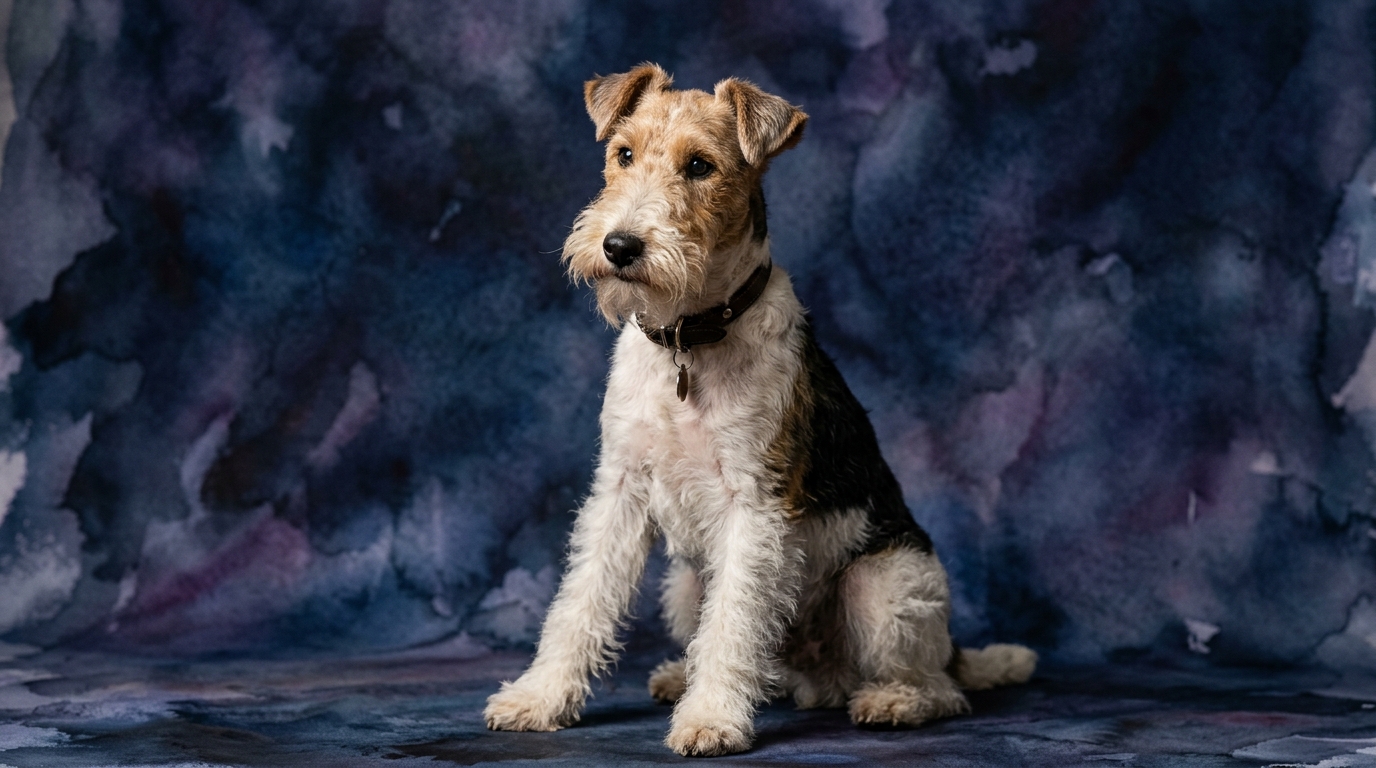
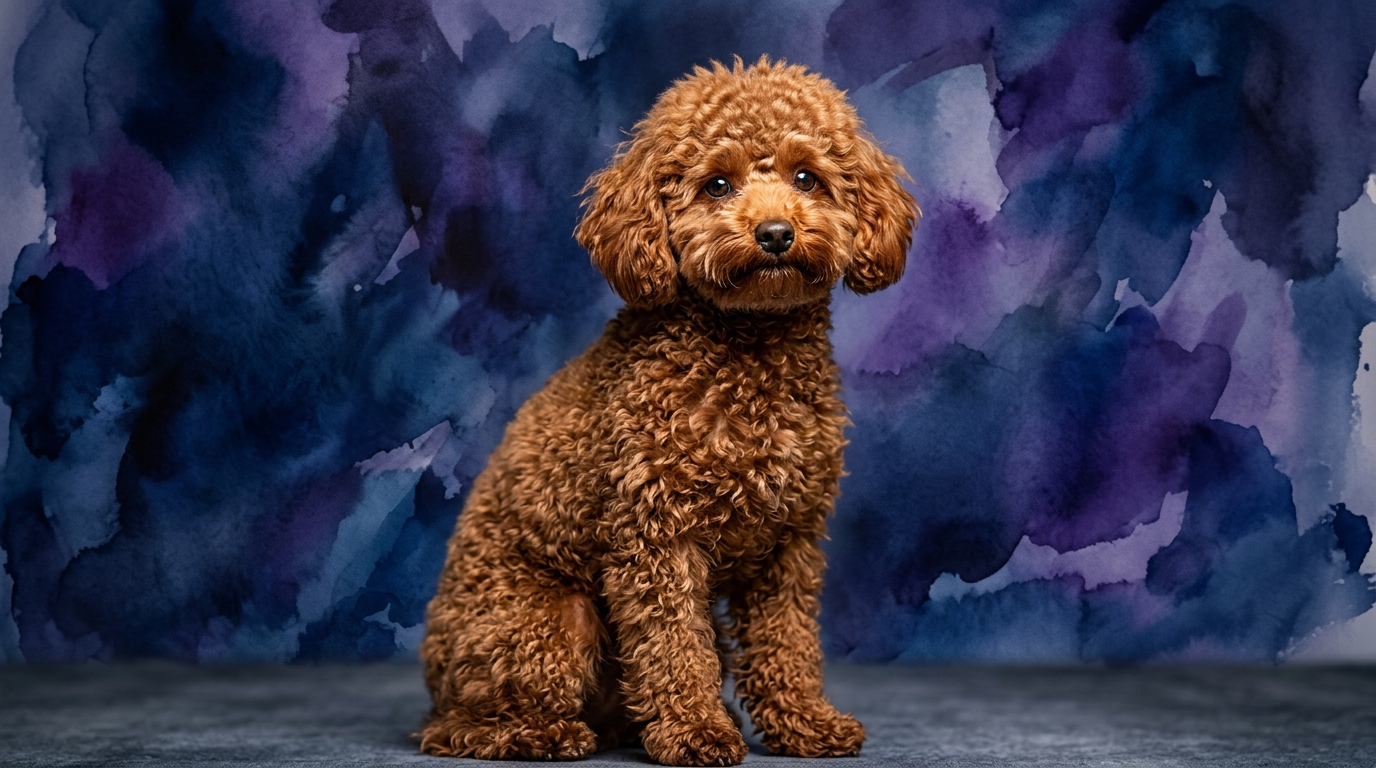
Side-by-Side IQ Profile: Wire Fox Terrier vs. Toy Poodle
The Cosmic Pet Pet IQ Lab employs a multi-dimensional approach to assess canine intelligence, moving beyond single scores to reveal a richer cognitive picture. For the Wire Fox Terrier, we observe a balanced yet tenacious mind, while the Toy Poodle showcases a highly trainable and quick-witted intellect.
The Wire Fox Terrier, a robust member of the Terrier group, is not ranked on the Coren intelligence scale, reflecting a different set of cognitive priorities honed over generations. Its Problem Solving ability is rated at 3/5, suggesting a capacity for independent thought and figuring out moderately complex challenges, often through trial and error or sheer persistence. Training Speed also stands at 3/5, indicating they can learn commands and routines but may require consistent, engaging methods to maintain focus. Social Intelligence is 3/5, meaning they can read human cues and adapt to social situations, though their independent streak might sometimes overshadow their desire to please. Instinctive Drive is a solid 3/5, pointing to a well-developed prey drive and natural curiosity. Finally, Memory is 3/5, enabling them to retain learned behaviors and recognize familiar patterns over time.
In stark contrast, the Toy Poodle, a refined member of the Toy group, holds an impressive Coren rank of #2, placing it among the most responsive breeds to human instruction. Its Problem Solving score is an exceptional 5/5, indicating a strong capacity for abstract thought, understanding complex sequences, and quickly navigating novel situations. Training Speed is also 5/5, signifying an eagerness and ability to grasp new commands with minimal repetition, making them highly receptive students. Social Intelligence is 3/5, showing they are capable of understanding and responding to human emotions and social cues, though perhaps not as overtly people-centric as some other breeds. Instinctive Drive, at 3/5, reflects a moderate level of natural instincts, less focused on prey drive and more adaptable to companionship. Memory is an outstanding 5/5, allowing them to recall a vast repertoire of commands, routines, and experiences with remarkable accuracy over extended periods.
Where the Wire Fox Terrier Wins Cognitively
While the Toy Poodle excels in traditional measures of obedience and problem-solving, the Wire Fox Terrier's balanced cognitive profile offers distinct advantages in specific contexts. Its 3/5 Problem Solving, combined with a tenacious spirit, means a Wire Fox Terrier is less likely to give up on a task, even if it’s not immediately apparent how to succeed. This persistence translates into a dog that can independently explore and overcome environmental challenges, such as navigating a complex backyard or figuring out how to retrieve a toy from an unusual spot, without constant human intervention.
Their 3/5 Instinctive Drive also means they possess a robust internal motivation. Unlike some breeds that rely heavily on human direction, a Wire Fox Terrier can be self-directed in their activities, finding satisfaction in scent work, digging, or chasing, even if not explicitly trained to do so. This independent drive, while sometimes challenging to manage, means they are less prone to boredom if left to their own devices for short periods, provided they have appropriate outlets for their terrier instincts. Their relatively even scores across all dimensions suggest a resilient, adaptable mind capable of handling a variety of real-world scenarios with a pragmatic, hands-on approach.
Where the Toy Poodle Wins Cognitively
The Toy Poodle's cognitive strengths are particularly evident in areas demanding rapid acquisition of knowledge and complex mental manipulation. Their 5/5 Problem Solving ability means they can quickly analyze new situations, understand abstract concepts, and devise effective strategies, whether it's opening a complicated puzzle toy or figuring out a new agility course. This makes them exceptional candidates for advanced training and dog sports.
Coupled with their 5/5 Training Speed and 5/5 Memory, Toy Poodles demonstrate an unparalleled capacity for learning and retention. They can master a wide array of commands, tricks, and multi-step routines with remarkable efficiency, often requiring only a few repetitions to solidify a new behavior. This superior memory allows them to perform complex sequences reliably, even after long breaks, making them highly versatile for roles ranging from performance sports like obedience and rally to assistance work, where precise and consistent execution is paramount. Their cognitive agility enables them to adapt swiftly to new commands or environmental changes during training.
Which Is Easier to Train and Why
Based on their IQ profiles, the Toy Poodle is demonstrably easier to train than the Wire Fox Terrier. The Toy Poodle's 5/5 Training Speed means they grasp new concepts and commands with exceptional rapidity, often needing only a few repetitions before a behavior is learned. Their 5/5 Memory ensures these lessons are retained long-term, leading to reliable performance. For instance, a Toy Poodle can often learn a new trick like 'spin' or 'weave' in a single session, and recall it weeks later without significant review.
In contrast, the Wire Fox Terrier's 3/5 Training Speed suggests a more moderate pace of learning. While capable, they may require more consistent repetition and highly engaging, varied training sessions to prevent boredom and maintain focus. Their 3/5 Instinctive Drive, which includes a strong prey drive, means they might be more easily distracted by environmental stimuli like scents or moving objects, diverting their attention from the task at hand. Therefore, while a Wire Fox Terrier can certainly be well-trained, it typically demands more patience, creativity, and a firmer understanding of terrier motivation from the owner to achieve comparable results to a Toy Poodle.
Which Suits Active Owners vs. Relaxed Owners
The Wire Fox Terrier's cognitive profile, particularly its balanced instinctive drive and independent problem-solving, makes it an ideal companion for active owners who appreciate a dog with a robust personality and a need for mental engagement through activity. Owners who enjoy outdoor adventures, such as hiking, earthdog trials, or agility, and who are prepared to channel a keen prey drive and curiosity, will find a Wire Fox Terrier a rewarding partner. Their tenacity means they enjoy tasks that require persistence, and they thrive with structured activities that challenge both their body and mind, preventing boredom-induced behaviors.
The Toy Poodle, with its exceptional training speed and problem-solving abilities, is highly adaptable and can suit a wider range of owners, including those with both active and more relaxed lifestyles. For active owners, a Toy Poodle can excel in dog sports like obedience, agility, and even advanced trick training, thriving on the mental stimulation and the opportunity to work closely with their human. For more relaxed owners, their eagerness to please and quick learning means they can be content with regular walks and interactive play, provided their cognitive needs are met through puzzle toys, training sessions, and social interaction. They are less driven by primal instincts and more by a desire for companionship and engagement with their family.
The Verdict: When to Choose Each
The Verdict
Choose the Wire Fox Terrier if you are an active, experienced owner who appreciates a dog with an independent, tenacious spirit, and you are prepared to channel their strong instinctive drives into engaging activities.
Opt for the Toy Poodle if you seek a highly trainable, versatile companion eager to learn and excel in various activities, suitable for both active pursuits and a more relaxed, companion-focused lifestyle.
🧠 Find Your Pet's IQ Score
Our Pet IQ Lab assessment covers 25+ tests across 5 cognitive dimensions — personalized to your breed.
Take the Full IQ Test →Frequently Asked Questions
Are Wire Fox Terriers difficult to train?
Wire Fox Terriers are not necessarily difficult, but their 3/5 Training Speed and independent nature mean they require consistent, engaging, and patient training methods. They may learn at a slower pace and need more motivation than some other breeds due to their strong instinctive drives.
Can Toy Poodles be good for dog sports?
Absolutely. With 5/5 scores in Problem Solving, Training Speed, and Memory, Toy Poodles are exceptionally well-suited for a variety of dog sports, including obedience, agility, rally, and even scent work. They thrive on the mental and physical challenge and the opportunity to work closely with their owners.
Which breed is more independent?
The Wire Fox Terrier tends to be more independent, driven by its 3/5 Instinctive Drive and propensity for self-directed problem-solving. Toy Poodles, while capable of independent thought, often show a stronger desire to engage with and please their human companions, making them less independent in their daily activities.