
Side-by-Side IQ Profile: Sporting vs. Terrier Minds
The Cosmic Pet Pet IQ Lab assesses five crucial dimensions of canine intelligence, and both the Wirehaired Pointing Griffon and the Bedlington Terrier register a consistent 3/5 across the board. However, this numerical equality belies profound differences in how these breeds apply their cognitive faculties, rooted deeply in their original purposes. For the Wirehaired Pointing Griffon, a dog meticulously bred for versatile hunting, their Problem Solving (3/5) often manifests as strategic thinking in the field—deciphering scent trails, navigating complex terrain to flush game, or executing a silent retrieve from water. Their Training Speed (3/5) reflects an ability to quickly grasp multi-step hunting commands and adapt to varying field conditions, driven by a desire to work cooperatively with their handler. Social Intelligence (3/5) in a Griffon typically involves a strong bond with their human hunting partner, reading cues, and understanding the dynamics of a working team. Their Instinctive Drive (3/5) is powerfully geared towards pointing and retrieving, a highly focused and persistent prey drive. Memory (3/5) for a Griffon means recalling specific locations of game, learned commands, and the layout of hunting grounds.
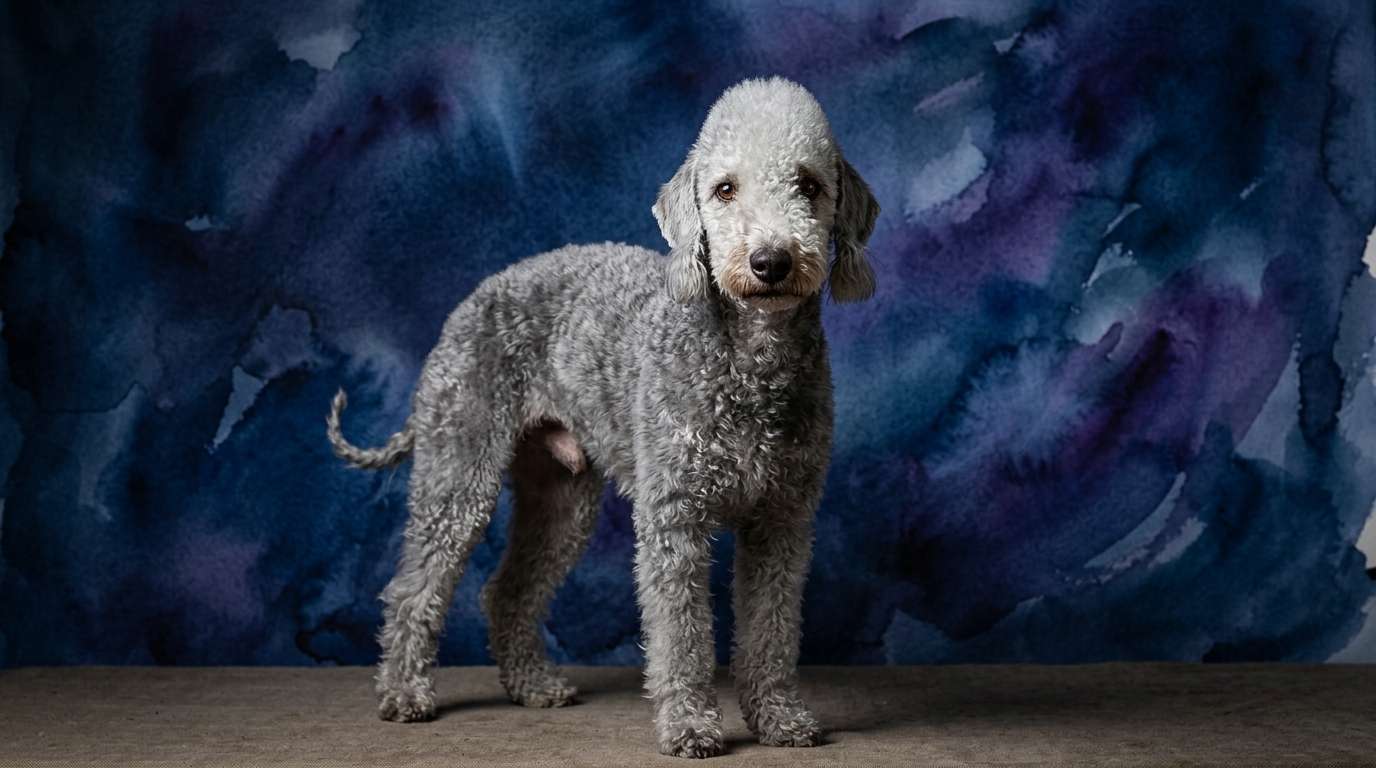
Conversely, the Bedlington Terrier, originally developed as a nimble and tenacious vermin hunter, expresses its 3/5 scores quite differently. Their Problem Solving (3/5) often involves independent strategizing to locate and dispatch small prey, navigating confined spaces like burrows, or finding creative solutions to obstacles. Training Speed (3/5) for a Bedlington might mean a quick uptake of agility routines or specific tasks related to their terrier work, though their independent streak can sometimes influence their willingness to perform. Their Social Intelligence (3/5) usually centers on family dynamics, understanding household rules, and forming deep, if sometimes selective, bonds with their human companions. The Bedlington's Instinctive Drive (3/5) is characterized by a potent, often single-minded, drive to chase and dig for small quarry, showcasing remarkable persistence. Memory (3/5) for this breed often relates to remembering routines, territorial boundaries, and specific hiding spots for their 'prey' (toys or perceived intruders).
Where the Wirehaired Pointing Griffon Excels Cognitively
Given their heritage, the Wirehaired Pointing Griffon typically shows a cognitive edge in tasks requiring sustained focus within open, dynamic environments and collaborative problem-solving. Their Problem Solving (3/5) shines brightest when the challenge involves complex sequences of actions with a human partner, such as a multi-stage retrieve across varied terrain, where they must assess distance, obstacles, and the best path to return game. This collaborative aspect is deeply ingrained, making them adept at interpreting subtle human signals and adjusting their actions accordingly, a testament to their Social Intelligence (3/5).
Furthermore, their Memory (3/5) is particularly strong for spatial recall over large areas, remembering where game was last seen or where they’ve successfully retrieved before. This makes them highly efficient in field work. Their Training Speed (3/5), while numerically similar, often translates into a quicker mastery of intricate obedience commands that form part of a larger 'working' protocol, benefiting from their inherent desire to please and participate in a team effort. The Griffon's Instinctive Drive (3/5) for pointing and retrieving provides a powerful, natural motivation for structured training scenarios, making them particularly receptive to learning tasks that align with their breed purpose.
Where the Bedlington Terrier Excels Cognitively
The Bedlington Terrier, with its terrier grit and independent spirit, demonstrates distinct cognitive strengths, particularly in scenarios demanding self-reliance and quick, decisive action. Their Problem Solving (3/5) is particularly effective in situations requiring cunning and adaptability, such as figuring out how to access a hidden toy or navigating a complex indoor environment. They excel at independent thought, often preferring to tackle challenges without constant human direction, a hallmark of their terrier nature.
Their Instinctive Drive (3/5) for chasing and digging fuels a remarkable tenacity, translating into cognitive persistence when faced with a puzzle or a perceived 'prey' item. This drive, combined with their Memory (3/5) for routines and patterns, makes them excellent at remembering where specific items are stored or the most efficient way to achieve a goal. While their Social Intelligence (3/5) might not always manifest as eager cooperation in formal training, it makes them exceptionally perceptive within a family unit, often understanding unspoken cues and household dynamics with a subtle, discerning awareness. Their Training Speed (3/5) is high for tasks that engage their natural prey drive or agility, allowing them to rapidly learn complex sequences that require swift physical and mental coordination.
Training Dynamics: Cooperation vs. Independence
When considering ease of training, the Wirehaired Pointing Griffon and Bedlington Terrier present differing experiences, even with identical Training Speed (3/5) scores. The Griffon’s strong Social Intelligence (3/5) and innate desire to work collaboratively with a human partner generally make them more straightforward to train for obedience and complex field commands. They tend to be eager to please and respond well to positive reinforcement, viewing training as a shared activity. Their Problem Solving (3/5) in this context is often directed towards understanding what their handler wants and figuring out how to achieve it in partnership, which translates to a more fluid training process for team-oriented tasks.
The Bedlington Terrier, while possessing a comparable Training Speed (3/5), often approaches training with a more independent mindset, rooted in their breed’s self-sufficient hunting role. Their Problem Solving (3/5) might be more geared towards achieving their *own* goals, which means trainers need to be creative and consistent, demonstrating how desired behaviors benefit the terrier directly. Their strong Instinctive Drive (3/5) for chasing and digging can sometimes override their desire to comply with commands if not properly channeled. Training a Bedlington requires patience, a firm but fair hand, and an understanding that they are not always motivated by pleasing their owner alone, but by engaging their own sharp minds and instincts. They learn quickly, but often on their own terms, requiring motivation tailored to their terrier spirit.
Owner Suitability: Active Outdoor Pursuits vs. Energetic Companionship
The cognitive profiles and inherent drives of these two breeds dictate different ideal owner lifestyles. The Wirehaired Pointing Griffon, with its robust Instinctive Drive (3/5) for hunting and cooperative Social Intelligence (3/5), thrives with active owners who enjoy outdoor pursuits. They require substantial daily exercise that engages both their bodies and minds, often benefiting from activities like hiking, swimming, or participating in dog sports such as scent work or dock diving. Owners who can provide opportunities for the Griffon to utilize its Problem Solving (3/5) and Memory (3/5) in a structured, stimulating way – perhaps through 'hunting' for hidden toys or complex obstacle courses – will see this breed flourish. They are a suitable match for individuals or families looking for a dedicated partner in adventure and mental engagement.
The Bedlington Terrier, while also energetic, fits a slightly different niche. Their Problem Solving (3/5) and Instinctive Drive (3/5) make them excellent companions for owners who appreciate a dog with a sharp, independent mind and a penchant for bursts of activity. While they need regular exercise to channel their energy and prevent boredom, their needs might be met with vigorous play sessions, brisk walks, or agility training rather than sustained, all-day outdoor excursions. Owners who enjoy engaging in mental games, puzzle toys, and consistent training to channel the Bedlington’s independent spirit will find a rewarding companion. They can adapt well to various living situations, including apartments, provided their mental and physical stimulation needs are consistently met, making them suitable for owners who can dedicate time to focused engagement rather than endless mileage.
The Verdict
Choose the Wirehaired Pointing Griffon if you seek a highly cooperative, adaptable companion for extensive outdoor adventures and enjoy engaging in team-oriented cognitive challenges.
Opt for the Bedlington Terrier if you appreciate an independent, cunning companion with bursts of energy and are prepared to engage a sharp mind with creative training and mental puzzles.
🧠 Find Your Pet's IQ Score
Our Pet IQ Lab assessment covers 25+ tests across 5 cognitive dimensions — personalized to your breed.
Take the Full IQ Test →Frequently Asked Questions
Do Wirehaired Pointing Griffons need a lot of mental stimulation?
Yes, their Problem Solving (3/5) and Memory (3/5) are geared towards complex tasks, requiring consistent mental engagement beyond just physical exercise. Activities like scent work, puzzle toys, and advanced obedience training are highly beneficial for a Griffon.
Are Bedlington Terriers good at learning tricks?
Absolutely, with a Training Speed (3/5) that allows them to pick up new behaviors quickly and Problem Solving (3/5) for figuring out novel actions. Their independent nature means motivation needs to be compelling, but they enjoy the challenge and mental engagement of learning tricks.
How do their Instinctive Drives differ in a home environment?
A Griffon's Instinctive Drive (3/5) may manifest as a strong interest in birds or retrieving thrown objects, often bringing items to you. A Bedlington Terrier's Instinctive Drive (3/5) might lead to more digging in the yard, chasing small critters (squirrels, mice), and a keen interest in exploring small spaces.