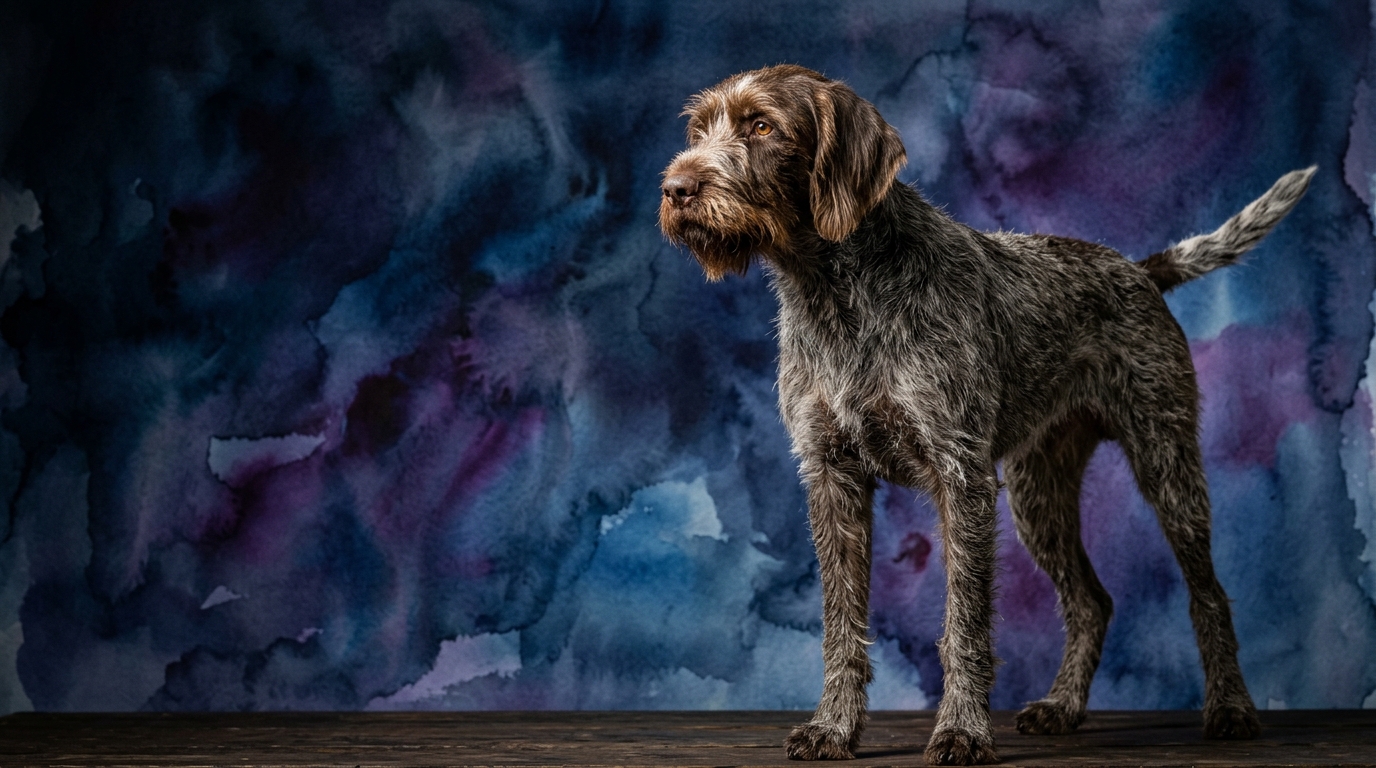
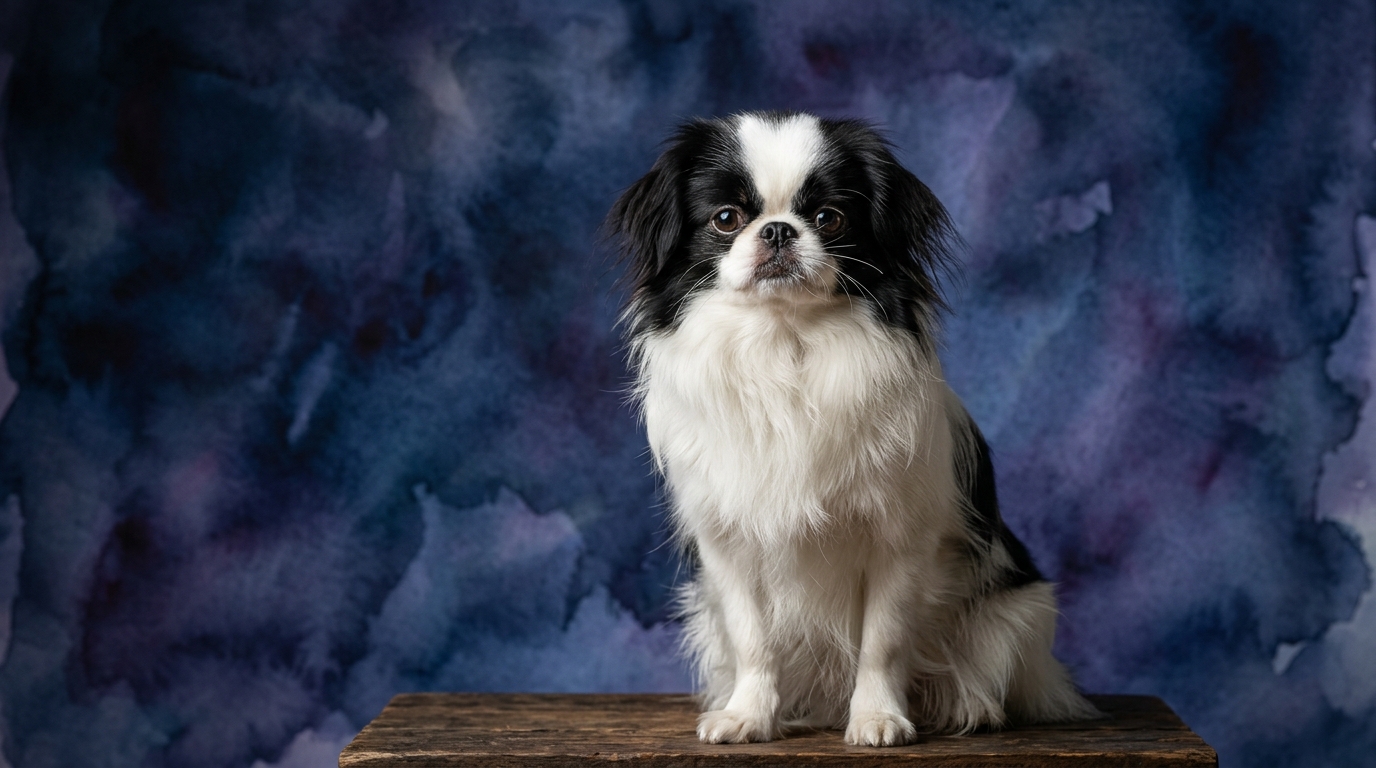
Side-by-Side IQ Profile: Wirehaired Pointing Griffon vs. Japanese Chin
The Cosmic Pet Pet IQ Lab evaluates canine intelligence across five key dimensions, and remarkably, both the Wirehaired Pointing Griffon and the Japanese Chin score an identical 3/5 in each category. While the raw scores are the same, the application and manifestation of these cognitive abilities differ significantly due to their distinct breed histories and purposes.
For the **Wirehaired Pointing Griffon**, a sporting breed, a **Problem Solving (3/5)** score indicates an ability to navigate complex environmental challenges, particularly those encountered in field work. Griffons excel at figuring out how to retrieve game from difficult terrain or how to track scents through varied landscapes, requiring sequential thought and adaptation to changing conditions. Their **Training Speed (3/5)** suggests a moderate pace for acquiring new commands, often driven by their desire to cooperate with their handler, with success hinging on consistent, positive reinforcement and channeling their natural hunting instincts into structured tasks. **Social Intelligence (3/5)** means they exhibit a moderate understanding of human cues and pack dynamics, forming strong bonds and being attuned to their family's emotional state, which allows for effective communication during cooperative tasks. Their **Instinctive Drive (3/5)** manifests as a strong inclination to hunt, point, and retrieve, providing a consistent engine for learning and performing tasks that align with their genetic predispositions. Finally, their **Memory (3/5)** demonstrates solid recall for learned commands, locations of game, and the routines of their human companions, crucial for retaining complex hunting patterns.
The **Japanese Chin**, a toy breed, interprets these same scores through a different lens. Their **Problem Solving (3/5)** often translates to navigating the intricacies of a domestic environment and understanding human social structures, adeptly figuring out how to gain attention, manipulate objects to their advantage, or find comfortable, hidden napping spots within the home. **Training Speed (3/5)** means Chins learn at a moderate pace, thriving on gentle, positive methods and short, engaging sessions, propelled by their desire for human approval and the promise of affection or small rewards. Their **Social Intelligence (3/5)** allows them to excel in discerning subtle human moods and adapting their behavior accordingly, making them highly responsive companions capable of forming deep, empathetic connections. The Chin’s **Instinctive Drive (3/5)** is geared towards companionship and interaction, expressed through playful antics, charming behaviors, and a strong desire to be near their people, fueling their engagement in social routines. Their **Memory (3/5)** exhibits good recall for routines, favored people, and past interactions, remembering where treats are stored and the schedules of their family.
Where the Wirehaired Pointing Griffon Wins Cognitively
The Wirehaired Pointing Griffon's cognitive strengths are deeply rooted in its purpose as a versatile hunting dog, making it particularly adept in scenarios demanding environmental awareness and sustained focus. Its 3/5 problem-solving manifests powerfully in outdoor environments, where it must quickly assess changing scent patterns, navigate varied terrain, and locate game with precision. This involves complex spatial reasoning and a capacity to adapt strategies on the fly, a cognitive demand less frequently placed on a purely companion breed. The Griffon's ability to process and react to a dynamic, natural world with purpose and efficiency is a distinct cognitive advantage.
Furthermore, the Griffon's instinctive drive, also rated 3/5, fuels a specific type of cognitive engagement: the sustained pursuit of a goal in a dynamic, natural setting. This isn't merely about physical stamina but also about mental endurance – maintaining concentration over long periods, processing sensory information, and making independent decisions in the field. While the Japanese Chin's instinctive drive focuses on social interaction, the Griffon's directs its cognitive resources towards a more externally-focused, task-oriented intelligence crucial for its working role. Its memory of 3/5 supports recalling complex scent trails and previously learned hunting patterns, a skill set that requires a different kind of memory application than remembering household routines.
Where the Japanese Chin Wins Cognitively
The Japanese Chin, despite matching the Griffon's raw scores, demonstrates a distinct cognitive superiority in the nuanced realm of social intelligence and domestic adaptability. Its 3/5 social intelligence is often expressed through an exceptional ability to interpret subtle human body language, vocal inflections, and emotional states, allowing it to tailor its responses with remarkable precision. This keen awareness fosters a profound level of companionship, where the Chin can anticipate needs or offer comfort, a cognitive skill refined through generations of close human interaction within a home setting.
Their problem-solving capabilities, also rated 3/5, are uniquely applied to navigating complex social dynamics and optimizing their position within the household structure. This might involve strategizing how to secure a prime lap spot, manipulating toys to initiate play, or discerning the most opportune moment to solicit attention. While a Griffon solves problems in the field, a Chin excels at solving "people problems" – understanding the intricacies of human schedules, preferences, and moods, and using this knowledge to achieve desired outcomes. Their memory of 3/5 is particularly strong in recalling specific human interactions and routines, which is vital for maintaining harmony in a domestic environment.
Which is Easier to Train and Why
When considering ease of training, both breeds present unique considerations despite their identical 3/5 training speed rating, stemming from their inherent behavioral differences and motivational structures. The Wirehaired Pointing Griffon, with its strong instinctive drive and desire to cooperate in tasks, often responds well to training that is structured, consistent, and directly linked to its natural aptitudes. They thrive on clear commands and positive reinforcement, particularly when the training exercises mimic elements of hunting or problem-solving. However, their independent streak and high energy mean that training sessions must be engaging and varied to prevent boredom or distraction. A Griffon requires an owner who can channel its substantial drive into productive learning, otherwise, its problem-solving and memory might be applied to less desirable, self-directed pursuits.
The Japanese Chin, while equally capable of learning at a moderate pace, requires a much more sensitive and gentle approach due to its delicate nature and strong attachment to its people. Their training success often relies on short, frequent sessions filled with positive reinforcement, praise, and high-value treats. Harsh corrections or prolonged, repetitive drills can quickly lead to disengagement or anxiety. Their social intelligence means they are highly attuned to their trainer's mood, making a calm and patient demeanor essential. House-training can sometimes be a particular challenge for Chins, requiring immense consistency and positive reinforcement, as their small size and preference for comfort can make them less inclined to venture outside in inclement weather. Therefore, "easier" is relative: the Griffon responds to a working partnership, while the Chin thrives on a gentle, affectionate bond.
Which Suits Active Owners vs. Relaxed Owners
The choice between a Wirehaired Pointing Griffon and a Japanese Chin largely depends on an owner's lifestyle and their capacity for providing mental and physical stimulation. The Griffon is unequivocally suited for active owners who relish outdoor adventures and have ample time for consistent engagement. Their 3/5 instinctive drive and problem-solving abilities demand regular outlets, whether through hunting, long hikes, agility training, or complex scent work. An owner who can provide several hours of vigorous activity daily, coupled with structured training, will find the Griffon to be a cooperative and fulfilled companion. Without sufficient mental and physical challenge, a Griffon's substantial energy and cognitive capacity can lead to boredom and destructive behaviors.
Conversely, the Japanese Chin is an ideal match for more relaxed owners who appreciate companionship and indoor activities. While they enjoy short walks and playful romps, their exercise needs are significantly lower than those of a sporting breed. Their social intelligence and memory make them excellent housemates, content to observe and interact from the comfort of a lap or a soft bed. Owners who work from home, retirees, or those living in apartments will find the Chin's moderate energy levels and strong desire for close human contact perfectly aligned with their lifestyle. Their cognitive strengths are best utilized in understanding household routines, engaging in gentle play, and providing empathetic companionship, rather than demanding physical feats.
The Verdict
Choose the Wirehaired Pointing Griffon if you are an active, outdoors-oriented individual or family seeking a cooperative partner for adventures, willing to invest in consistent training and ample exercise. This breed thrives when its natural drives and problem-solving skills are harnessed in a working or sporting capacity.
Opt for the Japanese Chin if you desire a sensitive, charming companion best suited for a relaxed, indoor lifestyle, where close human interaction and gentle mental stimulation are prioritized. This breed excels at providing affectionate companionship and adapting to a calm household environment.
🧠 Find Your Pet's IQ Score
Our Pet IQ Lab assessment covers 25+ tests across 5 cognitive dimensions — personalized to your breed.
Take the Full IQ Test →Frequently Asked Questions
Do Wirehaired Pointing Griffons need a large yard?
While a large yard is beneficial for a Griffon to burn off some energy, it's not a substitute for consistent, structured exercise and mental stimulation. Their cognitive needs for problem-solving and instinctive drive require engagement beyond mere space, such as field work, long walks, or training sessions.
Are Japanese Chins good with children?
Japanese Chins can be good with older, respectful children who understand how to interact gently with a small, delicate dog. Their social intelligence allows them to adapt, but their sensitive nature means they may not tolerate rough play, making supervision crucial.
How much mental stimulation does each breed need daily?
A Wirehaired Pointing Griffon requires significant mental stimulation daily, often 1-2 hours of engaging activities like training, puzzle toys, or scent work, alongside physical exercise. A Japanese Chin benefits from 30-60 minutes of gentle mental engagement through interactive play, short training sessions, or social interaction.