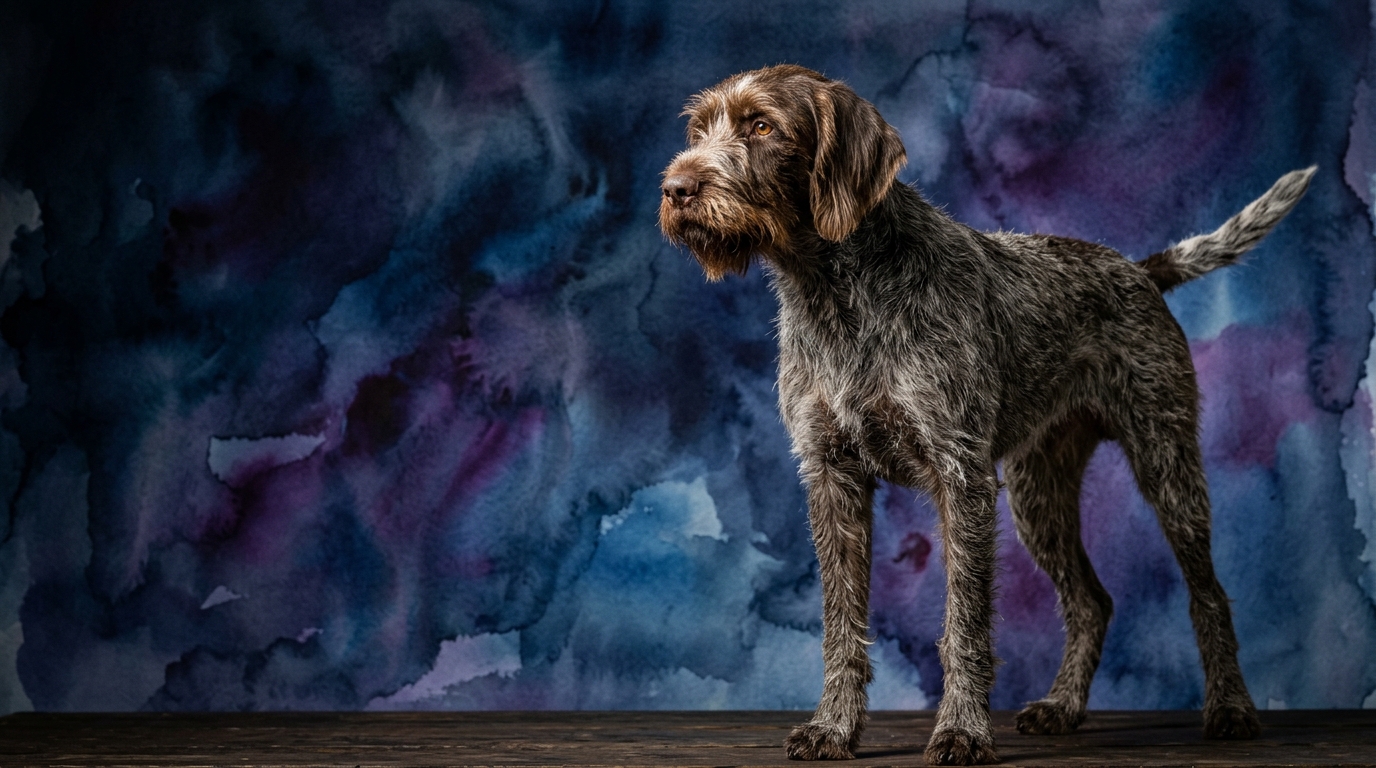
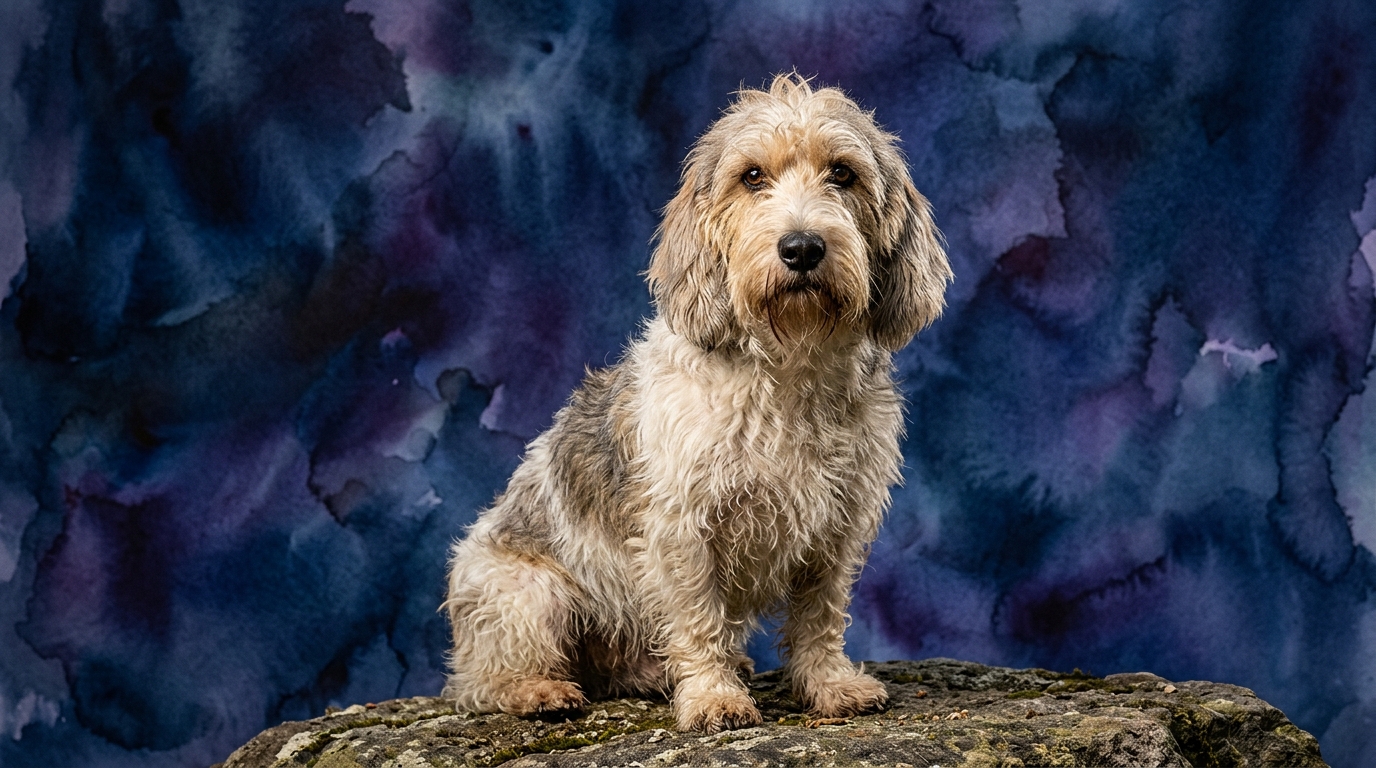
Side-by-Side IQ Profile: Wirehaired Pointing Griffon vs. Petit Basset Griffon Vendéen
The Cosmic Pet Pet IQ Lab evaluates canine intelligence across five key dimensions, offering a nuanced understanding of each breed's cognitive strengths. While both the Wirehaired Pointing Griffon and the Petit Basset Griffon Vendéen register a consistent 3/5 across all categories, the *application* and *manifestation* of these scores differ significantly due to their distinct breed histories and roles. Let's explore how these identical scores translate into varied cognitive behaviors.
**Wirehaired Pointing Griffon (WPG) - Sporting Group**
**Problem Solving (3/5):** This score indicates an ability to navigate moderately complex situations. For the WPG, this often manifests in their hunting work, figuring out how to locate game in varied cover, strategizing retrieves, or adapting to changing wind conditions to point effectively. They demonstrate a practical cognitive approach focused on task completion in partnership with a handler, often requiring them to interpret environmental cues in conjunction with human direction.
**Training Speed (3/5):** WPGs typically pick up new commands at a steady pace, requiring consistent methods and positive reinforcement. Their willingness to cooperate stems from their breeding as a partner in the field, making them responsive to direction once the purpose of a command is understood. While they grasp concepts readily, their innate drive means training must be engaging to maintain focus, especially when external stimuli are present.
**Social Intelligence (3/5):** These dogs are adept at reading human cues and thrive on interaction. Their social intelligence helps them understand a handler's intentions during a hunt and integrate smoothly into family life, often forming strong bonds. They gauge social situations well, making them generally agreeable companions who seek connection and cooperative engagement with their human counterparts.
**Instinctive Drive (3/5):** The WPG possesses a pronounced drive for hunting, pointing, and retrieving. This isn't an uncontrollable surge but a focused, purposeful instinct to locate game and bring it back, channeled and refined through centuries of selective breeding for a cooperative hunting style. Their drive is intrinsically linked to working alongside a human partner.
**Memory (3/5):** A WPG's memory is robust enough to recall learned commands, specific hunting locations, and routines. They remember complex sequences of actions required for successful retrieves and can retain training over time, even with breaks in practice. This memory is crucial for their role in recalling where game was last seen or specific field commands.
**Petit Basset Griffon Vendéen (PBGV) - Hound Group**
**Problem Solving (3/5):** PBGVs also exhibit moderate problem-solving capabilities, but theirs are typically applied to independent tasks. This might involve navigating dense undergrowth to follow a scent trail, figuring out how to get around an obstacle to reach a perceived quarry, or discerning subtle scent changes. Their cognitive solutions often prioritize the pursuit of a trail, demonstrating an autonomous, sensory-driven approach.
**Training Speed (3/5):** PBGVs can learn commands with a steady application of effort, but their independent nature and powerful scent drive often present unique training challenges. While they comprehend instructions, their inclination to follow their nose can supersede a desire to comply, making consistency and high-value rewards crucial for reliable responses. Their learning speed is there, but their motivation to perform for humans can be secondary to their instincts.
**Social Intelligence (3/5):** PBGVs are generally outgoing and friendly, interacting well with both humans and other dogs, often thriving in multi-dog households. Their social intelligence is geared towards pack cohesion and friendly, if sometimes boisterous, engagement, rather than strict adherence to human direction. They enjoy company but retain a strong sense of self and independent action.
**Instinctive Drive (3/5):** The PBGV's instinctive drive is a powerful, almost singular focus on scent. This strong drive compels them to track, bay, and pursue, often with remarkable tenacity. It is an independent drive, less about cooperation with a human and more about fulfilling the primal urge to follow a trail, making them highly dedicated to their olfactory pursuits.
**Memory (3/5):** PBGVs possess a solid memory for scent patterns, familiar routes, and learned routines. They can recall commands and associate experiences, though their strong sensory input from scent can sometimes override memory recall in distracting environments, especially when a compelling smell is present. Their memory is particularly acute for olfactory details and spatial navigation related to scent trails.
Where the Wirehaired Pointing Griffon Excels Cognitively
While both breeds share identical IQ scores, the Wirehaired Pointing Griffon demonstrates distinct cognitive strengths rooted in its cooperative hunting heritage. One area where the WPG truly shines is in **cooperative problem solving**. Their 3/5 problem-solving ability is intrinsically linked to deciphering handler cues in complex field scenarios, demonstrating a superior aptitude for joint strategic thinking. This involves anticipating a handler's next move or adjusting their search pattern based on subtle human signals, a skill less emphasized in the independent PBGV.
The WPG also exhibits an advantage in the **application of training under human-focused distraction**. Their 3/5 training speed, combined with their sporting purpose, means WPGs are generally more inclined to maintain focus on human commands even when their instincts are piqued. Their drive is channeled *through* human direction, making them more consistently responsive to structured training in environments with moderate distractions compared to the scent-driven PBGV.
Furthermore, the WPG's **social reciprocity in task performance** is a notable cognitive win. Their social intelligence shines in tasks requiring a give-and-take dynamic. They actively seek to understand and fulfill a handler's expectations, making them particularly adept at complex retrieves or intricate pointing sequences where mutual understanding is paramount. This cooperative spirit is a distinct cognitive advantage in partnership roles, reinforcing their role as a working companion.
Where the Petit Basset Griffon Vendéen Excels Cognitively
The Petit Basset Griffon Vendéen, with its hound lineage, showcases cognitive strengths that diverge from its Griffon cousin, particularly in independent sensory processing. A key area where the PBGV excels is in **independent sensory problem solving**. Their 3/5 problem-solving is expressed through their exceptional ability to independently unravel scent puzzles. They demonstrate a remarkable cognitive resilience in following faint trails over varied terrain, processing complex olfactory information to achieve their objective without constant human intervention. This specialized intelligence allows them to make autonomous decisions based on nuanced sensory input.
Another significant cognitive advantage for the PBGV lies in its **tenacity in instinctive pursuit**. While both breeds possess a 3/5 instinctive drive, the PBGV's drive is characterized by an almost singular, unwavering focus on a scent trail. This translates to a superior cognitive tenacity in pursuit, where distractions other than scent are effectively filtered out. Their mental fortitude in sticking to a task driven by their nose is a hallmark of their specialized intelligence, enabling them to persist where other breeds might falter.
Finally, PBGVs demonstrate a superior aptitude for **environmental navigation via scent memory**. They leverage their memory and instinctive drive to construct detailed 'scent maps' of their environment. They can recall the nuances of a trail, differentiating between new and old scents, and remembering where a particular scent led previously. This form of memory is a highly specialized cognitive strength, allowing them to navigate and re-engage with complex scent landscapes with precision and efficiency.
Training Dynamics: Which Breed is Easier and Why?
When considering ease of training, the Wirehaired Pointing Griffon generally presents a more straightforward experience for owners focused on obedience and cooperative tasks. Their heritage as a hunting partner means they are inherently more inclined to work *with* a human. While their instinctive drive is strong, it is typically channeled through handler direction, making them more receptive to commands even amidst moderate distractions. For instance, a WPG is more likely to maintain a 'stay' command when a bird flushes nearby, having been bred to hold a point and wait for direction.
The Petit Basset Griffon Vendéen, despite having the same 3/5 training speed, often requires a more nuanced and persistent approach. Their powerful, independent scent drive means that while they comprehend commands, their inclination to follow a compelling scent can override their desire to comply. Achieving reliable recall off-leash in an environment rich with smells can be a significant challenge, as their cognitive focus shifts entirely to the olfactory world. They learn, but their internal motivation to obey a human command is often secondary to their primary drive, making consistency, high-value rewards, and secure environments paramount for effective training.
Suitability for Active vs. Relaxed Owners
The **Wirehaired Pointing Griffon** is ideally suited for active owners who relish outdoor activities and desire a canine partner in their adventures. Their 3/5 instinctive drive necessitates regular, engaging physical and mental stimulation, such as hiking, field work, or dog sports like agility. Owners who can provide opportunities for their WPG to utilize their cooperative problem-solving and retrieve instincts will find them a fulfilled and manageable companion. They thrive on having a 'job' and benefit from structured routines that channel their energy and intelligence productively.
The **Petit Basset Griffon Vendéen**, while possessing a similar 3/5 instinctive drive, suits active owners who appreciate an independent spirit and are prepared for a dog whose activity is often dictated by its nose. Their need for exercise is substantial, but it often involves vigorous walks or secure off-leash areas where they can indulge their tracking instincts. Relaxed owners might struggle with a PBGV's persistent need to follow scents and their often boisterous energy indoors if not adequately exercised. Owners who enjoy long, investigative walks and can manage a dog with a strong, independent will are best matched for a PBGV, understanding their need for olfactory engagement.
The Verdict
Opt for a Wirehaired Pointing Griffon if you seek a highly cooperative canine partner for outdoor pursuits, valuing a dog that actively engages with your directions in structured activities and thrives on shared tasks. They are an excellent choice for handlers who appreciate a dog whose intelligence is geared towards collaborative problem-solving and consistent responsiveness.
Select a Petit Basset Griffon Vendéen if you are drawn to an independent, tenacious companion with an exceptional drive for scent work, enjoying their boisterous personality and unique problem-solving abilities rooted in their olfactory prowess. They suit owners who are patient with their hound's independent nature and can provide outlets for their powerful tracking instincts.
🧠 Find Your Pet's IQ Score
Our Pet IQ Lab assessment covers 25+ tests across 5 cognitive dimensions — personalized to your breed.
Take the Full IQ Test →Frequently Asked Questions
Are Wirehaired Pointing Griffons good family dogs?
Yes, Wirehaired Pointing Griffons generally integrate well into family life due to their 3/5 social intelligence, forming strong bonds and enjoying interaction. They are often patient with children and other pets, provided they receive sufficient exercise and mental engagement to prevent boredom.
Do Petit Basset Griffon Vendéens bark a lot?
Petit Basset Griffon Vendéens are hounds known for their distinctive "baying" vocalizations, which they instinctively use to alert during tracking. While not excessive barkers in the traditional sense, their natural inclination to vocalize when excited or on a compelling scent trail is strong, requiring management for peaceful coexistence in some environments.
How much exercise do these breeds need?
Both breeds require a substantial amount of daily exercise, reflecting their 3/5 instinctive drive and active heritage. Wirehaired Pointing Griffons need vigorous activity like running or field work to fulfill their cooperative drive, while Petit Basset Griffon Vendéens benefit from long, investigative walks or secure areas for off-leash scent exploration to satisfy their independent tracking instincts.