
Side-by-Side Cognitive Profiles: Decoding the '3/5' Score
On paper, the Wirehaired Pointing Griffon (WPG) and the Scottish Terrier (Scottie) appear to possess remarkably similar cognitive blueprints, each achieving a solid 3 out of 5 across all five dimensions of The Cosmic Pet Pet IQ Lab's assessment. However, these identical scores belie distinct expressions of intellect, deeply rooted in their breed histories and original purposes.
For the **Wirehaired Pointing Griffon**, a sporting dog, their 3/5 in **Problem Solving** means they are adept at navigating complex outdoor environments, figuring out how to locate game, and understanding the sequence of a hunt, often working in tandem with a human. This isn't about abstract puzzles, but practical, real-world challenges tied to their job. Their **Training Speed** at 3/5 indicates they respond well to consistent, positive reinforcement, picking up commands at a moderate but steady pace, particularly when these commands facilitate cooperative tasks. This breed's 3/5 **Social Intelligence** translates to a good understanding of human cues and intentions, often seeking interaction and working harmoniously with their handler, forming strong, responsive bonds. Their **Instinctive Drive** at 3/5 is a solid, functional drive for pointing and retrieving, displaying sustained focus on scent and prey without being overly frantic or chaotic. Finally, their 3/5 **Memory** ensures they retain learned behaviors, routes, and handler expectations, making them reliable partners in repeated tasks or established routines, remembering scent trails and past retrieves with good accuracy.
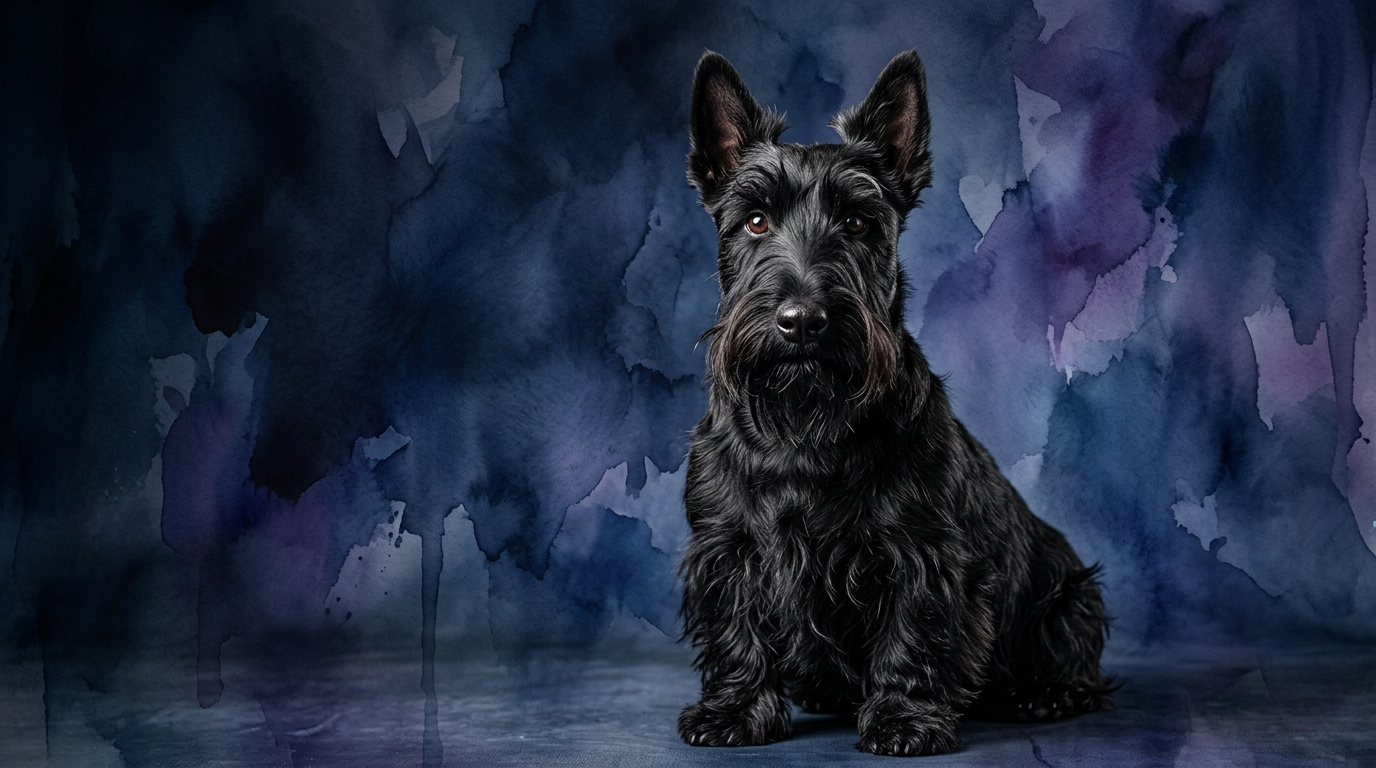
The **Scottish Terrier**, a tenacious terrier breed, applies its 3/5 **Problem Solving** in a decidedly more independent manner. Their ingenuity often shines in their persistent efforts to reach a desired object, navigate tight spaces, or outsmart vermin, frequently displaying tenacious resourcefulness to achieve their self-directed goals. Their **Training Speed** also rated at 3/5, suggests they are capable of learning commands at a moderate pace, but their pronounced independent streak means compliance often hinges on perceived value or engaging motivation, rather than an inherent desire to please. The Scottie's 3/5 **Social Intelligence** allows them to understand social dynamics within their chosen family unit, yet they often express affection and interaction on their own terms, being discerning and sometimes reserved with strangers, preferring a select few. Their 3/5 **Instinctive Drive** is a powerful, self-directed force, compelling them to dig, chase, and investigate with unwavering determination, rooted deeply in their vermin-hunting heritage. Their 3/5 **Memory** supports their consistent character, remembering boundaries, past interactions, and where they might have buried that one treat, contributing to their sometimes stubborn adherence to established habits.
Where the Wirehaired Pointing Griffon Cognitively Excels
Despite identical numerical scores, the Wirehaired Pointing Griffon's cognitive strengths lean heavily into cooperative endeavors and environmental mastery. Their problem-solving at 3/5 is particularly strong in scenarios where collaboration with a human is key, such as navigating a complex field together to locate game or executing a multi-step retrieve. This ability isn't just about figuring things out; it’s about figuring them out *with* you.
Their 3/5 instinctive drive, coupled with their social intelligence, gives them a distinct edge in sustained, directed focus towards a shared objective. For instance, a Griffon might instinctively understand a handler's subtle hand signal to change direction in a field, demonstrating their cooperative problem-solving and attuned social intelligence working in harmony. They excel at processing complex environmental cues and integrating human guidance, making them highly effective partners in activities requiring prolonged, focused attention and adaptability to changing outdoor conditions.
Where the Scottish Terrier Cognitively Excels
The Scottish Terrier's cognitive strengths lie in independent thought, tenacity, and resourceful persistence. Their 3/5 problem-solving often manifests as superior capability in devising solutions to obstacles without human intervention, such as figuring out how to retrieve a toy stuck under furniture, employing various strategies like nudging, pawing, or even barking for assistance, but ultimately driving the solution themselves. They are masters of strategic resourcefulness, often 'thinking outside the box' to overcome challenges.
The Scottie's 3/5 instinctive drive, combined with their problem-solving, results in an unwavering determination to achieve a self-assigned goal. Once a Scottie sets its mind on something – be it a scent, a digging project, or a particular spot on the couch – their persistence is remarkable and incredibly hard to deter. Their social intelligence, while reserved, also allows them to quickly assess new people or situations and decide on their level of engagement, often setting clear boundaries in their interactions with a discerning eye.
Training Dynamics: Cooperation vs. Independence
When it comes to training, the Wirehaired Pointing Griffon is generally considered more straightforward. Their sporting heritage has ingrained a desire to work *with* humans, and their 3/5 training speed is coupled with a cooperative temperament. They are often eager to please and find satisfaction in performing tasks for their handler. Griffons typically respond well to positive reinforcement and consistent methods, viewing training as a shared activity where their social intelligence helps them attune to human expectations, making the learning process smoother and more predictable. They are motivated by partnership and praise, making them generally biddable.
Conversely, the Scottish Terrier can be more challenging to train, despite their identical 3/5 training speed. While capable of learning, their strong independent streak and deep-seated terrier drive mean they often question the *necessity* of a command. A Scottie might understand what you want but choose not to comply if it doesn't align with their current agenda or if they perceive a more interesting self-directed task. Training them often requires more patience, creativity, and a focus on making tasks highly rewarding and engaging from *their* perspective. They are less driven by a desire to please and more by what benefits them or satisfies their inherent drives, demanding a nuanced approach that respects their strong will.
Matching Breeds to Lifestyles: Active Explorers vs. Spirited Companions
The Wirehaired Pointing Griffon is best suited for active, outdoors-loving owners who can fulfill their significant physical and mental needs. These are dogs that thrive on engagement that taps into their hunting instincts. Long walks, hikes, swimming, retrieving games, and opportunities for scent work are not just beneficial but crucial for their well-being. A relaxed or sedentary owner might find a Griffon to be restless, bored, and potentially destructive due to unfulfilled energy and mental needs. Their cooperative nature means they thrive when included in family adventures and given a 'job' to do, actively participating in outdoor pursuits alongside their humans.
The Scottish Terrier can suit both active and somewhat more relaxed owners, though with important caveats. While they don't demand the same endurance runs as a Griffon, they require consistent, engaging walks and significant mental stimulation. Their tenacious digging and chasing instincts need appropriate outlets; a relaxed owner must provide secure environments for exploration, engaging enrichment toys, and short, focused bursts of activity. A Scottie might be content to nap by your feet for hours, but their keen mind and independent spirit still need daily challenges and opportunities for purposeful activity to prevent boredom and potential mischievous behaviors. They are less about sustained physical output and more about focused, purposeful activity that satisfies their innate curiosity and drive.
The Verdict: When to Choose Each Spirited Companion
The Verdict
Choose the Wirehaired Pointing Griffon if you are an active, outdoors-loving individual or family seeking a cooperative, biddable companion for adventures, field work, or engaging in dog sports where teamwork and sustained effort are paramount.
Opt for the Scottish Terrier if you appreciate a spirited, independent companion with a charmingly stubborn streak, are prepared for creative and consistent training, and can provide outlets for their tenacious curiosity and terrier instincts in a secure, enriching environment.
🧠 Find Your Pet's IQ Score
Our Pet IQ Lab assessment covers 25+ tests across 5 cognitive dimensions — personalized to your breed.
Take the Full IQ Test →Frequently Asked Questions
Do Wirehaired Pointing Griffons and Scottish Terriers approach problem-solving differently, despite similar scores?
Absolutely. While both score 3/5, the Griffon typically applies its problem-solving to cooperative tasks in open environments, like finding game with a handler. The Scottie, conversely, often uses its problem-solving for independent goals, such as figuring out how to get into a tight space or outsmarting a perceived 'prey' item.
How does their 3/5 social intelligence manifest uniquely in each breed?
A Griffon's social intelligence often translates to a clear desire to work alongside and please its human family, readily reading cues for collaboration and seeking interaction. A Scottie's 3/5 social intelligence means they understand family dynamics but tend to be more discerning, interacting on their own terms and often displaying a reserved loyalty rather than overt eagerness to please.
Given their identical 3/5 instinctive drive, will both breeds require similar outlets?
Not necessarily. The Griffon's instinctive drive is geared towards pointing and retrieving, requiring outlets like field work, scent games, or swimming to satisfy its purpose. The Scottie's drive is rooted in hunting vermin, manifesting as a strong urge to dig, chase, and explore, needing secure areas for these activities and engaging toys that satisfy their tenacious nature.