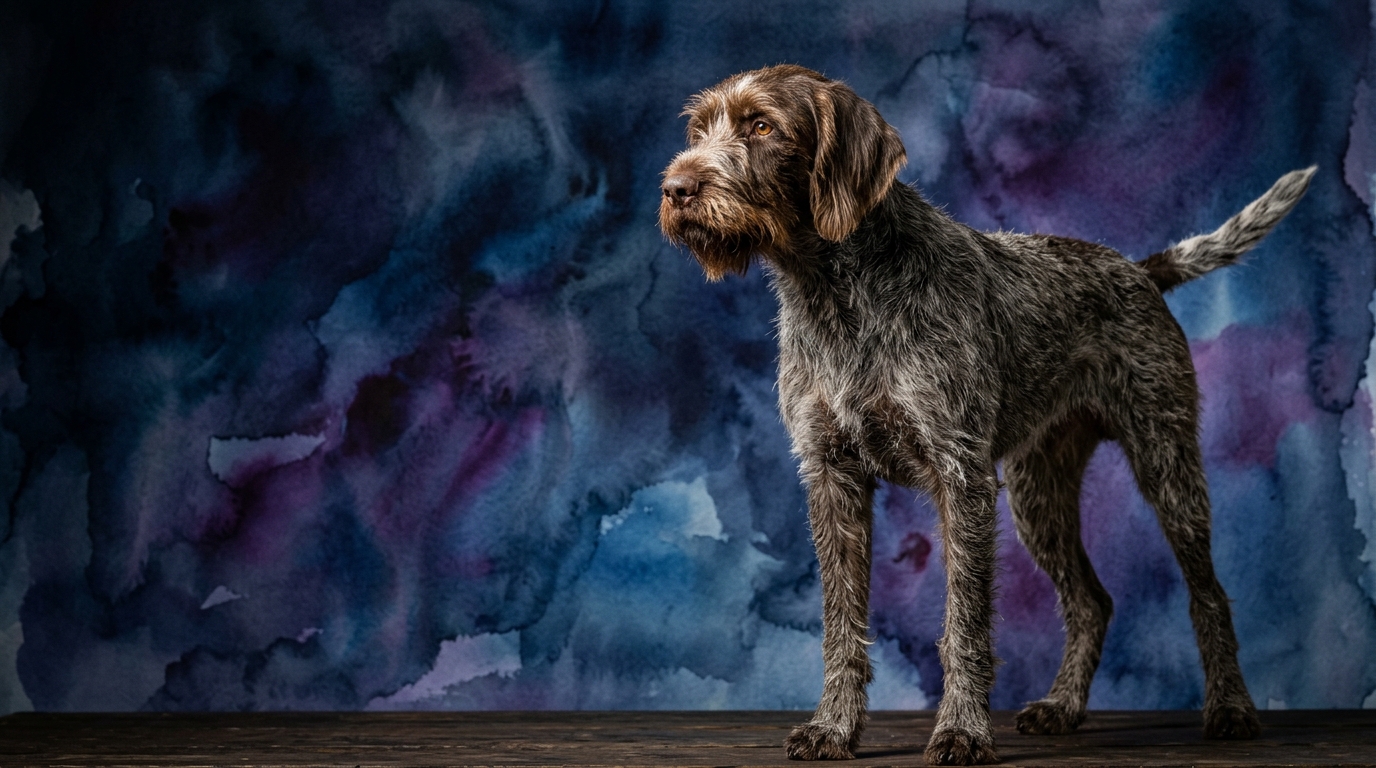
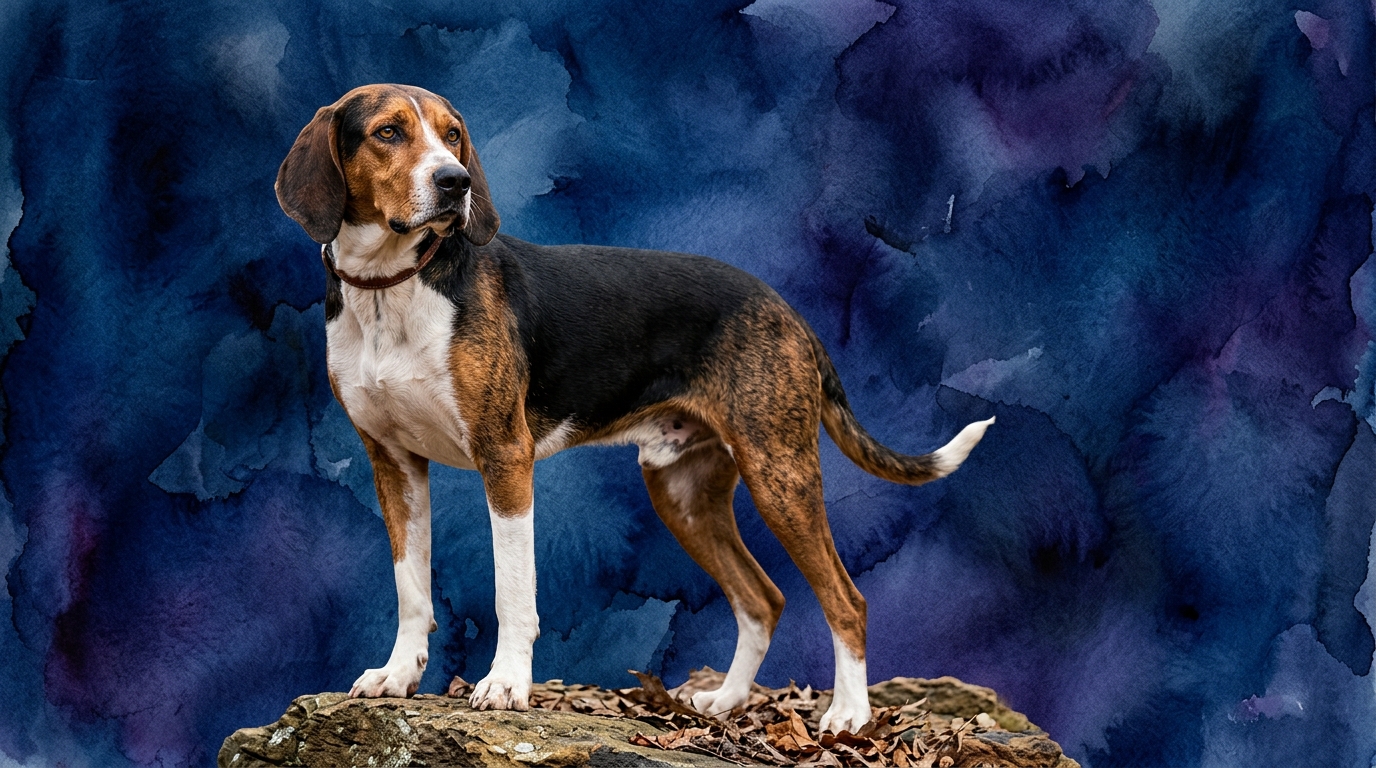
Side-by-Side Cognitive Profile
The Wirehaired Pointing Griffon (WPG), a versatile sporting dog, and the Treeing Walker Coonhound (TWC), a specialized scent hound, both register a consistent 3 out of 5 across all five cognitive dimensions in The Cosmic Pet Pet IQ Lab. This numerical uniformity, however, belies the unique ways each breed applies its inherent mental capacities, shaped by centuries of selective breeding for specific tasks. Understanding these nuances requires looking beyond the raw score to the context of their working heritage.
For Problem Solving, both breeds score 3/5, indicating a moderate capacity for independent thought and overcoming obstacles. The WPG typically applies this to navigating diverse terrain while searching for game, deciphering scent puzzles to locate birds, and adapting its hunting strategy based on environmental cues. The TWC, conversely, utilizes its problem-solving acumen to meticulously unravel complex, often cold, scent trails, determining the most efficient path through varied landscapes to tree its quarry. Their methods differ, but their capacity to strategize in the field is comparable.
Training Speed for both is rated 3/5, suggesting a moderate pace of learning new commands and behaviors. The WPG, bred to work closely with a handler, often displays a cooperative spirit, making it receptive to positive reinforcement and eager to perform tasks that involve collaboration. Its learning curve is steady, allowing for the acquisition of a broad repertoire of pointing, flushing, and retrieving skills. The TWC, while capable of learning, can present a different training dynamic; its deep-seated prey drive and singular focus on scent can sometimes make sustained attention to human-initiated commands more challenging, particularly when distractions abound. Consistency and highly motivating rewards are key for both.
Social Intelligence, at 3/5 for both, indicates a solid capacity for understanding and responding to human and canine communication. The WPG's social intelligence often translates into a strong bond with its family, an ability to read handler cues in the field, and a generally affable demeanor. They are typically attuned to their owner's moods and desires, fostering a close working relationship. The TWC's social intelligence, while equally present, might manifest differently; it often thrives in a 'pack' environment, whether with other dogs or its human family, but its independent hunting nature means it might interpret social cues in a way that prioritizes its primary drive during a hunt, requiring a nuanced understanding from its human companions.
Instinctive Drive is also 3/5 for both, signifying a strong, but not overwhelming, genetic predisposition for their breed-specific tasks. The WPG possesses a balanced suite of sporting instincts: a keen nose for pointing, a soft mouth for retrieving, and a robust constitution for water work, all channeled into purposeful hunting. These drives are powerful but generally manageable and responsive to direction. The TWC's instinctive drive is almost singularly focused on scent tracking and treeing, an intense and enduring pursuit that can override other impulses. This drive is a powerful engine, requiring outlets that respect its inherent purpose, otherwise, it can lead to frustration and unwanted behaviors.
Finally, Memory, at 3/5, suggests both breeds have a moderate ability to retain learned information and experiences. The WPG remembers training commands, successful hunting locations, and the routines of its household, aiding in its adaptability and reliability. The TWC’s memory is particularly adept at recalling scent profiles, mapping effective hunting routes, and remembering successful treeing spots. For both, a consistent environment and training regimen will reinforce their moderate memory capabilities, making them reliable partners in their respective roles.
Where the Wirehaired Pointing Griffon's Cognition Shines
The Wirehaired Pointing Griffon's cognitive profile, while numerically similar to the Coonhound's, particularly shines in its versatility and collaborative problem-solving. Its 3/5 problem-solving score is often applied to adapting quickly to varied game birds and diverse terrain, from dense cover to open fields and even water. This adaptability requires a cognitive flexibility to switch between pointing, flushing, and retrieving strategies based on the situation, a trait that makes it an exceptionally well-rounded hunting companion. Its moderate training speed benefits from a strong desire to please and a natural inclination to work in concert with a human handler, allowing it to master a wider array of complex, multi-stage commands than a breed less focused on direct partnership.
Furthermore, the WPG's social intelligence (3/5) contributes significantly to its cognitive strengths in a domestic setting. They are often highly attuned to their owners' intentions and emotional states, making them intuitive companions. This translates to an ability to anticipate commands and respond to subtle cues, which is a hallmark of a collaborative working relationship. Their memory (3/5) is effectively utilized for retaining complex sequences of hunting tasks and household routines, making them predictable and reliable partners both in the field and at home. This overall cognitive package makes the Griffon adept at being a 'jack-of-all-trades' in the sporting world, capable of excelling in multiple disciplines with focused guidance.
Where the Treeing Walker Coonhound's Cognition Shines
The Treeing Walker Coonhound's cognitive strengths, though also rated 3/5, are uniquely specialized and profoundly effective within its specific domain of scent work. Its problem-solving ability, for instance, is a marvel of deductive reasoning applied to olfactory data. A TWC can analyze a faint, broken scent trail, discriminate it from countless other environmental odors, and mentally reconstruct the path of its quarry, often over vast distances and challenging landscapes. This is not simply following a path, but interpreting a complex sensory puzzle, a testament to its specialized cognitive prowess that few other breeds can match.
The TWC's instinctive drive (3/5) is an unwavering engine for this specialized problem-solving. While a 3/5 might suggest moderate drive, for a Coonhound, this translates to an almost singular focus and endurance in pursuit of a scent, often ignoring distractions that would derail other breeds. This tenacity, combined with its moderate memory, allows it to recall successful hunting strategies and specific scent profiles, refining its efficiency with each outing. Its social intelligence (3/5), while sometimes overshadowed by its independent hunting drive, is crucial for pack cohesion and communicating its 'treeing' success through its distinctive bay. In summary, the TWC's cognition shines in its unparalleled dedication to and mastery of the intricate art of scent tracking and treeing, making it an unrivaled specialist in its field.
Which Is Easier to Train and Why
Given their identical 3/5 training speed scores, the ease of training for a Wirehaired Pointing Griffon versus a Treeing Walker Coonhound isn't about one being inherently faster, but rather about their motivations and responses to different training approaches. The Wirehaired Pointing Griffon generally presents as the 'easier' breed to train for a wider range of tasks, primarily due to its sporting heritage emphasizing close handler cooperation. Griffons are typically eager to please, thrive on positive reinforcement, and are naturally inclined to work as a team member, making them responsive to various commands and adaptable to diverse training scenarios. Their social intelligence and moderate instinctive drive mean they are often more focused on their handler's cues, even amidst distractions, and find satisfaction in successful collaboration.
The Treeing Walker Coonhound, while equally capable of learning at a moderate pace, often requires a more nuanced and patient training strategy. Their powerful, independent scent drive is their primary motivator, and this can be a significant 'distraction' from human-centric commands. Training a TWC often means finding ways to channel or integrate their natural instincts rather than suppress them. Recall, for example, can be particularly challenging when a Coonhound is 'on scent,' requiring extensive, consistent training with high-value rewards to build reliability. While they can learn complex commands, their cognitive focus is often geared towards their olfactory world, meaning training must be engaging enough to compete with the allure of a captivating scent. Owners must appreciate and manage this strong, specialized drive, making the TWC a rewarding but potentially more demanding training partner for those unfamiliar with hound behaviors.
Which Suits Active Owners vs. Collaborative vs. Independent-Oriented Owners
Neither the Wirehaired Pointing Griffon nor the Treeing Walker Coonhound is suited for truly relaxed or sedentary owners; both are working breeds with significant energy and mental stimulation needs. However, their cognitive profiles dictate different types of active engagement. The Wirehaired Pointing Griffon is an ideal match for active owners who seek a highly collaborative and versatile partner for outdoor adventures. Its balanced instinctive drive and strong social intelligence mean it thrives on joint activities like hiking, field training, swimming, or retrieving games. Owners who enjoy teaching new skills and appreciate a dog that is attuned to their directions and eager to participate in a wide range of activities will find the Griffon's cognitive make-up incredibly rewarding. They are excellent for those who want a dog to be an active, integrated part of their daily life and hobbies.
The Treeing Walker Coonhound, while equally demanding of physical activity, is better suited for active owners who appreciate and can accommodate a more independent, scent-driven companion. Owners who are passionate about tracking, scent work, or provide ample opportunities for their dog to explore olfactory landscapes in secure areas will find the TWC's specialized cognition fulfilling. Their powerful instinctive drive means they need outlets for their nose, and without it, they can become bored and potentially destructive. Owners must understand that a TWC's 'active' engagement might involve long, focused scent trails where the dog is primarily guiding the experience, rather than constant direct collaboration. They are perfect for those who admire a dog's singular focus and tenacity in its chosen pursuit, even if it means a slightly less 'biddable' companion in moments of high scent drive.
The Verdict
Choose the Wirehaired Pointing Griffon if you desire a highly versatile, collaborative hunting or outdoor companion that thrives on working closely with you across diverse activities. Its balanced cognitive profile makes it adaptable and generally more amenable to a wide range of training and domestic integration.
Choose the Treeing Walker Coonhound if you are an active owner fascinated by the intricate world of scent, prepared to provide extensive outlets for a powerful, independent tracking drive. Its specialized cognition excels in deciphering complex olfactory puzzles, making it an unparalleled partner for dedicated scent work.
🧠 Find Your Pet's IQ Score
Our Pet IQ Lab assessment covers 25+ tests across 5 cognitive dimensions — personalized to your breed.
Take the Full IQ Test →Frequently Asked Questions
Are Wirehaired Pointing Griffons good family dogs?
Yes, Wirehaired Pointing Griffons often make excellent family dogs due to their social intelligence (3/5) and affectionate nature. They typically bond closely with their families and are generally patient and playful with children, provided they receive adequate exercise and mental stimulation.
Do Treeing Walker Coonhounds need a lot of exercise?
Absolutely, Treeing Walker Coonhounds require a significant amount of exercise daily to satisfy their strong instinctive drive (3/5). Long walks, runs, or opportunities for scent work in secure areas are crucial to prevent boredom and ensure their physical and mental well-being.
Can either breed adapt to apartment living?
Neither breed is ideally suited for apartment living due to their high energy levels and working dog heritage. While a Wirehaired Pointing Griffon might adapt with extraordinary daily exercise and mental engagement, a Treeing Walker Coonhound's vocal nature and profound need for scent work make apartment life particularly challenging for them.