
Side-by-Side IQ Profile: Unpacking Cognitive Dimensions
The Cosmic Pet Pet IQ Lab offers a unique lens through which to understand canine cognition, breaking down intelligence into five distinct dimensions. For the Yorkshire Terrier, a breed with a Coren ranking of #27, indicating a solid capacity for working and obedience, we observe a nuanced profile: Problem Solving at 3 out of 5, Training Speed at 4 out of 5, Social Intelligence at 4 out of 5, Instinctive Drive at 4 out of 5, and Memory also at 4 out of 5. This paints a picture of a companion that learns quickly and connects deeply.
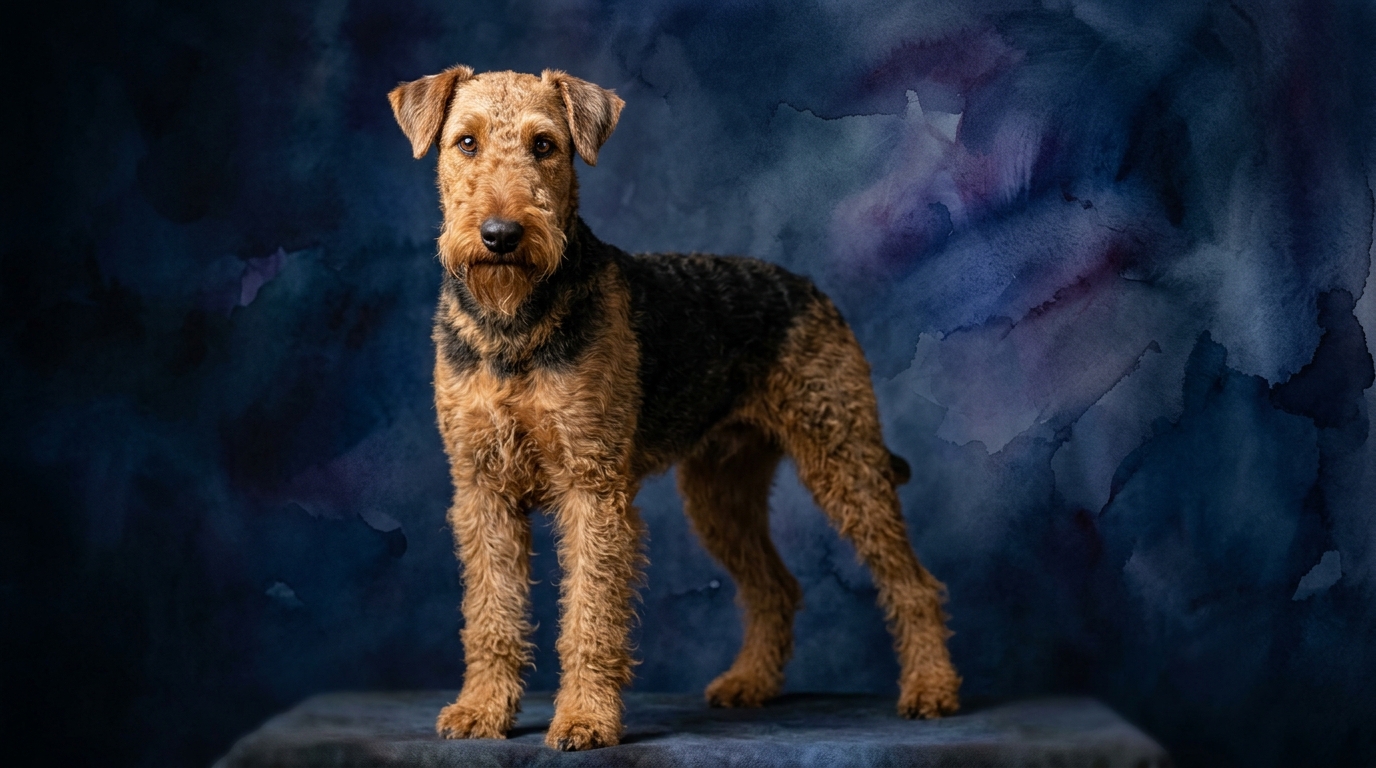
In contrast, the Airedale Terrier, with a Coren ranking of #29—placing it just a few spots behind the Yorkie in general obedience aptitude—presents a slightly different cognitive landscape. Its Problem Solving ability scores a robust 4 out of 5, while Training Speed matches the Yorkie at 4 out of 5. However, its Social Intelligence registers at 3 out of 5, and its Instinctive Drive also at 3 out of 5, with Memory holding strong at 4 out of 5. These scores suggest an independent thinker with a keen ability to retain information.
Both breeds share an admirable capacity for learning quickly and retaining information, evidenced by their identical 4/5 scores in Training Speed and Memory. This means that once a command or routine is established, both the Yorkie and Airedale are adept at recalling and executing it efficiently. The primary distinctions, therefore, lie in their approaches to problem-solving, their engagement with social cues, and the intensity of their inherent drives, which profoundly influence their day-to-day behaviors and how they interact with their environment and human companions.
Where the Yorkshire Terrier Wins Cognitively
The Yorkshire Terrier’s standout cognitive advantage lies unequivocally in its superior Social Intelligence, scoring an impressive 4 out of 5. This elevated capacity means Yorkies are exceptionally attuned to human emotions and social cues, often seeming to anticipate their owner's moods or desires. They excel at forming deep, reciprocal bonds, making them highly responsive companions who thrive on interaction and connection. This heightened social awareness contributes to their adaptability in various domestic situations, as they are quick to understand household dynamics and their role within them.
This profound social attunement translates into a dog that is often more eager to please and more easily guided by subtle cues from their human counterparts. While not explicitly a 'win' in a competitive sense, the Yorkie's Instinctive Drive at 4 out of 5, compared to the Airedale's 3/5, suggests a more pronounced innate zest for engaging with their surroundings, whether it's 'hunting' a toy or exploring a new scent. This drive, combined with their social intelligence, can make them highly motivated participants in games and training exercises that involve close partnership, leading to a vibrant and interactive companionship.
Where the Airedale Terrier Wins Cognitively
The Airedale Terrier shines brightest in the realm of Problem Solving, earning a robust 4 out of 5 in this cognitive dimension, surpassing the Yorkie's 3/5. This higher score indicates a breed with a pronounced capacity for independent thought and strategic action. Airedales are often observed figuring out complex puzzles, devising their own solutions to perceived obstacles, or navigating intricate environments with a clear sense of purpose. This isn't just about learning commands; it's about applying logic and creativity to novel situations.
An Airedale's superior problem-solving acumen means they are less likely to simply wait for direction and more inclined to assess a situation and act on their own initiative. This can be a double-edged sword: highly desirable for tasks requiring cleverness and independence, but potentially challenging for owners who prefer a dog that consistently seeks explicit guidance. Their cognitive strength in this area makes them excellent candidates for advanced obedience, agility, or tasks that require more than rote memorization, as they genuinely enjoy the mental challenge of deciphering and overcoming difficulties.
Which is Easier to Train and Why
When evaluating which breed might be 'easier' to train, it's crucial to look beyond the identical 4/5 Training Speed scores, which simply indicate both can acquire commands quickly. The true differentiator lies in how their other cognitive dimensions influence the *process* of training. The Yorkshire Terrier, with its 4/5 Social Intelligence, often approaches training with an inherent desire to please and connect. They are highly responsive to their owner's tone, body language, and emotional state, making them exceptionally receptive to positive reinforcement and praise. Their higher Instinctive Drive at 4/5 can also be effectively channeled, transforming training into an engaging, collaborative game.
Conversely, the Airedale Terrier, while equally capable of learning commands swiftly (4/5 Training Speed), brings its formidable 4/5 Problem Solving ability to the forefront. This means they are quick to understand the 'why' behind an action, but their lower 3/5 Social Intelligence might translate into a more independent approach to training. They might require more explicit, structured guidance and less reliance on emotional appeals. An Airedale might try to 'outsmart' a trainer or find a shortcut if the task isn't compelling enough, rather than simply following instructions. Their 3/5 Instinctive Drive means motivation might need to be carefully cultivated through varied challenges and clear rewards, rather than relying on an innate eagerness to engage in repetitive tasks.
Therefore, while both breeds learn at a similar pace, the Yorkshire Terrier might offer a smoother, more emotionally collaborative training experience due to its social attunement. The Airedale, on the other hand, might require a trainer who appreciates a canine partner that thinks for itself and thrives on intellectual challenge, potentially making complex tasks more rewarding but initial engagement more deliberate. The 'easier' choice ultimately depends on the trainer's style and what they seek in a training partner.
Which Suits Active Owners vs. Relaxed Owners
The choice between a Yorkshire Terrier and an Airedale Terrier for active versus relaxed owners hinges on a combination of their cognitive profiles and inherent breed traits. The Yorkshire Terrier, despite its small stature, possesses an Instinctive Drive of 4 out of 5, indicating a spirited nature that belies its size. This means they are not simply lap dogs; they enjoy engaging in activities, exploring, and participating in family outings. Their high Social Intelligence (4/5) makes them excellent portable companions for active owners who want a dog to join them on adventures, from brisk walks to social gatherings, where their responsiveness and affectionate nature can truly shine. They can also suit relaxed owners, provided their need for mental stimulation and consistent, loving interaction is met, as their primary need is for companionship and engagement.
The Airedale Terrier, conversely, with its larger size and a Problem Solving score of 4 out of 5, demands a more robust outlet for its physical and mental energies. While its Instinctive Drive is 3 out of 5, suggesting it might not possess the relentless energy of some other working breeds, its intelligence necessitates consistent mental engagement. This breed thrives with active owners who can provide varied training, structured play, and opportunities for exploration and problem-solving, such as hiking or participation in dog sports. A relaxed owner might find an Airedale's need for mental stimulation and purposeful activity challenging to manage, potentially leading to boredom-induced behaviors. Their slightly lower Social Intelligence (3/5) means they might be more independent, appreciating an owner who respects their clever self-sufficiency while still providing clear leadership.
In essence, an active owner seeking a highly interactive, portable companion who thrives on social engagement might find the Yorkie an ideal fit. An active owner who values a larger, more independent, and intellectually challenging partner that excels at figuring things out and engaging in structured activities will likely be more suited to an Airedale. For truly relaxed owners who prefer minimal activity, neither breed is a perfect match without significant dedication to mental enrichment.
The Verdict
Choose a Yorkshire Terrier if you prioritize a highly social, emotionally responsive companion who learns quickly and thrives on close interaction, suitable for both active and more relaxed settings with consistent engagement.
Opt for an Airedale Terrier if you seek an independent, clever partner who excels at problem-solving and requires consistent mental and physical challenges from an active, dedicated owner.
🧠 Find Your Pet's IQ Score
Our Pet IQ Lab assessment covers 25+ tests across 5 cognitive dimensions — personalized to your breed.
Take the Full IQ Test →Frequently Asked Questions
Do Yorkshire Terriers bark a lot due to their instinctive drive?
A Yorkie's Instinctive Drive of 4/5 can indeed manifest as alert barking, particularly when they perceive novel sounds or people. Their keen awareness, coupled with their desire to communicate and protect their social unit, makes them excellent watchdogs, though this trait can be managed with consistent training.
Is the Airedale Terrier's lower social intelligence a barrier to bonding?
Not at all; an Airedale's 3/5 Social Intelligence simply means they might express affection and engage differently than a more overtly demonstrative breed. They form deep bonds but might show their connection through shared activities and mutual respect rather than constant seeking of physical closeness, making them loyal companions for the right owner.
Since both have 4/5 Training Speed, does that mean they are equally easy for a first-time owner?
While both learn commands quickly, their other cognitive traits influence the overall ease for a first-time owner. A Yorkie's higher social intelligence can make them more forgiving and eager to please, while an Airedale's strong problem-solving skills and independence might require a more experienced hand to channel their cleverness effectively.