
Side-by-Side Cognitive Profiles
The Cosmic Pet Pet IQ Lab's metrics offer a granular view into the mental make-up of these two distinct breeds, highlighting how their historical roles have sculpted their cognitive strengths. The Yorkshire Terrier, ranked #27 by Coren for obedience and working intelligence, presents a profile generally leaning towards domestic adaptability and quick learning.
For the Yorkshire Terrier, problem-solving registers at 3/5, indicating a capacity to navigate common household challenges and figure out how to get what they want, though not necessarily complex abstract puzzles. Their training speed shines at 4/5, suggesting a quick grasp of commands and a general responsiveness to instruction. Social intelligence is also robust at 4/5, making them adept at reading human cues and forming strong, often manipulative, bonds. An instinctive drive of 4/5 reflects their terrier tenacity and independence when pursuing a goal, while their memory at 4/5 ensures they retain learned behaviors and specific interactions effectively.
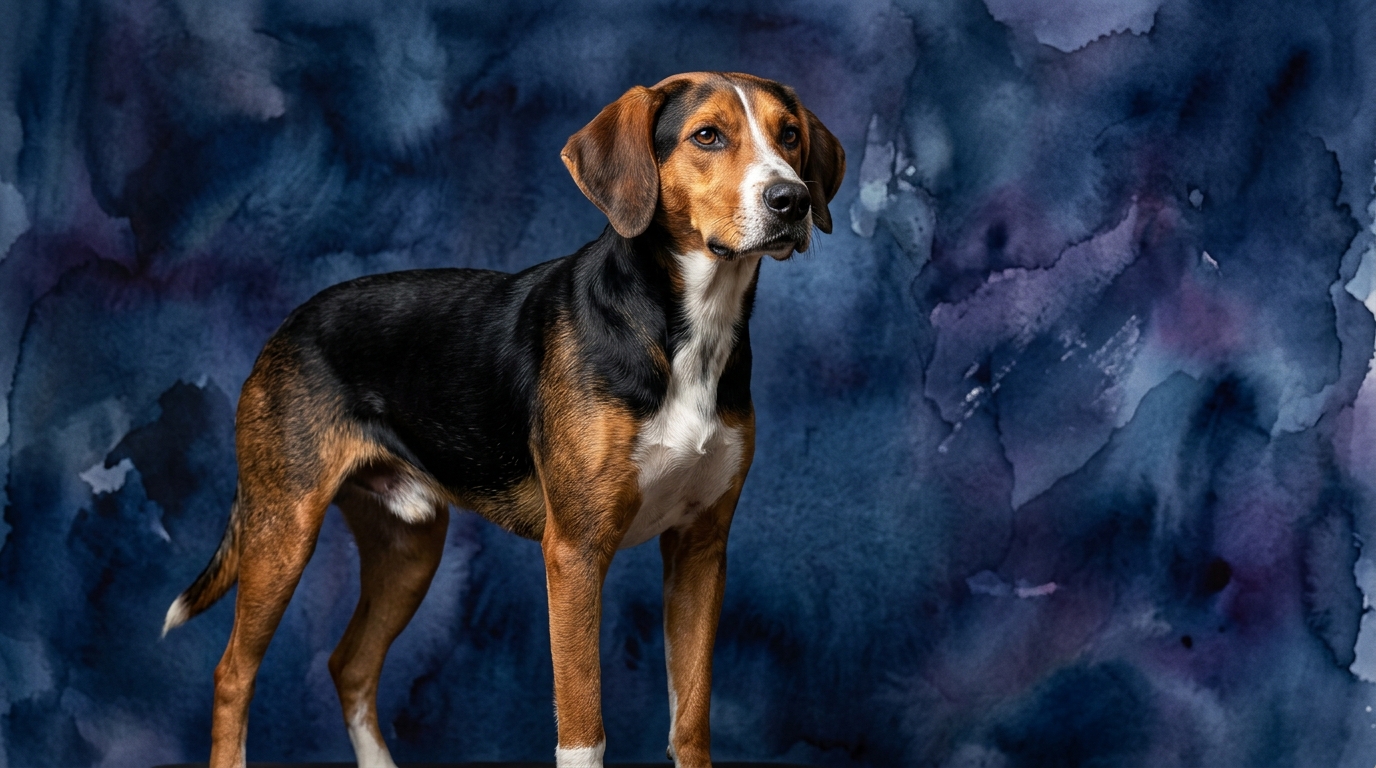
In contrast, the American Foxhound, while not Coren-ranked, showcases a different set of cognitive priorities rooted in their heritage as a scent hound. Their problem-solving capacity also stands at 3/5, but this is typically applied to practical, environmental challenges related to tracking rather than domestic intricacies. Training speed for the Foxhound is 3/5, implying that while they can learn, it often requires more patience and consistency due to their independent and scent-driven focus.
The American Foxhound's social intelligence sits at 3/5, indicating they are generally amiable and capable of interaction, but their primary social focus might be on the pack or the hunt rather than intricate human-dog communication. Their instinctive drive, also 3/5, is powerfully geared towards sustained tracking and endurance, a relentless pursuit of scent. Finally, their memory is rated at 3/5, effective for recalling scent trails and routines relevant to their work, though perhaps less focused on remembering specific commands if a compelling scent takes precedence.
Where the Yorkshire Terrier Excels Cognitively
The Yorkshire Terrier's cognitive profile reveals several areas where they demonstrate a clear advantage, particularly within a domestic and companion animal context. Their superior training speed, rated at 4/5 compared to the Foxhound's 3/5, means they typically grasp new commands and routines more quickly. This responsiveness makes them a rewarding partner for obedience training, trick learning, and agility, where rapid comprehension and execution are valued.
Furthermore, the Yorkie's higher social intelligence (4/5 versus 3/5) indicates a greater aptitude for understanding and responding to human communication. They are often more attuned to their owner's moods and intentions, making them highly adaptable to various social situations and household dynamics. This cognitive strength allows them to integrate seamlessly into diverse family environments, often becoming very skilled at eliciting desired responses from their human companions.
Their enhanced memory (4/5 versus 3/5) further supports their capacity for learning and retention, enabling them to remember a wider array of commands, routines, and specific interactions over time. This robust memory, combined with their instinctive drive for engagement, makes them excellent candidates for advanced training and consistent, predictable companionship. A Yorkshire Terrier is often observed remembering specific cues or past training sessions with impressive accuracy, allowing for progressive skill development.
Where the American Foxhound Shines Cognitively
While the American Foxhound's scores might appear lower in some categories, their cognitive strengths are profoundly specialized and tailored to their ancestral purpose. Their problem-solving ability, rated at 3/5, is particularly impressive when applied to navigating complex terrains and unraveling intricate scent puzzles. This isn't about solving a puzzle feeder, but rather about independently strategizing how to follow a faint trail across varying landscapes, a task requiring remarkable focus and determination.
The Foxhound's instinctive drive, also 3/5, is a testament to their unparalleled endurance and single-mindedness in tracking. This isn't merely a 'drive' but a deep-seated cognitive program that allows them to maintain focus on a scent for hours, covering vast distances without wavering. Their memory, at 3/5, supports this by enabling them to recall complex scent patterns and geographical layouts relevant to their pursuit, often remembering where a particular trail led even after a significant lapse in time.
Their social intelligence, rated at 3/5, while not focused on intricate human manipulation, is highly effective within a pack dynamic. Foxhounds are bred to work collaboratively with other dogs and their human handlers in the field, demonstrating a form of cooperative intelligence that is crucial for their work. They understand their role within a group and can coordinate efforts, making them exceptionally skilled in group hunting or scent detection activities where teamwork is paramount.
Training Dynamics: Yorkie vs. Foxhound
When considering ease of training, the Yorkshire Terrier generally presents a more straightforward experience for the average owner. Their training speed of 4/5 means they tend to pick up new commands and cues relatively quickly. Coupled with their higher social intelligence, Yorkies often display a keen desire to please their owners, responding well to positive reinforcement and praise, making initial obedience training a more fluid process. Their smaller size also makes managing their movements and attention during training sessions less physically demanding.
However, the Yorkie's instinctive drive of 4/5, typical of terriers, means they possess a stubborn streak and an independent spirit. While quick to learn, they might choose to ignore commands if something more stimulating captures their attention, requiring consistent motivation and engaging training methods to maintain focus. Early socialization and consistent boundary setting are crucial to channel their natural tenacity positively.
The American Foxhound, with a training speed of 3/5, typically requires a more patient and persistent approach. Their formidable instinctive drive for scent work often overrides other stimuli, making recall particularly challenging in open, stimulating environments. Training a Foxhound means understanding and working with their powerful nose; their attention can be difficult to redirect once they're on a trail. Their social intelligence, while present, is often geared towards pack cooperation rather than individual human-centric interactions, which can translate to less direct 'eagerness to please' in a traditional obedience setting.
Effective Foxhound training often leverages their love for scent work, integrating it into their learning process rather than fighting against it. This might involve scent games or tracking exercises as rewards, building a strong bond through shared activities that honor their natural instincts. Consistency, clear expectations, and a highly rewarding system are paramount for success with this independent and scent-driven breed.
Matching Breeds to Lifestyles: Active vs. Relaxed Owners
The stark differences in their cognitive and physical makeup mean these breeds suit vastly different owner lifestyles. The American Foxhound is unequivocally a dog for active owners. Their immense energy levels, combined with their profound instinctive drive and endurance for tracking, demand significant daily physical and mental exertion. Owners who enjoy long-distance running, extensive hiking, or engaging in scent work and field trials will find a compatible partner in a Foxhound. They thrive in environments where they have ample space to explore and satisfy their innate need to follow a trail, making them less suitable for sedentary lifestyles or confined urban settings.
Conversely, the Yorkshire Terrier, while possessing a spirited energy, is far more adaptable to a range of activity levels, including those of more relaxed owners. They benefit from regular walks and playtime, but their exercise needs are generally met with shorter, more frequent outings and indoor games. Their robust social intelligence and memory mean they appreciate mental stimulation through training and puzzle toys, which can be provided even in less physically demanding ways. They are content to cuddle indoors after their exercise needs are met, making them well-suited for apartment living or homes with less access to expansive outdoor spaces.
For relaxed owners, the Yorkshire Terrier offers companionship and engagement without the intense physical demands of a Foxhound. Their cognitive makeup allows them to be satisfied with a blend of mental challenges and moderate physical activity, making them excellent companions for those who appreciate a responsive, affectionate dog that doesn't require hours of dedicated outdoor pursuit. The American Foxhound, if under-exercised or bored, can manifest destructive behaviors, incessant barking, or attempts to escape, making them a challenging choice for owners unable to meet their substantial needs.
The Verdict
Choose the Yorkshire Terrier if you seek a highly responsive, companionable dog eager to learn a diverse range of commands and adapt readily to varied domestic and social settings.
Opt for the American Foxhound if you are a dedicated owner who embraces the challenge of channeling a powerful scent drive, providing extensive outdoor activity, and appreciating a dog whose unique cognitive strengths lie in endurance and independent tracking.
🧠 Find Your Pet's IQ Score
Our Pet IQ Lab assessment covers 25+ tests across 5 cognitive dimensions — personalized to your breed.
Take the Full IQ Test →Frequently Asked Questions
Are Yorkshire Terriers good at learning tricks?
Yes, with a training speed of 4/5 and strong memory, Yorkshire Terriers typically excel at learning a variety of tricks and commands. Their robust social intelligence often makes them eager to engage with their owners in such interactive activities, quickly picking up new cues and routines.
Can American Foxhounds live in apartments?
While their physical size might technically fit, American Foxhounds are generally not ideal for apartment living due to their immense energy levels and vocal nature. They require significant daily outdoor exercise and mental stimulation to prevent boredom and destructive behaviors, which can be challenging to provide adequately in a confined space.
How do their problem-solving skills differ?
Both breeds score 3/5 in problem-solving, but their applications differ significantly; Yorkshire Terriers often solve domestic puzzles like manipulating objects for treats, while American Foxhounds excel at practical problems in the field, such as navigating terrain to efficiently follow a complex scent trail. The context and motivation behind their problem-solving capabilities are distinct.