
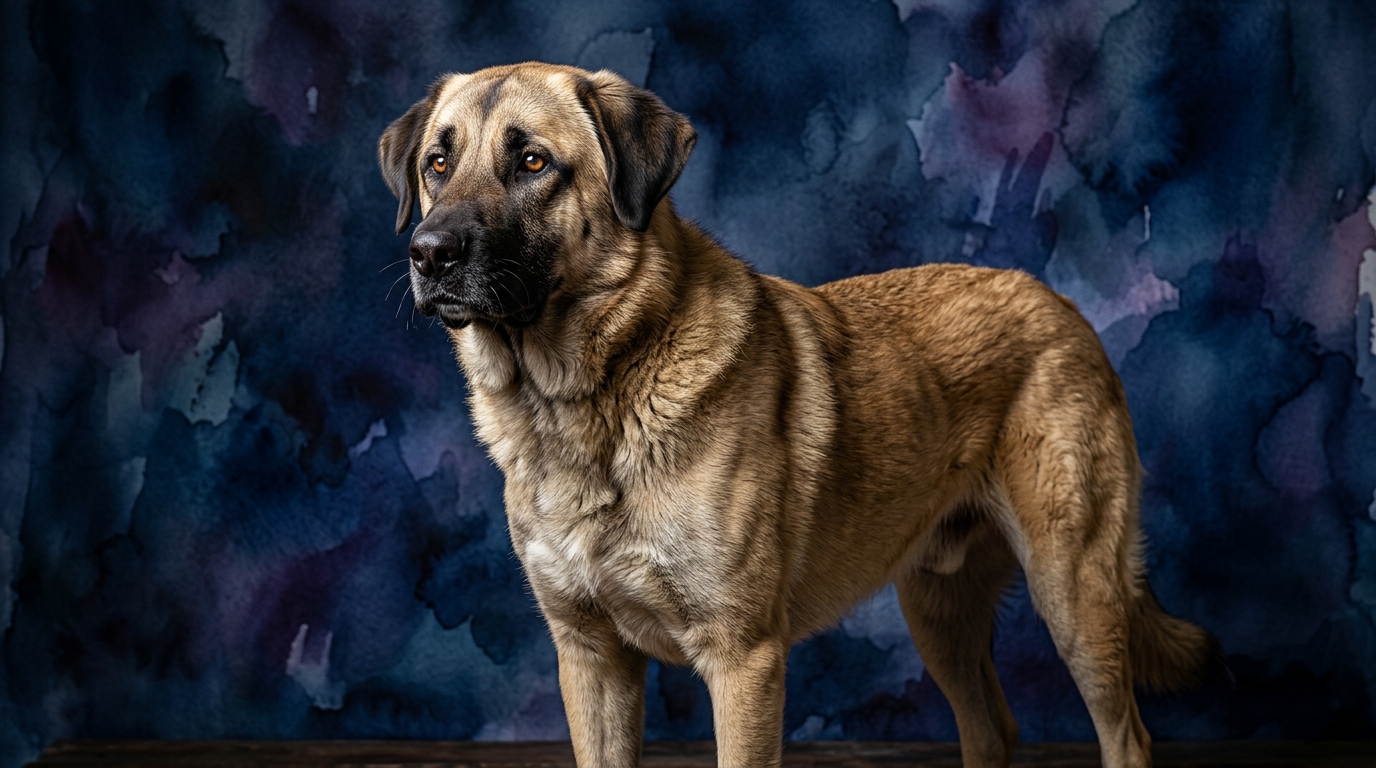
Side-by-Side IQ Profile: Yorkshire Terrier vs. Anatolian Shepherd Dog
The Yorkshire Terrier, a member of the Terrier group and ranked #27 by Coren for working and obedience intelligence, presents a lively cognitive makeup. Its Problem Solving is rated 3/5, indicating an ability to navigate straightforward challenges, often with human encouragement. Training Speed shines at 4/5, suggesting a quick uptake of new commands and routines, while its Social Intelligence, also 4/5, points to a strong capacity for reading human cues and adapting its behavior. An Instinctive Drive of 4/5 often manifests as persistent focus, whether on a toy or a perceived 'critter,' and its Memory score of 4/5 ensures good retention of learned behaviors and social patterns.
In stark contrast, the Anatolian Shepherd Dog, a robust member of the Working group and not Coren-ranked, possesses a cognitive profile honed for autonomous guardianship. Its Problem Solving is 3/5, but this is typically applied to real-world scenarios like assessing threats or finding optimal patrolling routes, often independently. Training Speed sits at 3/5, meaning it learns steadily but may require more patience due to its inherent self-reliance. Social Intelligence is 3/5, indicating an ability to understand its environment and human family, albeit with less emphasis on human-pleasing antics. Its Instinctive Drive, also 3/5, is powerfully directed towards protection and vigilance, and a Memory score of 3/5 supports its ability to recall territories, routines, and perceived threats over long periods.
Where the Yorkshire Terrier Wins Cognitively
The Yorkshire Terrier's cognitive strengths lie prominently in its capacity for rapid learning and intricate social engagement. Its superior Training Speed (4/5) compared to the Anatolian's (3/5) means a Yorkie typically grasps new commands and tricks with remarkable alacrity, often showing genuine enthusiasm for mental stimulation. This quick assimilation is powerfully supported by its 4/5 Memory score, enabling it to retain a broad repertoire of behaviors and respond consistently to cues over time. Furthermore, the Yorkie's Social Intelligence, also rated 4/5, provides a distinct advantage in interpreting subtle human emotions and intentions, fostering a deeper, more responsive communication channel with its owner. This allows for a sophisticated level of interaction and a greater capacity for nuanced, human-directed tasks, making it a highly adaptable companion in various interactive settings.
Where the Anatolian Shepherd Dog Wins Cognitively
While the Anatolian Shepherd Dog's individual scores might seem lower, its cognitive strengths are uniquely powerful when viewed through the lens of its ancestral purpose: independent guardianship. Its Problem Solving, rated 3/5, isn't about fetching a specific toy but about autonomously assessing dynamic situations, strategizing how to deter potential threats, or finding the most effective way to protect its charges across a vast territory. This self-reliance is a critical cognitive advantage, allowing it to operate effectively without constant human directives. The Anatolian's Instinctive Drive (3/5) is intensely focused on protection, a deep-seated behavioral program that doesn't need external motivation but rather an environment where it can exercise its inherent guardian responsibilities. Its Social Intelligence (3/5) enables it to differentiate precisely between family, livestock, and potential threats, making complex judgments about who belongs and who doesn't. Its Memory (3/5) supports a detailed mental map of its territory and the routines of its charges, crucial for effective, long-term vigilance and decisive action in complex, real-world scenarios.
Which Is Easier to Train and Why
When considering ease of training, the Yorkshire Terrier undeniably offers a smoother experience for most owners. Its 4/5 Training Speed and 4/5 Memory mean that a Yorkie can often learn basic commands in fewer repetitions and retains them for longer periods. This breed typically thrives on positive reinforcement and human interaction, eager to please its owner and quick to connect actions with rewards. Their higher Social Intelligence (4/5) allows them to more readily interpret human body language and vocal cues, facilitating clearer communication during training sessions. The Yorkie's natural desire to engage and cooperate makes it a highly rewarding student for consistent trainers.
In contrast, the Anatolian Shepherd Dog, with a 3/5 Training Speed and 3/5 Memory, requires a more patient, consistent, and understanding approach. This breed was developed to think independently and make its own decisions in the field, rather than to blindly obey human commands. While capable of learning, an Anatolian might question the *necessity* of a command if it doesn't align with its guardian instincts or perceived purpose. Training an Anatolian involves building a strong foundation of trust and respect, understanding its motivations, and often framing commands in a way that appeals to its inherent protective nature, rather than relying solely on eager compliance. This requires an owner who can be a firm, fair leader, consistently reinforcing boundaries and expectations.
Which Suits Active Owners vs. Relaxed Owners
The suitability for active versus relaxed owners depends heavily on how 'active' and 'relaxed' are precisely defined. A Yorkshire Terrier, despite its small stature, possesses a 4/5 Instinctive Drive and 4/5 Social Intelligence. This means it thrives with owners who are 'active' in providing mental stimulation, engaging in regular short training sessions, interactive play, and consistent social interaction. While it doesn't demand vast amounts of strenuous physical exercise, a 'relaxed' owner who neglects its need for engagement might find a bored, vocal terrier. It suits owners who are active in their interaction and can provide focused attention, even if their living space is modest.
The Anatolian Shepherd Dog, on the other hand, demands an entirely different kind of 'active' owner. Its independent nature and powerful guardian instincts necessitate an owner who is 'active' in providing clear, consistent leadership, extensive socialization from a young age, and ample space for patrolling. A truly 'relaxed' owner who isn't prepared for the significant commitment of managing a large, strong, and self-willed guardian breed would likely face considerable challenges. While it's not a breed that needs constant high-intensity physical exertion like some sporting dogs, its mental and behavioral needs require an owner who is proactively engaged in its training, socialization, and overall welfare to ensure it is a well-adjusted and manageable companion.
The Verdict
Opt for a Yorkshire Terrier if you seek a responsive, quick-learning companion eager for interactive training and social engagement within a home environment. Its adaptability and affectionate nature make it an excellent choice for owners who value a dog that readily integrates into family life and thrives on consistent human connection.
Select an Anatolian Shepherd Dog when you require a dedicated, independent guardian with ample space, and you are committed to providing firm, consistent leadership and extensive socialization. This breed is ideal for owners prepared for a powerful, self-reliant protector whose cognitive strengths lie in autonomous decision-making and territorial vigilance.
🧠 Find Your Pet's IQ Score
Our Pet IQ Lab assessment covers 25+ tests across 5 cognitive dimensions — personalized to your breed.
Take the Full IQ Test →Frequently Asked Questions
Does the Anatolian Shepherd Dog's lack of a Coren rank mean it's less intelligent overall?
Coren's ranking primarily assesses 'working and obedience intelligence,' focusing on how quickly a dog learns human-directed commands. The Anatolian's lack of a rank doesn't signify a lack of intelligence, but rather that its cognitive strengths are rooted in independent problem-solving and guardian instincts, which are not the primary metrics of Coren's scale. Its intelligence is highly specialized for its protective role.
Can a Yorkshire Terrier be an effective alert dog despite its size?
While a Yorkshire Terrier certainly isn't a physical deterrent like an Anatolian, its 4/5 Instinctive Drive and vocal nature mean it can be an excellent alert dog. It will typically bark fiercely at perceived intruders or unusual sounds, effectively notifying its owners of anything amiss. Its social intelligence also means it's keenly aware of its environment and changes within it.
How does 'Instinctive Drive' differ between these two breeds?
For the Yorkshire Terrier, its 4/5 Instinctive Drive often manifests as a strong prey drive for small vermin or enthusiasm for focused play and toy interaction. For the Anatolian Shepherd Dog, its 3/5 Instinctive Drive is overwhelmingly geared towards territorial protection and guarding livestock or family, driving its independent decision-making and vigilant behavior rather than human-directed activities like retrieving or agility.