
Side-by-Side IQ Profile: Yorkshire Terrier vs. Boston Terrier
With a Coren ranking of #27, the Yorkshire Terrier exhibits a spirited cognitive profile. They score 3/5 in "Problem Solving," showing a moderate ability to navigate new challenges with tenacity. Their "Training Speed" is an impressive 4/5, indicating a quick grasp of new commands, while their "Memory" also stands at 4/5, ensuring strong retention of learned behaviors. Possessing a "Social Intelligence" of 4/5, Yorkies are adept at understanding human cues and forming deep bonds. True to their heritage, their "Instinctive Drive" is robust at 4/5, manifesting as a keen interest in chasing, exploring, and often vocalizing.
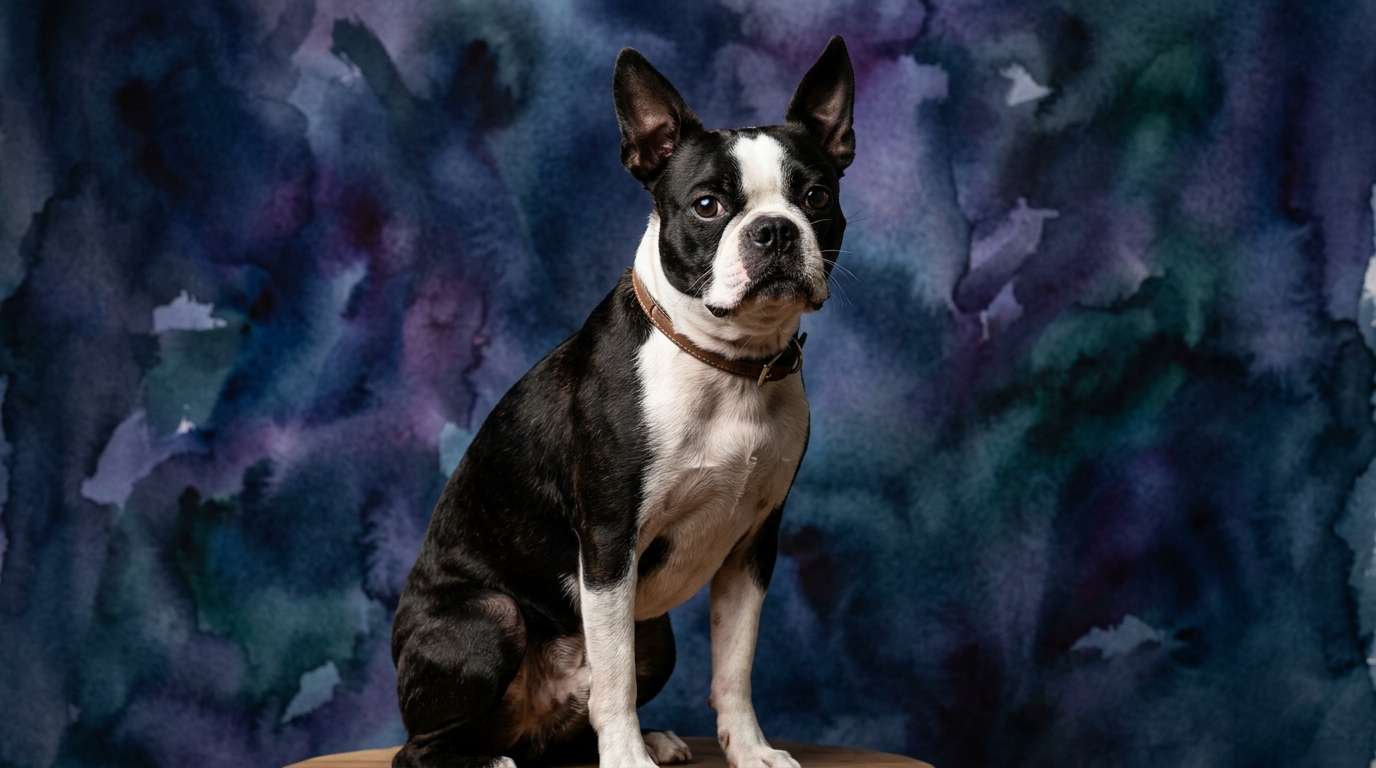
Ranking #54 on the Coren scale, the Boston Terrier presents a different, yet equally charming, cognitive makeup. They share a "Problem Solving" score of 3/5 with the Yorkie, demonstrating comparable abilities to figure things out, often with a curious and amiable approach. Their "Training Speed" is 3/5, meaning they learn at a steady, average pace, and their "Memory" is also 3/5, requiring consistent reinforcement for optimal retention. Like the Yorkie, their "Social Intelligence" is high at 4/5, making them exceptionally attuned to their human companions. A defining trait is their lower "Instinctive Drive" at 2/5, resulting in less inherent inclination for intense chasing, digging, or territorial behaviors, contributing to their reputation as a calm house dog.
Where the Yorkshire Terrier Wins Cognitively
The Yorkshire Terrier demonstrates clear cognitive strengths, particularly in areas related to learning efficiency and innate drives. Their Coren ranking at #27 places them significantly higher than the Boston Terrier at #54, indicating a generally greater aptitude for understanding and obeying new commands in fewer repetitions. This efficiency is reflected in their "Training Speed" score of 4/5, surpassing the Boston Terrier's 3/5. Yorkies grasp new concepts quickly, making them exceptionally responsive to structured training sessions and capable of learning a wide array of tricks and obedience tasks with relative ease.
Furthermore, the Yorkie's "Memory" score of 4/5 provides a distinct advantage. They exhibit robust recall for previously learned behaviors and routines, meaning that once a command is mastered, it tends to stick. This strong memory contributes to their reliability in maintaining good habits and remembering boundaries set by their owners. Coupled with an "Instinctive Drive" of 4/5, Yorkies possess a tenacious spirit and a natural inclination to engage with their environment. While this can manifest as typical terrier pursuits like chasing small critters or digging, it also fuels a drive to explore and interact, providing a strong foundation for activities like agility or scent work when properly channeled. Their higher instinctive drive, compared to the Boston Terrier's 2/5, means they often bring a more intense focus and determination to tasks that tap into these inherent motivations, making them potentially more driven in certain types of cognitive challenges.
Where the Boston Terrier Wins Cognitively
While the Boston Terrier's individual IQ scores might appear slightly lower in some categories compared to the Yorkshire Terrier, their cognitive profile offers distinct advantages, particularly in their balanced approach and lower intrinsic intensity. Both breeds share an impressive "Social Intelligence" score of 4/5, indicating an equal adeptness at understanding human cues and integrating into family dynamics. However, the Boston Terrier's lower "Instinctive Drive" at 2/5, compared to the Yorkie's 4/5, presents a unique cognitive benefit for certain lifestyles. This reduced drive means they are typically less prone to intense prey drives, obsessive digging, or persistent vocalization. Cognitively, this translates to fewer internal distractions stemming from innate urges, potentially allowing for a more settled and less demanding mental state within a home environment.
Their "Problem Solving" score of 3/5, matching the Yorkie, suggests they are equally capable of navigating simple challenges, but often do so with a more relaxed demeanor. Where a Yorkie might tackle a puzzle with determined terrier energy, a Boston Terrier might approach it with a calm curiosity, often seeking human assistance or interaction as part of their solution. This balanced cognitive approach, combined with their strong social intelligence, means Boston Terriers often excel in roles where companionship and harmonious living are paramount. Their moderate "Training Speed" and "Memory" scores (both 3/5) indicate they are perfectly capable of learning and retaining information, simply requiring a bit more patience and consistent reinforcement. This combination makes them adaptable and pleasant companions, often perceived as having a more "go-with-the-flow" cognitive style that can be less intense for novice owners or those seeking a less driven companion.
Which is Easier to Train and Why
When evaluating ease of training, the Yorkshire Terrier generally holds an edge due to its superior "Training Speed" and "Memory" scores. A Yorkie's 4/5 in Training Speed means they typically pick up new commands and house rules more rapidly, often requiring fewer repetitions during initial learning phases. Their sharp recall (Memory 4/5) ensures that once a behavior is learned, it tends to stick, leading to more consistent performance over time. This makes them highly rewarding for owners who enjoy teaching complex commands or participating in dog sports like obedience or rally, where quick comprehension and reliable retention are key. Their higher "Instinctive Drive" (4/5) can also be leveraged in training, as their natural enthusiasm can be channeled into task completion, provided the owner understands how to motivate a terrier.
The Boston Terrier, with a "Training Speed" of 3/5 and "Memory" of 3/5, is certainly trainable but may require more patience and consistent reinforcement. They learn at a solid, average pace, meaning owners might need to dedicate slightly more time to solidify commands and ensure long-term retention. Their lower "Instinctive Drive" (2/5) means they might not be as inherently driven by traditional terrier motivations, which can be both a blessing and a challenge. While they might be less prone to chasing and digging, finding appropriate motivators (often treats or social praise, given their high social intelligence) is crucial to keep them engaged in training. Essentially, while both breeds are capable of becoming well-behaved companions, the Yorkie's cognitive profile lends itself to a somewhat faster and potentially more elaborate training journey for those who enjoy the process.
Which Suits Active Owners vs. Relaxed Owners
The cognitive makeup of these two breeds offers clear guidance for matching them with owner lifestyles. The Yorkshire Terrier, with its robust "Instinctive Drive" (4/5) and quick "Training Speed" (4/5), tends to thrive with more active and engaged owners. Their terrier spirit means they appreciate opportunities to explore, chase, and utilize their sharp minds. Owners who enjoy teaching new tricks, participating in dog sports like agility or earthdog trials, or simply taking frequent, stimulating walks will find the Yorkie's cognitive energy well-matched. Their strong memory and quick learning make them excellent candidates for advanced obedience or even canine freestyle, where complex routines are performed. An active owner understands that a Yorkie's mental stimulation is as important as physical exercise to prevent boredom-driven behaviors.
Conversely, the Boston Terrier, characterized by its lower "Instinctive Drive" (2/5) and strong "Social Intelligence" (4/5), is often an ideal fit for more relaxed owners or those seeking a companion primarily for indoor activities and gentle outdoor strolls. Their moderate training speed and memory mean they are responsive to consistent, calm training but aren't typically driven by an intense need for constant mental challenges or physical exertion. Boston Terriers are content to be close companions, often happy with a few short play sessions and daily walks. Their cognitive profile makes them adaptable to apartment living and less demanding in terms of structured "work." Relaxed owners will appreciate their even temperament and their strong desire to simply be part of the family, without the constant need for redirection of strong innate drives.
The Verdict
Opt for a Yorkshire Terrier if you seek a quick-witted companion eager to learn, excel in structured training, and participate in active, mentally stimulating pursuits. Their strong memory and spirited drive suit owners ready to engage their terrier's keen intellect and inherent zest for life.
Select a Boston Terrier if you desire a highly social, adaptable companion with a more relaxed demeanor and lower instinctive drives, perfect for a harmonious home life. They thrive with patient owners who appreciate their amiable nature and steady learning pace, valuing companionship above intense activity.
🧠 Find Your Pet's IQ Score
Our Pet IQ Lab assessment covers 25+ tests across 5 cognitive dimensions — personalized to your breed.
Take the Full IQ Test →Frequently Asked Questions
Are Yorkshire Terriers harder to live with due to their high instinctive drive?
While their 4/5 instinctive drive means Yorkies have strong natural urges like chasing or digging, this doesn't necessarily make them harder to live with. It simply means owners should be prepared to provide appropriate outlets for these drives through play, training, and mental enrichment to ensure a well-adjusted companion.
Do Boston Terriers struggle with training because of their average training speed?
Not at all. A Boston Terrier's 3/5 training speed means they learn at a solid, average pace, not that they struggle. They respond very well to consistent, positive reinforcement and patient teaching, making them perfectly capable of mastering obedience and becoming well-mannered companions.
Which breed is more adaptable to apartment living based on their intelligence profile?
Both breeds can adapt well to apartment living, but the Boston Terrier's lower instinctive drive (2/5) often makes them slightly more naturally suited. Their reduced urge for intense activity and chasing, combined with high social intelligence, means they are typically content with indoor companionship and moderate outdoor exercise, requiring less redirection of innate behaviors.