
Side-by-Side Cognitive Profile: Yorkie vs. Bull Terrier
At The Cosmic Pet Pet IQ Lab, we assess canine intelligence across five key dimensions, providing a nuanced understanding of each breed's mental landscape. Let's examine how the Yorkshire Terrier and Bull Terrier stack up.
The Yorkshire Terrier, ranked #27 by Coren for obedience and working intelligence, presents a compelling cognitive profile. Their Problem Solving is rated 3/5, indicating an aptitude for navigating minor environmental challenges and deciphering moderate puzzles. Training Speed shines at 4/5, suggesting a quick grasp of new commands and an eagerness to learn. Social Intelligence is also robust at 4/5, enabling them to keenly interpret human emotions and engage in complex familial interactions. Their Instinctive Drive scores 4/5, reflecting a strong prey drive and territorial awareness typical of their heritage, while Memory is excellent at 4/5, ensuring consistent recall of learned behaviors and routines.
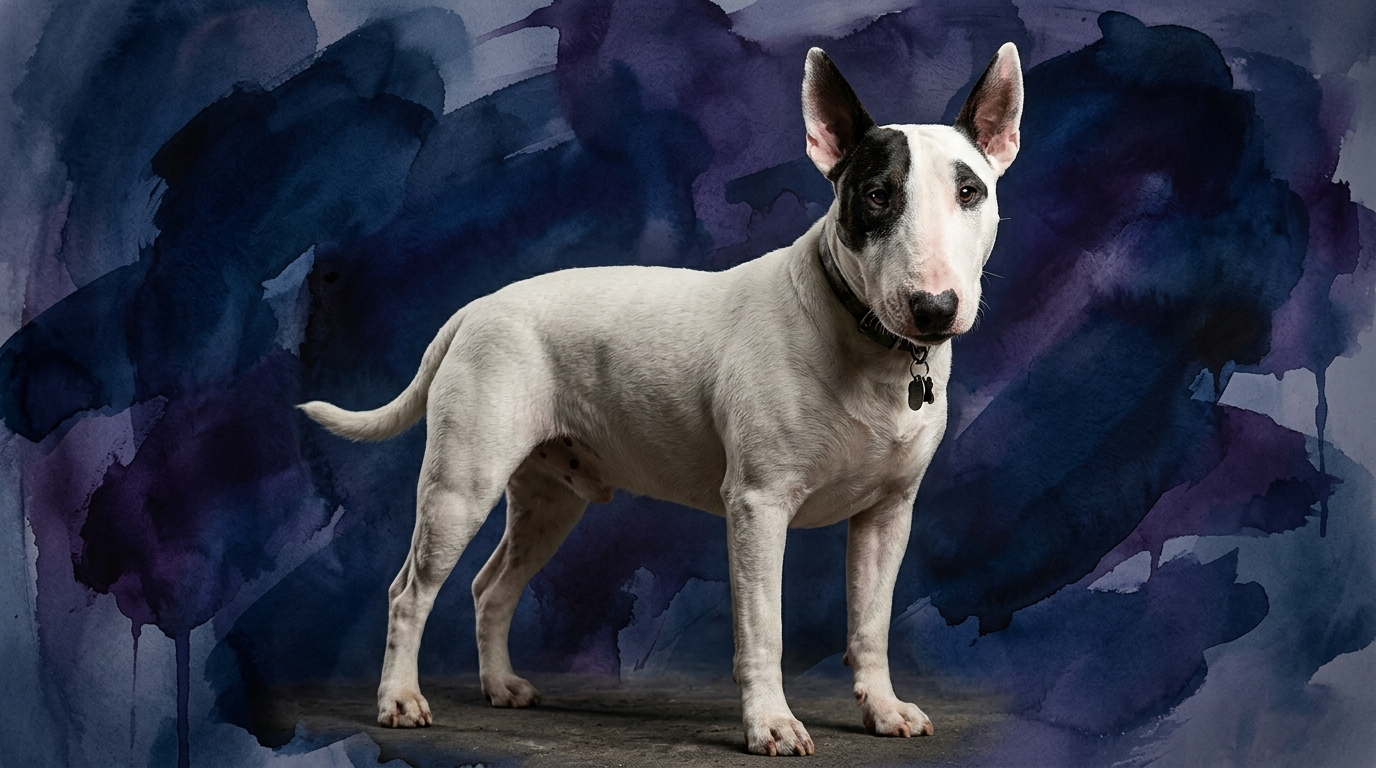
In contrast, the Bull Terrier, with a Coren rank of #66, offers a different set of cognitive strengths and challenges. Their Problem Solving ability is 3/5, matching the Yorkie, but often manifesting through persistence and physical manipulation rather than intricate strategy. Training Speed is 3/5, implying they require more patience and repetition to master new tasks. Social Intelligence sits at 3/5; while capable of strong bonds, they may be less attuned to subtle human cues than their smaller counterpart. Instinctive Drive is 3/5, indicating a moderate, often focused, drive, and their Memory is also 3/5, solid for core commands but potentially requiring more frequent refreshers for less practiced skills.
Where the Yorkshire Terrier Cognitively Excels
When comparing these two Terrier breeds, the Yorkshire Terrier demonstrates a clear advantage in several cognitive dimensions, contributing to their higher Coren ranking. Their superior Training Speed, rated 4/5 compared to the Bull Terrier's 3/5, means Yorkies typically pick up new commands and routines in fewer repetitions. This efficiency in learning makes them a more straightforward companion for owners who enjoy teaching tricks or participating in obedience training, as they quickly forge associations between actions and desired outcomes.
The Yorkie's Social Intelligence, scoring 4/5 against the Bull Terrier's 3/5, highlights their exceptional ability to read and respond to human emotions and intentions. This heightened social acumen allows them to adapt their behavior more fluidly to their human companions' moods, fostering a deeply responsive and less demanding interactive experience. They often anticipate needs and react with sensitivity, making them highly empathetic companions.
Furthermore, the Yorkshire Terrier's Memory, also 4/5 compared to the Bull Terrier's 3/5, contributes significantly to their ease of integration into a household. Their robust recall ensures that learned behaviors, house-training rules, and social boundaries remain consistent over time, requiring less frequent reinforcement. This strong memory also extends to remembering people, places, and routines, making them reliable in established environments and quick to recognize familiar faces.
Where the Bull Terrier Cognitively Shines
While the Bull Terrier's cognitive scores are generally lower or equal to the Yorkshire Terrier's, their specific profile reveals distinct strengths that excel in different contexts. Their Problem Solving ability, rated 3/5 like the Yorkie, often manifests with a unique blend of physical tenacity and determined effort. Bull Terriers, with their robust build and inherent resolve, might be more inclined to physically manipulate objects or persist through challenges that a smaller or less physically dominant dog might abandon. This translates to a practical, hands-on approach to problem-solving, where sustained effort and physical engagement are key.
The Bull Terrier's Instinctive Drive, rated 3/5 compared to the Yorkie's 4/5, while numerically lower, possesses a quality of focused determination that can be a cognitive asset. Their drive is often less reactive and more about sustained pursuit of a goal once engaged. This means that when their drive is properly channeled, such as in scent work, specific agility tasks, or disciplined play, they can exhibit remarkable focus and endurance. This resolute nature, though sometimes perceived as stubbornness in training, can be a strength when an owner seeks a dog capable of concentrated effort on a single objective, leveraging their inherent mental fortitude to see tasks through.
Ease of Training: Behavioral Differences Unpacked
When considering ease of training, the cognitive profiles of the Yorkshire Terrier and Bull Terrier diverge significantly, influencing their behavioral responses to instruction. The Yorkshire Terrier, with its 4/5 Training Speed and 4/5 Social Intelligence, is generally considered easier to train. They are quick to grasp new concepts, often requiring fewer repetitions to solidify a command. Their high social intelligence means they are attuned to their owner's cues and desires, making them eager to please and responsive to positive reinforcement. For instance, a Yorkie will typically associate a 'sit' command with a treat and perform it reliably after just a few sessions, driven by their desire for interaction and reward. Their smaller size also makes them physically less challenging to manage during initial training phases.
The Bull Terrier, on the other hand, presents a more challenging training prospect due to their 3/5 Training Speed and 3/5 Social Intelligence. They require greater patience and more consistent repetition to internalize commands. Their social intelligence, while present, means they might not be as immediately receptive to subtle human signals or as inherently motivated by pleasing their owner alone. Bull Terriers possess a strong, independent will that can be mistaken for stubbornness; they are not inherently disobedient but rather self-assured and often need to understand the 'why' or find the personal benefit in a task. For example, teaching a Bull Terrier 'recall' might require more creative motivation, such as a high-value toy or a game, rather than just a simple treat, because their focus can be harder to redirect. Effective Bull Terrier training demands creativity, consistency, and a deep understanding of their unique motivations, often turning training into a collaborative problem-solving exercise rather than a simple command-and-response routine.
Matching Cognitive Profiles to Lifestyles: Active vs. Relaxed Owners
Understanding the cognitive makeup of the Yorkshire Terrier and Bull Terrier is crucial for matching them with the right owner lifestyle, ensuring both dog and human thrive. For active owners seeking a highly engaged and responsive companion, both breeds offer unique benefits. The Yorkshire Terrier, despite its diminutive size, possesses a 4/5 Instinctive Drive and 4/5 Memory, making them surprisingly energetic and keen participants in activities like agility, trick training, or long walks. Their excellent memory means they retain complex routines, and their social intelligence (4/5) ensures they are highly interactive partners who thrive on consistent mental and physical stimulation. An active owner who enjoys teaching new skills and engaging in interactive play will find a Yorkie a willing and capable partner.
Bull Terriers are also well-suited for active owners, but their activity needs manifest differently. Their robust build and need for regular physical exertion demand consistent walks, runs, or structured play sessions. While their Instinctive Drive is 3/5, it's a focused drive that, when channeled, can lead to sustained engagement in activities like hiking, competitive dog sports, or challenging obedience work. Owners who enjoy physical activities and are prepared to invest significant, patient effort into creative training will find a determined and resilient partner in a Bull Terrier, preventing the boredom that can lead to undesirable behaviors.
For more relaxed owners, the considerations shift. A Yorkshire Terrier can adapt to a somewhat relaxed lifestyle, provided their moderate problem-solving (3/5) and strong instinctive drive (4/5) are still met with adequate mental stimulation and moderate physical activity. They are content to be close companions, but their cognitive profile means they are not simply 'lap dogs'; they require regular engagement, puzzle toys, and short training sessions to prevent mischief and boredom. A relaxed owner who enjoys quiet companionship but is still willing to provide consistent, albeit less intense, mental challenges can find a Yorkie fits well.
The Bull Terrier is generally less suited for purely relaxed owners. While they enjoy downtime with their family, their cognitive profile, particularly their problem-solving (3/5) and the need to channel their unique drive, means they require an owner who is prepared to provide consistent structure, physical outlets, and mental engagement. A relaxed owner who does not provide sufficient outlets for their physical and mental energy might find a Bull Terrier becomes bored, destructive, or overly boisterous. Their well-being depends heavily on a dedicated owner who understands and caters to their specific needs for activity and purpose.
The Verdict
Choose the Yorkshire Terrier if you seek a highly responsive companion eager to learn, quick to pick up new tasks, and attuned to your emotional states, thriving on consistent interaction and mental challenges.
Opt for the Bull Terrier if you appreciate a resilient, determined companion with a unique personality, and are prepared to invest significant, patient effort into creative training and consistent physical and mental engagement.
🧠 Find Your Pet's IQ Score
Our Pet IQ Lab assessment covers 25+ tests across 5 cognitive dimensions — personalized to your breed.
Take the Full IQ Test →Frequently Asked Questions
Are Yorkshire Terriers easy to house train?
With their 4/5 training speed and memory, Yorkshire Terriers can be house trained relatively quickly with consistency, frequent potty breaks, and positive reinforcement. However, their small bladders mean diligence and frequent opportunities are key to success.
Do Bull Terriers get along with other pets?
Bull Terriers, with their 3/5 social intelligence, can coexist with other pets if properly socialized from a young age and given careful introductions. Their strong will necessitates supervision and consistent training to ensure harmonious multi-pet households.
What kind of mental stimulation do these breeds need?
Yorkshire Terriers benefit from puzzle toys, learning new tricks, and interactive games, leveraging their strong memory and social intelligence. Bull Terriers thrive on structured training, scent work, and challenging play that harnesses their determination and problem-solving skills, requiring consistent engagement to prevent boredom.