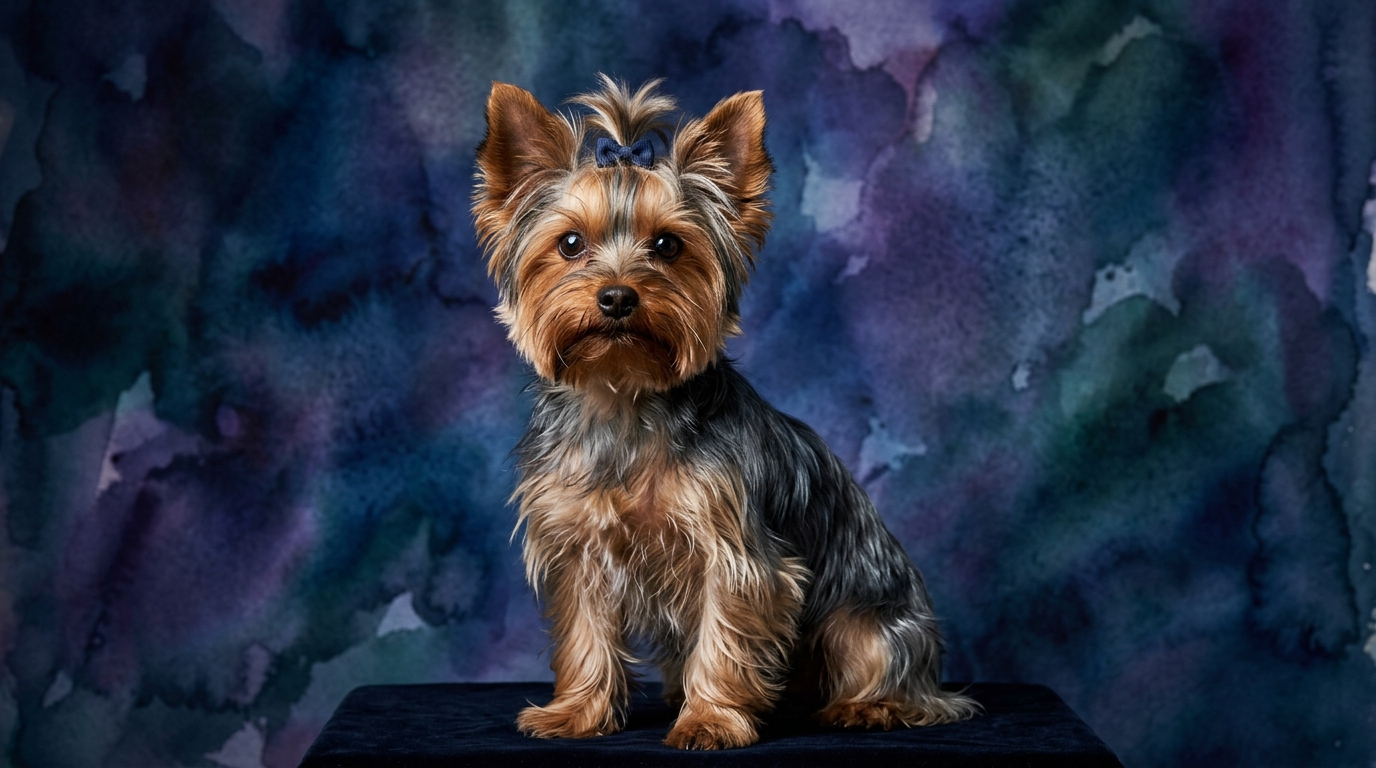
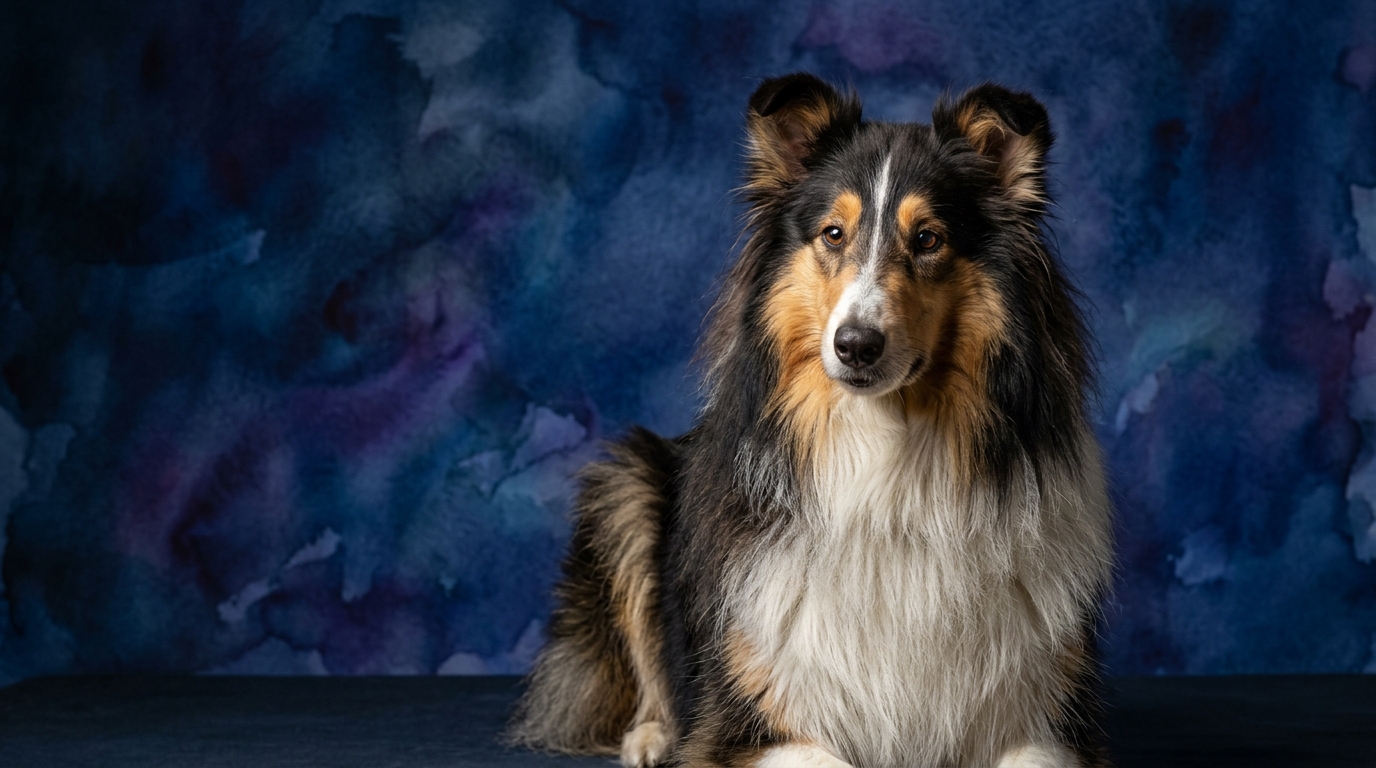
Side-by-Side Cognitive Profile
The Cosmic Pet Pet IQ Lab assesses canine intelligence across five critical dimensions. For the Yorkshire Terrier, a Terrier breed, its profile shows Problem Solving 3/5, Training Speed 4/5, Social Intelligence 4/5, Instinctive Drive 4/5, and Memory 4/5, placing it at Coren rank #27. This terrier’s cognitive strengths lean towards social engagement and a tenacious drive.
In contrast, the Collie (Rough), a Herding breed, presents a profile of Problem Solving 4/5, Training Speed 4/5, Social Intelligence 3/5, Instinctive Drive 3/5, and Memory 5/5, earning it a Coren rank #16. The Collie’s cognitive prowess is notably marked by its exceptional memory and strategic problem-solving capabilities.
Delving into Problem Solving, the Yorkie’s 3/5 suggests they may approach new challenges with more reliance on trial-and-error or learned patterns, often needing human guidance for complex puzzles. The Collie’s 4/5 indicates a higher capacity for independent thought and strategic thinking, reflecting their ancestral need to navigate intricate herding scenarios.
Both breeds share a 4/5 score in Training Speed, meaning they generally pick up new commands and routines with impressive quickness. However, their motivations differ: the Yorkie often thrives on close human interaction and praise, while the Collie responds well to clear, consistent instructions and purposeful tasks.
Social Intelligence sees the Yorkie at 4/5, demonstrating a keen sensitivity to human emotions and social cues, often forming profound, empathetic bonds. The Collie’s 3/5 suggests a more focused social understanding, perhaps more attuned to group dynamics and managing a ‘flock’ rather than intensely mirroring individual human emotional states.
Instinctive Drive is 4/5 for the Yorkie, manifesting as a strong terrier urge to chase, dig, and explore with persistent curiosity. The Collie’s 3/5 drive is rooted in herding, translating into a desire for structure and purpose, guiding rather than relentlessly pursuing.
Finally, Memory is 4/5 for the Yorkie, indicating good recall for routines and commands, contributing to their adaptability. The Collie’s outstanding 5/5 memory is a hallmark, allowing them to retain a vast repertoire of complex tasks and spatial information over extended periods, crucial for their herding heritage.
Where the Yorkshire Terrier Wins Cognitively
The Yorkshire Terrier’s primary cognitive advantage lies in its superior Social Intelligence (4/5). This enables them to form exceptionally deep, reciprocal emotional bonds, often anticipating their owner's moods and reacting to subtle changes in tone or body language with remarkable empathy. Their ability to read human cues makes them incredibly responsive and attuned companions, fostering a profound sense of connection.
While their Problem Solving is rated 3/5, the Yorkie’s high Instinctive Drive (4/5) fuels a tenacious, persistent approach to challenges within their immediate environment. They excel at problem-solving that involves physical manipulation, like navigating obstacles to reach a desired toy or figuring out how to access a favorite spot, driven by their keen senses and unwavering curiosity rather than abstract reasoning.
Where the Collie (Rough) Wins Cognitively
The Collie (Rough) truly shines with its exceptional Memory (5/5). This allows them to recall an extensive array of commands, complex task sequences, and spatial information with remarkable accuracy, even after long periods. Their ability to retain detailed instructions makes them incredibly reliable partners for intricate obedience, agility, or service work, where consistent execution of learned behaviors is paramount.
Furthermore, the Collie’s Problem Solving at 4/5 indicates a more strategic and analytical approach to novel situations. Drawing from their herding background, they can assess environments, anticipate movements, and devise plans to achieve goals, whether it’s gently guiding family members or figuring out how to manipulate latches. This foresight in their actions demonstrates a deeper cognitive processing than simple reactive responses.
Training Ease: Unpacking Behavioral Differences
Both breeds score 4/5 in Training Speed, indicating a rapid ability to learn new commands, yet their behavioral nuances influence the training experience. The Yorkshire Terrier's high social intelligence and desire for close interaction make them highly motivated by praise and attention, eager to please their human companions. However, their strong instinctive drive (4/5) means they can be easily distracted by novel scents or sounds, requiring consistent engagement and redirection to maintain focus. Their tenacious nature can also lead to stubbornness if they perceive a task as unrewarding, necessitating patient, positive reinforcement and varied training techniques to keep them engaged and prevent independent decision-making.
The Collie (Rough) also grasps instructions quickly, benefiting from their exceptional memory and problem-solving skills to retain complex sequences. Their lower instinctive drive (3/5) compared to the Yorkie means they are generally less prone to independent chasing or digging, making them more focused during training sessions. Collies thrive on purpose-driven tasks and clear, consistent instruction, often excelling in structured activities like obedience or agility where their memory can be fully utilized. However, their social intelligence (3/5) suggests they might be less overtly motivated by purely emotional praise, responding better to a balanced approach that includes clear objectives and a sense of accomplishment. Their herding instinct, if not properly channeled through training, can manifest as a desire to 'manage' family members, sometimes with gentle nudges or nips at heels.
Suitability for Active vs. Relaxed Owners
For owners seeking an active, interactive companion, the Yorkshire Terrier is an excellent fit. Despite their small stature, their 4/5 instinctive drive and high social intelligence mean they thrive on regular mental stimulation, interactive play, and consistent engagement. They enjoy short, frequent training sessions, puzzle toys, and exploring their environment, adapting well to apartment living if their cognitive and physical needs are met through structured activities rather than just passive companionship. Owners who appreciate a dog deeply attuned to their presence and willing to participate in various small-scale adventures will find a Yorkie a delightful partner.
The Collie (Rough) suits active owners who value purpose and structure in their dog's routine. While their instinctive drive is 3/5, this translates into a need for consistent mental engagement that mirrors their ancestral herding work, such as advanced obedience, agility, or even trick training. Collies excel with owners who can provide long walks, structured training sessions, and opportunities for mental challenges that tap into their problem-solving and memory. They are not typically frantic in their energy but require consistent, purposeful activity to prevent boredom and destructive behaviors. A Collie can adapt to a more relaxed home environment, provided their daily schedule includes sufficient mental and physical exercise to satisfy their intelligent, working breed nature.
The Verdict: When to Choose Each
The Verdict
Choose the Yorkshire Terrier when you seek a highly socially intelligent, tenacious companion deeply attuned to human emotion, who thrives on interactive play and can adapt to varied living situations with consistent engagement.
Opt for the Collie (Rough) when prioritizing a dog with exceptional memory and strategic problem-solving abilities, suited for structured activities, consistent training, and a deep, reliable partnership in purposeful tasks.
🧠 Find Your Pet's IQ Score
Our Pet IQ Lab assessment covers 25+ tests across 5 cognitive dimensions — personalized to your breed.
Take the Full IQ Test →Frequently Asked Questions
Are Yorkshire Terriers difficult to train due to their terrier nature?
While Yorkshire Terriers possess a strong, independent terrier drive (4/5), their high training speed (4/5) and social intelligence (4/5) mean they are quite trainable. Consistency, positive reinforcement, and early socialization are key to channeling their tenacity effectively, preventing stubbornness and ensuring good manners.
Do Rough Collies need a lot of physical exercise daily?
Rough Collies require regular physical activity, but more importantly, they thrive on mental stimulation and purpose. Long walks, structured play, and training sessions that engage their problem-solving (4/5) and memory (5/5) are more beneficial than just endless running, fulfilling their herding-bred needs for mental work.
Which breed is better with children, a Yorkie or a Collie?
Both breeds can be good with children, but their approaches differ. Yorkies, with their high social intelligence, often form close bonds but require careful handling due to their small size. Collies, with their gentle herding instincts, are generally patient and protective, though their tendency to 'herd' can sometimes manifest as gentle nudging if not properly guided.