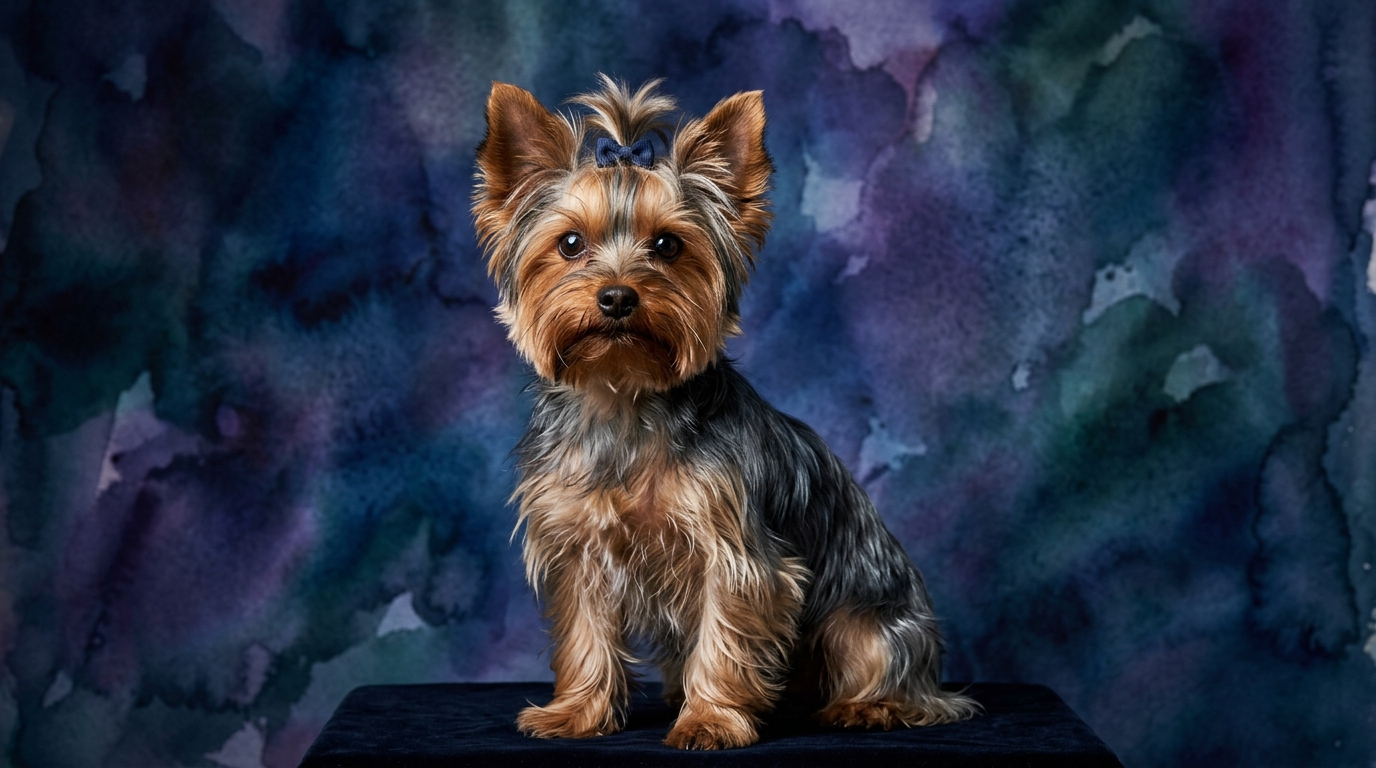
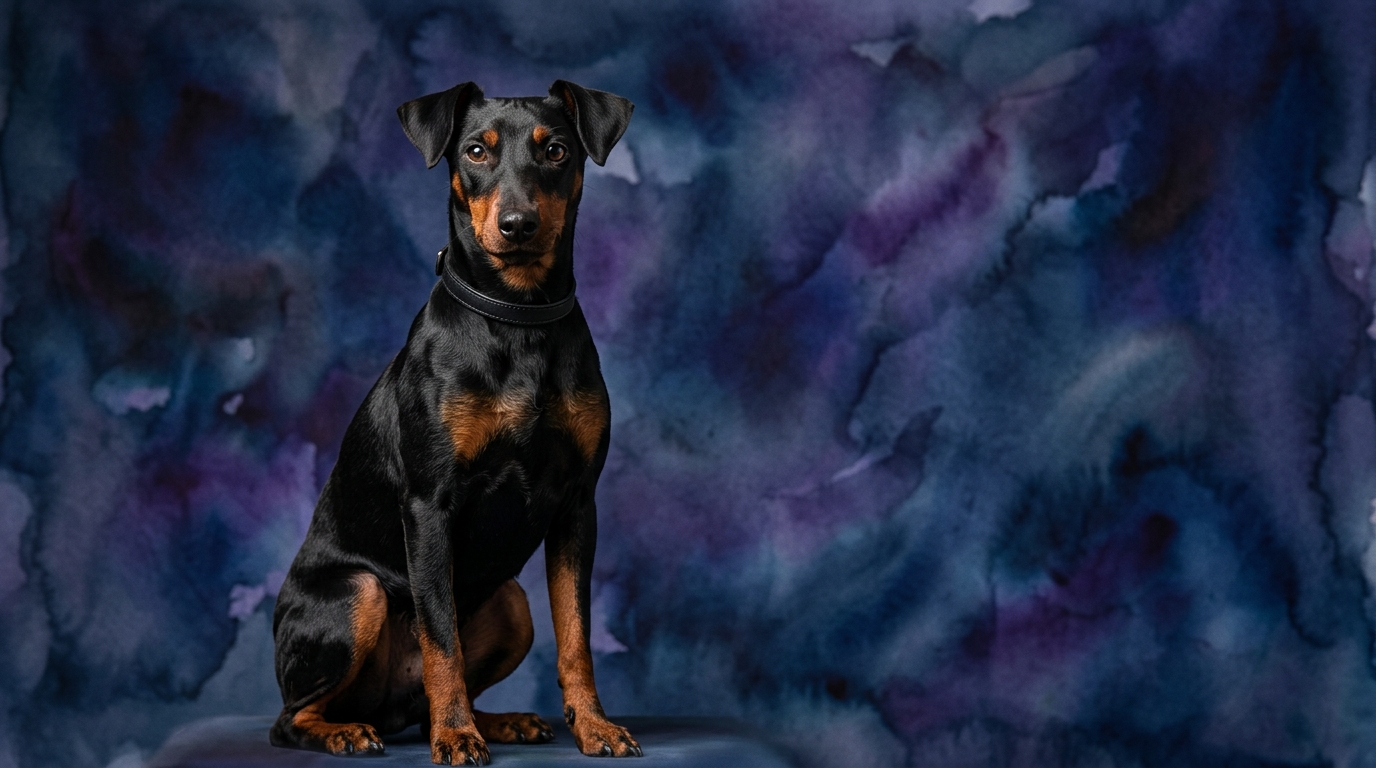
Side-by-Side IQ Profile: Yorkie vs. Manchester Terrier
The Cosmic Pet Pet IQ Lab employs a multi-dimensional approach to assess canine cognition, moving beyond simple 'smart' labels to understand the specific facets of a breed's intellect. The Yorkshire Terrier, recognized by Coren's rankings at #27, presents a robust cognitive profile, while the Manchester Terrier, though not Coren-ranked, offers a distinct, equally engaging set of mental attributes.
For **Problem Solving**, both breeds register a 3/5. This indicates a moderate capacity for independent thought and figuring out novel situations, suggesting they can learn through trial and error but might not consistently devise complex solutions without guidance. They are capable of navigating their environment and overcoming simple obstacles, but complex puzzles might require significant encouragement or a breakthrough moment.
In **Training Speed**, the Yorkshire Terrier scores 4/5, indicating a relatively quick grasp of new commands and routines, often needing fewer repetitions to solidify learning. The Manchester Terrier, with a 3/5, requires a more consistent and patient approach; while capable of learning, they may take longer to master new tasks, demanding more dedication from their trainers. This difference points to varying levels of receptiveness and focus during structured learning sessions.
**Social Intelligence** sees the Yorkshire Terrier at 4/5, suggesting a strong capacity for understanding human cues, forming deep bonds, and adapting to social dynamics within a family unit. They often seek human interaction and can be perceptive of emotional states. The Manchester Terrier's 3/5 indicates a more independent social nature; they connect with their families but might display a slightly less overt need for constant human validation, possessing a more self-contained social awareness.
Regarding **Instinctive Drive**, the Yorkshire Terrier again scores 4/5, reflecting a pronounced expression of typical terrier traits such as prey drive, digging, and barking, often channeled through focused energy. The Manchester Terrier, with a 3/5, still possesses these drives, but perhaps in a slightly less intense or more selective manner, exhibiting a focused determination often tied to its ratting heritage.
Finally, **Memory** is a strength for the Yorkshire Terrier at 4/5, meaning they tend to retain learned information, commands, and experiences effectively over time. The Manchester Terrier's 3/5 suggests a competent memory, but perhaps one that requires more reinforcement to maintain recall, especially for less frequently practiced tasks. This implies the Yorkie might be quicker to pick up old tricks after a break.
Where the Yorkshire Terrier Wins Cognitively
The Yorkshire Terrier demonstrates distinct cognitive advantages in several areas. Their higher Training Speed (4/5) means they typically absorb new commands with greater alacrity, making initial training periods smoother and often more rewarding for owners seeking rapid progress. This quick uptake is supported by their superior Memory (4/5), allowing them to retain a larger repertoire of commands and routines without constant refreshing. A Yorkie often remembers what was taught weeks or months prior, picking up where they left off with minimal prompting.
Furthermore, their elevated Social Intelligence (4/5) allows them to more readily tune into human intentions and emotional states, fostering a deeper, more responsive partnership. This makes them highly attuned companions, often anticipating desires or reacting appropriately to subtle cues. Their pronounced Instinctive Drive (4/5), while requiring proper management, can be channeled effectively into various dog sports or tasks, demonstrating a focused energy and tenacity in pursuing goals once understood. For example, a Yorkie might excel in agility, not just due to physical ability, but because their memory and trainability allow them to quickly learn and execute complex courses.
Where the Manchester Terrier Exhibits Unique Cognitive Strengths
While the Manchester Terrier's scores might not always surpass the Yorkie's, their cognitive profile offers unique strengths, particularly in areas requiring independent thought and focused determination. Their Problem Solving ability, rated 3/5 – equal to the Yorkie – manifests often in a more self-reliant context. A Manchester Terrier may approach a challenge with a tenacious, singular focus, drawing on their inherent terrier drive to work through an issue until a solution is found, even if it takes more time. This is less about quick human-led learning and more about persistent, self-directed exploration.
Their Instinctive Drive (3/5), though slightly lower than the Yorkie's, is characterized by a precise, historical purpose: ratting. This translates into a focused, unwavering determination when engaged in tasks that mimic their original function, such as scent work or precise pursuit games. This isn't a general exuberance but a directed, purposeful application of their cognitive energy. Their slightly lower Social Intelligence (3/5) can also be seen as a strength for owners who appreciate a dog with a more independent streak, one that is affectionate but not overly reliant on constant human direction, capable of entertaining itself or making its own decisions in certain contexts.
Which is Easier to Train and Why?
Based on their cognitive profiles, the Yorkshire Terrier is generally considered easier to train than the Manchester Terrier. The Yorkie's higher Training Speed (4/5) means they typically grasp new commands and routines more quickly, requiring fewer repetitions to achieve proficiency. This efficiency is significantly bolstered by their superior Memory (4/5), ensuring that once a command is learned, it is retained effectively over time, reducing the need for constant re-teaching.
Furthermore, the Yorkie's higher Social Intelligence (4/5) makes them more attuned to human instruction and more eager to please, often seeking to understand and respond to their owner's cues. This responsiveness creates a more receptive student. In contrast, the Manchester Terrier's Training Speed (3/5) and Memory (3/5) suggest that training will demand greater consistency, patience, and repetition. Their slightly more independent nature, reflected in their Social Intelligence (3/5), means they may sometimes be less inclined to blindly follow commands, requiring an owner to be more engaging and creative to maintain their focus and motivation. While both breeds are trainable, the Yorkie's cognitive makeup lends itself to a more straightforward and often faster training experience.
Which Suits Active Owners vs. Relaxed Owners?
For **active owners** seeking a companion for varied activities, both breeds offer engagement, but with different nuances. The Yorkshire Terrier, with its higher Instinctive Drive (4/5) and excellent Training Speed (4/5), can be an enthusiastic participant in dog sports like agility or obedience, provided their energy is channeled productively. Their strong Social Intelligence (4/5) means they thrive on interactive play and mental challenges with their human partners. They enjoy being involved in family outings and can adapt well to a dynamic lifestyle, always keen to learn a new trick or explore a new environment.
The Manchester Terrier, while also possessing a notable Instinctive Drive (3/5), often expresses it with a more focused intensity, particularly in activities that tap into their historical ratting instincts, such as earthdog trials or scent work. Their Problem Solving (3/5) and slightly more independent Social Intelligence (3/5) mean they appreciate tasks where they can apply their intellect with a degree of autonomy. They thrive with owners who provide consistent, engaging activities that satisfy their need for purpose, rather than just general high-energy exercise. They might be better suited to structured activities that allow them to work 'with' their owner rather than purely 'for' them.
For **relaxed owners**, the distinction becomes clearer. A Yorkshire Terrier can adapt to a more relaxed pace, especially if their social needs are met through companionship and moderate daily walks. Their strong social intelligence ensures they are content being close to their human family, even during quiet times, making them excellent lap companions. However, their 4/5 instinctive drive still mandates regular mental engagement to prevent boredom-induced behaviors.
A Manchester Terrier, despite its moderate ratings, requires a more specific kind of engagement even for relaxed owners. Their independent streak and focused instinctive drive (3/5) mean that while they might not need constant high-intensity exercise, they do require consistent mental stimulation and clear boundaries. A relaxed owner must still be prepared to offer structured play, short training sessions, or puzzle toys to satisfy their cognitive needs. Without this, their self-reliant nature might lead them to find their own 'work,' which may not always align with owner preferences. Neither breed is truly suited for a completely sedentary lifestyle without mental input, but the Yorkie's higher social intelligence makes them slightly more adaptable to a less 'task-oriented' form of companionship.
The Verdict: When to Choose Each
The Verdict
Choose the Yorkshire Terrier if you prioritize a highly trainable, socially responsive companion eager to learn and deeply connect, thriving on interactive engagement and retaining commands with ease.
Opt for the Manchester Terrier if you appreciate an independent, tenacious companion with a focused drive, valuing a dog that engages with challenges on its own terms and requires consistent, purpose-driven interaction.
🧠 Find Your Pet's IQ Score
Our Pet IQ Lab assessment covers 25+ tests across 5 cognitive dimensions — personalized to your breed.
Take the Full IQ Test →Frequently Asked Questions
Are Yorkshire Terriers good for first-time dog owners?
Yes, Yorkshire Terriers can be suitable for first-time owners due to their high social intelligence and training speed. Their eagerness to please and strong memory make the learning process generally smoother, though their instinctive drive still requires consistent guidance.
Do Manchester Terriers get along well with other pets?
Manchester Terriers can coexist with other pets, especially if socialized early, but their instinctive drive (3/5) might mean a stronger prey drive towards smaller animals. Their slightly lower social intelligence (3/5) suggests they might be more selective in their canine friendships than a Yorkie.
Which breed requires more mental stimulation to prevent destructive behavior?
Both breeds require mental stimulation, but the Manchester Terrier's independent problem-solving and focused instinctive drive often necessitate more structured, purpose-driven activities to prevent boredom. A Yorkie's higher social intelligence might make them more content with interactive play and companionship, though they still need engagement.