Side-by-Side IQ Profile
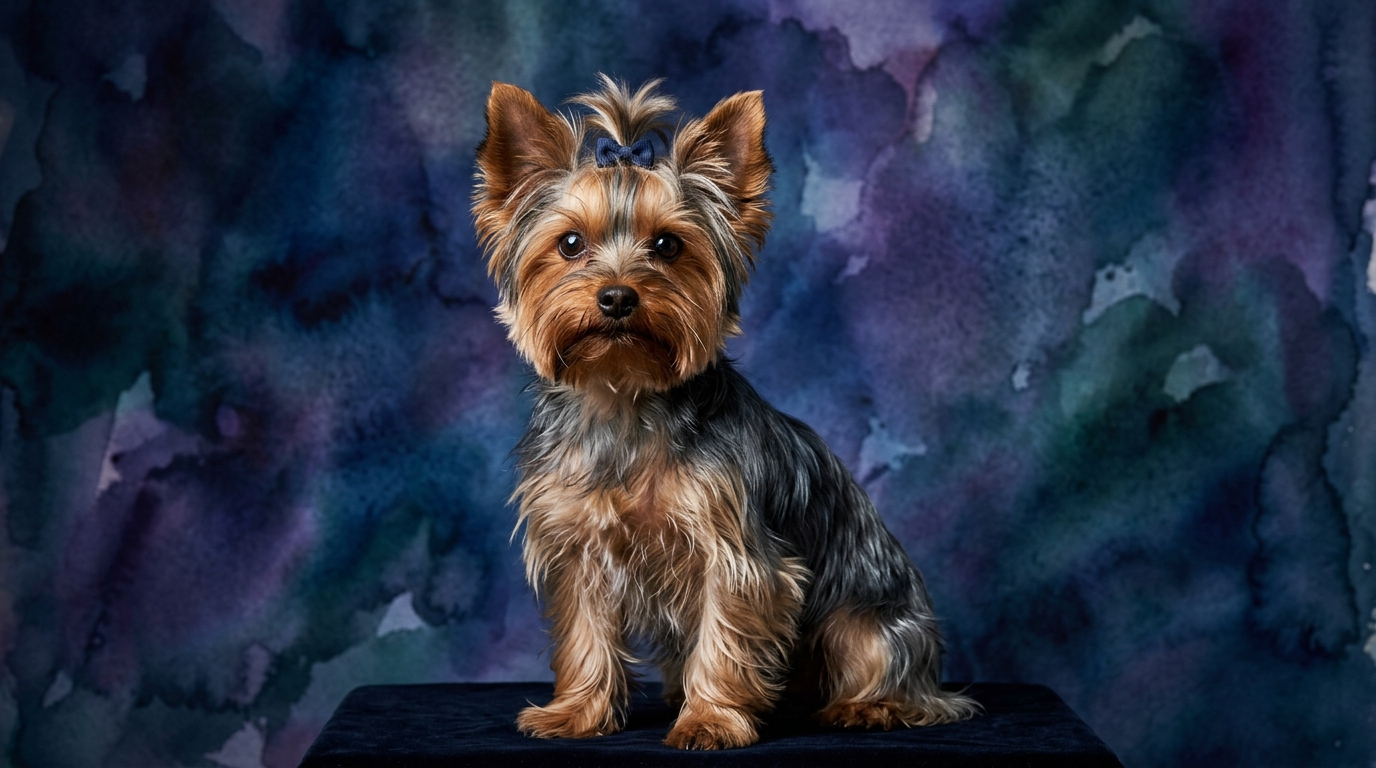
**Yorkshire Terrier (Terrier Group, Coren Rank #27):** This spirited companion registers a Problem Solving score of 3/5, indicating a capacity for independent thought and navigating novel situations, often with a tenacious terrier flair. Its Training Speed shines at 4/5, reflecting a quick grasp of commands and a responsiveness that makes structured learning rewarding. Social Intelligence also scores 4/5, pointing to a breed adept at reading human cues and forming strong bonds, often leveraging its charm. An Instinctive Drive of 4/5 speaks to its historical role as a ratting dog, manifesting as focused determination and a keen awareness of its surroundings. Finally, its Memory at 4/5 suggests a strong retention of learned behaviors and experiences, both positive and negative.
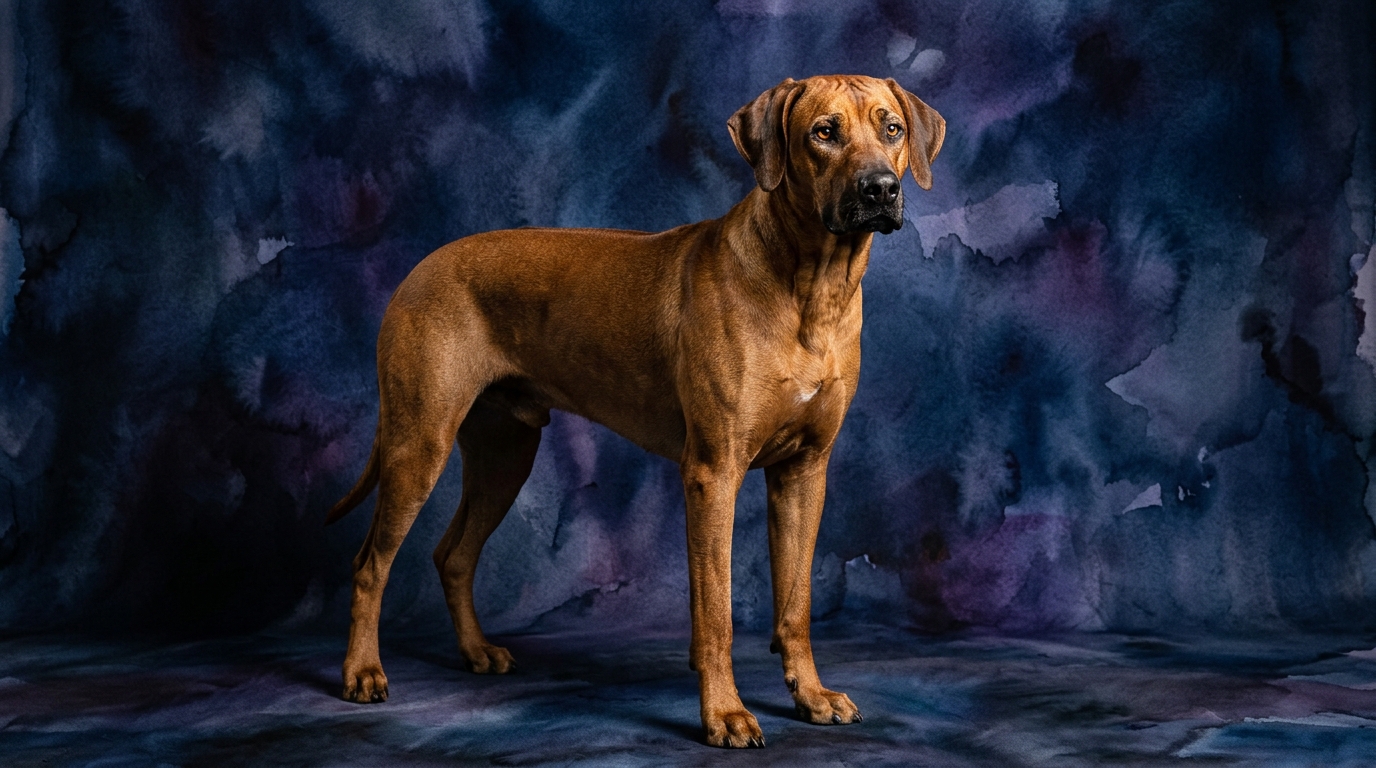
**Rhodesian Ridgeback (Hound Group, Coren Rank #52):** The majestic Rhodesian Ridgeback presents a Problem Solving score of 3/5, signifying an ability to assess and react to environmental challenges, often with a self-assured independence typical of its hound lineage. Its Training Speed stands at 3/5, implying that while capable of learning, it often requires more consistent motivation and a deeper understanding of its motivations compared to breeds eager for constant instruction. Social Intelligence also rates 3/5, suggesting a discerning nature; it forms deep bonds with its inner circle but can be reserved with strangers. An Instinctive Drive of 3/5 reflects its heritage as a big-game hunter, manifesting as a powerful prey drive and a strong sense of territory. Its Memory score of 3/5 indicates a solid capacity for recall, though perhaps less immediate or broad than some more biddable breeds.
Where Yorkshire Terrier Wins Cognitively
The Yorkshire Terrier demonstrates clear cognitive advantages in several key areas, particularly in its capacity for rapid learning and social engagement. With a Training Speed of 4/5, it often picks up new commands and routines with impressive alacrity, making it an excellent candidate for obedience, trick training, and even agility sports. This swift processing of new information means fewer repetitions are typically needed for a Yorkie to master a task. Its Social Intelligence, also rated 4/5, allows it to finely tune into human emotions and social dynamics, often adapting its behavior to elicit desired responses – a charming characteristic for a companion animal. Furthermore, its 4/5 Memory score means it not only learns quickly but retains that knowledge effectively, making long-term training goals more achievable. The Yorkie's Instinctive Drive, also 4/5, while rooted in its ratting past, translates into a determined focus that can be channeled effectively into various cognitive tasks, demonstrating a tenacious problem-solving approach to puzzles or desired rewards.
Where Rhodesian Ridgeback Wins Cognitively
While the Rhodesian Ridgeback's scores are generally equal to or slightly lower than the Yorkie's, its cognitive strengths manifest differently, reflecting its distinct evolutionary purpose and breed characteristics. Its Problem Solving score of 3/5, for instance, isn't about quick tricks but rather about independent decision-making and perseverance in complex, real-world scenarios. A Ridgeback might independently assess a situation, like tracking a scent or guarding its territory, and devise its own course of action, demonstrating a thoughtful, self-reliant intelligence rather than relying on constant human direction. Its Instinctive Drive, also 3/5, while lower than the Yorkie's, is applied on a grander scale; it's the drive to pursue, to protect, and to endure over long distances, requiring a blend of physical and mental stamina. This drive, combined with its memory, allows it to remember complex scent trails or territorial boundaries, showcasing a different kind of cognitive application suited to its working heritage. Its social intelligence, though 3/5, is characterized by a deep, discerning loyalty to its chosen family, requiring a more nuanced understanding of trust and companionship than the more universally affable Yorkie.
Which is Easier to Train and Why
Based on their respective IQ profiles, the Yorkshire Terrier is generally easier to train, primarily due to its superior Training Speed (4/5) and Social Intelligence (4/5). Yorkies often show a strong desire to please their owners and are quick to form associations between commands and actions, making positive reinforcement highly effective. Their ability to read human cues means they pick up on intentions and expectations rapidly, streamlining the learning process. While they possess a terrier stubbornness, their overall biddability and eagerness to engage in interactive learning sessions make them responsive pupils. In contrast, the Rhodesian Ridgeback, with a Training Speed of 3/5, presents a more significant training challenge. Ridgebacks are independent thinkers, often described as having a “what’s in it for me?” attitude. Their strong prey drive and protective instincts can sometimes override commands if not managed with consistent and firm, yet positive, leadership. Training a Ridgeback requires immense patience, understanding of their hound mentality, and a commitment to making training engaging and rewarding to overcome their inherent self-reliance and potential for selective hearing.
Which Suits Active Owners vs. Relaxed Owners
The choice between a Yorkshire Terrier and a Rhodesian Ridgeback hinges significantly on an owner's lifestyle and energy levels. The Rhodesian Ridgeback is unequivocally suited for active owners. This breed possesses substantial physical stamina and a deep-seated need for exercise and mental engagement. Daily vigorous activity, such as long runs, hikes, or structured training sessions, is crucial to prevent boredom and destructive behaviors. Their independent problem-solving and strong instinctive drive benefit immensely from activities like tracking, advanced obedience, or canine sports. Owners who enjoy outdoor adventures and can provide consistent physical and mental outlets will find a Ridgeback a devoted and capable companion. Conversely, while Yorkies are energetic little dogs and certainly enjoy walks and play, they are far more adaptable to a relaxed owner's lifestyle. Their smaller size means their exercise needs can often be met with indoor play and shorter, regular walks. While they thrive on mental stimulation and social interaction (Social Intelligence 4/5), they don't demand the same rigorous physical output as a Ridgeback. A relaxed owner who enjoys consistent companionship and can provide engaging indoor activities or short strolls would find the Yorkie a suitable match.
The Verdict
Choose the Yorkshire Terrier if you seek a highly trainable, socially astute companion for a more relaxed lifestyle, appreciating quick learning and adaptable companionship.
Opt for the Rhodesian Ridgeback if you are an active, experienced owner prepared to channel its independent problem-solving and strong instincts into vigorous exercise and consistent, patient training.
🧠 Find Your Pet's IQ Score
Our Pet IQ Lab assessment covers 25+ tests across 5 cognitive dimensions — personalized to your breed.
Take the Full IQ Test →Frequently Asked Questions
Do Yorkshire Terriers require a lot of mental stimulation despite their small size?
Absolutely. Despite their diminutive stature, Yorkshire Terriers possess a 3/5 Problem Solving score and 4/5 Memory, thriving on mental challenges like puzzle toys, learning new tricks, and consistent training to keep their minds engaged and prevent boredom.
How does the Rhodesian Ridgeback's instinctive drive impact its behavior as a pet?
The Ridgeback's 3/5 Instinctive Drive translates into a strong prey drive and protective tendencies. This means they require early socialization and consistent training to manage these natural instincts, ensuring they are well-behaved and safe around smaller animals and strangers.
Can a Rhodesian Ridgeback live in an apartment?
While possible, it's challenging. A Rhodesian Ridgeback's significant energy levels and need for extensive exercise, coupled with its 3/5 Instinctive Drive for patrolling, make a large yard or frequent access to open spaces highly beneficial for its well-being and temperament.