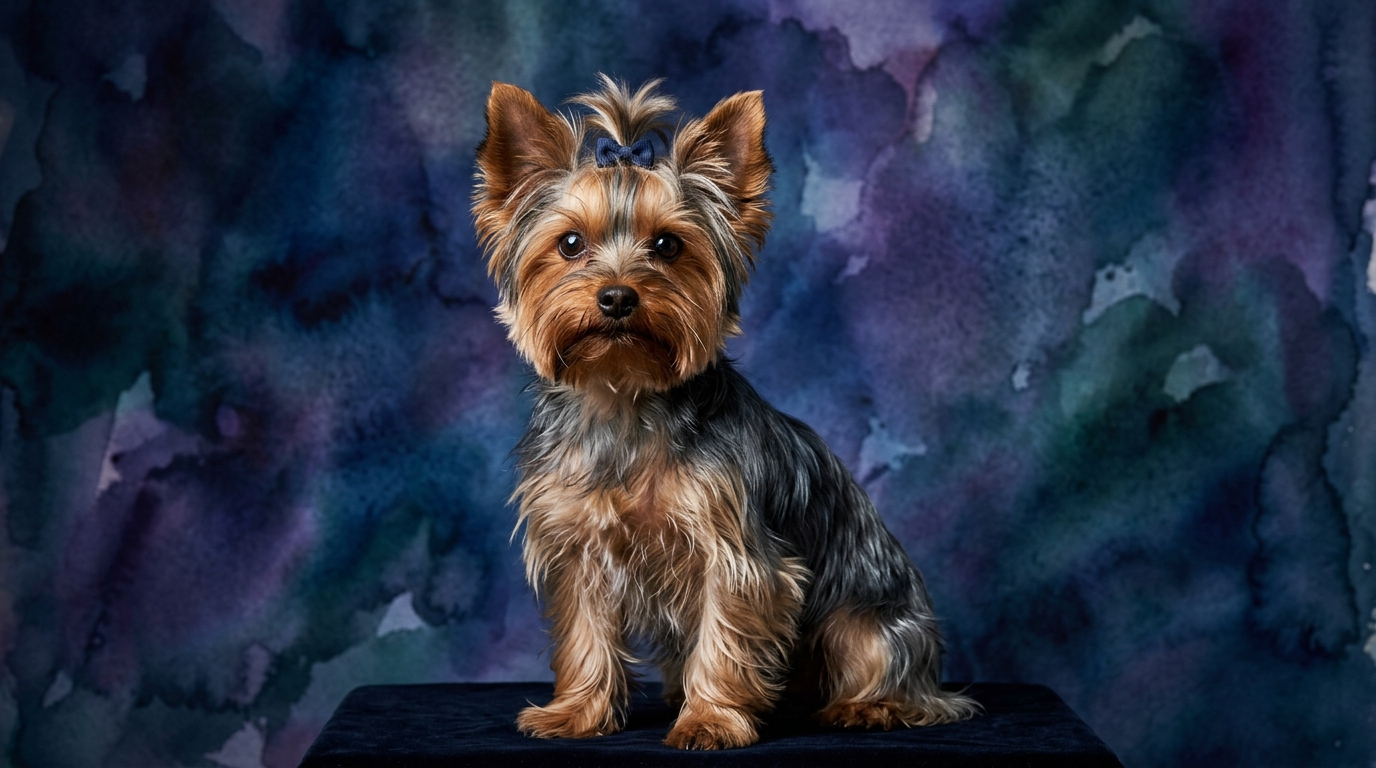

Side-by-Side IQ Profile: Yorkshire Terrier vs. Russian Toy
The Cosmic Pet Pet IQ Lab assesses canine cognition across five key dimensions, revealing a detailed picture for each breed. For the Yorkshire Terrier, we observe a Problem Solving score of 3/5, indicating a moderate capacity for independent thought in novel situations. Its Training Speed is a commendable 4/5, suggesting a quick grasp of new commands and routines. Social Intelligence for the Yorkie also rates at 4/5, reflecting its adeptness at understanding human cues and forming strong bonds. An Instinctive Drive of 4/5 points to its strong terrier heritage, with a notable propensity for chasing and exploring, while Memory at 4/5 means it retains learned behaviors and associations effectively.
The Russian Toy presents a slightly different cognitive fingerprint. Its Problem Solving ability, like the Yorkie, stands at 3/5, showing a similar moderate approach to tackling challenges. However, its Training Speed is rated 3/5, suggesting it may require a bit more repetition or patience during training sessions compared to the Yorkie. Social Intelligence for the Russian Toy is 3/5, indicating a good but perhaps less intense focus on human interaction compared to some breeds. Its Instinctive Drive also scores 3/5, reflecting a more moderate impulse for hunting or exploration, and its Memory is likewise 3/5, meaning it learns and remembers, though perhaps not with the same rapid retention as its Yorkshire counterpart.
Where the Yorkshire Terrier Wins Cognitively
The Yorkshire Terrier demonstrates a clear cognitive edge in several areas, primarily in its accelerated Training Speed, robust Social Intelligence, pronounced Instinctive Drive, and reliable Memory, all rated 4/5 compared to the Russian Toy's 3/5. This means a Yorkie typically absorbs new commands and routines more rapidly, often requiring fewer repetitions before a behavior becomes ingrained. Its heightened social intelligence allows it to more readily interpret human emotions and intentions, fostering a highly responsive and interactive partnership. The stronger instinctive drive, while needing appropriate outlets, means they often possess a greater zeal for engagement and task-oriented activities, and their superior memory ensures that both positive and negative associations, as well as learned commands, are retained with remarkable persistence.
Where the Russian Toy Wins Cognitively
While the Russian Toy's individual cognitive scores are generally a point lower than the Yorkshire Terrier's, its profile presents distinct advantages for specific lifestyles. With a 3/5 in Instinctive Drive, the Russian Toy often exhibits a less intense urge to chase, dig, or assert territory compared to its terrier cousin. This can translate into a more relaxed demeanor in diverse environments and a potentially easier integration into multi-pet households without the same level of predatory instinct management. Its 3/5 Social Intelligence, while perhaps less overtly demonstrative, still allows for deep, affectionate bonds without the potential for overwhelming demand for attention that some higher-rated social dogs might exhibit. For owners seeking a companion with a calmer, less demanding cognitive presence, the Russian Toy's balanced, moderate scores can be an optimal fit, providing companionship without excessive mental stimulation requirements.
Which is Easier to Train and Why
Based on their respective Training Speed scores, the Yorkshire Terrier, with its 4/5 rating, is generally easier and quicker to train than the Russian Toy, which scores 3/5. This difference isn't about one breed being 'smarter,' but rather about their inherent predisposition to absorb and execute commands. A Yorkie's higher training speed means it often picks up new cues with fewer repetitions, showing a more immediate understanding of desired behaviors. For instance, teaching a Yorkie 'sit' or 'stay' might involve fewer sessions before reliability is achieved, potentially due to its elevated social intelligence making it more attuned to human instruction and desire to please. The Russian Toy, while certainly trainable, may require a more patient, consistent approach, with trainers needing to break down tasks into smaller steps and provide more frequent positive reinforcement over a longer period to solidify learning. This isn't a deficiency but simply a difference in their cognitive processing speed for learned behaviors, meaning the Russian Toy might benefit more from short, engaging sessions to prevent mental fatigue.
Which Suits Active Owners vs. Relaxed Owners
The cognitive profiles of these two breeds offer distinct matches for varying owner lifestyles. The Yorkshire Terrier, with its 4/5 Instinctive Drive and 4/5 Social Intelligence, typically thrives with active owners who enjoy engaging in training, consistent play, and perhaps even dog sports. Their higher drive means they appreciate having 'jobs' or activities that channel their energy, whether it's learning new tricks, participating in agility, or going on varied walks. Owners who enjoy frequent interaction and providing ample mental stimulation will find a Yorkie's cognitive makeup highly rewarding. Their robust memory also means they remember routines well, which benefits owners who like structured daily activities.
Conversely, the Russian Toy, with its 3/5 scores across most cognitive dimensions, tends to be a better fit for more relaxed owners. Their moderate instinctive drive means they are generally content with less intense exercise and mental demands, making them excellent companions for those who prefer leisurely strolls and cozy indoor activities. While they still enjoy play and affection, their lower social intelligence and drive mean they might not constantly seek engagement, allowing for a more independent presence. Owners who appreciate a calm, affectionate lapdog that doesn't require constant cognitive challenges to prevent boredom will likely find the Russian Toy's temperament aligns perfectly with their less demanding lifestyle.
The Verdict
Choose the Yorkshire Terrier if you seek a highly interactive, quick-to-learn companion eager for engagement and consistent mental challenges.
Opt for the Russian Toy if you prefer a more laid-back, affectionate companion whose moderate energy and cognitive demands fit a relaxed home environment.
🧠 Find Your Pet's IQ Score
Our Pet IQ Lab assessment covers 25+ tests across 5 cognitive dimensions — personalized to your breed.
Take the Full IQ Test →Frequently Asked Questions
Do Yorkshire Terriers require a lot of mental stimulation?
Yes, with a 4/5 Instinctive Drive and Memory, Yorkshire Terriers benefit significantly from regular mental engagement. This can include training sessions, puzzle toys, and varied environments to explore, preventing boredom and channeling their natural terrier curiosity effectively.
Is a Russian Toy difficult to train due to its 3/5 Training Speed?
A 3/5 Training Speed means the Russian Toy is certainly trainable, but it may require more patience and consistency than breeds with higher scores. Breaking tasks into smaller steps and using positive reinforcement frequently will yield good results, just be prepared for a slightly slower learning curve.
Which breed is better for first-time dog owners?
For first-time owners, the Russian Toy's more moderate instinctive drive and social intelligence might be slightly less demanding, making it a good choice. However, a Yorkshire Terrier's eagerness to learn can also be rewarding for new owners willing to invest in consistent training and interaction.