
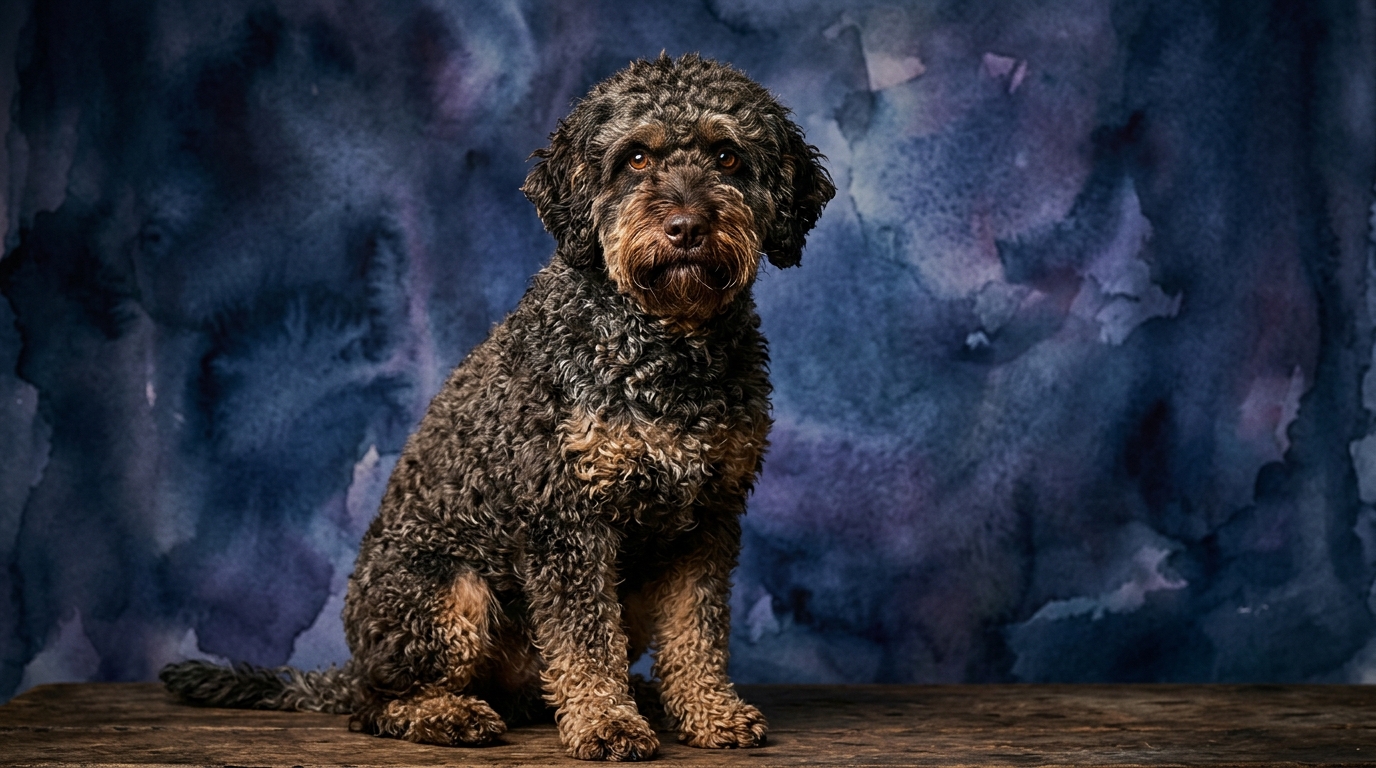
Side-by-Side IQ Profile: Yorkshire Terrier vs. Spanish Water Dog
The Cosmic Pet Pet IQ Lab assesses canine intelligence across five key dimensions, providing a granular view of each breed’s cognitive strengths. Let’s examine how the Yorkshire Terrier and Spanish Water Dog measure up.
**Yorkshire Terrier (Coren Rank #27):** This spirited companion, belonging to the Terrier group, exhibits a distinct cognitive makeup tailored to its role as a charming, yet tenacious, household member.
Problem Solving (3/5): These spirited companions are often quite ingenious when it comes to navigating their domestic landscape, figuring out how to reach a prized toy on a shelf or manipulating a blanket to create a cozy hideaway. Their resourcefulness shines in finding shortcuts to their desires within the home, demonstrating a cleverness focused on their immediate, personal environment rather than complex, abstract puzzles.
Training Speed (4/5): Yorkies typically absorb new commands and routines with impressive alacrity. Their keen desire to engage with their primary handler, coupled with their sharp observational skills, allows them to quickly associate actions with positive outcomes, making them responsive learners in obedience and trick training.
Social Intelligence (4/5): Exhibiting a profound attunement to human emotions and household dynamics, Yorkies often form intensely loyal bonds. They are adept at reading subtle cues from their family members, anticipating needs, and offering comfort or playful interaction precisely when it seems most appropriate, showcasing a deep understanding of their social unit.
Instinctive Drive (4/5): Possessing a robust terrier drive, their instincts manifest as a persistent curiosity to investigate every rustle and scent, a tenacious pursuit of perceived “prey” (be it a squeaky toy or a dust bunny), and a surprising boldness for their stature. This drive fuels their lively play and can lead to determined explorations.
Memory (4/5): Their recall of learned behaviors, established routines, and the layout of their familiar spaces is strong. They consistently remember commands, preferred interaction patterns, and the locations of favored items, contributing to their reliability and predictability within the home.
**Spanish Water Dog (Not Coren-Ranked):** Hailing from the Herding group, the Spanish Water Dog's cognitive profile reflects its historical role as a versatile working companion.
Problem Solving (3/5): SWDs approach challenges with a practical, hands-on methodology. They are capable of devising solutions for environmental obstacles, such as figuring out how to retrieve a toy from water or navigating a complex trail. Their problem-solving leans towards physical manipulation and trial-and-error within a tangible context, often with a clear, task-oriented goal.
Training Speed (3/5): These dogs are generally willing and capable learners, responding well to consistent, clear instruction. While they may not exhibit the immediate grasp of some breeds, they absorb information steadily and build a solid foundation of understanding over time, requiring patience but yielding lasting results.
Social Intelligence (3/5): SWDs develop strong, protective bonds with their core family, demonstrating a clear awareness of their social hierarchy. They tend to be reserved and observant around strangers, taking their time to assess new individuals and situations, which reflects a discerning social approach rather than immediate openness.
Instinctive Drive (3/5): A significant herding and working drive defines the SWD, manifesting as a strong need for purpose and activity. This innate inclination encourages them to be physically and mentally engaged, often seeking out tasks, whether it's retrieving, swimming, or “managing” their human flock, to channel their energy productively.
Memory (3/5): They possess a dependable memory for commands, established routines, and spatial awareness relevant to their tasks or environment. This solid retention contributes to their consistency and reliability as working companions once a skill or behavior has been thoroughly ingrained.
Where the Yorkshire Terrier Wins Cognitively
The Yorkshire Terrier’s cognitive strengths shine particularly bright in areas that foster a close, responsive bond within a domestic setting.
**Rapid Associative Learning for Domestic Cues:** With a 4/5 Training Speed, the Yorkshire Terrier excels in quickly forming associations between human requests and desired actions within a home setting. This isn't just about simple commands; it's their ability to pick up on subtle vocal inflections, body language, and environmental cues to anticipate what's next, making them incredibly responsive to their owner's everyday interactions.
**Emotional Acuity within the Family Unit:** Their 4/5 Social Intelligence translates into a deep, almost intuitive understanding of family dynamics and individual moods. A Yorkie often seems to “know” when comfort is needed, offering a gentle nudge, or when playful distraction is welcome, initiating a game. This emotional perceptiveness makes them exceptional, empathetic companions.
**Mastery of Household Routines and Spatial Memory:** Supported by their 4/5 Memory and social attunement, Yorkies are adept at remembering the intricate patterns of daily life – the precise time for a meal, the route to the favorite napping spot, or the location of a hidden treat. This cognitive mapping of their immediate world contributes to their confident navigation and predictable behavior within the home.
Where the Spanish Water Dog Wins Cognitively
The Spanish Water Dog's cognitive advantages are most apparent in their capacity for sustained work and adaptability to varied, challenging environments.
**Sustained Purpose-Driven Engagement:** The Spanish Water Dog's 3/5 Instinctive Drive, rooted in their herding heritage, means they excel in tasks requiring prolonged focus and a clear objective. Unlike the quick bursts of a terrier, an SWD can maintain interest and effort in activities like scent tracking, complex agility courses, or actual herding, demonstrating a cognitive stamina for work.
**Methodical Problem-Solving in Varied Environments:** While rated 3/5 for Problem Solving, their approach is distinct. SWDs often apply their intelligence to practical, environmental challenges, such as navigating uneven terrain, retrieving objects from water, or figuring out how to open a gate. They exhibit a methodical, persistent trial-and-error approach to overcome physical obstacles, which is crucial for a working dog.
**Environmental Adaptability and Resourcefulness:** Their historical role required them to adapt to diverse landscapes and tasks. This translates into a cognitive flexibility to assess and respond effectively to changing environmental conditions, whether it's a new trail, different weather, or an unfamiliar task. They are resourceful in utilizing their surroundings to achieve a goal, a testament to their practical intelligence.
Training Dynamics: Which Breed is Easier and Why?
Evaluating ease of training requires understanding each breed's inherent drives and learning styles.
**Yorkshire Terrier:** For basic obedience and house training, the Yorkshire Terrier often presents as an “easier” student due to their 4/5 training speed and strong social intelligence. They are highly motivated by praise, attention, and treats, quickly grasping associations. Their smaller size also makes them physically easier to manage during early training. However, their robust 4/5 instinctive drive, characteristic of terriers, can introduce challenges. This drive often manifests as a strong will and a tendency to be easily distracted by novel scents or sounds, potentially leading to selective hearing when something more exciting captures their attention. Persistent barking or a determined pursuit of perceived “prey” (like squirrels) requires early, consistent redirection and positive reinforcement to channel appropriately. Their spirited nature demands an owner who is firm yet gentle, providing engaging mental stimulation to prevent boredom-induced mischief.
**Spanish Water Dog:** The Spanish Water Dog, with a 3/5 training speed, requires a more patient and consistent training approach. They are not as quick to pick up new commands as the Yorkie, but once a behavior is learned and understood, their 3/5 memory ensures good retention. Their strong herding drive and need for purpose mean that training must be engaging and mentally stimulating. Without a clear “job” or consistent structure, an SWD might invent their own activities, such as herding family members or nipping at heels, which can be challenging behaviors for an inexperienced owner. Their 3/5 social intelligence often means they are reserved with strangers, making early and extensive socialization vital to prevent shyness or overly protective tendencies. They thrive on positive reinforcement and clear, calm leadership, responding best to an owner who can provide a consistent routine, varied physical activity, and problem-solving tasks that satisfy their working dog heritage.
Matching Canine Cognition to Owner Lifestyles
The ideal owner for each breed largely depends on the activity level and engagement they can provide.
**Active Owners: The Spanish Water Dog.** This breed, with its 3/5 instinctive drive and robust working heritage, is an ideal match for individuals or families who embrace an energetic, outdoor lifestyle. They require substantial daily physical and mental exercise, thriving on activities that engage both their bodies and minds. Long hikes, swimming, complex agility courses, dock diving, or even herding trials are not just appreciated but essential for their well-being. An SWD will flourish with an owner who provides consistent training, varied challenges, and an outlet for their natural drive, transforming their energy into a devoted and capable companion.
**Relaxed Owners: The Yorkshire Terrier.** While undeniably spirited, the Yorkshire Terrier's exercise requirements are more moderate, making them suitable for owners with a less intensely active lifestyle. Daily walks, combined with engaging indoor play sessions and puzzle toys, are often sufficient to keep their 4/5 instinctive drive and sharp mind content. Their strong 4/5 social intelligence means they are deeply content being close companions, often happy to snuggle on the couch after a good play session. They thrive in a home where they receive ample attention, consistent training, and mental engagement through games, fitting seamlessly into the lives of owners who appreciate a devoted, perceptive lap dog with a surprising zest for life.
The Verdict
Choose the Yorkshire Terrier if you seek a highly perceptive, devoted companion who thrives on close human interaction and learns quickly in a home environment, and you can manage their spirited terrier nature with consistent, positive training.
Choose the Spanish Water Dog if you lead an active lifestyle, desire a robust, versatile working dog who excels in purposeful activities, and are prepared to provide consistent mental and physical challenges to satisfy their herding heritage.
🧠 Find Your Pet's IQ Score
Our Pet IQ Lab assessment covers 25+ tests across 5 cognitive dimensions — personalized to your breed.
Take the Full IQ Test →Frequently Asked Questions
Are Yorkshire Terriers good with children?
Yorkshire Terriers can be good with older, respectful children who understand how to interact gently with a small dog. Their spirited nature and small size mean they can be easily injured or become snappy if not handled properly, so supervision is always recommended.
Do Spanish Water Dogs shed a lot?
Spanish Water Dogs have a single, woolly coat that doesn't shed like typical double-coated breeds. Instead, their hair grows continuously and forms cords if not regularly clipped, making them a good option for some allergy sufferers, though no dog is entirely hypoallergenic.
Which breed is more vocal?
Yorkshire Terriers often have a reputation for being quite vocal, using their barks to alert owners to new sounds or visitors, reflecting their terrier watchfulness. Spanish Water Dogs can also be vocal, particularly when expressing their opinions or alerting to perceived threats, but their barking tends to be more purposeful than incessant.