
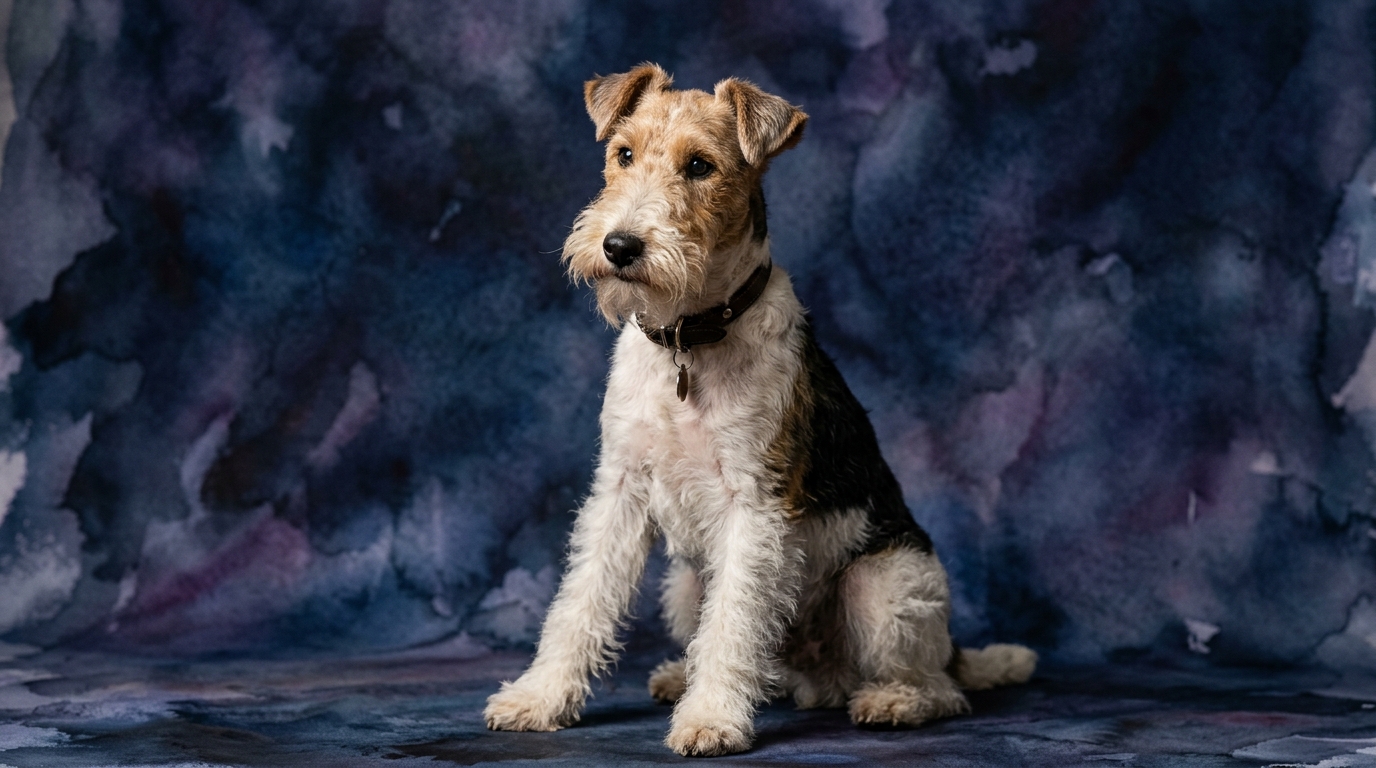
Side-by-Side IQ Profile: Unpacking Terrier Minds
The Cosmic Pet's Pet IQ Lab meticulously assesses canine intelligence across five key dimensions, offering a detailed glimpse into how different breeds process the world. For our comparison, we're examining two breeds from the spirited terrier group, each presenting a unique cognitive signature that reflects their historical roles and inherent temperaments.
The Yorkshire Terrier, a breed with a notable Coren rank of #27, demonstrates a well-rounded and often more advanced cognitive profile. Its scores are: Problem Solving 3/5, Training Speed 4/5, Social Intelligence 4/5, Instinctive Drive 4/5, and Memory 4/5. These metrics suggest a dog that not only possesses solid foundational problem-solving capabilities but also excels in learning, social engagement, innate drive, and information retention.
In contrast, the Wire Fox Terrier, not specifically Coren-ranked, exhibits a consistently robust and pragmatic cognitive makeup. Its scores are: Problem Solving 3/5, Training Speed 3/5, Social Intelligence 3/5, Instinctive Drive 3/5, and Memory 3/5. This uniform set of scores points to a dog whose mental attributes are balanced, purposeful, and deeply rooted in its working heritage, even if not numerically superior in individual dimensions compared to the Yorkie.
A direct comparison immediately highlights a shared baseline in Problem Solving, indicating both breeds possess a similar capacity for independent thought and navigating obstacles. However, the Yorkie's elevated scores across training, social, instinctive, and memory dimensions suggest a breed that generally processes and interacts with its environment with a touch more finesse and adaptability in those specific areas.
The Yorkshire Terrier's Cognitive Edge
The Yorkshire Terrier's cognitive profile reveals distinct advantages, particularly in its higher scores for Training Speed, Social Intelligence, Instinctive Drive, and Memory. Its Training Speed of 4/5 means Yorkies typically grasp new commands and routines with greater alacrity, processing human instructions and associating actions with consequences more quickly. This often translates to fewer repetitions needed during training sessions, making the learning process more efficient.
Their Social Intelligence, also at 4/5, is a significant cognitive asset. Yorkies demonstrate a heightened ability to read and interpret human cues, intentions, and emotional states. This fosters a deeper communicative bond, making them highly responsive to their handler’s subtle signals and moods. This cognitive dimension allows for a more nuanced and reciprocal relationship, as they are often more attuned to their human companions.
The Yorkie's Instinctive Drive, rated at 4/5, indicates a persistent and often purposeful urge to engage with its surroundings through chasing, exploring, and vocalizing. While all terriers possess drive, the Yorkie's higher score suggests this innate inclination is particularly strong and can be more readily channeled into specific, trainable tasks or activities, such as scent games or agility, providing structured outlets for their natural impulses.
Finally, a Memory score of 4/5 means Yorkshire Terriers retain learned behaviors, routines, and complex sequences over longer periods. This superior recall reduces the need for frequent refreshers and allows for the development of a more extensive repertoire of skills. Their robust ability to recall past experiences and associations contributes significantly to their adaptability and consistent performance in various situations.
The Wire Fox Terrier's Distinctive Cognitive Strengths
While the Yorkshire Terrier boasts numerically higher scores in several cognitive dimensions, the Wire Fox Terrier presents a distinct blend of mental attributes that excel in specific contexts, particularly those requiring self-reliance and focused determination. Its Problem Solving score of 3/5, while matching the Yorkie, often manifests as a tenacious, independent approach to challenges. This isn't about seeking constant human direction, but rather a persistent drive to figure things out on its own, a cognitive strength deeply rooted in its heritage as a solo hunter of small game. They are less likely to abandon a puzzle or a perceived 'task' until they've exhausted their own solutions, demonstrating robust mental fortitude.
Furthermore, the Wire Fox Terrier's Instinctive Drive, also rated at 3/5, fuels a highly purposeful engagement with its environment. While the Yorkie’s drive is also strong, the WFT's tends to be more singularly directed towards classic terrier pursuits like digging, tracking scents, and investigating with unwavering focus. This 3/5 drive, combined with its independent problem-solving, makes it profoundly effective in scenarios where sustained, self-motivated effort is required, rather than broad adaptability. Their cognitive makeup is geared towards a relentless pursuit of a goal once it's fixed in their sights.
Their consistent 3/5 scores across Training Speed, Social Intelligence, and Memory, while not numerically superior, point to a dog whose cognitive functions are tightly integrated for practical, task-oriented application. They learn efficiently for their purpose, retain what's critical for their work, and engage socially enough to cooperate, but not so much as to be easily distracted from their primary objective. This balanced, focused cognitive profile is a significant strength for owners seeking a dog with a clear, driven purpose, valuing tenacity over broad social adaptability.
Training Dynamics: Which is Easier to Train and Why
When considering ease of training, the Yorkshire Terrier’s cognitive profile presents a distinct advantage. With a Training Speed of 4/5, Social Intelligence of 4/5, and Memory of 4/5, the Yorkie generally proves to be a more amenable and quicker study in formal training settings. Their superior responsiveness to human communication, coupled with their ability to quickly recall commands and routines, makes them excellent candidates for obedience, trick training, or even advanced canine sports. They are typically keen to please and often thrive on positive reinforcement and clear, consistent instruction, adjusting their behavior in tune with their handler's feedback.
The Wire Fox Terrier, with its consistent 3/5 across these same dimensions, typically requires a more steadfast and patient training approach. Their independent problem-solving, while a strength in certain contexts, can manifest as a stubborn streak, making them less inclined to follow commands if they perceive a more interesting alternative. Training a Wire Fox Terrier demands clear boundaries, engaging and varied methods, and a strong understanding of their natural drive. Repetition is crucial, and while their 3/5 memory ensures learned behaviors stick once acquired, the process of instilling those behaviors might require more consistent effort and creative motivation than with a Yorkie. Their 3/5 social intelligence means they might not be as overtly 'people-pleasing' and might need more direct, less subtle cues to maintain focus.
Lifestyle Suitability: Active vs. Relaxed Owners
Matching a dog's cognitive and physical needs to an owner's lifestyle is crucial for a harmonious relationship. The Yorkshire Terrier, despite its diminutive size, is far from a sedentary lap dog, thanks to its 4/5 Instinctive Drive and energetic terrier spirit. It thrives with owners who can provide consistent mental stimulation and daily physical activity, whether through vigorous indoor play, engaging puzzle toys, or regular outdoor walks. Their higher social intelligence and adaptability make them suitable for owners who enjoy integrating their dog into various social settings, from park visits to café outings, provided their innate terrier energy and alertness are managed appropriately.
Conversely, the Wire Fox Terrier, with its 3/5 Instinctive Drive and independent problem-solving, is better suited for active owners who relish providing structured outlets for their breed's historical purpose. This means plenty of vigorous exercise, opportunities for scent work, digging (in designated areas!), and engaging in activities that challenge their tenacious spirit and working drive. They excel with owners who can commit to consistent, engaging training and mental tasks, channeling their natural instincts into constructive pursuits. A relaxed owner who cannot consistently meet their significant exercise and mental engagement needs may find their independent nature and persistent drive challenging to manage, potentially leading to undesirable behaviors.
The Verdict
Choose the Yorkshire Terrier if you seek a highly responsive companion eager to learn, with a strong memory for commands and a keen social awareness that thrives on close human interaction and adaptable engagement.
Opt for the Wire Fox Terrier if you appreciate an independent, tenacious spirit that excels at self-directed problem-solving, provided you are an active owner prepared for consistent, structured training and ample opportunities to channel its robust working drive.
🧠 Find Your Pet's IQ Score
Our Pet IQ Lab assessment covers 25+ tests across 5 cognitive dimensions — personalized to your breed.
Take the Full IQ Test →Frequently Asked Questions
Are Yorkshire Terriers easy to train for beginners?
With a Training Speed of 4/5 and Social Intelligence of 4/5, Yorkshire Terriers are generally considered more amenable to training, even for novice owners. Their quick learning and eagerness to connect make them responsive to consistent, positive reinforcement methods, though their terrier stubbornness can sometimes surface.
Do Wire Fox Terriers need a lot of exercise?
Yes, Wire Fox Terriers, with their 3/5 Instinctive Drive rooted in a working heritage, require significant daily exercise and mental stimulation. Owners should plan for vigorous play, structured walks, and activities that engage their problem-solving and tenacious spirit to prevent boredom and destructive behaviors.
Which breed is more prone to barking?
Both are terriers and possess a degree of vocalness inherent to their breed type. The Yorkshire Terrier's 4/5 Instinctive Drive and 4/5 Social Intelligence can translate to alert barking as a form of communication or territorial defense, while the Wire Fox Terrier's 3/5 Instinctive Drive fuels its own vocal expressions, often tied to its perceived duties or excitement during activity.