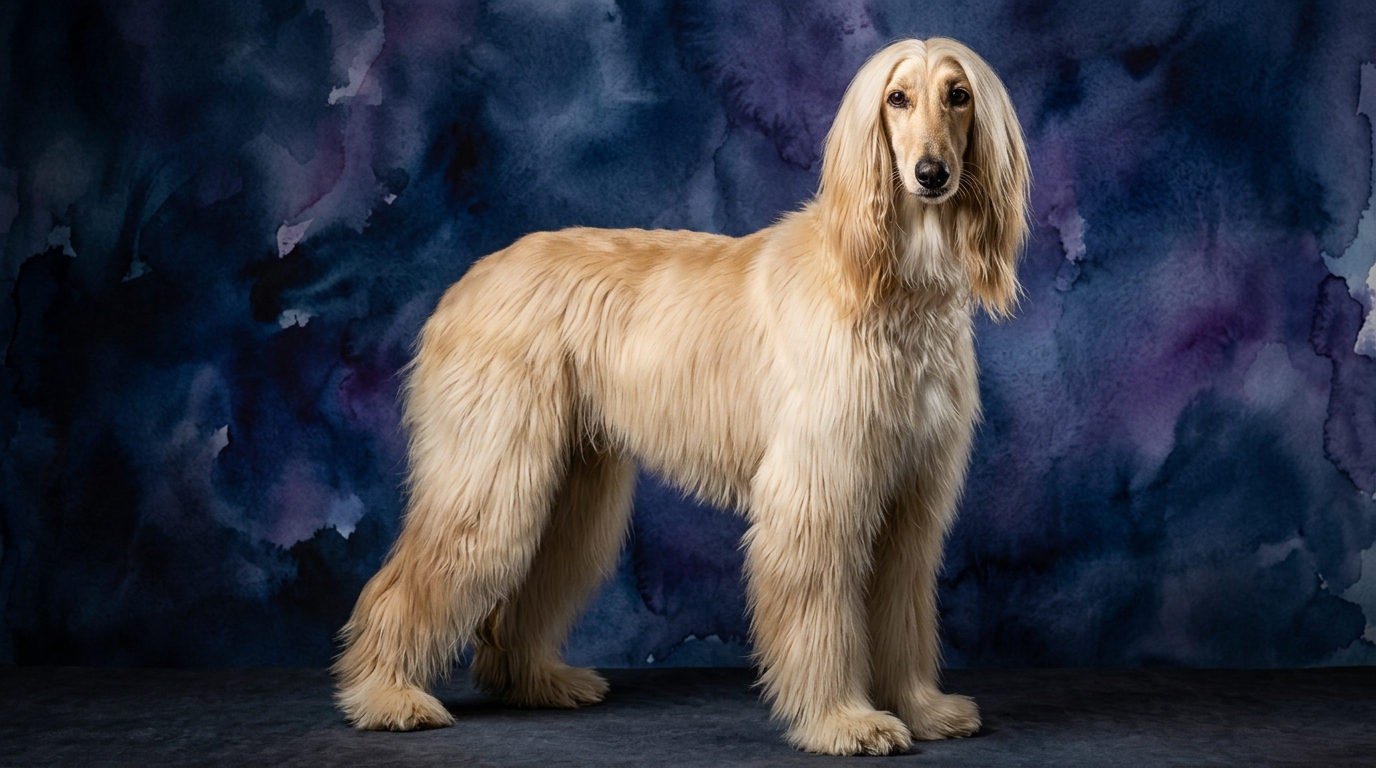
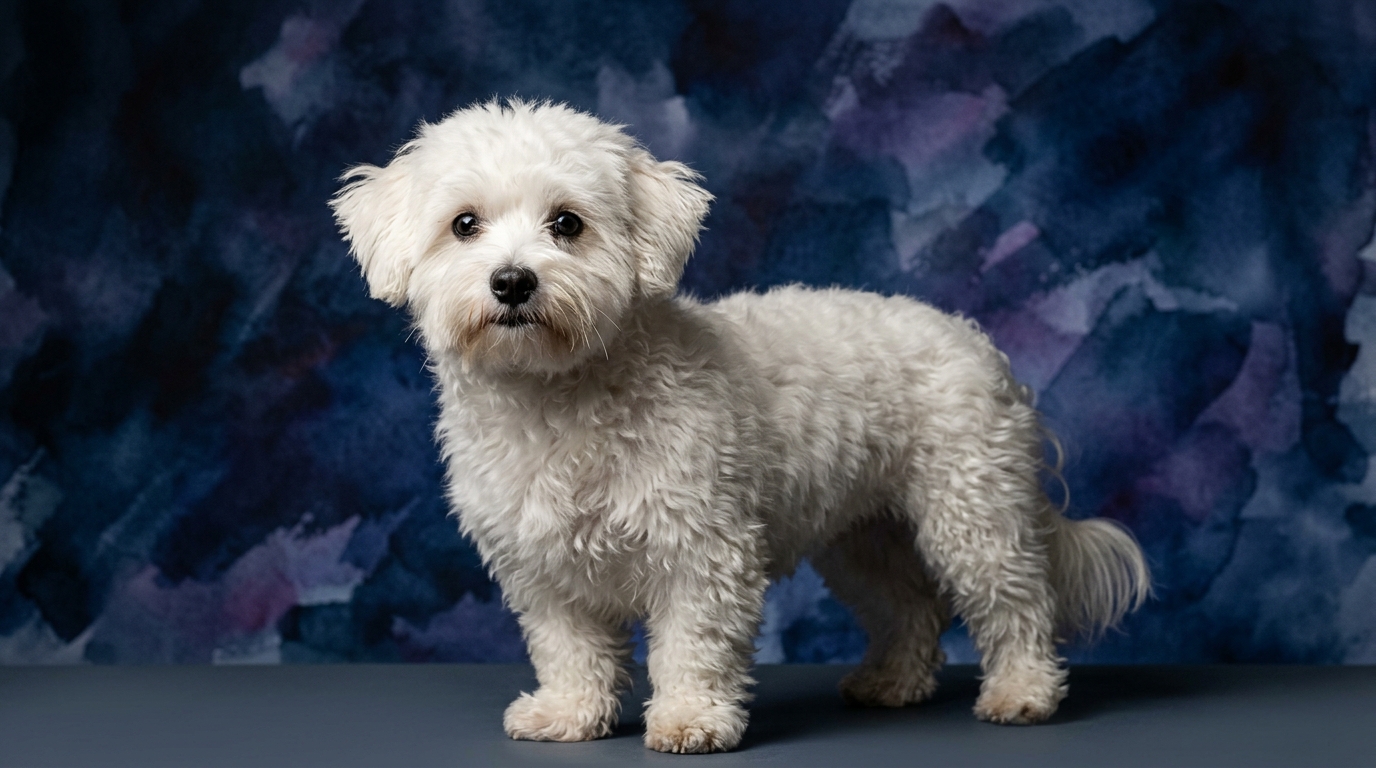
Side-by-Side Cognitive Profiles
The Cosmic Pet Pet IQ Lab provides a unique framework for understanding canine intelligence, breaking it down into five crucial dimensions. For the Afghan Hound, a sighthound originating from ancient Afghanistan, its profile reflects its heritage: Problem Solving at a robust 4/5, indicating a strong capacity for independent thought and creative solutions to environmental challenges, often relying on its own judgment rather than waiting for human direction. However, its Training Speed is a modest 1/5, suggesting a deliberate pace in learning new commands and a selective response to instruction. Social Intelligence stands at 2/5, pointing to a more reserved and self-sufficient nature, less driven by constant human interaction. Its Instinctive Drive is a powerful 5/5, reflecting an intense urge to chase and hunt, a hallmark of its sighthound lineage. Memory is rated at 3/5, meaning it retains information at an average rate, but its application is often filtered through its strong independent will.
In contrast, the Coton de Tuléar, a companion dog from Madagascar, presents a balanced and adaptable cognitive blueprint. Its Problem Solving is rated at 3/5, indicating a respectable ability to navigate new situations and figure things out, often with a keen eye on its human companions for cues. Training Speed is a solid 3/5, suggesting a moderate pace of learning new commands and routines, requiring consistent but not overly repetitive engagement. Social Intelligence is also 3/5, highlighting an amiable and moderately people-oriented disposition, valuing companionship without being overly demanding. Instinctive Drive sits at 3/5, signifying a moderate level of natural urges that are manageable in a domestic setting, rather than overwhelming. Memory is a balanced 3/5, allowing it to recall past experiences and learned behaviors effectively, aiding in its trainability and daily interactions.
Where the Afghan Hound Excels Cognitively
The Afghan Hound’s cognitive strengths are deeply rooted in its ancient purpose as a hunter in challenging terrains. Its Problem Solving score of 4/5 is a clear standout, indicating a breed that doesn’t just react but actively strategizes. When faced with an obstacle, whether it’s finding the best path through a complex landscape or figuring out how to access a desired item, the Afghan Hound is likely to employ its own clever, often unexpected, solutions. This isn't about following instructions; it's about independent reasoning and decision-making, a trait invaluable for a dog that once hunted largely unsupervised. This manifests as a resourceful approach to life, where they often outwit simple containment or routine expectations.
Furthermore, the Afghan Hound's Instinctive Drive at 5/5 is unparalleled in this comparison. This isn't merely a desire for activity; it's a powerful, innate compulsion to pursue and engage with moving objects, a drive that defines its very being. This acute sensory awareness and rapid reaction time are cognitive assets, allowing them to process visual stimuli with incredible speed and initiate complex motor patterns in pursuit. For owners who can channel this drive into appropriate activities like lure coursing or extensive free-running in secure areas, they will witness a dog operating at the peak of its natural cognitive and physical prowess, demonstrating incredible focus and determination.
Where the Coton de Tuléar Shows Its Cognitive Edge
The Coton de Tuléar’s cognitive advantages shine in areas that foster harmonious living and collaborative learning. Its Training Speed of 3/5, while not extraordinary, significantly outpaces the Afghan Hound's 1/5. This indicates a greater willingness and capacity to absorb new commands and routines with reasonable repetition. Cotons generally show a more receptive attitude towards structured learning, often eager to please and more easily motivated by rewards and positive reinforcement. Their ability to form associations quickly between actions and consequences makes training sessions more productive and less frustrating for both dog and owner, allowing for a broader repertoire of learned behaviors.
Equally important is the Coton de Tuléar’s Social Intelligence, also rated at 3/5, which is notably higher than the Afghan Hound's 2/5. This score reflects a breed that is more attuned to human emotions and social cues, making them more responsive to their family's moods and desires. They tend to seek out interaction and companionship, forming strong bonds that facilitate communication and cooperation. This social acumen translates into a dog that integrates more smoothly into family life, understanding boundaries and anticipating needs, creating a more cohesive and interactive household environment. Their moderate Instinctive Drive (3/5) further supports this, as their natural urges are less likely to conflict with social expectations or training goals.
Training Dynamics: Which is Easier and Why?
When it comes to ease of training, the Coton de Tuléar clearly holds the advantage, primarily due to its superior Training Speed (3/5) and Social Intelligence (3/5) compared to the Afghan Hound's 1/5 and 2/5 respectively. A Coton generally approaches training with an eagerness to engage and a desire for interaction, quickly grasping new concepts and responding reliably to commands. Their moderate Social Intelligence means they are more inclined to work alongside their human, seeking approval and understanding the nuances of communication, which streamlines the learning process. They are generally more amenable to positive reinforcement techniques and respond well to consistent, gentle guidance, often showing a charming willingness to perform tricks or follow household rules.
The Afghan Hound, on the other hand, presents a significantly greater training challenge. Its 1/5 Training Speed is not indicative of an inability to learn, but rather a profound independence and a strong preference for making its own decisions. They often exhibit a 'what's in it for me?' attitude, and once a task becomes repetitive or loses its appeal, they may simply disengage. Their 2/5 Social Intelligence means they are less motivated by human approval and more by their own internal drives, making consistent compliance a long-term project. Training an Afghan Hound requires immense patience, creativity, and a deep understanding of their sighthound nature, often focusing on motivation through play, lure coursing, or activities that tap into their powerful Instinctive Drive rather than rote obedience.
Matching Breeds to Lifestyles: Active vs. Relaxed Owners
The stark difference in Instinctive Drive (Afghan Hound 5/5 vs. Coton de Tuléar 3/5) and Problem Solving capacity dictates a clear divergence in suitability for active versus relaxed owners. The Afghan Hound is unequivocally a match for active owners who can not only provide extensive physical exercise but also intellectually stimulate their independent minds. Their extreme Instinctive Drive demands regular opportunities to run at top speed in secure, expansive areas, and their high Problem Solving means they thrive on challenges that engage their cunning and resourcefulness. Owners who enjoy activities like lure coursing, long hikes, or even competitive dog sports will find a willing, though sometimes independently-minded, partner in an Afghan Hound. A relaxed owner who cannot meet these intense needs may find an Afghan Hound exhibiting boredom-related behaviors or becoming aloof due to a lack of appropriate outlets for their powerful drives.
Conversely, the Coton de Tuléar is a more adaptable companion, well-suited for a range of lifestyles, including those of more relaxed owners, provided they still offer consistent engagement. While they certainly enjoy activity and play, their moderate Instinctive Drive (3/5) means they are generally content with daily walks, indoor play sessions, and interactive toys, rather than requiring intense, high-speed pursuits. Their balanced Social Intelligence (3/5) means they thrive on companionship and enjoy being involved in family activities, whether it's a quiet evening at home or a casual outing. They appreciate mental stimulation through training and puzzle toys but do not possess the same demanding independent problem-solving needs as an Afghan Hound, making them a delightful fit for owners seeking a responsive, affectionate, and moderately active companion.
The Verdict
Choose the Afghan Hound if you are an experienced, active owner seeking a truly independent, resourceful companion with an unparalleled drive for chase, and you are prepared for a unique training journey.
Opt for the Coton de Tuléar if you desire a responsive, affectionate, and moderately active companion who enjoys learning and integrates seamlessly into family life with a balanced cognitive profile.
🧠 Find Your Pet's IQ Score
Our Pet IQ Lab assessment covers 25+ tests across 5 cognitive dimensions — personalized to your breed.
Take the Full IQ Test →Frequently Asked Questions
Is an Afghan Hound difficult to live with due to its low training speed?
An Afghan Hound's low training speed (1/5) means they require significant patience, consistency, and creative motivation. They are not 'difficult' but demand an owner who understands their independent nature and can channel their strong instinctive drives, rather than expecting strict obedience from a traditional working dog.
How does the Coton de Tuléar's social intelligence impact its interaction with families?
The Coton de Tuléar's moderate social intelligence (3/5) makes them highly adaptable and generally amiable companions for families. They are attuned to human emotions and enjoy being part of family activities, forming strong bonds and often seeking interaction without being overly demanding or clingy.
Can an Afghan Hound learn complex tasks despite its training speed score?
Yes, an Afghan Hound can learn complex tasks, especially those that engage their strong problem-solving skills (4/5) and instinctive drive (5/5). Their 'training speed' score primarily reflects their selective cooperation, not a lack of cognitive capacity; they learn what they deem valuable or interesting, often surprising owners with their cleverness when motivated appropriately.