Side-by-Side Cognitive Profiles
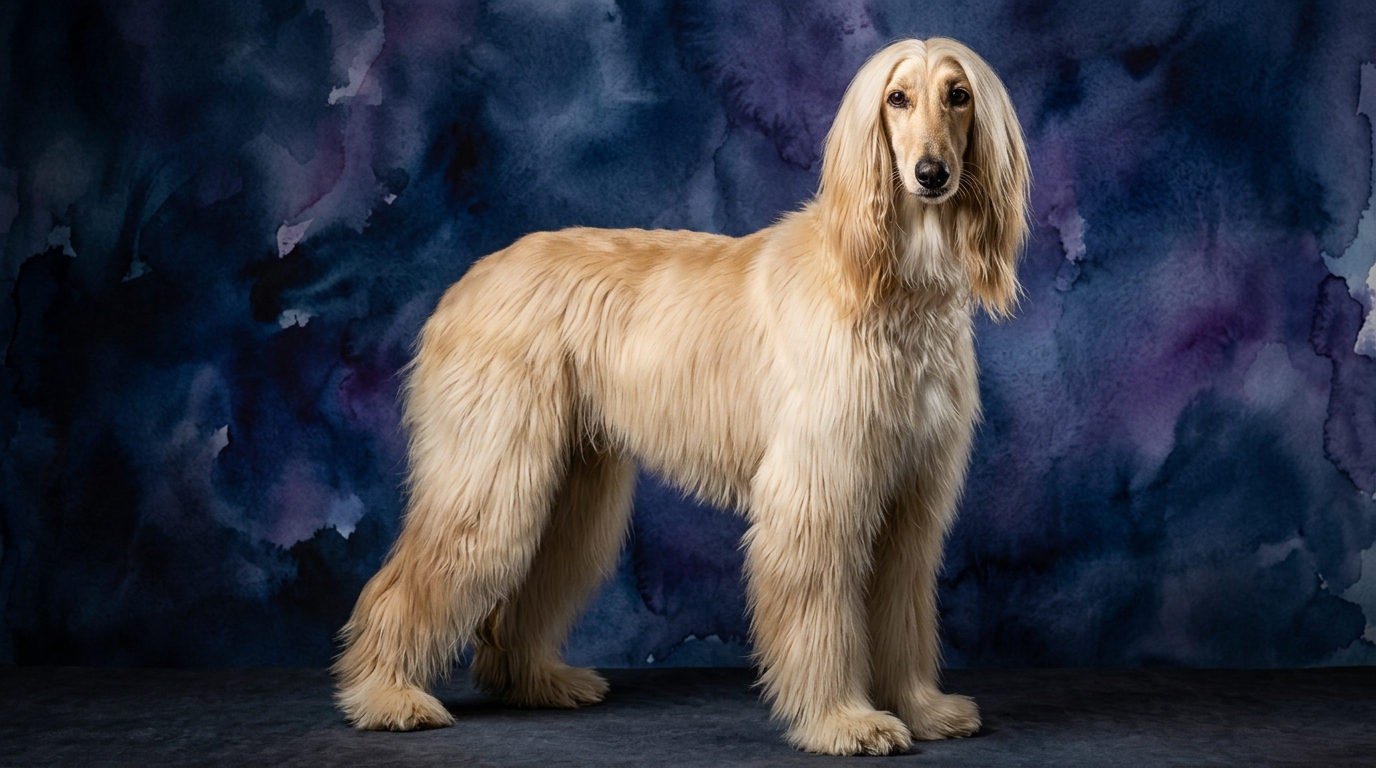
Our Cosmic Pet Pet IQ Lab assessment reveals distinct cognitive architectures for these two breeds. The Afghan Hound, an ancient sighthound, scores a 4/5 in Problem Solving, indicative of its capacity for independent, visual-based decision-making crucial for open-field pursuit. However, its Training Speed is a modest 1/5, reflecting a characteristic disinterest in repetitive obedience. Social Intelligence stands at 2/5, suggesting a reserved nature and selective engagement, while its Instinctive Drive is a formidable 5/5, dominated by an intense prey drive. Memory is rated 3/5, likely strong for spatial awareness and visual cues.
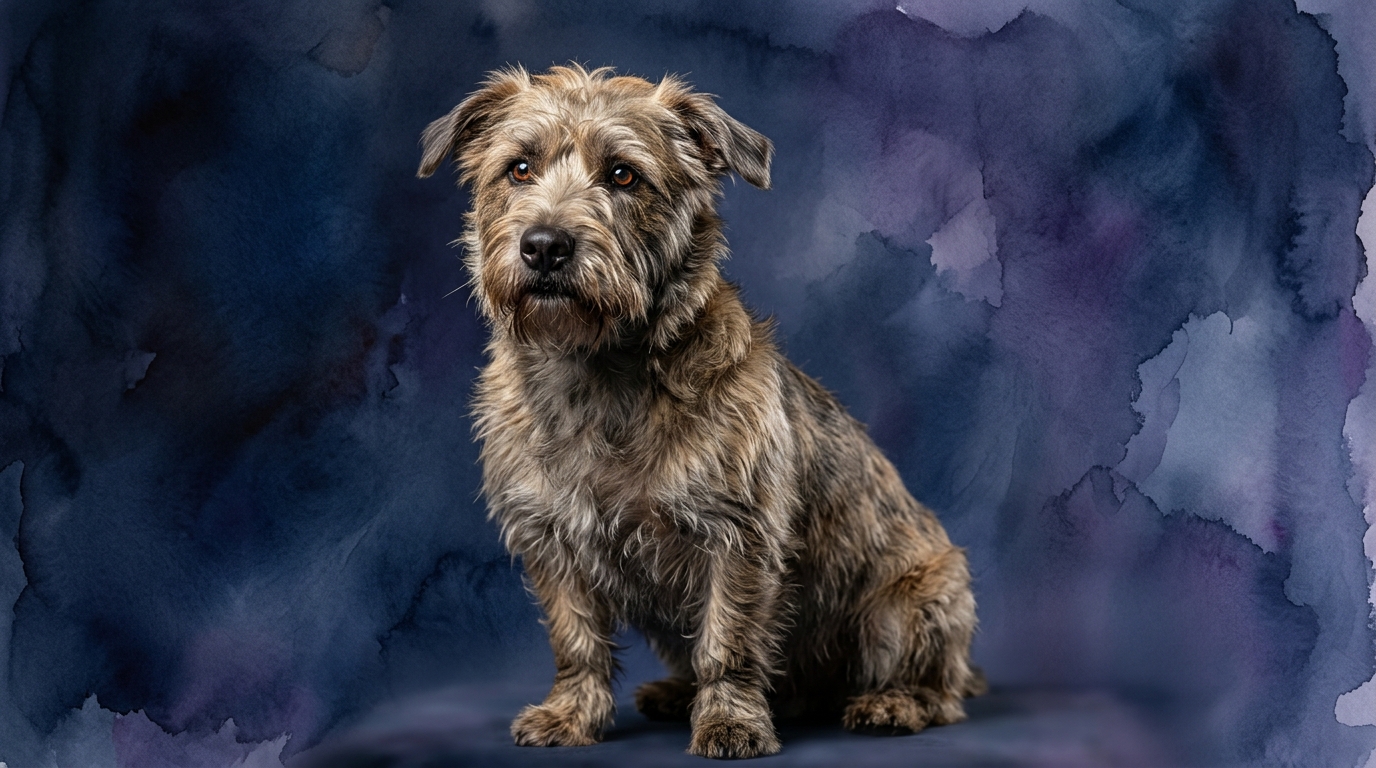
In contrast, the Glen of Imaal Terrier, a sturdy working terrier, presents a balanced profile. Its Problem Solving is 3/5, demonstrating a persistent, often physical approach to challenges, typical of a badger-hunting breed. Training Speed is 3/5, indicating a moderate willingness to learn but requiring consistent, engaging methods. Social Intelligence also scores 3/5, showing a capacity for strong family bonds alongside a reserved demeanor with strangers. Instinctive Drive is 3/5, primarily focused on digging and pursuing small game, while Memory is also 3/5, sufficient for recalling learned tasks and routines.
Where the Afghan Hound Excels Cognitively
The Afghan Hound's cognitive strengths are deeply rooted in its heritage as a hunter of large, agile prey across vast terrains. Their superior Problem Solving (4/5) manifests in their ability to independently strategize during a chase, rapidly assessing topography, anticipating prey movements, and choosing the most efficient pursuit path without human intervention. This isn't about solving puzzles for a treat; it's about dynamic, real-time environmental navigation and decision-making under high stakes.
Their exceptional Instinctive Drive (5/5) means they are exquisitely tuned to visual stimuli, capable of spotting movement at incredible distances and instantly initiating a pursuit. This drive is a cognitive engine, fueling their focus and determination in their primary evolutionary role. While this can make them challenging to recall from a chase, it underscores a highly specialized form of intelligence geared towards independent hunting and survival. Their memory, rated 3/5, likely supports this by allowing them to recall successful hunting strategies and terrain features.
Where the Glen of Imaal Terrier Shines Cognitively
The Glen of Imaal Terrier's cognitive advantages stem from its history as a badger and fox hunter, often working independently underground. Their Problem Solving (3/5) is characterized by immense tenacity and a willingness to physically overcome obstacles. They are adept at persistent digging, navigating confined spaces, and employing brute force combined with strategic thinking to reach a goal, such as vermin hidden beneath the earth. This is a practical, determined form of intelligence, focused on achieving an objective through sheer will and physical effort.
Their balanced Social Intelligence (3/5) allows them to form strong, loyal bonds with their families, understanding household dynamics and individual human temperaments. While not as outwardly demonstrative as some breeds, they are attentive to their people, often displaying a quiet empathy. Their Instinctive Drive (3/5), while lower than the Afghan's, is channeled into focused, persistent tasks like digging or scent-tracking, showcasing a different kind of cognitive endurance and purposefulness.
Training: A Tale of Two Temperaments
Training an Afghan Hound (Training Speed 1/5) demands extraordinary patience and a deep understanding of their independent nature. They are not inherently driven to please and often perceive commands as suggestions rather than directives. Their high Instinctive Drive (5/5) means that a fleeting visual stimulus, like a squirrel, will almost always override any training cue, making off-leash reliability a significant challenge. Owners must employ overwhelmingly positive reinforcement, short engaging sessions, and recognize that their 'lack of compliance' isn't defiance but rather a hardwired preference for self-directed activity.
The Glen of Imaal Terrier (Training Speed 3/5), while more amenable, still requires a consistent, firm, and fair approach. Their terrier tenacity means they can be stubborn, but their moderate social intelligence and drive make them more receptive to working with an engaged owner. They respond well to varied training methods that keep them mentally stimulated, and while their instinctive drive (3/5) to dig or chase can be strong, it is generally more manageable than the Afghan's intense prey drive. Early socialization and consistent boundary setting are crucial to shaping a well-adjusted Glen.
Matching Breeds to Lifestyles: Active vs. Relaxed Owners
For active owners, the choice depends on the *type* of activity they prefer. An Afghan Hound suits owners who appreciate long, flowing runs in securely fenced areas where their sighthound instincts can be safely expressed. These owners must be prepared for a dog that thrives on independent exercise rather than constant interaction during activity. They also require owners dedicated to significant grooming and who find beauty in a dog that is often aloof but devoted to its inner circle. Relaxation for an Afghan owner might involve a quiet evening with a dog that seeks affection on its own terms, rather than demanding constant play.
The Glen of Imaal Terrier appeals to owners seeking a sturdy, engaged companion for outdoor adventures and moderate daily activity. They enjoy hiking, exploring, and participating in dog sports that challenge their problem-solving skills and tenacity. These owners are typically hands-on, enjoy consistent training, and appreciate a dog that is robust and enjoys being part of family activities. While they enjoy a good nap, they also appreciate mental stimulation and a purpose, making them a good fit for owners who enjoy interactive play and training sessions.
The Verdict
Choose the Afghan Hound if you admire independent thinkers, possess immense patience for training, and are prepared for a dog whose cognitive strengths lie in autonomous pursuit and observation, thriving on structured bursts of speed.
Opt for the Glen of Imaal Terrier if you desire a tenacious, practical problem-solver that enjoys engagement and purpose, offering a more balanced training experience and a sturdy companion for interactive, focused activities.
🧠 Find Your Pet's IQ Score
Our Pet IQ Lab assessment covers 25+ tests across 5 cognitive dimensions — personalized to your breed.
Take the Full IQ Test →Frequently Asked Questions
Is the Afghan Hound difficult to train?
Yes, their training speed is rated 1/5 due to their independent nature and low drive to please. They respond best to positive reinforcement, short sessions, and owners who understand their sighthound instincts will often override commands.
Do Glen of Imaal Terriers have a strong prey drive?
Glen of Imaal Terriers have an instinctive drive of 3/5, which includes a moderate prey drive and a strong inclination to dig. While not as extreme as a sighthound's, it requires management and secure fencing to prevent them from pursuing small animals.
Which breed is better for a first-time dog owner?
Neither breed is typically recommended for first-time owners without extensive research and commitment. However, the Glen of Imaal Terrier, with its more balanced training speed and social intelligence, might be slightly more manageable for a dedicated novice compared to the highly independent Afghan Hound.