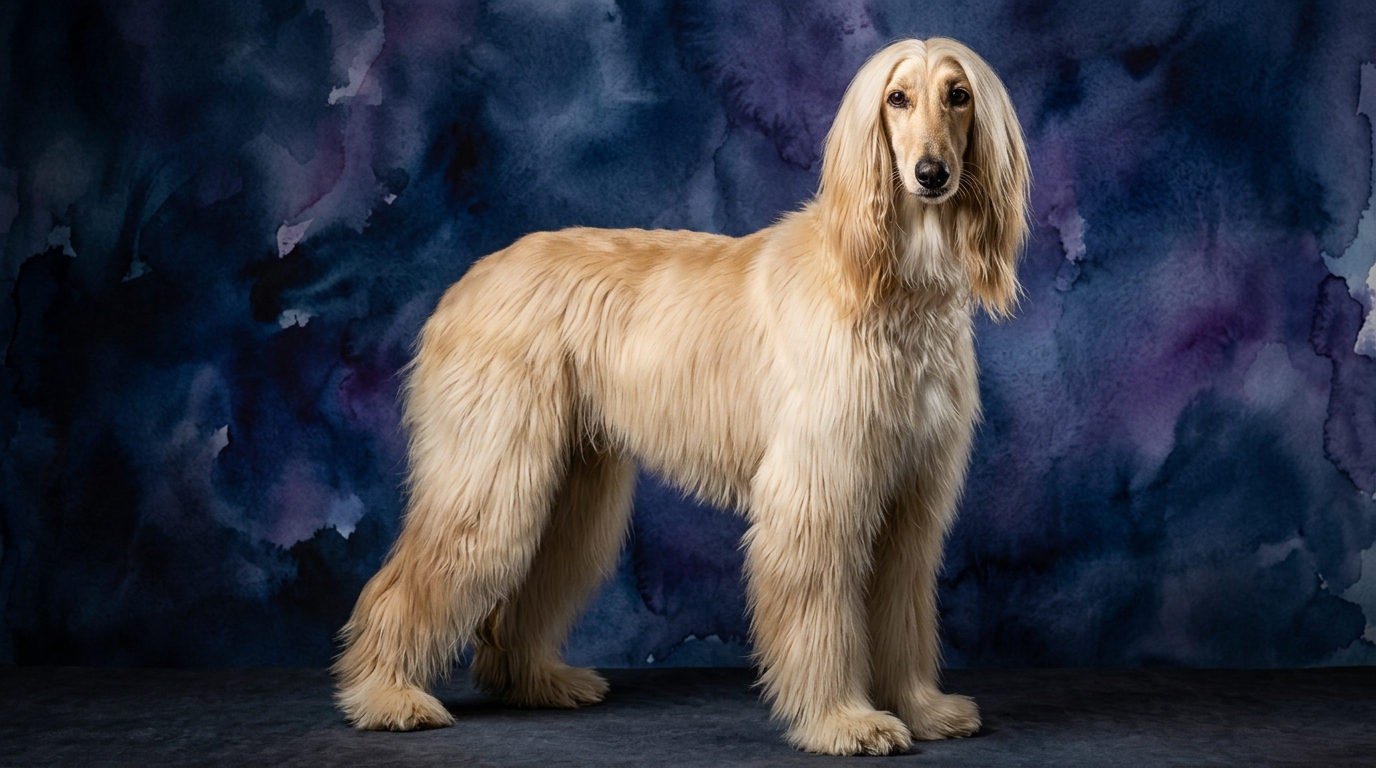
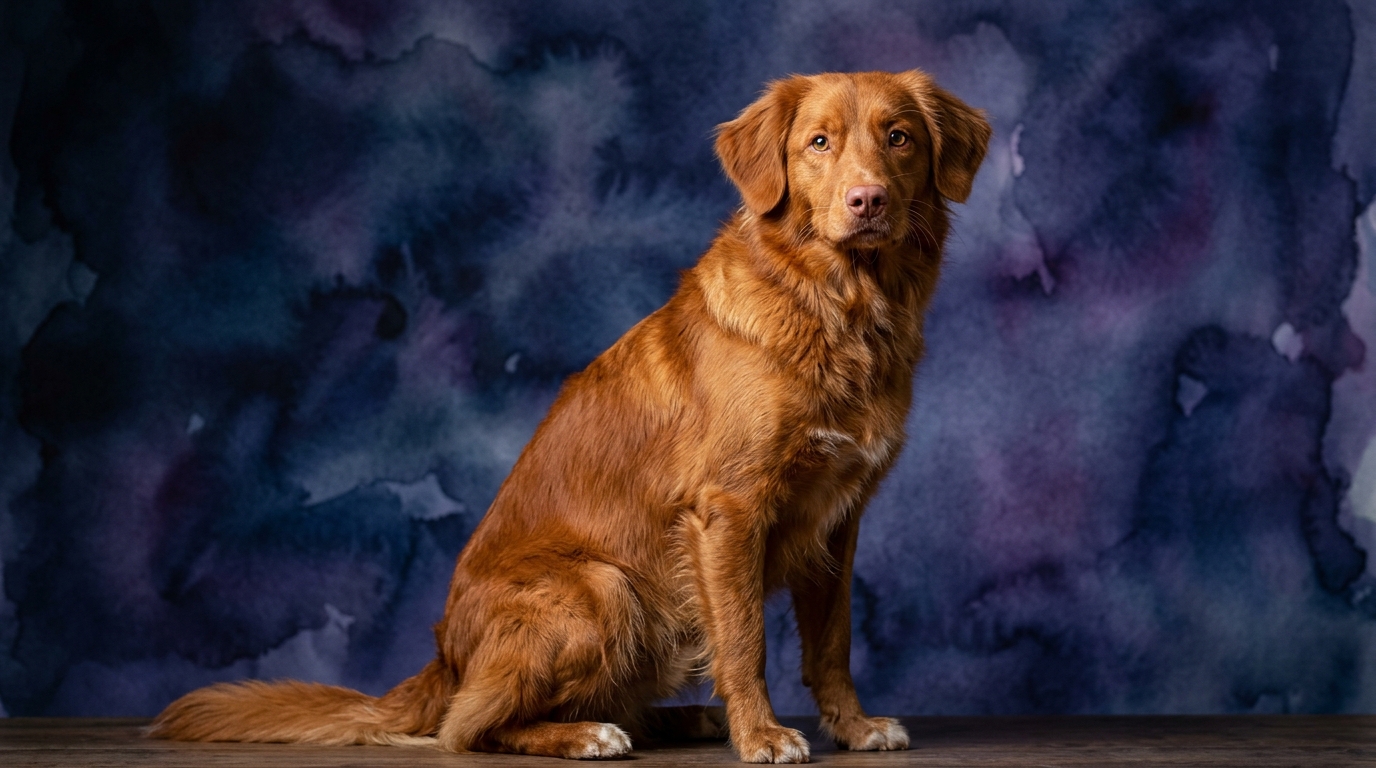
Side-by-Side IQ Profile: Afghan Hound vs. Toller
The Cosmic Pet Pet IQ Lab employs five key dimensions to map a breed's cognitive strengths. For the majestic Afghan Hound, we observe a strong Problem Solving ability at 4/5, indicating a capacity for independent thought and creative solutions, but a notably low Training Speed at 1/5, suggesting a reluctance to comply quickly with commands.
Their Social Intelligence scores 2/5, pointing to a more reserved nature, while their Instinctive Drive is exceptionally high at 5/5, reflecting their powerful sighthound heritage. Memory for the Afghan Hound is rated 3/5, solid but not exceptional, meaning they retain information but may choose when to apply it.
In contrast, the spirited Nova Scotia Duck Tolling Retriever presents a balanced cognitive profile. Their Problem Solving ability is 3/5, showing competence but perhaps less independent ingenuity than the Afghan. Training Speed is a moderate 3/5, indicating a reasonable pace for learning and responsiveness.
Social Intelligence also stands at 3/5, suggesting a more agreeable and connected disposition, making them generally more receptive to human interaction. Their Instinctive Drive is 3/5, present but not overwhelming, often channeled into specific tasks, and their Memory matches the Afghan Hound at 3/5, providing a reliable foundation for learning.
Where the Afghan Hound Wins Cognitively
The Afghan Hound truly shines in scenarios demanding self-reliance and inventive solutions, reflected in their 4/5 Problem Solving score. Unlike many breeds that look to their handler for direction, an Afghan might devise its own path around an obstacle or strategy to retrieve a dropped item, showcasing a unique form of cleverness.
This independent thought process, coupled with their exceptional 5/5 Instinctive Drive, means they possess an unparalleled ability to pursue and execute tasks driven by their primal sighthound instincts, such as spotting and chasing distant movement with unwavering focus. Their cognitive strength lies in this potent combination of independent problem-solving applied to their deep-seated drives rather than human-directed tasks.
Where the Nova Scotia Duck Tolling Retriever Wins Cognitively
The Nova Scotia Duck Tolling Retriever’s cognitive strengths lie in their balanced and cooperative nature. With a 3/5 for both Training Speed and Social Intelligence, Tollers are generally more receptive to human guidance and eager to engage in collaborative tasks.
They process new commands at a steady pace and are more inclined to form strong working partnerships, making them excellent candidates for activities requiring consistent interaction and responsiveness. Their moderate 3/5 Instinctive Drive means their natural urges are present but more manageable, allowing their cognitive resources to be directed towards structured learning and human-centric goals rather than being solely consumed by independent pursuits.
Which is Easier to Train, and Why
Training ease is a stark differentiator between these two breeds. The Nova Scotia Duck Tolling Retriever, with its 3/5 Training Speed and 3/5 Social Intelligence, is significantly easier to train. They possess a natural inclination to work alongside humans, readily picking up commands and responding consistently.
Their moderate instinctive drive means they are less likely to be distracted by independent urges and more focused on the task at hand, making positive reinforcement highly effective. Their desire to please and engage makes them responsive partners in obedience and dog sports.
The Afghan Hound, however, presents a substantial training challenge due to its 1/5 Training Speed and 2/5 Social Intelligence. Their independent problem-solving often translates into a 'what's in it for me?' attitude, and their deep-seated 5/5 Instinctive Drive means they are frequently more attuned to their environment and inherent urges than to human directives.
Training an Afghan requires immense patience, consistency, and a deep understanding of their sighthound nature; they learn on their own terms and often choose whether or not to comply based on their assessment of the situation. Their memory at 3/5 is average, but their willingness to apply that memory to learned commands is low, making consistent recall a significant undertaking.
Which Suits Active Owners vs. Relaxed Owners
For active owners seeking a canine companion that thrives on engagement and purposeful activity, the Nova Scotia Duck Tolling Retriever is an excellent match. Their balanced instinctive drive and eagerness to work mean they excel in dog sports, hiking, or retrieving games, requiring consistent physical and mental stimulation.
They enjoy being part of family activities and will readily participate in adventures, making them ideal for individuals or families with a dynamic lifestyle. Their moderate drive means they are energetic but also settle well indoors after exercise.
The Afghan Hound, while possessing a high instinctive drive for chasing, often presents a paradox for active owners. Their need for bursts of intense exercise, like sprinting in a secure area, is undeniable, but their overall demeanor can be surprisingly relaxed indoors. They are not typically suited for owners who desire a dog that consistently seeks out interaction or performs complex tasks on command.
An owner who appreciates their independent spirit, can provide ample space for their specific exercise needs, and is content with a more aloof companion will find the Afghan Hound more suitable. They are less about constant activity and more about specific, fulfilling outlets for their profound drive, preferring to conserve energy until a compelling chase opportunity arises.
The Verdict
Choose the Afghan Hound if you admire a dog with profound independent problem-solving skills, a strikingly reserved personality, and an intense, focused instinctive drive that manifests in brief, powerful bursts of activity, provided you are prepared for a challenging training journey and appreciate a companion who thinks for themselves.
Opt for the Nova Scotia Duck Tolling Retriever if you seek an eager, biddable companion that learns readily, enjoys collaborative activities, and thrives on consistent engagement, offering a balanced blend of moderate instinctive drive and social responsiveness ideal for an active, involved owner.
🧠 Find Your Pet's IQ Score
Our Pet IQ Lab assessment covers 25+ tests across 5 cognitive dimensions — personalized to your breed.
Take the Full IQ Test →Frequently Asked Questions
Does the Afghan Hound's high problem-solving score make them 'smarter' than the Toller?
Not necessarily in a practical, everyday sense. The Afghan's problem-solving is often self-directed and applied to their own interests, while the Toller's balanced profile makes them more adaptable to human-directed tasks and training, which many owners equate with 'smartness' in a companion.
Can an Afghan Hound be trained for advanced obedience or dog sports?
While an Afghan Hound *can* learn, their low Training Speed and high Instinctive Drive mean it requires exceptional dedication, creativity, and patience from the owner. They are less inclined to perform repetitive tasks on command compared to breeds like the Toller, often viewing them as pointless.
How do their instinctive drives impact their daily lives?
The Afghan's 5/5 instinctive drive means an incredibly strong prey drive; secure fencing and leashed walks are crucial to prevent chasing, as they will pursue perceived prey relentlessly. The Toller's 3/5 drive is more manageable, often channeled into retrieving games and a general enthusiasm for activity, making them less prone to independent, uncontrolled pursuits.