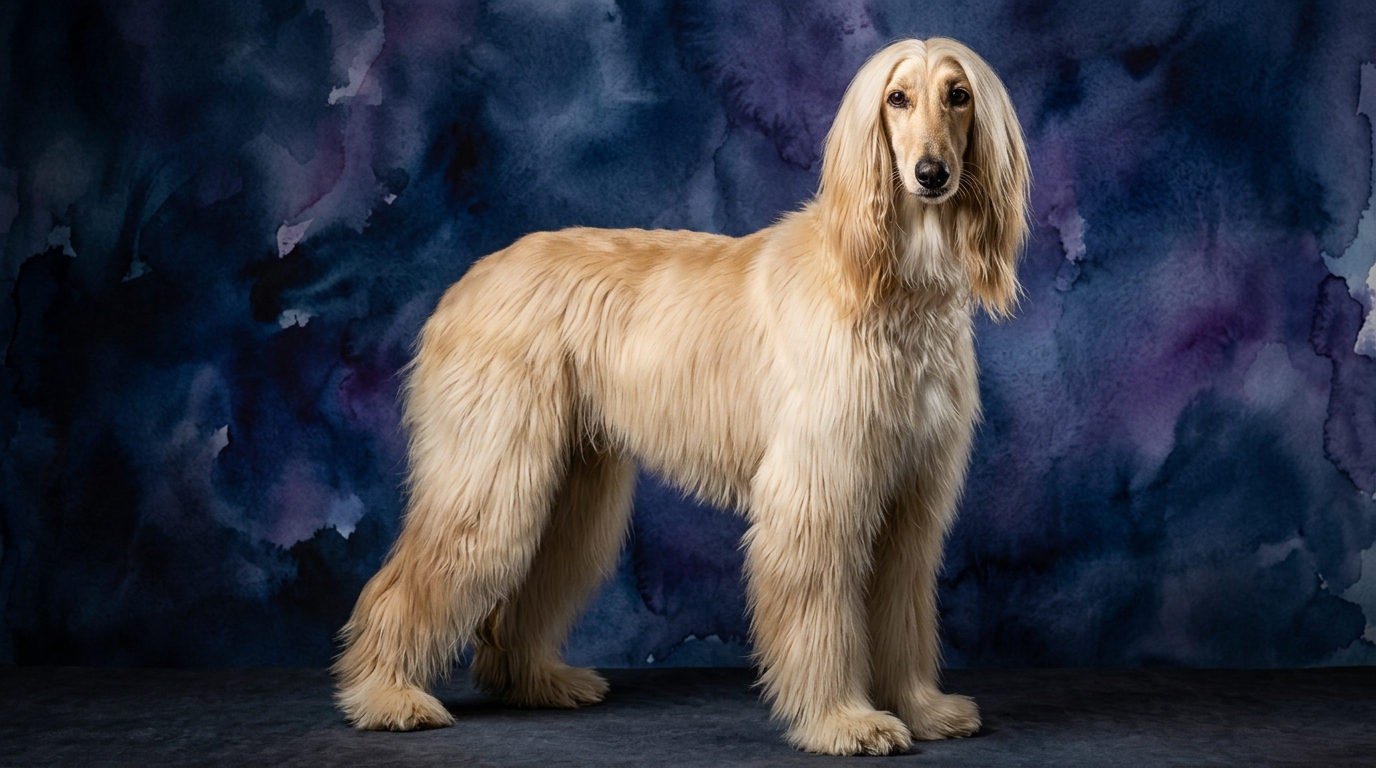
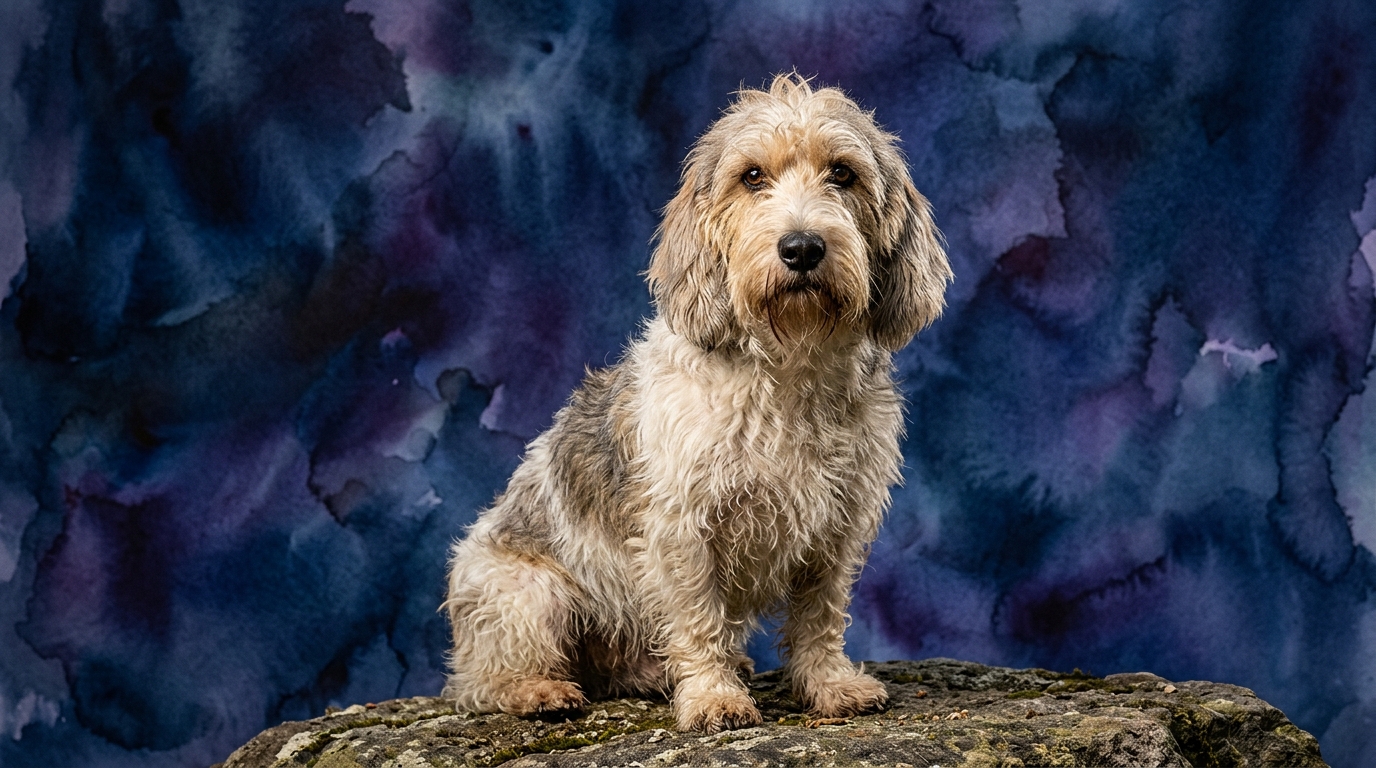
Side-by-Side IQ Profile: Afghan Hound vs. PBGV
The Afghan Hound presents a unique cognitive blueprint. Their problem-solving ability, rated at 4/5, indicates a breed capable of independent thought and devising creative solutions, often to their own advantage rather than their owner's. However, their training speed registers a low 1/5, reflecting a significant challenge in teaching new commands due to their independent spirit and disinterest in traditional obedience. Social intelligence is also modest at 2/5, suggesting a dog that can be aloof, preferring their own company or engaging on their own terms rather than seeking constant human interaction. The breed's instinctive drive, a powerful 5/5, is centered around their sighthound heritage, making them incredibly focused on visual stimuli and the thrill of the chase. Memory, at 3/5, is average, meaning they recall experiences and lessons, but this doesn't automatically translate to compliance given their other traits.
In contrast, the Petit Basset Griffon Vendéen offers a more balanced cognitive profile. Their problem-solving capability stands at 3/5, demonstrating an aptitude for navigating moderate challenges, often driven by their keen sense of smell. Training speed is a more accommodating 3/5, indicating a willingness to learn and engage in training sessions, albeit with the typical hound's independent streak. Social intelligence also scores 3/5, reflecting a generally friendly and outgoing nature, making them more attuned to human companionship and social cues than the Afghan. Instinctive drive is rated 3/5, primarily focused on scent work, which means they are driven but perhaps less intensely single-minded than a sighthound. Memory, like the Afghan, is rated at 3/5, suggesting a capacity to retain information and learned behaviors consistently.
Where the Afghan Hound Wins Cognitively
The Afghan Hound truly excels in areas demanding acute independent thought and singular focus on their primary drive. Their problem-solving score of 4/5, superior to the PBGV's 3/5, manifests as an uncanny ability to navigate complex environments or situations on their own terms. This isn't about solving puzzles for treats, but rather figuring out how to open gates, reach forbidden counters, or outsmart conventional barriers to achieve their self-appointed goals. This cognitive strength highlights an innate resourcefulness and a mind that constantly assesses its surroundings for opportunities. Furthermore, their instinctive drive, a perfect 5/5 compared to the PBGV's 3/5, is unparalleled. This intense focus on visual stimuli and the pursuit of perceived prey demonstrates a highly specialized cognitive processing dedicated to their sighthound heritage. It's a profound, almost instinctual, form of intelligence that allows them to process vast amounts of visual information at speed and react with incredible precision, making them masters of their ancestral hunting craft.
Where the Petit Basset Griffon Vendéen Wins Cognitively
The Petit Basset Griffon Vendéen demonstrates clear cognitive advantages in areas emphasizing cooperation and adaptability to a domestic setting. Their training speed, at 3/5, significantly surpasses the Afghan Hound's 1/5, making them considerably more receptive to learning new commands and routines. This difference means a PBGV is more likely to engage willingly in training activities, making the process less arduous and more rewarding for both dog and owner. This higher training speed is often linked to their more robust social intelligence, also rated 3/5 compared to the Afghan's 2/5. PBGVs are generally more attuned to human social cues and derive more satisfaction from cooperative interactions, fostering a stronger bond and making them more amenable to living harmoniously within a family structure. This balanced cognitive profile, with moderate scores across the board, allows the PBGV to adapt more readily to various challenges and social situations, making them a more versatile companion in a typical household environment.
Which is Easier to Train and Why
Without a doubt, the Petit Basset Griffon Vendéen is the easier breed to train, a distinction largely attributed to their higher training speed and social intelligence. The PBGV's 3/5 training speed means they absorb new information and commands more readily, responding positively to consistent, reward-based methods. Their 3/5 social intelligence also plays a crucial role; they are more inclined to seek interaction and approval from their humans, making them more motivated to participate in training as a cooperative activity. In contrast, the Afghan Hound's training speed of 1/5 is a testament to their profound independence. They are not inherently driven by a desire to please and often find traditional obedience exercises tedious or pointless. Coupled with their lower social intelligence (2/5) and extremely high instinctive drive (5/5), an Afghan is easily distracted by environmental stimuli, particularly anything that triggers their sighthound instincts. Training an Afghan requires immense patience, creativity, and an understanding that compliance is often conditional on their mood and perceived benefit, rather than an automatic response to commands.
Which Suits Active Owners vs. Relaxed Owners
Neither the Afghan Hound nor the Petit Basset Griffon Vendéen is suited for truly relaxed owners, as both breeds possess strong working instincts that necessitate regular engagement. However, the type of activity and the owner's approach to their dog's cognitive needs differ significantly. The Afghan Hound, with its 5/5 instinctive drive and 4/5 problem-solving, thrives with active owners who appreciate and can accommodate an independent, free-thinking dog with a profound need to run. These owners must provide secure, expansive areas for galloping and be prepared for a dog that will challenge boundaries and think for itself. Their mental stimulation often comes from navigating their environment and making their own “decisions,” rather than strictly following commands. The PBGV, while also active, is better suited for owners who enjoy more interactive forms of engagement. Their 3/5 instinctive drive, focused on scent, means they benefit immensely from owners who are willing to engage in scent work, tracking games, or long, exploratory walks where their nose can lead the way. Their more balanced social intelligence and training speed make them better partners for activities like canine sports (agility, rally, barn hunt) where cooperation is key, though they still retain a delightful hound stubbornness.
The Verdict
Choose the Afghan Hound if you are an experienced owner who cherishes a highly independent, visually driven companion and are prepared for a dog whose cognitive strengths lie in autonomous problem-solving and an unparalleled instinctive focus, rather than eager obedience.
Opt for the Petit Basset Griffon Vendéen if you desire a more socially engaged, moderately trainable hound who still offers a delightful independent spirit and thrives on interactive scent-based activities, making them a more adaptable family member.
🧠 Find Your Pet's IQ Score
Our Pet IQ Lab assessment covers 25+ tests across 5 cognitive dimensions — personalized to your breed.
Take the Full IQ Test →Frequently Asked Questions
Are Afghan Hounds untrainable due to their low training speed?
Afghan Hounds are not untrainable, but their 1/5 training speed means they require exceptional patience, consistency, and motivation. Owners must understand their independent nature and high instinctive drive, employing positive reinforcement and making training fun and rewarding on the dog's terms.
How does the PBGV's instinctive drive manifest in daily life?
The PBGV's 3/5 instinctive drive is primarily scent-driven, meaning they are often found with their noses to the ground. This manifests as a strong desire to explore odors, potentially leading them to follow interesting trails, so a secure yard and leash discipline are essential for their safety.
Can a PBGV participate in dog sports despite being a hound?
Absolutely! With their 3/5 training speed and social intelligence, PBGVs can excel in various dog sports, particularly those that engage their scent drive like barn hunt or tracking. They also enjoy agility and rally, thriving on the cooperative challenges.