Side-by-Side Cognitive Profile
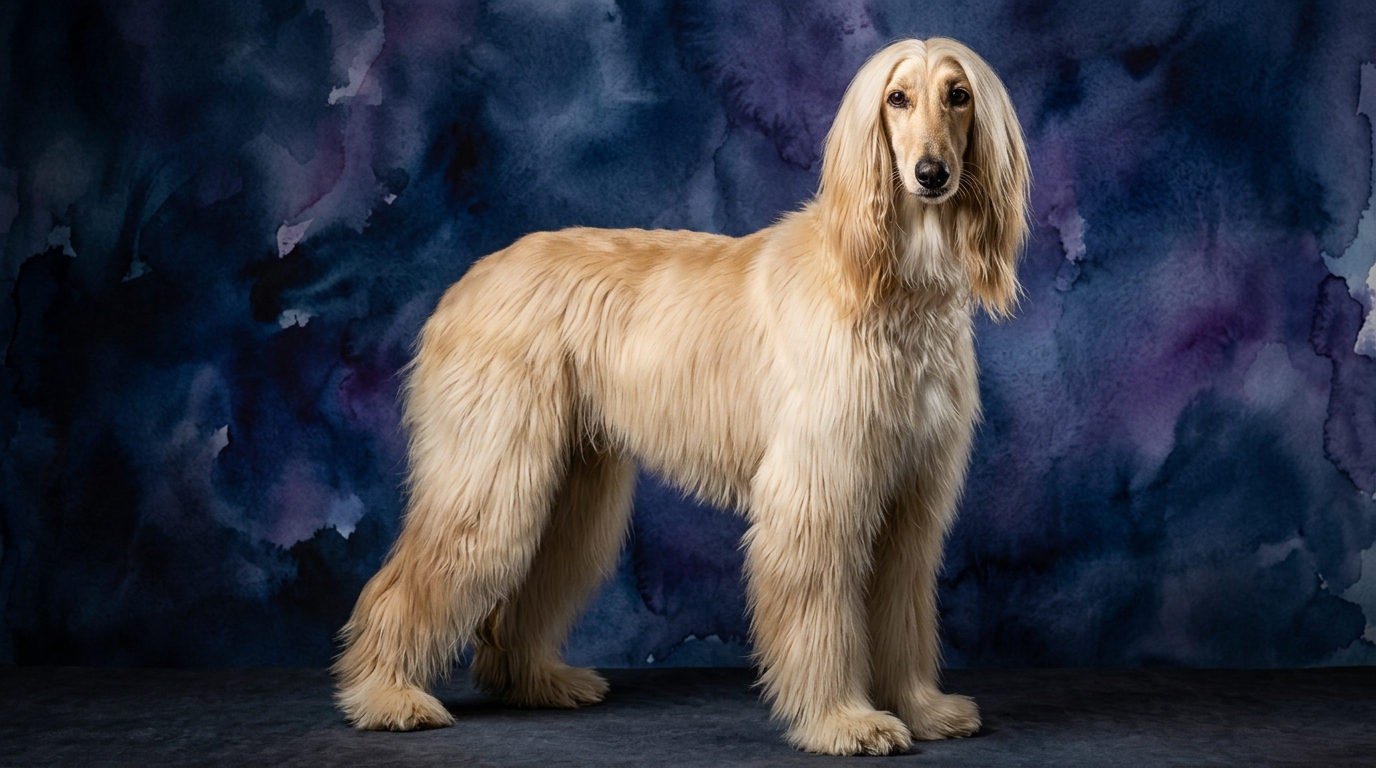
At The Cosmic Pet Pet IQ Lab, we analyze canine cognition across five key dimensions, revealing the nuanced mental strengths of each breed. The Afghan Hound, with a Coren rank of #79, presents a profile emphasizing independent action and powerful instinct. Their Problem Solving is rated 4/5, indicating a capacity for complex thought often directed towards self-serving goals or unique solutions rather than human-directed tasks. Training Speed scores 1/5, reflecting a significant need for patience and repetition due to their independent nature. Social Intelligence is 2/5, suggesting a reserved demeanor and less attunement to subtle human emotional cues or cooperative endeavors. Instinctive Drive, however, is a commanding 5/5, showcasing an unparalleled sighthound aptitude for chase and prey pursuit. Memory clocks in at 3/5, decent for learned patterns but less reliable for consistent obedience commands given their training approach.
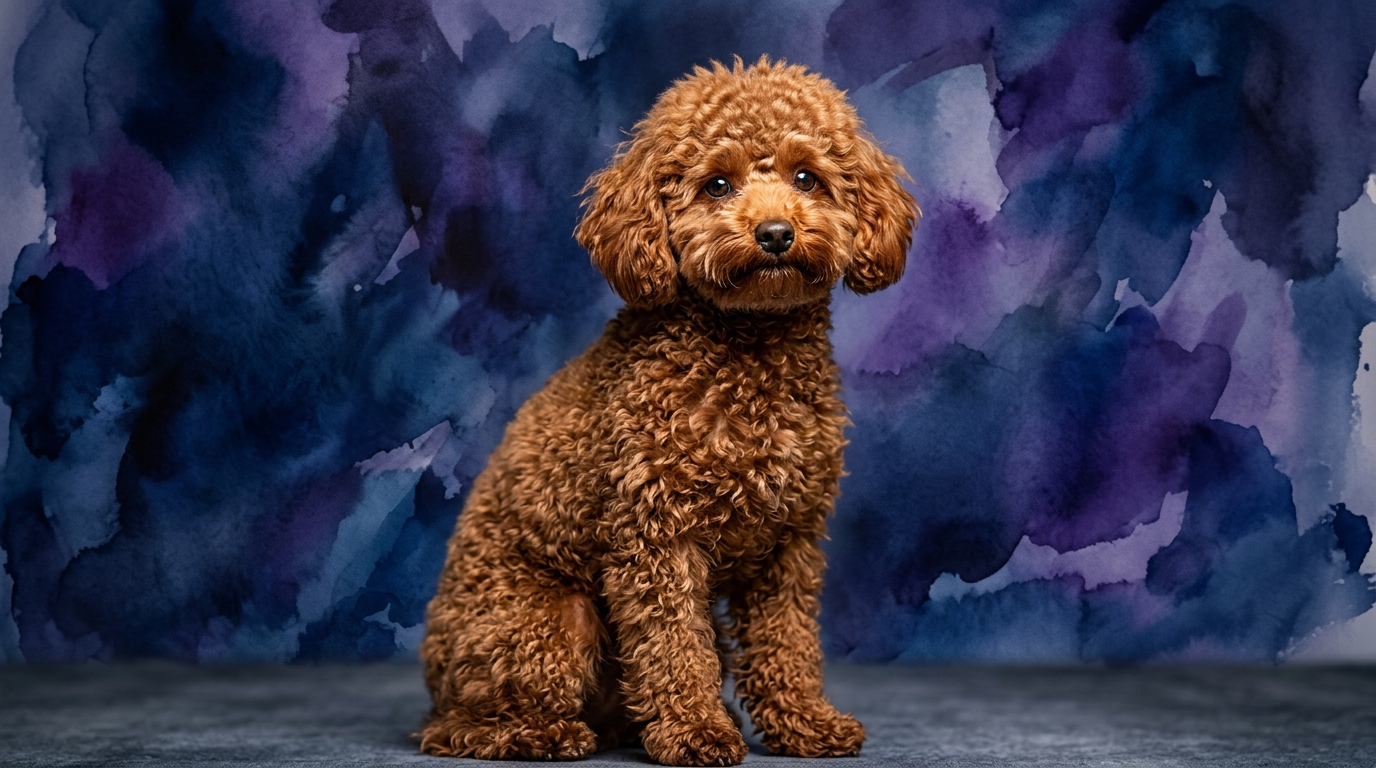
In stark contrast, the Toy Poodle, holding an impressive Coren rank of #2, displays a cognitive makeup geared for engagement and rapid learning. Their Problem Solving is a top-tier 5/5, demonstrating exceptional ability to grasp complex tasks, solve puzzles, and adapt strategies effectively. Training Speed also excels at 5/5, highlighting their eagerness and quickness in acquiring new commands with minimal repetition. Social Intelligence stands at 3/5, indicating a generally cooperative and attentive nature, making them responsive partners. Instinctive Drive is a moderate 3/5; while they possess some retrieve or water dog instincts, these are typically manageable and less overwhelming than the Afghan's prey drive. Their Memory is an outstanding 5/5, contributing significantly to their trainability and efficient retention of commands, routines, and experiences.
Where the Afghan Hound Excels Cognitively
The Afghan Hound’s cognitive strengths are profoundly rooted in its historical role as a sighthound. Their Instinctive Drive, rated 5/5, is a testament to centuries of selective breeding for independent hunting. This isn't merely a physical urge; it's a sophisticated cognitive system for spotting, tracking, and pursuing fast-moving objects across vast distances, requiring swift, autonomous decision-making in the field without human intervention. Their brains are finely tuned to process visual stimuli related to movement, prioritizing this over almost all other inputs, making them masters of the chase.
Furthermore, their Problem Solving, at 4/5, often manifests in inventive, self-directed ways. While not typically applied to cooperative tasks, this breed can demonstrate remarkable ingenuity in navigating complex environments, finding unconventional solutions to reach a desired outcome (like escaping a yard or outwitting a barrier to a forbidden treat). This indicates a strong capacity for independent thought and strategic planning when motivated by their own objectives, showcasing a different kind of cognitive prowess that values self-reliance over adherence to human directives.
Where the Toy Poodle Shines Cognitively
The Toy Poodle’s cognitive profile is a beacon of cooperative intelligence and adaptability. Their exceptional Training Speed (5/5) is a cornerstone of their mental prowess, allowing them to rapidly grasp and execute new commands. This quick learning ability stems from a unique blend of high social intelligence and an inherent desire to engage with their human companions, making them highly receptive to instruction and eager to please.
Their Problem Solving (5/5) excels in contexts requiring understanding human requests and manipulating objects to achieve shared goals. This includes mastering intricate trick training, excelling in agility courses, or solving complex puzzle toys. Their cognitive strength lies in interpreting abstract concepts and applying them to novel situations with a cooperative and analytical mindset, making them highly versatile learners.
Underpinning this trainability is a superior Memory (5/5). Toy Poodles efficiently retain information, making long-term recall of commands, routines, and past experiences seamless. This robust memory ensures that once a behavior is learned, it is not easily forgotten, allowing for the progressive accumulation of complex skills and a vast behavioral repertoire.
Finally, their Social Intelligence (3/5), while not as high as their problem-solving, is sufficient to foster strong bonds and enable them to read and respond to human emotional states and intentions. This capacity for empathetic connection makes them highly responsive partners in learning and daily interactions, contributing significantly to their ease of integration into human families.
Training: A Tale of Two Temperaments
When it comes to ease of training, the Toy Poodle is undeniably the more straightforward choice. Their high Training Speed (5/5) and commendable Social Intelligence (3/5) mean they are inherently inclined to understand and comply with human directives. They thrive on positive reinforcement, quickly forming associations between commands and actions, and their desire to engage and work alongside their owners makes them receptive to guidance. This breed often approaches training as an enjoyable, cooperative game, making the process rewarding for both dog and owner.
The Afghan Hound, conversely, presents a significant training challenge due to its low Training Speed (1/5) and more reserved Social Intelligence (2/5). They are less motivated by human approval and often prioritize their own independent thoughts or powerful instincts over compliance. Training an Afghan Hound requires immense patience, creative motivation that often taps into their prey drive or independent problem-solving (e.g., lure coursing), and an understanding that repetition alone may not suffice. Their tendency towards 'selective hearing' isn't a deficiency in perception but a cognitive choice to weigh human requests against their own strong internal motivations, making consistent, reliable obedience a long-term project.
Matching Canine Cognition to Lifestyle
For owners with an active, understanding lifestyle, the Afghan Hound can be a rewarding, albeit demanding, companion. They require extensive, safe off-leash running opportunities, such as securely fenced areas or dedicated lure coursing fields, to fulfill their profound instinctive drive. Their exercise is less about structured play and more about satisfying their innate need to run at full speed. Owners must be prepared for an independent thinker who may not always comply readily, valuing their strong will and elegant self-possession rather than expecting perfect obedience. This breed thrives with those who appreciate a dog with a mind of its own and can accommodate its unique physical and mental needs.
The Toy Poodle, conversely, is adaptable to a wider spectrum of owner lifestyles, from moderately active to more relaxed, provided consistent mental and social interaction is guaranteed. While active and playful, their exercise needs can be met with daily walks, engaging indoor games, and plenty of mental stimulation. They thrive on close engagement with their owners, enjoying activities like obedience, agility, advanced trick training, or even just interactive puzzle toys. Their cooperative nature and eagerness to learn make them suitable for owners who enjoy teaching and bonding through shared activities, seamlessly integrating into various household dynamics.
The Verdict
Choose an Afghan Hound if you admire independent thinkers, possess immense patience for training, and are prepared to manage a powerful prey drive while providing ample, safe running space for a truly unique companion.
Opt for a Toy Poodle if you seek a highly trainable, cooperative companion eager to learn new tricks and participate in diverse activities, thriving on close interaction and mental challenges.
🧠 Find Your Pet's IQ Score
Our Pet IQ Lab assessment covers 25+ tests across 5 cognitive dimensions — personalized to your breed.
Take the Full IQ Test →Frequently Asked Questions
Can an Afghan Hound be trained for advanced obedience?
While possible, it requires exceptional dedication and understanding of their independent nature. They learn at their own pace and often need motivation tailored to their sighthound instincts, making it a marathon, not a sprint, to achieve advanced obedience.
Do Toy Poodles ever become bored if not mentally stimulated?
Absolutely. Their high problem-solving ability and memory mean they require consistent mental engagement to prevent boredom. Lack of stimulation can lead to them finding their own entertainment, which may manifest as undesirable behaviors.
How does instinctive drive impact daily life for these breeds?
For Afghan Hounds, a high instinctive drive (5/5) translates to an overwhelming urge to chase, necessitating secure leashes and fenced areas for safety. For Toy Poodles, a moderate drive (3/5) is more manageable, often manifesting as playful curiosity or a desire to retrieve, rather than an all-consuming pursuit.