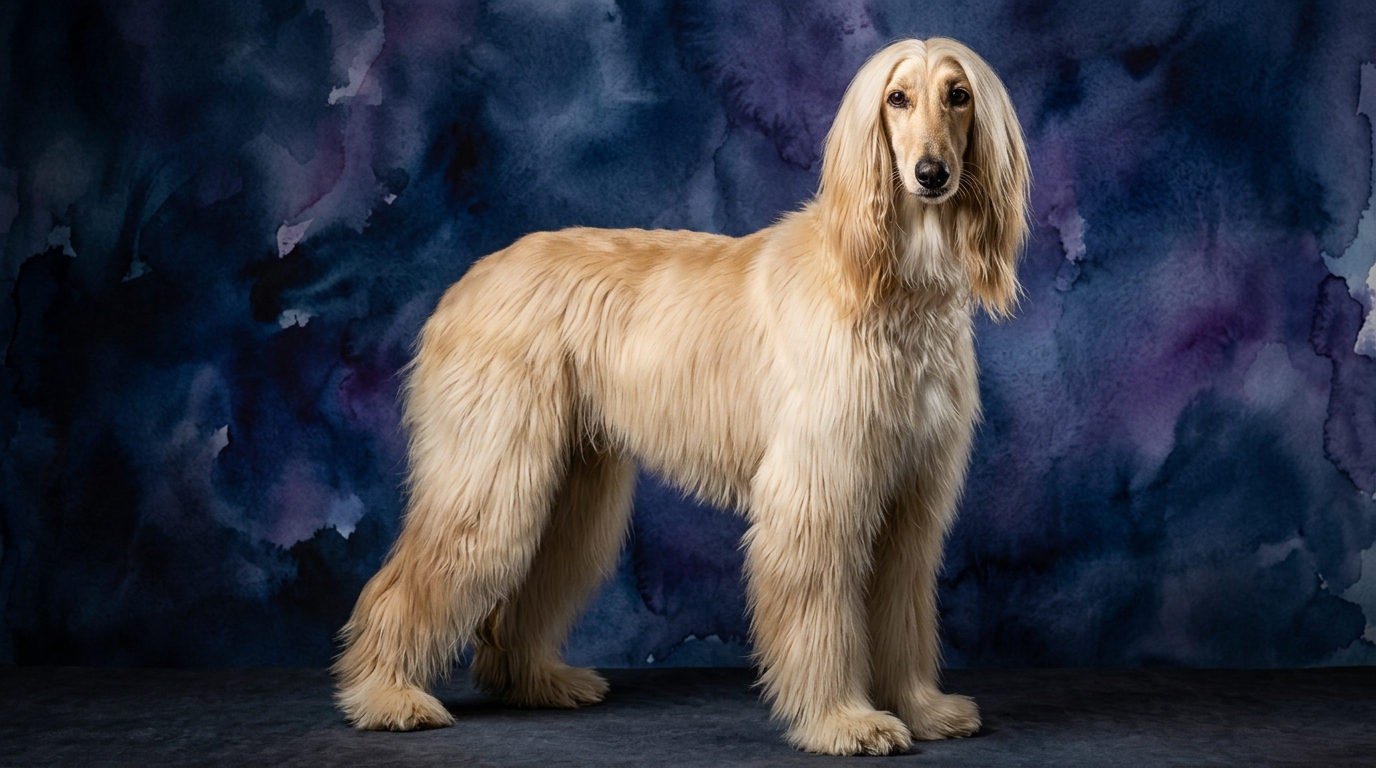
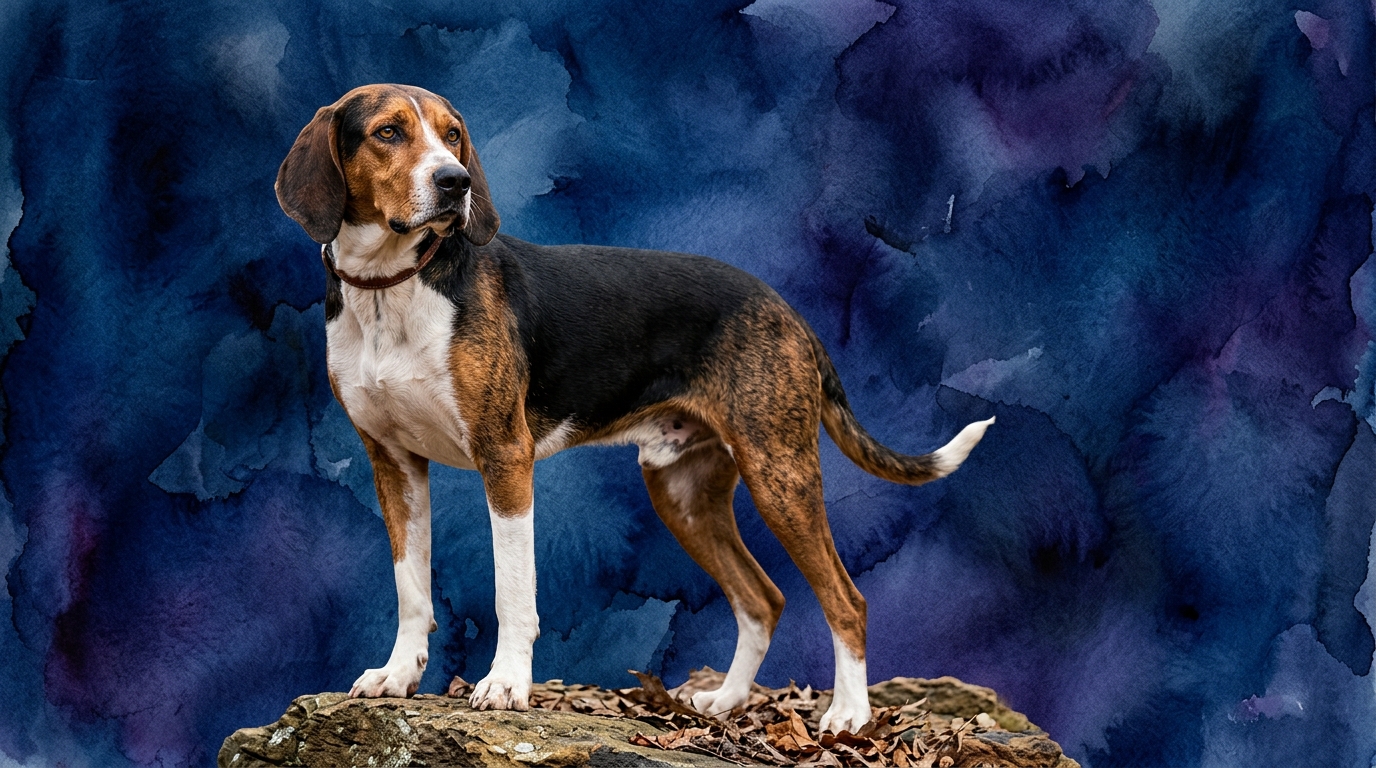
Side-by-Side IQ Profile: Afghan Hound vs. Treeing Walker Coonhound
**Afghan Hound:** These elegant sighthounds present a unique cognitive profile. Their **Problem Solving (4/5)** is keenly self-directed, often involving clever strategies to achieve their own objectives, even if those conflict with human rules. They assess situations and devise effective routes to their goals, demonstrating adaptive thinking. However, their **Training Speed (1/5)** is notably low; they are famously independent thinkers, exhibiting minimal motivation for repetitive tasks or actions without a clear, immediate personal benefit, making traditional obedience training a slow and demanding process. Their **Social Intelligence (2/5)** tends to be reserved and somewhat aloof; while capable of deep bonds, they are not typically effusive or overly concerned with subtle human social cues. The Afghan Hound's **Instinctive Drive (5/5)** is their cognitive specialization: as sighthounds, their drive to spot, chase, and pursue moving objects is incredibly powerful and finely tuned, involving rapid visual processing and lightning-fast decision-making. Their **Memory (3/5)** is solid for routines, familiar environments, and experiences, particularly those that were impactful or involved their self-interest, though they may not always 'remember' to obey a command if they don't see the point.
**Treeing Walker Coonhound:** Bred for the hunt, the Treeing Walker Coonhound's intelligence is geared towards practical application. Their **Problem Solving (3/5)** skills are evident in navigating complex scent trails, varied terrain, and strategizing how to 'tree' quarry, demonstrating practical application in their environment. Their **Training Speed (3/5)** is considerably more amenable than the Afghan's; they are eager to engage with handlers and respond well to positive reinforcement, especially when scent work is incorporated, learning commands at a moderate pace with a willingness to cooperate. As a breed traditionally working in packs and closely with human hunters, they possess good **Social Intelligence (3/5)**, generally friendly, enjoying companionship, and more attuned to human moods and cues. Their **Instinctive Drive (3/5)** centers around scenting and treeing quarry; while strong, it is often focused and can be channeled through specific activities, frequently operating in conjunction with a handler, making it somewhat more manageable. Their **Memory (3/5)** is good for scent trails, learned commands, and established routines, which is crucial for their working role in recalling specific scents or navigating familiar territories efficiently.
Where the Afghan Hound Wins Cognitively
The Afghan Hound's cognitive prowess truly stands out in its sophisticated, self-directed problem-solving (4/5). This isn't about following instructions; it's about an independent intellect that can assess situations and devise creative solutions to achieve its own desires. Owners often recount tales of Afghans figuring out complex latches, opening doors, or strategically positioning themselves to gain an advantage – these are not acts of simple disobedience, but rather demonstrations of adaptive thinking and goal-oriented planning. Their unparalleled instinctive drive (5/5) also represents a highly specialized cognitive strength. This intense focus on visual pursuit requires rapid processing of environmental stimuli, instantaneous risk assessment, and precise motor control, showcasing a formidable neuro-sensory system dedicated to their sighthound purpose.
Where the Treeing Walker Coonhound Wins Cognitively
The Treeing Walker Coonhound excels in areas that foster collaboration and practical application. Their superior training speed (3/5) allows them to grasp and execute commands more readily than the Afghan, making them more adaptable to a variety of structured activities and household expectations. This responsiveness stems from a greater willingness to engage with human direction. Furthermore, their higher social intelligence (3/5) means they are more attuned to human social dynamics, often seeking interaction and understanding subtle cues from their family. This makes them more cooperative companions, better suited for integrated family life and activities that require a partnership between dog and owner.
Which is Easier to Train and Why
Without a doubt, the Treeing Walker Coonhound is easier to train. Their training speed (3/5) and social intelligence (3/5) make them more receptive students. They derive satisfaction from working alongside their handler, and their natural desire to use their nose can be effectively channeled into training games and tasks. They are generally more motivated by praise, treats, and the opportunity to engage, making the learning process a positive, collaborative experience. Conversely, the Afghan Hound's training speed (1/5) and independent nature mean they don't inherently see the value in performing tasks purely for human satisfaction. Training an Afghan requires immense patience, creativity, and a deep understanding of their sighthound instincts. It’s less about commanding and more about convincing, making the process significantly more challenging and less straightforward than with a Treeing Walker Coonhound.
Which Suits Active Owners vs. Relaxed Owners
Neither of these breeds is ideal for truly 'relaxed' owners who prefer minimal engagement, as both require significant physical and mental stimulation. However, their activity needs differ in nature. The Afghan Hound suits active owners who understand the necessity of providing secure, expansive areas for bursts of high-speed running and independent exploration, ideally in a fenced environment where their powerful instinctive drive (5/5) can be safely expressed. These owners must also be patient and creative in managing a highly independent, sometimes aloof, temperament. The Treeing Walker Coonhound, on the other hand, suits active owners who enjoy consistent, purposeful engagement, particularly through scent work like tracking, nose games, or long hikes where their nose can lead the way. They thrive on collaborative activities and prefer an owner who actively participates in their daily mental and physical exercise, often being more vocal and demanding of attention.
The Verdict
Choose the Afghan Hound if you appreciate an independent, elegant companion with a self-directed, problem-solving mind, and are prepared to invest in creative, non-traditional training methods while providing secure outlets for intense, high-speed exercise.
Choose the Treeing Walker Coonhound if you seek an engaging, collaborative partner for consistent activity, especially scent-based work, and value a more socially interactive temperament that thrives on partnership and purposeful engagement.
🧠 Find Your Pet's IQ Score
Our Pet IQ Lab assessment covers 25+ tests across 5 cognitive dimensions — personalized to your breed.
Take the Full IQ Test →Frequently Asked Questions
Is the Afghan Hound truly 'unintelligent' due to its low training speed score?
Not at all. The Afghan Hound's low training speed (1/5) reflects its independent nature and lack of motivation for human-directed obedience, not a lack of cognitive ability. Their high problem-solving (4/5) and instinctive drive (5/5) scores reveal a highly specialized, self-directed intelligence focused on their own goals and sighthound purpose.
Can a Treeing Walker Coonhound live in an apartment?
A Treeing Walker Coonhound can potentially live in an apartment, but it requires an exceptionally dedicated owner. Their strong instinctive drive (3/5) for scent work and need for consistent physical and mental stimulation means daily, rigorous exercise and engagement are crucial to prevent boredom and destructive behaviors.
How do these breeds typically interact with children and other pets?
Afghan Hounds can be good with respectful children and often coexist peacefully with other pets, though their strong prey drive (5/5) means small, fast-moving animals might trigger their chase instinct. Treeing Walker Coonhounds are generally friendly and tolerant with children and, due to their pack nature (social intelligence 3/5), often get along well with other dogs, though introductions should always be managed carefully.