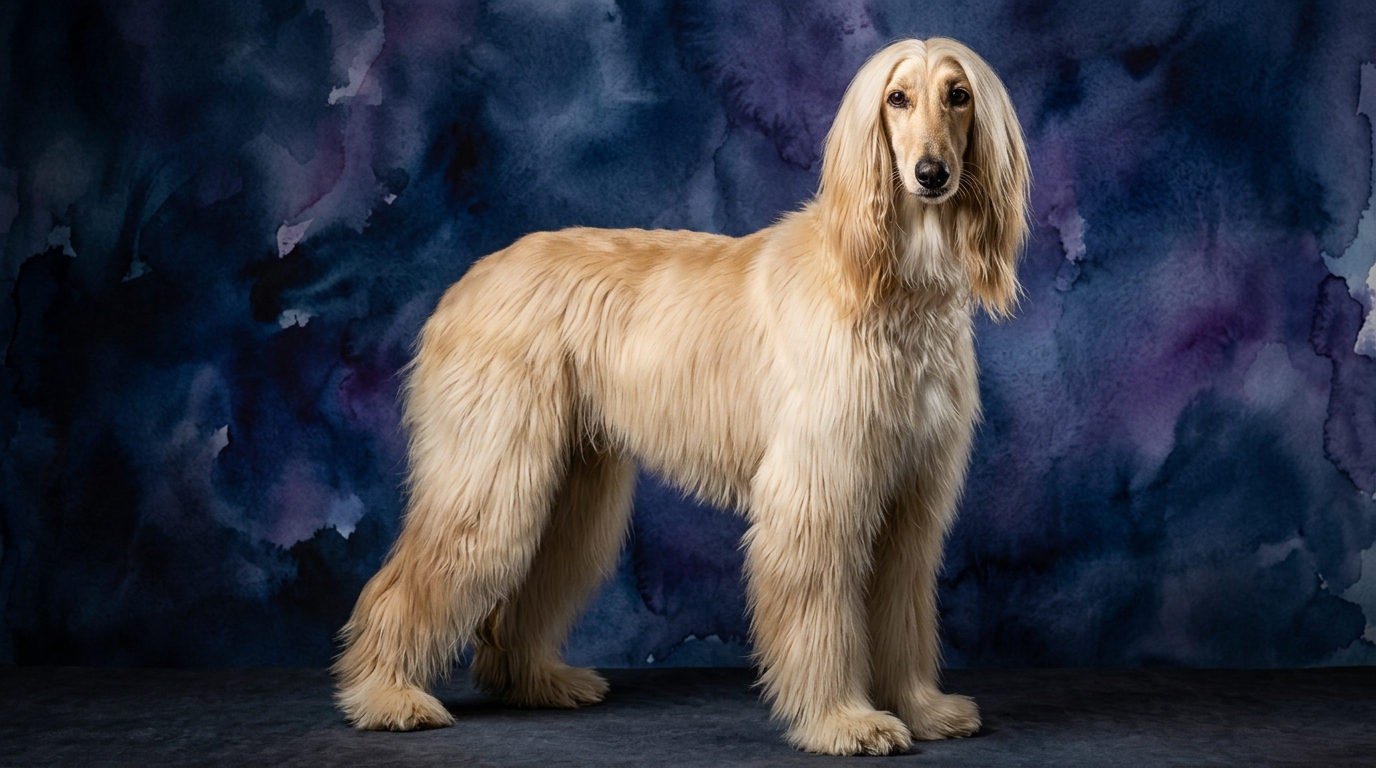
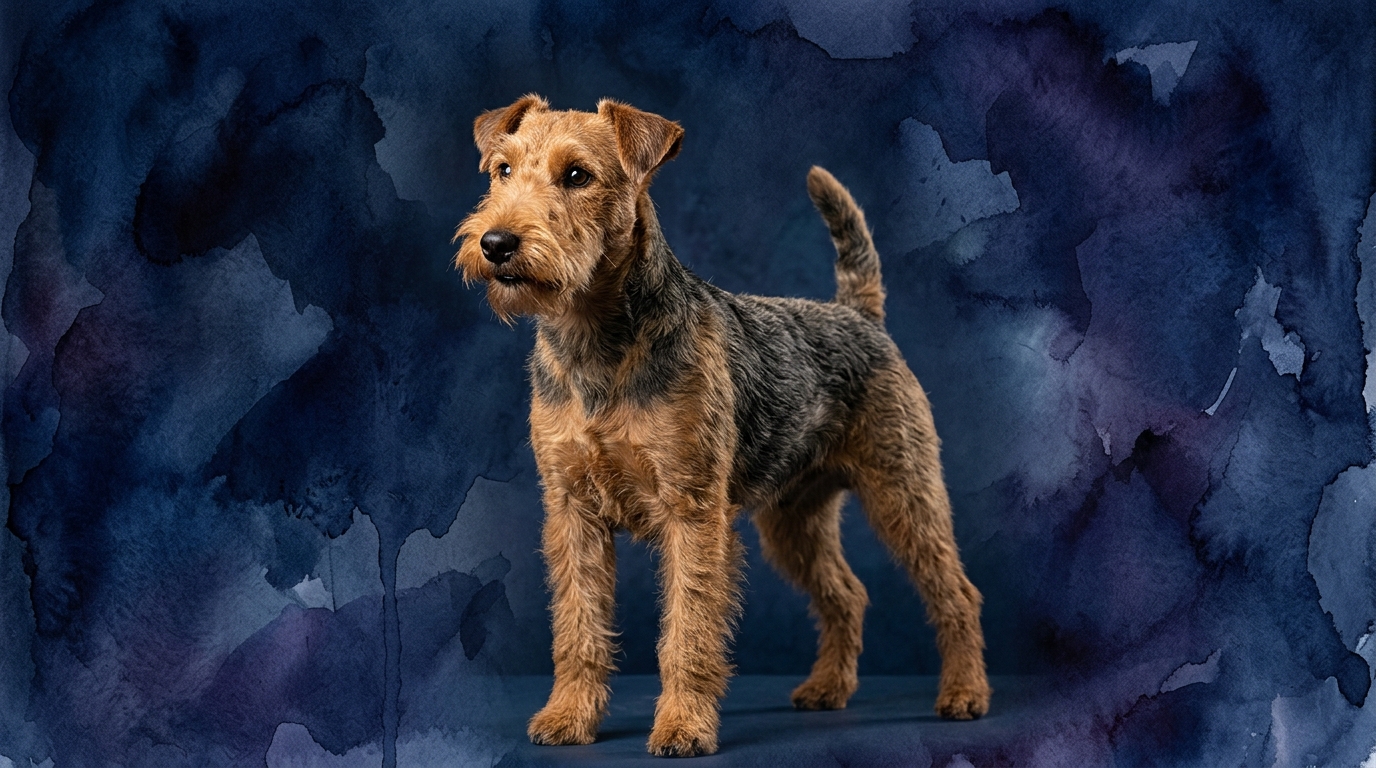
Side-by-Side Cognitive Profiles: Decoding Their Minds
The Cosmic Pet Pet IQ Lab's framework allows us to dissect the distinct cognitive architectures of the Afghan Hound and the Welsh Terrier. The Afghan Hound, a sighthound of ancient lineage, exhibits a Problem Solving score of 4/5, reflecting its independent, strategic thinking required for solo pursuit of game across vast distances. Its Training Speed, however, registers a low 1/5, indicating a strong self-determination that often prioritizes its own agenda over human directives. Social Intelligence stands at 2/5, suggesting a reserved and often aloof demeanor, while an Instinctive Drive of 5/5 underscores its unparalleled drive for the chase. Memory, rated at 3/5, helps it recall terrain and hunting patterns.
In contrast, the Welsh Terrier, a spirited member of the terrier group, presents a balanced cognitive profile. Its Problem Solving ability is rated 3/5, indicating a practical intelligence geared towards overcoming obstacles in pursuit of quarry, often with human collaboration. A Training Speed of 3/5 signifies a respectable willingness to learn and respond to cues, making it more amenable to structured training. Social Intelligence also scores 3/5, reflecting a generally outgoing and adaptable nature within a family setting. Its Instinctive Drive, at 3/5, is substantial for a terrier but more manageable than the Afghan Hound's, focused on digging and hunting small vermin. Memory, like the Afghan Hound, is 3/5, aiding in recalling tasks and routines.
Where the Afghan Hound's Cognition Shines
The Afghan Hound’s cognitive strengths are most apparent in its superior Problem Solving and unparalleled Instinctive Drive. Its 4/5 Problem Solving score isn't about solving puzzles for human entertainment, but rather about the complex, rapid decision-making required to track, corner, and capture fast-moving prey. This involves assessing terrain, anticipating escape routes, and executing sophisticated pursuit strategies autonomously, a testament to its independent reasoning. This breed operates with a singular focus on its hunting objective, demonstrating an innate, self-directed form of intelligence that is breathtaking to witness in its intended context.
Furthermore, the Afghan Hound's 5/5 Instinctive Drive is a cognitive marvel in itself. This isn't merely a physical urge; it's a deep-seated mental blueprint that dictates motivation, focus, and perseverance. Their drive to chase is so profound that it overrides many other stimuli, shaping their perception and reaction to the world. For an owner who understands and appreciates this profound, ancient instinct, the Afghan Hound offers a glimpse into a mind perfectly honed for a specific, demanding task—a truly specialized form of cognitive excellence.
Where the Welsh Terrier's Cognition Excels
The Welsh Terrier demonstrates cognitive advantages particularly in its Training Speed and more balanced Social Intelligence. With a Training Speed of 3/5, the Welsh Terrier is significantly more responsive to human instruction and eager to engage in collaborative learning, making the process of teaching commands and routines a more fluid and rewarding experience for both dog and owner. This capacity for quicker acquisition of human-directed tasks allows for greater versatility in activities and a smoother integration into various human environments, reflecting a mind more inclined towards partnership.
Its 3/5 Social Intelligence also gives the Welsh Terrier an edge in adaptability and interaction. While not overly effusive, they possess a more nuanced understanding of social cues and hierarchies within a family unit, making them generally more approachable and less prone to the aloofness sometimes seen in sighthounds. This balanced social cognition enables them to form stronger, more interactive bonds with a wider range of people and pets, fostering a more harmonious domestic life. Their moderate Instinctive Drive (3/5) also means their natural urges, while present, are less overwhelming and more amenable to redirection through training.
Ease of Training: A Tale of Two Motivations
When considering ease of training, the Welsh Terrier clearly holds an advantage over the Afghan Hound. The Welsh Terrier's Training Speed of 3/5 stems from its terrier heritage, where working closely with humans to flush out quarry was essential. They are typically motivated by praise, treats, and the opportunity to engage with their human companions, making them receptive to positive reinforcement methods. Their cognitive makeup includes a desire to understand and respond to human expectations, leading to a more straightforward and often enjoyable training journey for owners willing to put in consistent effort.
The Afghan Hound’s 1/5 Training Speed, conversely, is not an indicator of inability to learn, but rather a reflection of its profound independence and self-directed motivation. For millennia, they hunted largely without direct human command, relying on their own keen senses and judgment. This breeds a cognitive style where obeying a human command is often secondary to their own perceived objectives or interests. Training an Afghan Hound requires immense patience, creativity, and an understanding that you are often negotiating rather than commanding, appealing to their inherent desire to run or chase rather than strict obedience. Their memory (3/5) allows them to retain information, but their drive dictates when and if they will apply it to human-initiated tasks.
Matching Minds to Lifestyles: Active Engagement vs. Independent Pursuit
Choosing between an Afghan Hound and a Welsh Terrier also means aligning their distinct cognitive needs with your lifestyle. The Afghan Hound, despite its regal appearance, demands an owner who can facilitate its powerful Instinctive Drive (5/5) through opportunities for high-speed, open-field running, such as lure coursing or securely fenced large areas. While they might be calm indoors, their mental well-being hinges on these intense bursts of physical and cognitive engagement that fulfill their hunting instincts. Owners suited for Afghan Hounds are those who appreciate an independent companion and can provide outlets for self-directed activity, valuing the dog's unique cognitive autonomy over constant interaction.
The Welsh Terrier, with its balanced cognitive scores, thrives with owners who are prepared for consistent, interactive engagement. Their 3/5 Training Speed and Social Intelligence mean they benefit from structured activities like agility, obedience, or earthdog trials, which channel their terrier drive and mental acuity into collaborative tasks. They require an owner who enjoys being an active participant in their dog's daily life, providing varied physical exercise alongside mental stimulation that involves problem-solving alongside their human. This breed suits those seeking a more traditional 'partner' in their adventures, rather than a more self-contained, independent spirit.
The Verdict
Choose the Afghan Hound if you are captivated by a breed with profound independent problem-solving skills and an unparalleled instinctive drive, valuing a companion that embodies ancient autonomy and requires specific outlets for its unique cognitive needs.
Opt for the Welsh Terrier if you seek an interactive, adaptable companion with a balanced cognitive profile, appreciating a dog that is more amenable to training, enjoys collaborative activities, and thrives on consistent, engaged partnership.
🧠 Find Your Pet's IQ Score
Our Pet IQ Lab assessment covers 25+ tests across 5 cognitive dimensions — personalized to your breed.
Take the Full IQ Test →Frequently Asked Questions
Is the Afghan Hound genuinely 'difficult' to train?
The Afghan Hound's 1/5 Training Speed doesn't mean it can't learn, but rather that its independence and strong self-preservation instincts mean it often prioritizes its own agenda over human commands. Training requires exceptional patience, positive reinforcement, and finding ways to motivate them by appealing to their natural drives, rather than expecting eager obedience.
How does the Welsh Terrier's social intelligence compare to the Afghan Hound's?
The Welsh Terrier scores 3/5 in Social Intelligence, indicating a more balanced and adaptable nature, generally more open to varied social interactions and understanding family dynamics. The Afghan Hound's 2/5 score suggests a more reserved and often aloof demeanor, preferring the company of its chosen few and less inclined towards broad social engagement, reflecting its independent hunting heritage.
Which breed is better suited for a family with children?
The Welsh Terrier, with its 3/5 Social Intelligence and more balanced Instinctive Drive, is generally considered more adaptable and interactive within a family setting, making it a potentially better fit for families with children who can provide consistent, supervised engagement. The Afghan Hound's reserved social nature and powerful instinctive drive may require more careful management and supervision around children, particularly due to its propensity to chase.