Side-by-Side IQ Profile: Airedale Terrier vs. Irish Wolfhound
The Cosmic Pet Pet IQ Lab employs five key dimensions to assess canine intelligence, offering a nuanced understanding beyond simple obedience. Here’s how the Airedale Terrier and Irish Wolfhound measure up.
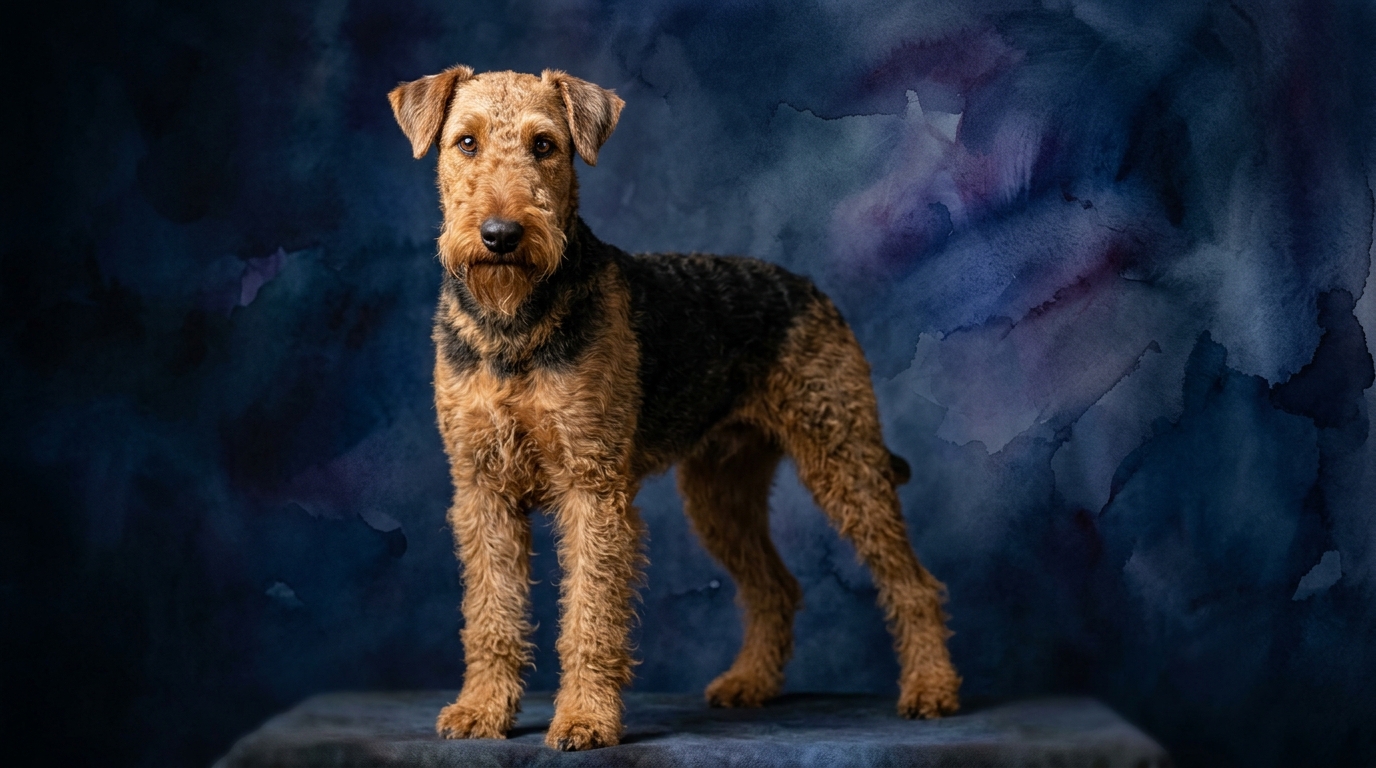
Airedale Terrier (Coren Rank #29): This breed’s profile reveals a robust cognitive toolkit. Their Problem Solving is rated 4/5, indicating a strong capacity for independent thought and finding solutions to novel challenges, often demonstrating resourcefulness in navigating their environment. Training Speed also scores 4/5, meaning Airedales generally pick up new commands and routines with efficiency, requiring fewer repetitions to solidify learned behaviors. Social Intelligence is 3/5, suggesting an adequate but not exceptional understanding of human social cues or complex pack dynamics. Instinctive Drive is likewise 3/5, reflecting a moderate level of innate, hardwired behaviors, particularly those related to their working heritage, which can be channeled with consistent training. Finally, Memory scores 4/5, signifying a strong ability to retain learned information, commands, and experiences effectively over time, contributing to their consistency.
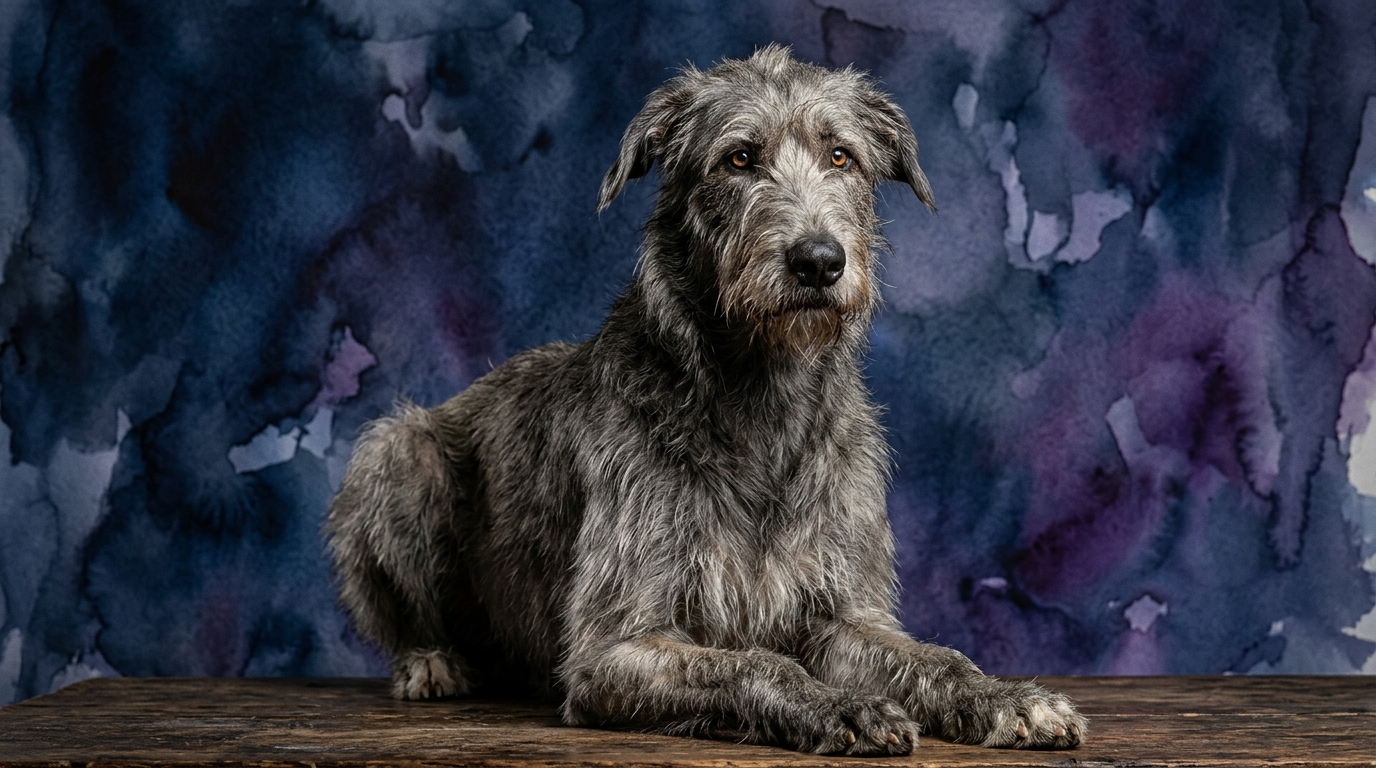
Irish Wolfhound (Not Coren-Ranked): The Irish Wolfhound presents a different, yet equally valid, cognitive landscape. Their Problem Solving is rated 3/5, indicating a solid, but perhaps less spontaneous, approach to new cognitive challenges, often relying more on learned responses or direct guidance. Training Speed also comes in at 3/5; Irish Wolfhounds learn at a steady pace but may require more repetitions or consistent reinforcement. Social Intelligence matches the Airedale at 3/5, suggesting a balanced capacity for interaction, generally amiable and connecting well with their families. Instinctive Drive is also 3/5, primarily reflecting their sighthound drive to chase moving objects, though often tempered by their calm demeanor. Their Memory scores 3/5, meaning they retain information adequately but might not have the same recall precision or longevity as breeds with higher scores, potentially needing occasional refreshers.
Where the Airedale Terrier Wins Cognitively
The Airedale Terrier clearly demonstrates an edge in several cognitive domains, primarily due to their higher Problem Solving (4/5), Training Speed (4/5), and Memory (4/5) scores compared to the Irish Wolfhound's 3/5 in each. Their terrier heritage, demanding quick thinking and independent action to flush out prey, manifests in a robust ability to assess and overcome novel obstacles. For instance, an Airedale is more likely to independently devise a strategy to retrieve a dropped item from under furniture or bypass a child gate, showcasing their resourcefulness. This inherent cognitive agility also translates directly into a more efficient learning curve; they grasp new commands and routines with fewer repetitions, making initial training phases potentially smoother and faster. Furthermore, their superior memory means learned behaviors and complex sequences are retained more reliably over extended periods, requiring less frequent refreshing of past lessons.
Where the Irish Wolfhound Wins Cognitively
While the Irish Wolfhound doesn't outscore the Airedale in any specific dimension, their cognitive profile is uniquely suited to their original purpose and lifestyle. Both breeds share a 3/5 in Social Intelligence and Instinctive Drive, but the Irish Wolfhound's overall temperament often complements these scores differently. Their historical role as coursing hounds required immense focus on a single moving target rather than complex strategic planning, fostering a calm, observant nature. This translates into a potentially less reactive approach to their environment, making them less prone to impulsive decisions driven by curiosity or a need to 'solve' every perceived problem. Their cognitive strengths lie in their composed presence; they excel in situations demanding steady companionship and a less frantic engagement with the world. While their problem-solving might be less spontaneous, their sheer presence and steady demeanor can be a cognitive 'win' for owners seeking a more serene canine companion.
Which is Easier to Train and Why
Based on their respective IQ profiles, the Airedale Terrier generally presents as the easier breed to train. Their 4/5 scores in Training Speed and Memory directly contribute to a more receptive and consistent learning experience. An Airedale will typically pick up new commands like 'stay' or 'heel' faster and retain them longer, requiring fewer repetitions and less frequent refreshers. Their stronger problem-solving skills also mean they can generalize learned behaviors to new situations more readily. For example, if taught to 'sit' in the living room, an Airedale is more likely to apply that command in a busy park with minimal additional instruction. In contrast, the Irish Wolfhound, with 3/5 in both Training Speed and Memory, will learn at a steady pace but may require more patience, consistency, and reinforcement. They might be more prone to 'selective hearing' or require more consistent application of commands across different environments, reflecting a more deliberate processing style rather than a quick, eager-to-please response. While both are trainable, the Airedale’s cognitive speed gives it an edge in the efficiency of acquiring and maintaining behaviors.
Which Suits Active Owners vs. Relaxed Owners
The cognitive profiles of these two breeds align them with different owner lifestyles. The Airedale Terrier, with its higher problem-solving capacity and quicker training speed, thrives with active owners who enjoy engaging their dog in mental and physical challenges. Owners who want to pursue advanced obedience, agility, or scent work will find the Airedale's cognitive zest and memory a rewarding match. Their moderate instinctive drive means they appreciate a 'job' and can become bored or mischievous without sufficient mental stimulation. Conversely, the Irish Wolfhound, with its more measured cognitive pace and generally calmer disposition, is often a better fit for relaxed owners. While they still require regular exercise to maintain their physical health, their cognitive engagement tends towards a more observational and companion-oriented style. They are less likely to seek out complex puzzles or independent 'projects,' preferring a steady routine and the quiet companionship that suits a more relaxed home environment, making them less demanding in terms of constant mental stimulation.
The Verdict
Opt for an Airedale Terrier if you seek a cognitively agile companion for active engagement, enjoying a quicker training trajectory and a dog that thrives on problem-solving tasks. They suit owners ready to channel their keen mind and robust memory into varied activities.
Select an Irish Wolfhound if you desire a serene, composed companion whose cognitive strengths lie in steady observation and a calm presence, fitting well into a more relaxed household that values gentle companionship over constant mental challenges.
🧠 Find Your Pet's IQ Score
Our Pet IQ Lab assessment covers 25+ tests across 5 cognitive dimensions — personalized to your breed.
Take the Full IQ Test →Frequently Asked Questions
Does Coren ranking apply to both breeds?
The Coren ranking specifically places breeds based on their working and obedience intelligence, a measure primarily focused on training speed and command retention. The Airedale Terrier is ranked #29, indicating a strong capacity in these areas, while the Irish Wolfhound is not Coren-ranked, suggesting a different cognitive emphasis.
How does instinctive drive differ in these breeds despite the same score?
While both score 3/5, their instinctive drives manifest differently due to their breed histories. The Airedale's drive is rooted in terrier-typical prey drive, often involving digging, chasing, and independent hunting, while the Irish Wolfhound's drive is primarily a sighthound's urge to chase fast-moving objects across open spaces.
Are Irish Wolfhounds less 'smart' because they aren't Coren-ranked?
Not at all; Coren ranking measures a specific type of working intelligence, not overall cognitive ability. Irish Wolfhounds possess distinct cognitive strengths, such as their calm observational intelligence and social connection, which might not be captured by a ranking focused on rapid obedience and problem-solving.