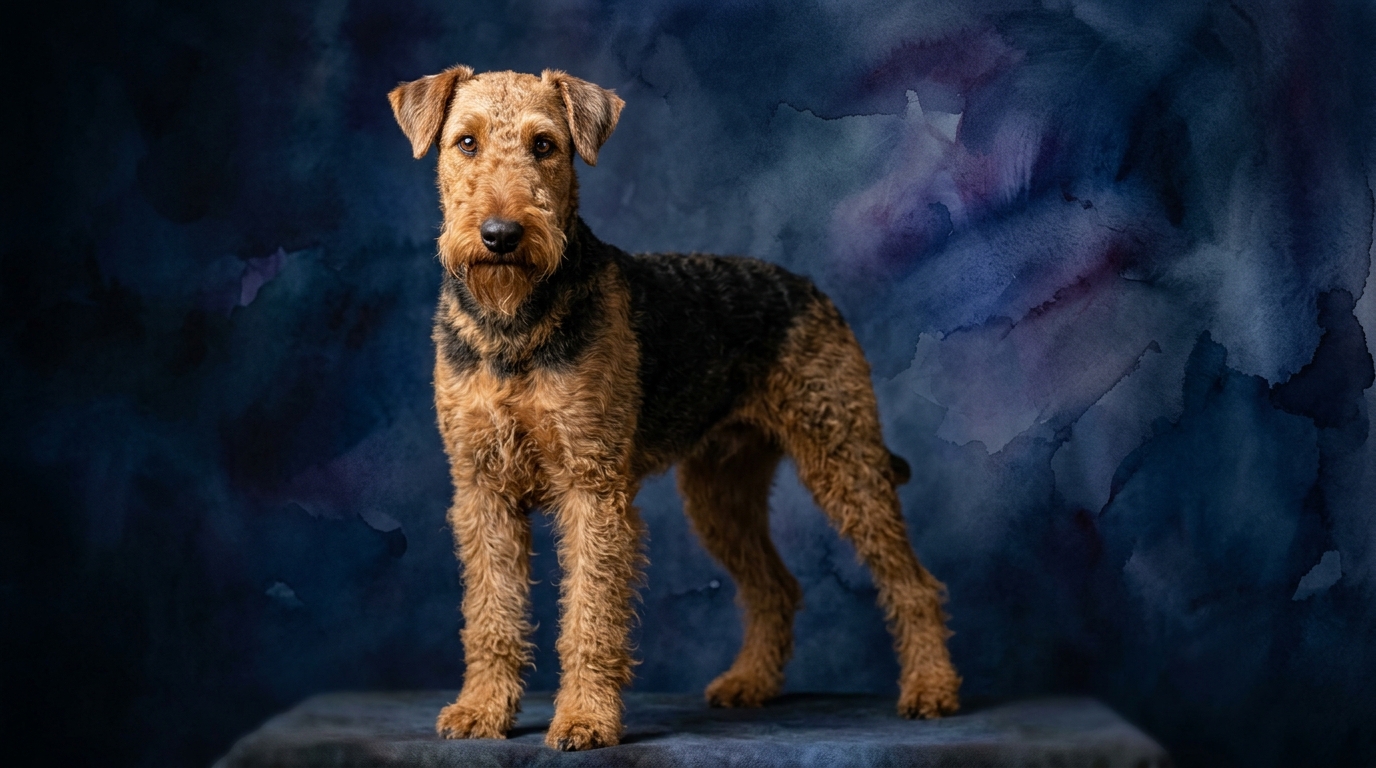
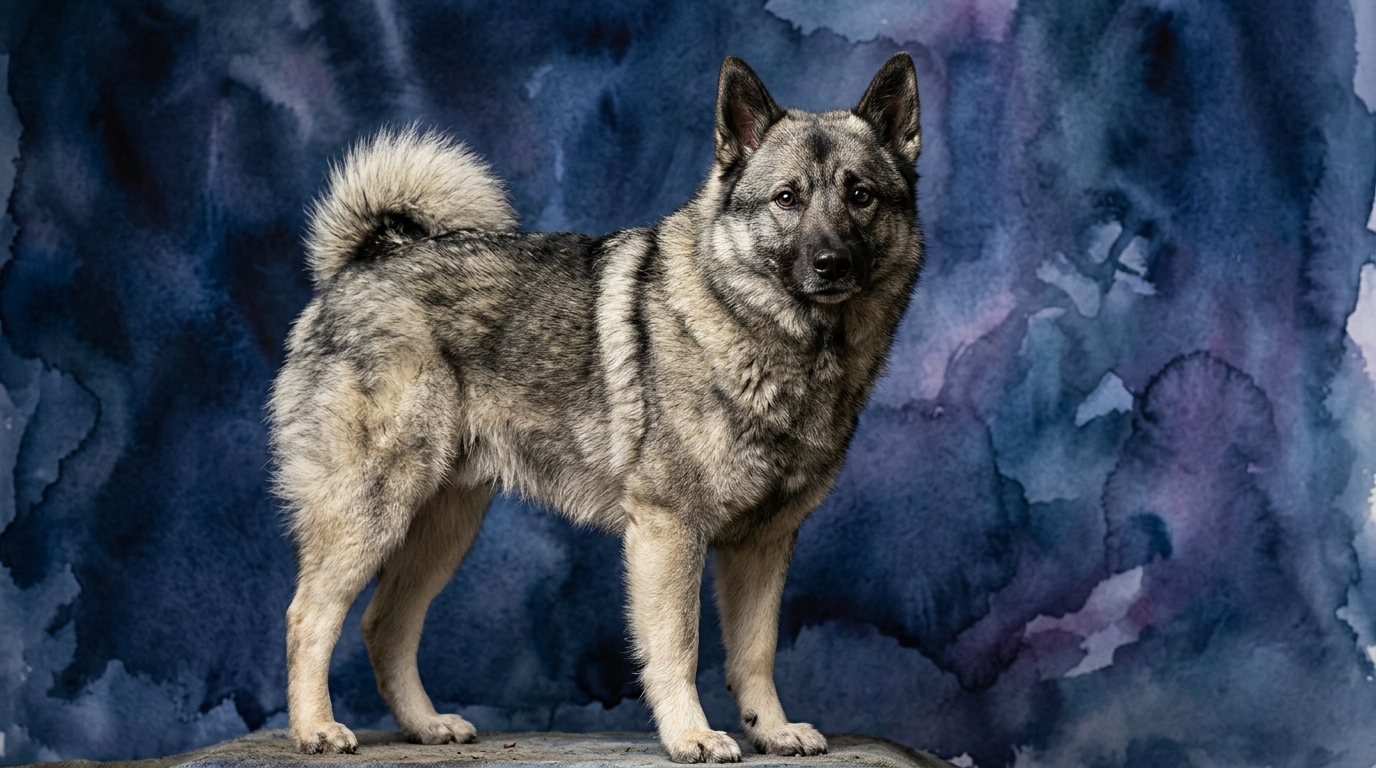
Side-by-Side IQ Profile: Airedale Terrier vs. Norwegian Elkhound
The Airedale Terrier, ranking #29 on the Coren scale, and the Norwegian Elkhound, at #36, both present an intriguing cognitive blueprint with identical scores in our five key dimensions. Examining these metrics through the lens of their breed histories reveals nuanced distinctions in how these abilities manifest.
**Airedale Terrier (Coren Rank #29)**
**Problem Solving (4/5):** This score reflects their capacity to navigate complex situations and overcome obstacles, a trait honed by their history as versatile hunters and working dogs. They often figure out how to open gates or retrieve items from challenging spots.
**Training Speed (4/5):** Airedales grasp new commands and routines quickly, demonstrating a readiness to learn when engaged. This score indicates they pick up on cues and learn new tasks efficiently.
**Social Intelligence (3/5):** They possess a moderate understanding of human social cues and pack dynamics, capable of forming strong bonds but often retaining a degree of independent thought. They can interpret subtle changes in tone or body language.
**Instinctive Drive (3/5):** Their strong prey drive and desire to work are evident, manifesting as a need for consistent mental and physical engagement. This score highlights their underlying motivation for activity and purpose.
**Memory (4/5):** Airedales retain learned behaviors, commands, and experiences effectively, allowing for consistent performance over time. They remember routines and past interactions well, which aids in their versatility.
**Norwegian Elkhound (Coren Rank #36)**
**Problem Solving (4/5):** Elkhounds display a robust ability to solve environmental challenges, particularly those related to tracking and navigation in varied terrains. They can strategize how to follow a scent trail or find their way back through unfamiliar territory.
**Training Speed (4/5):** Like Airedales, Elkhounds learn new tasks and commands at an efficient pace, showing good retention of information. They are quick to understand what is being asked of them during training sessions.
**Social Intelligence (3/5):** They exhibit a moderate capacity for understanding human emotions and social structures, often forming deep, loyal connections while maintaining a dignified, somewhat reserved demeanor. They pick up on moods and can be quite empathetic.
**Instinctive Drive (3/5):** Their heritage as hunting companions fuels a strong desire for purpose, often expressed through tracking, guarding, and endurance activities. This score reflects their innate motivation for work in challenging conditions.
**Memory (4/5):** Elkhounds demonstrate a solid ability to recall learned behaviors, commands, and complex routes, which is crucial for their historical roles in hunting and navigation. They remember training and significant events clearly.
Where the Airedale Terrier Wins Cognitively
Despite identical IQ scores, the Airedale's higher Coren rank suggests a slight edge in applying their cognitive skills to human-directed obedience and problem-solving within structured environments. Their terrier tenacity means their 4/5 problem-solving often manifests as persistent, ingenious attempts to achieve a goal, whether it's outsmarting a squirrel or figuring out a complex puzzle toy. This assertive application of intelligence, combined with their 4/5 training speed, allows them to excel in diverse roles from agility to police work, where quick adaptation and a bold, direct approach are highly valued. Their memory (4/5) supports this by solidifying a vast repertoire of learned responses and strategies for various human-assigned tasks.
Where the Norwegian Elkhound Wins Cognitively
The Elkhound's cognitive strengths, while numerically similar, are finely tuned for different challenges, particularly those involving sustained focus in natural environments. Their 4/5 problem-solving shines in tasks requiring independent judgment, such as tracking a scent over long distances or navigating complex terrain without constant human input. This breed's 3/5 instinctive drive is channeled into enduring pursuits, where their memory (4/5) allows them to recall intricate scent trails and geographical markers with precision. Their intelligence is less about immediate compliance and more about resilient, self-directed execution of a task, making them formidable partners in specialized outdoor activities like hunting or search and rescue.
Which Is Easier to Train and Why
While both breeds share a 4/5 training speed, the Airedale Terrier generally presents as 'easier' to train in a conventional obedience sense, a distinction reflected in its higher Coren rank (#29 vs #36). Airedales, though possessing an independent streak, often have a strong desire to engage with their human counterparts in structured activities. Their problem-solving (4/5) is frequently applied to understanding and mastering commands, and their social intelligence (3/5) allows them to interpret human intent more readily in training scenarios, leading to quicker, more consistent responses. Elkhounds, conversely, might learn commands just as quickly, but their strong instinctive drive (3/5) towards scent and independent action means they can be more easily distracted or less inclined to perform a command if a more compelling natural stimulus, like a captivating smell, is present. Their problem-solving might focus on the 'why' of a command in relation to their own motivations, requiring a trainer to be highly engaging and consistent.
Which Suits Active Owners vs. Relaxed Owners
Both the Airedale Terrier and the Norwegian Elkhound are suited for active owners, though their activity needs differ in style. The Airedale, with its powerful build and agile mind, thrives on varied physical and mental challenges like dog sports and puzzle toys; its 3/5 instinctive drive demands purposeful engagement. A relaxed owner might find an Airedale's energy and creative problem-solving (4/5) overwhelming if not adequately channeled, potentially leading to undesirable behaviors. The Norwegian Elkhound also requires significant activity, particularly long walks, hikes, or scent-work that engages their keen sense of smell. Its 3/5 instinctive drive is geared towards endurance and exploration, making it resilient in outdoor pursuits. Neither breed is ideal for sedentary lifestyles, but the Elkhound's independent nature might make it slightly more content with less structured, yet still active, routines compared to the Airedale's need for interactive engagement.
The Verdict
Choose an Airedale Terrier if you seek an active, engaged companion for varied dog sports, structured training, and a partner who applies their cleverness directly to human-centric challenges.
Choose a Norwegian Elkhound if you appreciate a resilient, independent partner for long outdoor adventures, tracking, and a dog whose problem-solving excels in natural, scent-driven environments.
🧠 Find Your Pet's IQ Score
Our Pet IQ Lab assessment covers 25+ tests across 5 cognitive dimensions — personalized to your breed.
Take the Full IQ Test →Frequently Asked Questions
Do Airedale Terriers and Norwegian Elkhounds get along with other pets?
Airedales, with their terrier heritage and 3/5 instinctive drive, can have a strong prey drive towards smaller animals, requiring careful socialization and supervision. Elkhounds, also possessing a 3/5 instinctive drive, might view smaller pets as prey or other dogs as competition, especially same-sex, necessitating early and consistent introductions to ensure harmony.
Are these breeds good for first-time dog owners?
Both breeds, while possessing 4/5 training speed and 4/5 memory, are generally not recommended for first-time owners due to their strong independent streaks and significant exercise requirements. Their 3/5 instinctive drive and moderate social intelligence mean they thrive with experienced owners who can provide consistent training, boundaries, and ample mental and physical stimulation.
How do their grooming needs compare?
Airedale Terriers have a dense, wiry coat that requires regular hand-stripping or professional grooming every few months, plus weekly brushing, to maintain its texture and minimize shedding. Norwegian Elkhounds have a thick double coat that sheds heavily twice a year and requires weekly brushing, especially during shedding seasons, to prevent mats and manage loose fur effectively.