Side-by-Side IQ Profile: A Deep Dive
The Cosmic Pet Pet IQ Lab employs a five-dimensional framework to assess canine intelligence, offering a nuanced perspective beyond simple obedience. Let's break down how the Airedale Terrier and Scottish Deerhound measure up.
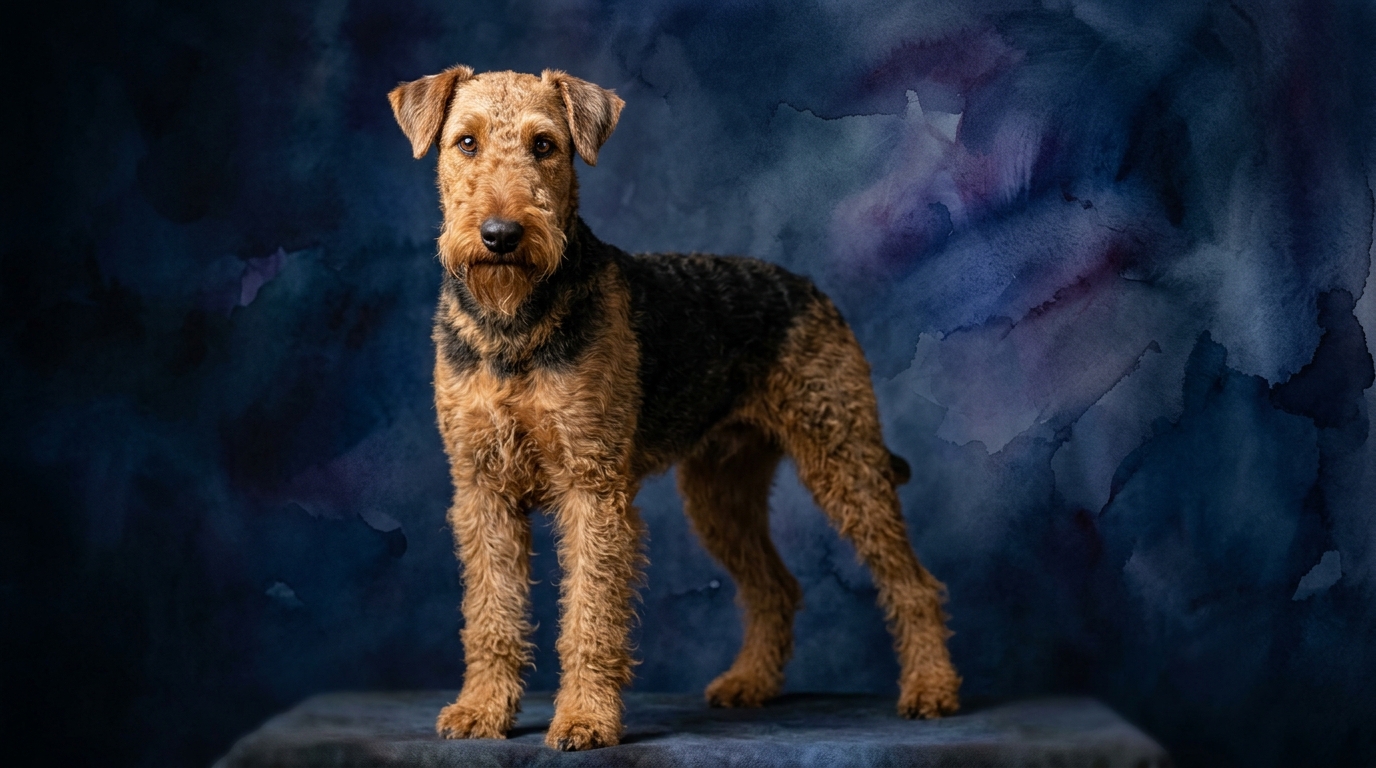
The Airedale Terrier, ranked #29 by Coren, demonstrates a formidable cognitive profile. Its Problem Solving is rated 4/5, indicating a strong capacity for independent thought and navigating complex situations. Training Speed also scores 4/5, suggesting a quick grasp of new commands and routines. Social Intelligence, essential for harmonious living, is 3/5, reflecting a balanced approach to interaction. The Airedale's Instinctive Drive, a measure of its inherent behavioral patterns, stands at 3/5, speaking to its working dog heritage. Finally, its Memory is 4/5, underscoring an impressive ability to retain information and learned behaviors.
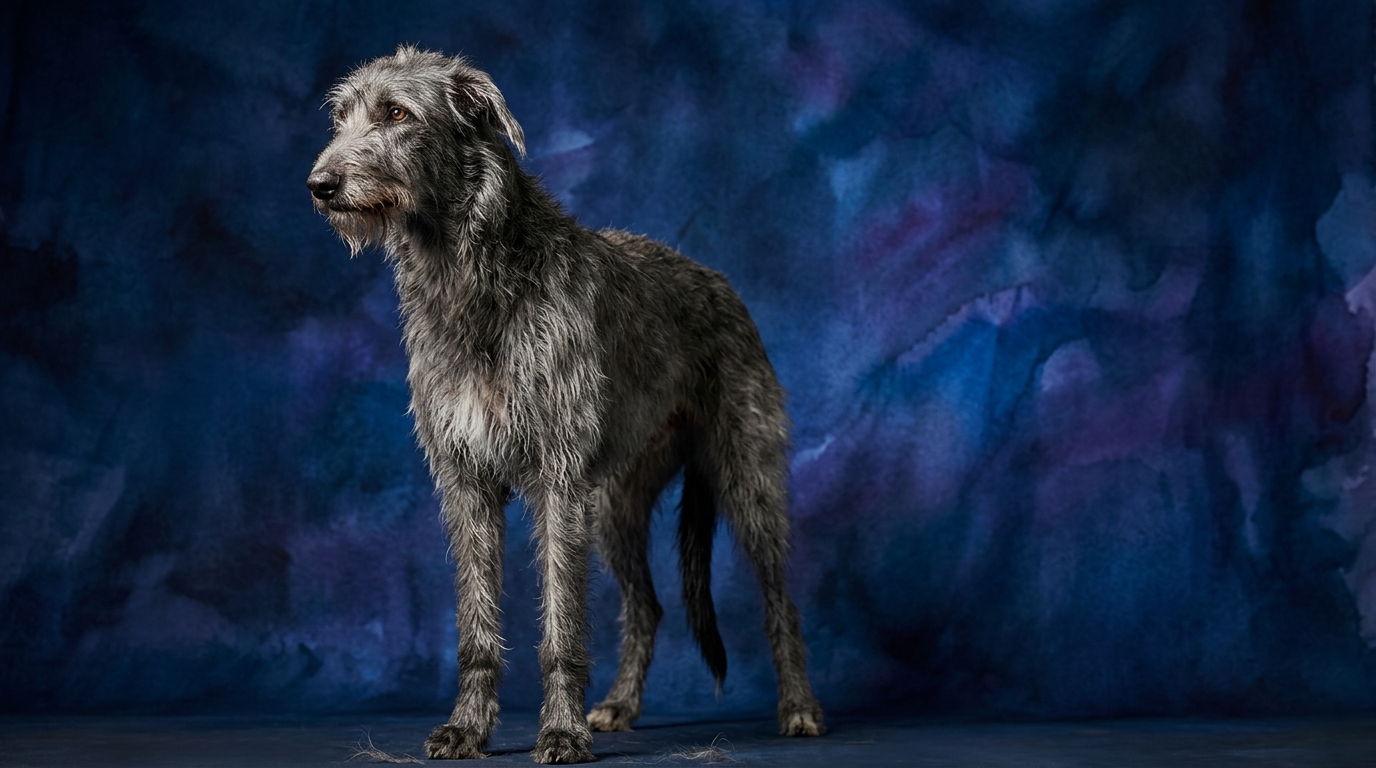
In contrast, the Scottish Deerhound, while not Coren-ranked, presents a distinct set of cognitive strengths tailored to its sighthound lineage. Its Problem Solving is rated 3/5, indicating a functional ability to overcome obstacles, often with a focus on efficiency in pursuit. Training Speed is also 3/5, suggesting a steady but perhaps less eager approach to learning formal commands compared to the Airedale. Social Intelligence matches the Airedale at 3/5, highlighting an adaptable and often gentle nature within its social circles. Instinctive Drive is 3/5, primarily manifesting as a powerful prey drive and an inclination for open-field running. Its Memory is rated 3/5, providing a solid foundation for recalling routines and experiences, albeit potentially less detailed than the Airedale's.
These profiles paint a picture of two breeds optimized for very different tasks: the Airedale, a versatile hunter and companion requiring sharp wits and adaptability, and the Deerhound, a specialized courser demanding keen sight, endurance, and independent decision-making in pursuit.
Where the Airedale Terrier Excels Cognitively
The Airedale Terrier's cognitive advantages are evident in its higher ratings for Problem Solving (4/5), Training Speed (4/5), and Memory (4/5). This breed demonstrates a remarkable capacity for analytical thought, often devising creative solutions to challenges rather than simply relying on brute force or instinct. This manifests in behaviors such as figuring out how to open gates, retrieve hidden toys through complex pathways, or even manipulate objects to achieve a desired outcome. Their superior Training Speed means they pick up new commands and multi-step routines with fewer repetitions, making them highly responsive to consistent instruction. Coupled with a strong Memory, Airedales are excellent at retaining vast repertoires of learned behaviors, making them capable of advanced obedience, agility, or even complex trick training. This combination of quick learning and strong recall makes them highly adaptable to varied tasks and environments, reflecting their history as versatile working dogs.
Distinct Cognitive Strengths of the Scottish Deerhound
While the Scottish Deerhound's general IQ scores might appear lower than the Airedale's in some categories, its cognitive profile is uniquely optimized for its sighthound purpose. Its Problem Solving (3/5) is geared towards efficient, independent pursuit across open terrain, requiring quick assessment of environmental factors and strategic course corrections rather than intricate manipulation. This isn't a deficiency but a specialized form of intelligence focused on visual tracking, speed, and endurance. Its Instinctive Drive (3/5), equal to the Airedale's, is a powerful asset for its intended role, manifesting as an intense focus on movement and a relentless desire to chase, demanding significant stamina and single-mindedness. Furthermore, its Social Intelligence (3/5), also matching the Airedale, is noteworthy for a breed often characterized by independence. This allows Deerhounds to integrate gracefully into family life, demonstrating a calm and affectionate demeanor, and responding appropriately to social cues within their human pack, despite their ancient hunting heritage. Their cognition is about specialized efficiency and graceful independence, not complex puzzle-solving.
Training Dynamics: Airedale vs. Deerhound
When it comes to ease of training, the Airedale Terrier generally holds an advantage due to its higher Training Speed (4/5) and Problem Solving (4/5). Airedales tend to grasp new commands quickly and enjoy the mental engagement of learning. Their natural curiosity and desire to figure things out make them responsive to positive reinforcement and structured training sessions. However, their strong-willed terrier nature means they require consistent, firm, but fair handling to prevent them from using their intelligence to outsmart their owners. Without clear leadership, their problem-solving skills might be applied to mischievous endeavors.
The Scottish Deerhound, with a Training Speed of 3/5, will learn, but often at a more measured pace. They are not typically driven by the same eagerness to please that some breeds exhibit. Their independent nature, a cornerstone of their sighthound heritage, means they may evaluate the necessity or benefit of a command before complying. While capable of learning a wide array of commands, owners should expect a more patient and consistent approach, focusing on building a strong, trusting relationship. Their recall, in particular, can be challenging if a strong prey drive takes over, as their instinctive drive to chase often overrides learned commands in the face of a tempting visual stimulus.
Suitability for Active vs. Relaxed Owners
The Airedale Terrier, despite its moderate Instinctive Drive (3/5), is generally better suited for active owners. Their keen Problem Solving and high Training Speed mean they thrive on mental stimulation as much as physical exercise. They require consistent engagement, structured activities, and opportunities to use their intelligence, such as obedience training, agility, or puzzle toys. An owner who enjoys active outdoor pursuits and can provide varied daily challenges will find the Airedale a fulfilling companion. Without sufficient mental and physical outlets, their intelligence can lead to boredom and destructive behaviors.
The Scottish Deerhound, while possessing a strong Instinctive Drive (3/5) for running, can actually suit a more relaxed owner, provided their specific exercise needs are met. They require bursts of intense, off-leash running in a safe, enclosed area to satisfy their sighthound instincts, but are often quite calm and relaxed indoors. Their lower Problem Solving and Training Speed ratings mean they aren't constantly seeking mental puzzles or demanding intricate engagement in the same way an Airedale might. An owner who appreciates a quiet, gentle giant at home but can commit to daily opportunities for a good sprint will find the Deerhound an ideal, low-key companion for much of the day.
Frequently Asked Questions
The Verdict
Choose an Airedale Terrier if you seek a highly trainable, problem-solving companion eager for mental challenges and consistent engagement in diverse activities. They thrive with owners who can provide structure and channel their sharp wits.
Opt for a Scottish Deerhound if you appreciate a calm, independent companion who needs dedicated space for vigorous sprints but is otherwise relaxed, valuing quiet companionship over constant mental tasks.
🧠 Find Your Pet's IQ Score
Our Pet IQ Lab assessment covers 25+ tests across 5 cognitive dimensions — personalized to your breed.
Take the Full IQ Test →Frequently Asked Questions
Does the Airedale Terrier's higher IQ make it inherently 'better' than the Scottish Deerhound?
No, a higher IQ score doesn't equate to 'better'; it indicates different cognitive strengths. The Airedale's versatile intelligence suits complex tasks, while the Deerhound's specialized intelligence is perfectly adapted for its sighthound heritage, making both exceptional in their own right.
How does the 'Instinctive Drive' rating influence daily life with these breeds?
The 3/5 Instinctive Drive in both breeds means they possess strong innate behaviors, but these manifest differently. For Airedales, it's often a drive to investigate and 'work,' sometimes leading to digging or barking. For Deerhounds, it's a powerful visual prey drive requiring secure containment and careful management during walks.
Can a Scottish Deerhound be trained for advanced obedience or sports like agility?
Yes, Scottish Deerhounds can certainly be trained for advanced obedience and participate in sports, though it may require more patience and creative motivation due to their independent nature and moderate Training Speed (3/5). They excel in lure coursing, which directly taps into their natural instincts.