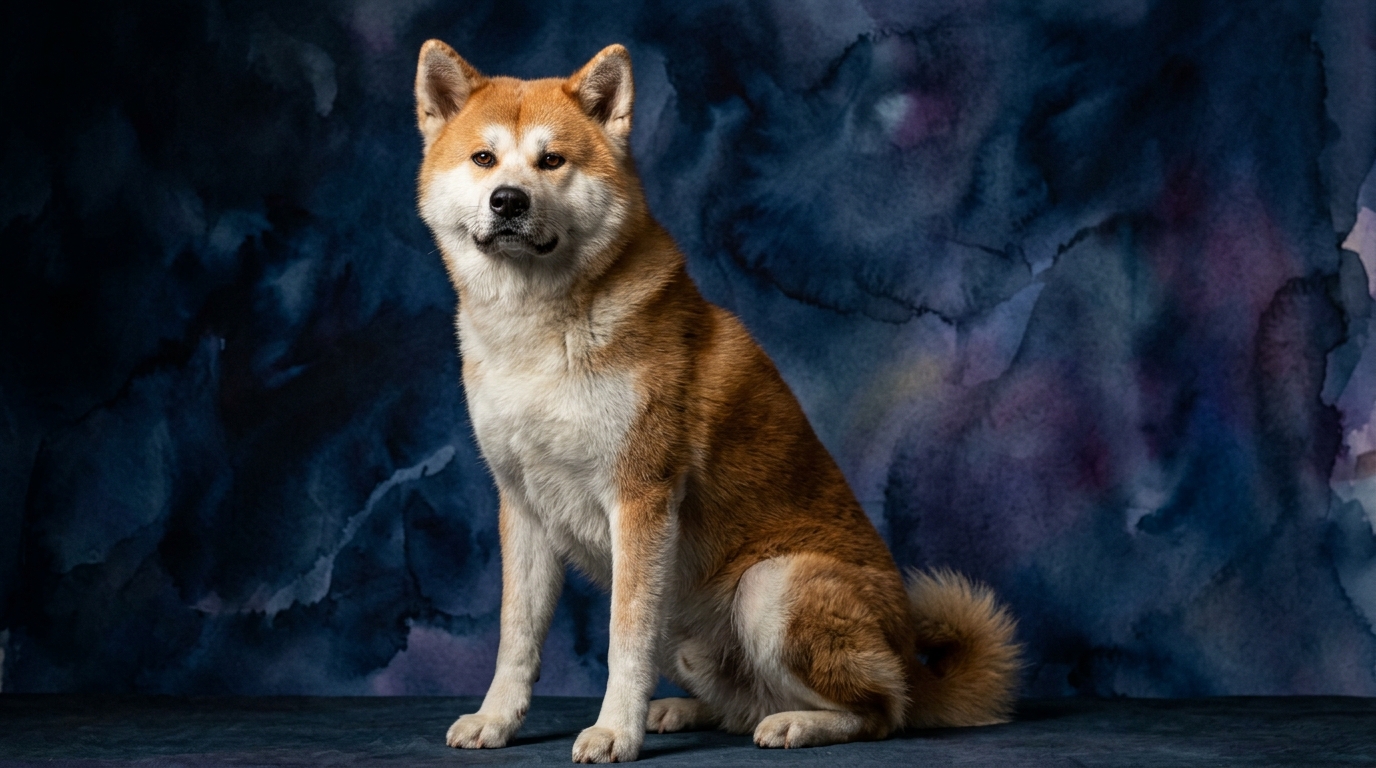

Side-by-Side Cognitive Profiles: Akita vs. Belgian Sheepdog (Groenendael)
The Cosmic Pet Pet IQ Lab provides a unique lens through which to compare the mental faculties of these two distinct breeds, highlighting their strengths and learning styles across five key dimensions. Understanding these profiles helps us appreciate the nuanced ways each dog processes information and interacts with its world.
For the Akita, with a Coren rank of #54, its cognitive profile paints a picture of a discerning, self-reliant companion. Its Problem Solving is rated at 3/5, indicating a moderate ability to navigate novel situations, often preferring to rely on its own judgment rather than constant human direction. Training Speed is 2/5, suggesting a more deliberate learning pace that requires patience and consistency. Social Intelligence stands at 3/5, reflecting a selective nature, deeply loyal to its inner circle but reserved with outsiders. Instinctive Drive is a formidable 5/5, underpinning its strong guardian and protective instincts. Finally, its Memory is a solid 4/5, allowing it to retain experiences, routines, and boundaries effectively.
In contrast, the Belgian Sheepdog (Groenendael), holding a much higher Coren rank of #15, presents a profile of exceptional mental agility and responsiveness. Its Problem Solving capability is 5/5, showcasing a rapid and flexible approach to challenges. Training Speed is also a perfect 5/5, signifying its remarkable aptitude for quickly absorbing and executing commands. Social Intelligence is 3/5, similar to the Akita in its devotion to family, but often expressed with more overt sensitivity and a desire to work alongside its handler. Its Instinctive Drive is 3/5, primarily geared towards herding and a strong work ethic. A standout feature is its Memory, rated at 5/5, indicating an outstanding capacity for recall and retention of complex information.
Where the Akita Wins Cognitively
The Akita's primary cognitive strength lies in its profound instinctive drive (5/5) and robust memory (4/5), which coalesce into an unwavering sense of duty and protection. Unlike breeds that might seek constant direction, the Akita's independent problem-solving (3/5) is often driven by its instinct to assess and act autonomously in perceived threats, relying on its stored knowledge of boundaries and routines. This means an Akita can make crucial decisions to guard its territory or family without explicit commands, a cognitive trait invaluable in its original role. Their capacity to remember specific past interactions and the associated outcomes allows them to build a reliable mental map of who belongs and who poses a potential risk, reinforcing their formidable presence as a watchful companion.
Where the Belgian Sheepdog (Groenendael) Wins Cognitively
The Groenendael's cognitive superiority shines in its exceptional problem-solving (5/5) and training speed (5/5), supported by a flawless memory (5/5). This combination makes them incredibly adaptable and quick-witted. They excel at deciphering complex tasks, whether it's navigating an agility course or learning a multi-step routine, often anticipating the next action. Their speed in training isn't just about repetition; it's about rapidly understanding the 'why' behind a command and connecting it to a desired outcome. This cognitive agility allows them to excel in dynamic environments where rapid decision-making and precise execution are paramount, making them standouts in competitive dog sports and service roles.
Trainability: A Tale of Two Approaches
There's a clear distinction in trainability between these two breeds, largely influenced by their core cognitive strengths and historical roles. The Belgian Sheepdog (Groenendael) is considerably easier to train due to its unparalleled training speed (5/5) and problem-solving ability (5/5), coupled with its perfect memory (5/5). Groenendaels are eager to engage, absorb information quickly, and thrive on mental stimulation and collaboration with their handler. They understand complex sequences and generalize learned behaviors to new situations with remarkable ease. For instance, teaching a Groenendael a new trick might take a handful of repetitions, as they're actively trying to understand what's expected and how to earn a reward.
In contrast, the Akita, with its training speed rated at 2/5 and problem-solving at 3/5, presents a greater challenge. Their independent nature means they often question the necessity of a command or prefer to find their own solutions, which doesn't always align with human expectations. An Akita might understand a command perfectly but choose not to execute it if it doesn't perceive immediate value or if its strong instinctive drive (5/5) dictates a different course of action. For example, recalling an Akita from a high-prey-drive situation requires far more foundational work and consistent motivation than with a Groenendael, whose focus is naturally more handler-centric. Training an Akita demands immense patience, positive reinforcement, and a deep understanding of their independent spirit to foster cooperation rather than mere obedience.
Matching Breeds to Lifestyles: Active vs. Relaxed Owners
For owners seeking a highly active and mentally engaging companion, the Belgian Sheepdog (Groenendael) is an ideal match. Their exceptional problem-solving and training speed mean they thrive on consistent mental and physical challenges, from advanced obedience and agility to herding trials or search and rescue work. A Groenendael needs an owner who can dedicate significant time daily to training, exercise, and structured activities that tap into their working drive and sharp intellect. A relaxed owner who cannot provide this level of engagement would likely find a Groenendael bored, potentially leading to destructive behaviors or excessive barking as they seek outlets for their unused mental and physical energy.
The Akita, while possessing a strong instinctive drive (5/5), presents a different kind of 'activity' requirement. They are generally less frantic than a Groenendael and can adapt to a more relaxed home life, provided they receive regular, moderate exercise and mental engagement tailored to their independent nature. Akitas are content with a few brisk walks or playtime in a secure yard, coupled with consistent training that reinforces boundaries and social manners. They don't demand constant tasks or intricate problem-solving games; their mental activity often revolves around observing their environment and fulfilling their guardian role. Therefore, an Akita can suit an owner who appreciates a calm, watchful presence and is prepared for a dog with a strong will and a need for clear, consistent leadership, rather than an always-on, task-oriented partner.
The Verdict
Choose an Akita if you value an independent, loyal guardian with a strong memory and profound instinctive drive, and are prepared for a deliberate training journey focused on mutual respect.
Opt for a Belgian Sheepdog (Groenendael) if you seek a highly trainable, quick-witted partner for performance sports or demanding tasks, and thrive on consistent mental and physical engagement.
🧠 Find Your Pet's IQ Score
Our Pet IQ Lab assessment covers 25+ tests across 5 cognitive dimensions — personalized to your breed.
Take the Full IQ Test →Frequently Asked Questions
Are Akitas good for first-time dog owners?
Akitas are not typically recommended for first-time dog owners due to their strong independent streak and guardian instincts. Their specific training needs and social intelligence require an experienced hand to guide them effectively and ensure proper socialization.
How much exercise does a Belgian Sheepdog (Groenendael) need daily?
A Belgian Sheepdog (Groenendael) requires substantial daily exercise, typically 60-90 minutes of vigorous activity, combined with significant mental stimulation. This can include long walks, runs, interactive play, and training sessions to satisfy their high energy and sharp intellect.
Can an Akita and a Belgian Sheepdog live together harmoniously?
Cohabitation is possible but requires careful management, especially given the Akita's discerning social intelligence and the Groenendael's herding tendencies. Early socialization for both, clear boundaries, and consistent supervision are crucial to fostering a peaceful multi-dog household.