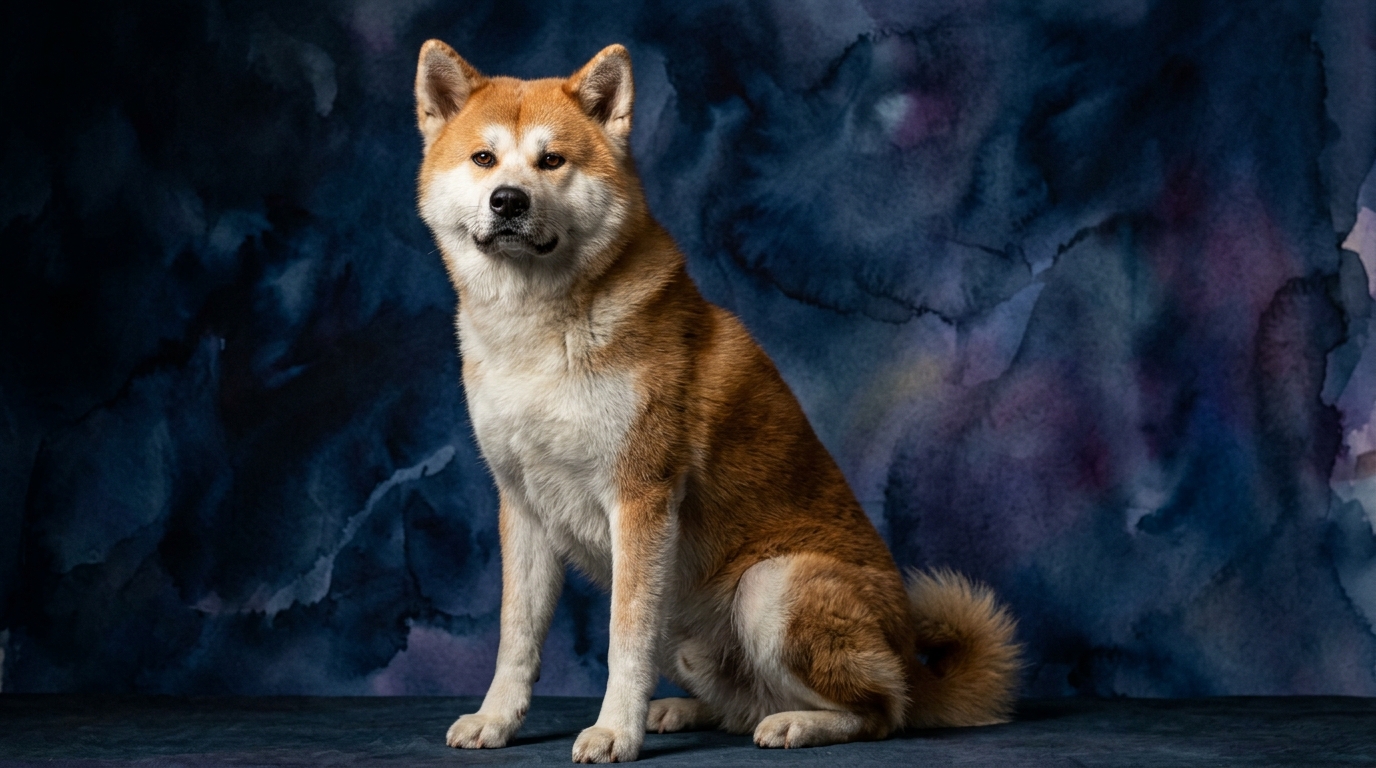
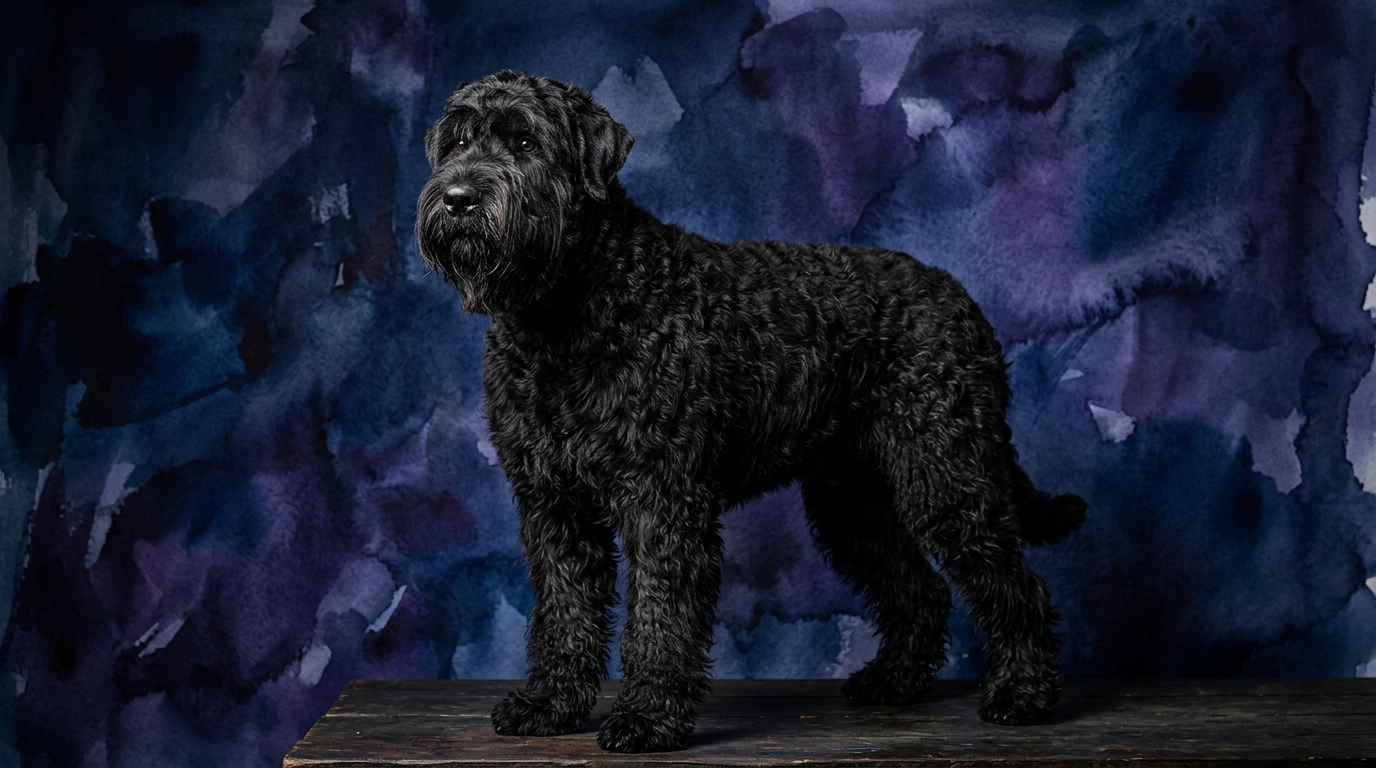
Side-by-Side IQ Profile: Akita vs. Black Russian Terrier
The Cosmic Pet Pet IQ Lab assesses canine cognition across five key dimensions. For the Akita, ranked #54 by Coren, its profile highlights a unique blend of independence and loyalty. Its Problem Solving is rated 3/5, indicating a moderate capacity for independent thought and deliberate solutions, often aligned with its own agenda. Training Speed is 2/5, reflecting a need for patience and consistency due to its strong-willed nature. Social Intelligence stands at 3/5, showing deep bonds with its immediate family but caution towards strangers and other animals. Instincive Drive is a profound 5/5, encompassing powerful protective, prey, and territorial instincts. Finally, its Memory is 4/5, demonstrating strong recall of experiences and routines.
The Black Russian Terrier, while not Coren-ranked, presents a slightly different cognitive architecture. Its Problem Solving is also 3/5, revealing a moderate ability to analyze and adapt to new challenges with a practical approach. Training Speed is 3/5, suggesting a more receptive and consistent learning pace compared to the Akita, aided by a willingness to engage. Social Intelligence is 3/5, indicating attentiveness to family dynamics and a discerning, watchful nature with outsiders. Its Instinctive Drive is 3/5, signifying present but more balanced protective instincts, typically manifesting as a controlled watchfulness. The Black Russian Terrier's Memory is 3/5, allowing for solid retention of commands, routines, and experiences, supporting consistent performance.
Where the Akita Wins Cognitively
The Akita’s cognitive strengths are most pronounced in its exceptional instinctive drive and robust memory. With an instinctive drive rated 5/5, Akitas possess an unparalleled depth of intrinsic motivation for guarding and territorial defense. This isn't merely a strong will; it's a profound, innate understanding of their role as protectors, manifesting as unwavering commitment. When safeguarding their home or family, their cognitive resources are channeled into hyper-vigilance and decisive action, driven by an ancient blueprint for defense. This deep-seated drive means an Akita will often act on instinct with a certainty that appears stubborn but is, in fact, a reflection of their genetic programming.
Furthermore, the Akita’s superior memory (4/5) allows them to retain complex information and experiences with remarkable clarity. This encompasses a detailed recall of social interactions, environmental cues, and past events. Akitas remember perceived slights or positive encounters with a vividness that shapes their future responses, making them consistent in their loyalty and, conversely, in their wariness. This robust memory, combined with their potent instinctive drive, means an Akita will not easily forget a training lesson, a boundary, or a perceived threat, contributing to their formidable reputation as guardians.
Where the Black Russian Terrier Wins Cognitively
The Black Russian Terrier demonstrates a distinct cognitive advantage in its balanced approach to learning and its more pliable instinctive drives. While both breeds share similar problem-solving abilities (3/5) and social intelligence (3/5), the BRT's training speed is rated 3/5 compared to the Akita's 2/5. This indicates a greater receptiveness to instruction and a quicker assimilation of new commands and routines. The BRT's inherent willingness to work alongside its human companion, coupled with a slightly less independent nature than the Akita, translates into a more cooperative learning experience. They are often more eager to engage in structured training and show a consistent desire to please, which accelerates the acquisition of new skills and behaviors.
Moreover, the Black Russian Terrier's instinctive drive, rated at 3/5, offers a cognitive benefit in terms of manageability. While still possessing strong protective instincts inherent to a working breed, these drives are typically more calibrated and less overwhelming than the Akita's intense 5/5 rating. This means a BRT's protective behaviors are often expressed with a greater degree of control and discernment, making them formidable guardians without the same level of inherent intensity that can challenge less experienced owners. This balance in instinctive drive contributes to a dog that is powerful yet more adaptable to diverse living situations and social interactions, as their innate tendencies are less likely to override learned behaviors or owner guidance.
Which is Easier to Train and Why
When evaluating ease of training, the Black Russian Terrier holds a cognitive edge over the Akita, primarily due to differences in their training speed and instinctive drive. The BRT's training speed is rated 3/5, indicating a moderate but consistent willingness to learn and retain new information. They generally respond well to positive reinforcement and clear, structured commands, showing a cooperative spirit that facilitates the learning process. Their slightly lower instinctive drive (3/5 compared to Akita's 5/5) means their innate protective and independent tendencies are less likely to overshadow training directives. This translates into a dog that is often more focused on the task at hand and less prone to independent decision-making when a command is given.
In contrast, the Akita's training speed is rated 2/5, reflecting a more deliberate and often independent approach to learning. Their robust instinctive drive (5/5) means they are profoundly self-assured and often driven by their own interpretation of a situation rather than an immediate desire to comply. This can manifest as a 'what's in it for me?' attitude, requiring trainers to be exceptionally patient, consistent, and creative in making training rewarding and meaningful from the Akita's perspective. While Akitas remember lessons well (memory 4/5), getting those lessons to 'stick' initially demands a greater investment of time and effort to overcome their inherent independence. Therefore, for most owners, the Black Russian Terrier will present a more straightforward and less challenging training journey, requiring less specialized experience to achieve reliable obedience.
Which Suits Active Owners vs. Relaxed Owners
The choice between an Akita and a Black Russian Terrier largely depends on an owner's lifestyle and their willingness to engage with their dog's specific cognitive and physical needs. For active owners who appreciate a dog with a powerful presence and are prepared for consistent, experienced handling, the Akita can be a rewarding companion. Their intense instinctive drive (5/5) means they thrive with activities that tap into their natural guarding and patrolling instincts, such as structured walks, property monitoring, or certain protection sports, always with professional guidance. An active owner who enjoys the challenge of working with a strong-willed, independent breed will find satisfaction in unlocking the Akita's potential. They require regular mental and physical engagement to prevent boredom and channel their strong drives constructively.
For owners seeking a robust companion but perhaps with a slightly more relaxed or adaptable approach to daily engagement, the Black Russian Terrier offers a compelling profile. Their balanced instinctive drive (3/5) and moderate training speed (3/5) make them more amenable to a variety of activities without the same intensity of innate motivation as the Akita. While still a working breed requiring regular exercise and mental stimulation, their protective instincts are often more readily channeled and controlled. This means they can adapt more easily to different activity levels, from vigorous daily walks to more relaxed evenings, provided their core needs for exercise and companionship are met. Their cooperative nature in training also makes them a better fit for owners who might be newer to large, powerful breeds or prefer a more straightforward training journey.
The Verdict
Choose the Akita if you are an experienced dog owner seeking a profoundly independent, highly instinctive guardian with an exceptional memory, prepared to invest significant, consistent effort into training and socialization to manage their powerful drives.
Choose the Black Russian Terrier if you desire a robust, protective companion with a more balanced temperament, a quicker training uptake, and a more adaptable nature, making them suitable for owners who appreciate a strong working dog but prefer a slightly more cooperative and manageable partner.
🧠 Find Your Pet's IQ Score
Our Pet IQ Lab assessment covers 25+ tests across 5 cognitive dimensions — personalized to your breed.
Take the Full IQ Test →Frequently Asked Questions
Do Akitas and Black Russian Terriers get along with other pets?
Akitas, with their strong instinctive drive and potential for prey drive, often require careful, early, and ongoing socialization to coexist peacefully with other pets. Black Russian Terriers, having a more balanced instinctive drive, can often integrate better with other animals, especially if raised together, but their protective instincts still necessitate supervision.
Are Akitas or Black Russian Terriers better for families with children?
Both breeds can be loyal family guardians, but their suitability depends on individual temperament and socialization. Akitas are fiercely protective of their family but can be less tolerant of boisterous child play, requiring vigilant supervision. Black Russian Terriers, while protective, are often noted for being more patient and tolerant with children within their family unit, though adult supervision is always crucial.
What kind of mental stimulation do these breeds need?
Both breeds require consistent mental stimulation to prevent boredom and destructive behaviors. Akitas benefit from tasks that engage their problem-solving and guarding instincts, while Black Russian Terriers thrive on obedience work, puzzle toys, and activities that harness their moderate training speed and desire to work alongside their owner.