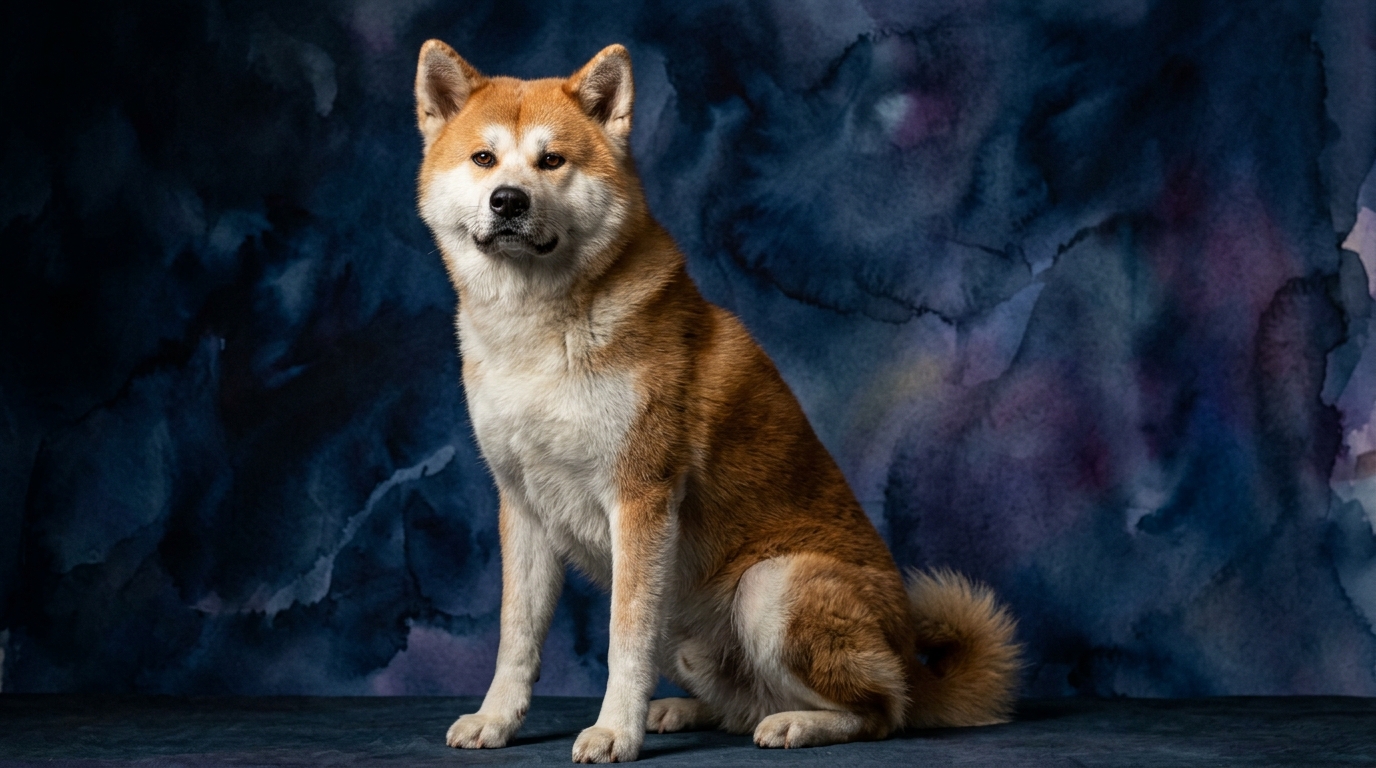
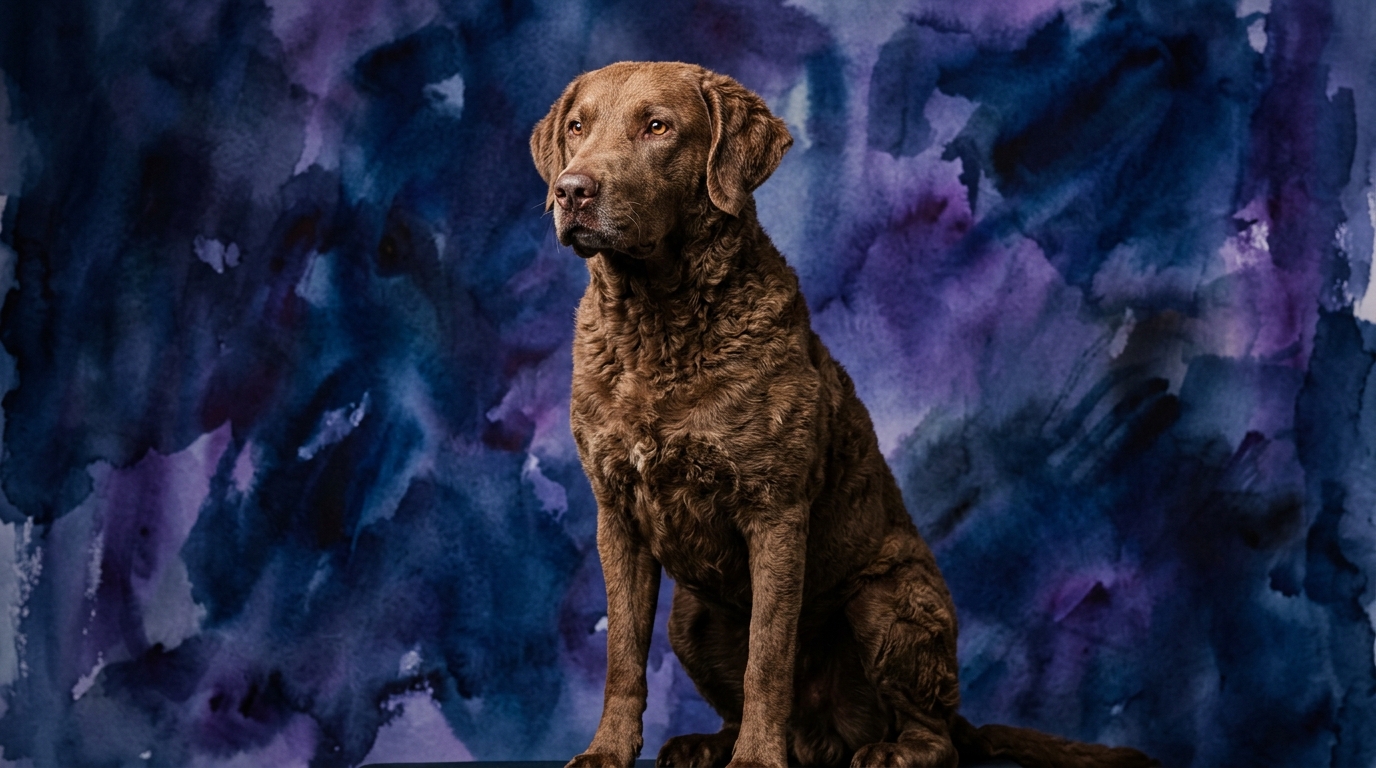
Side-by-Side Cognitive Profiles: Akita vs. Chesapeake Bay Retriever
The Cosmic Pet Pet IQ Lab employs a multi-dimensional framework to assess canine cognition, moving beyond simple 'smartness' to evaluate specific mental aptitudes. For the Akita, a dignified member of the Working group with a Coren ranking of #54, its profile paints a picture of a discerning and self-sufficient thinker. Its Problem Solving is rated 3/5, indicating a capacity for independent thought but perhaps less inclination for collaborative puzzle-solving; Training Speed is 2/5, suggesting a more deliberate and strong-willed learning curve; Social Intelligence stands at 3/5, reflecting a deep, selective bond rather than broad social eagerness; Instinctive Drive is a formidable 5/5, highlighting potent protective and territorial instincts; and Memory is 4/5, allowing for a long retention of experiences and relationships.
In contrast, the Chesapeake Bay Retriever, a robust Sporting dog with a significantly higher Coren ranking of #27, showcases a mind geared towards purpose and partnership. Its Problem Solving is 4/5, demonstrating practical ingenuity especially in task-oriented scenarios; Training Speed is 4/5, indicative of a readiness to learn and execute commands efficiently; Social Intelligence is 3/5, similar to the Akita in its discerning nature, often forming strong bonds with its immediate family; Instinctive Drive is 3/5, primarily focused on retrieving and water work rather than generalized protective impulses; and Memory is 4/5, enabling it to recall complex routines and learned behaviors with accuracy.
These distinct profiles underscore the fundamental differences in their historical roles and inherent temperaments. The Akita’s scores lean towards an animal capable of making its own decisions and acting on strong internal drives, while the Chesapeake Bay Retriever's scores highlight a companion bred for focused cooperation and task mastery, eager to engage with its human partners in fulfilling specific roles.
Where the Akita Wins Cognitively
The Akita's cognitive strengths lie in its profound independence and highly developed instinctive drives. With an Instinctive Drive score of 5/5, this breed excels in autonomous decision-making, particularly concerning protection and self-preservation. While its Problem Solving is rated 3/5, this often manifests as a resourceful ability to navigate situations without constant human direction, making it adept at assessing its environment and reacting based on its own judgment.
Furthermore, the Akita's Memory, rated 4/5, combined with its selective Social Intelligence (3/5), means it forms deep, lasting impressions of individuals and events. This translates into unwavering loyalty and a remarkable ability to remember past interactions, both positive and negative, which informs its discerning social behavior. Its independent problem-solving is not about pleasing a handler but about effective self-management and guarding, a nuanced cognitive advantage for specific roles.
Where the Chesapeake Bay Retriever Wins Cognitively
The Chesapeake Bay Retriever shines in its practical application of intellect, particularly in collaborative tasks. Its Problem Solving score of 4/5 reflects a keen ability to quickly assess and overcome obstacles within a defined working context, such as figuring out the most efficient way to retrieve an object or navigate challenging terrain during a hunt. This isn't abstract thinking, but rather a robust, functional problem-solving capacity directly tied to its purpose.
The Chessie's superior Training Speed (4/5) is another significant cognitive advantage, indicating a rapid grasp of new commands and an eagerness to repeat desired behaviors. This high trainability, coupled with its 4/5 Memory, allows it to build an extensive repertoire of learned actions and routines, making it highly adaptable and effective in structured environments and complex sporting activities. It thrives on clear directives and positive reinforcement, quickly integrating new information into its behavioral framework.
Ease of Training: Understanding Behavioral Differences
When considering ease of training, the Chesapeake Bay Retriever generally presents a more straightforward path. Its Training Speed of 4/5 and higher Coren rank of #27 underscore its natural inclination to work cooperatively and absorb instructions efficiently. Chessies are typically motivated by a desire to perform tasks for their handlers, especially those involving retrieving or water work, making them responsive to consistent positive reinforcement and clear, task-oriented guidance. Their enthusiasm for engagement makes establishing a strong training foundation relatively quicker.
The Akita, with a Training Speed of 2/5 and Coren rank of #54, offers a more substantial training challenge. This breed possesses a strong, independent will and often requires a compelling reason to comply with commands, rather than an inherent eagerness to please. Training an Akita demands immense patience, consistency, and a deep understanding of canine behavior, focusing on building a reciprocal relationship based on trust and respect rather than strict obedience. They are not easily coerced and will often assess a command before deciding whether to follow, making repetitive drill-based training less effective than engaging their intellect and motivation.
Matching Breeds to Owner Lifestyles: Active vs. Deliberate Engagement
For truly active owners who thrive on constant outdoor engagement and purpose-driven activities, the Chesapeake Bay Retriever is often an ideal match. This breed requires significant physical exercise and mental stimulation, excelling in activities like swimming, retrieving games, hiking, and various dog sports. Their energy levels and desire to work mean they flourish with owners who are committed to providing daily, vigorous outlets for their drive, making them partners in adventure rather than passive companions. Neglecting their need for activity can lead to boredom and undesirable behaviors.
Owners seeking a companion that requires consistent, deliberate engagement, rather than ceaseless physical intensity, might find the Akita a more suitable, though still demanding, choice. While Akitas need regular exercise to maintain physical health, their mental stimulation often revolves around consistent boundary setting, independent exploration in secure areas, and selective interaction. They are not for the truly relaxed owner, as their strong instinctive drives and independent nature demand an owner who is confident, consistent, and prepared to invest in ongoing behavioral management and relationship building, valuing a discerning companion over a perpetually eager one.
The Verdict: When to Choose Each Breed
The Verdict
Choose an Akita if you appreciate a discerning, self-reliant companion and are prepared to invest in patient, consistent training that respects their independent spirit and strong protective instincts.
Opt for a Chesapeake Bay Retriever if you are an active individual or family seeking a devoted, task-oriented partner for outdoor adventures, ready to channel their keen working drive into consistent training and physical engagement.
🧠 Find Your Pet's IQ Score
Our Pet IQ Lab assessment covers 25+ tests across 5 cognitive dimensions — personalized to your breed.
Take the Full IQ Test →Frequently Asked Questions
Do Akitas learn tricks easily?
Akitas can learn tricks, but their Training Speed of 2/5 means they often require more patience and motivation than breeds eager to please. They typically learn best when the training is engaging, consistent, and makes sense to them, rather than through rote repetition.
Are Chesapeake Bay Retrievers good at problem-solving in everyday situations?
With a Problem Solving score of 4/5, Chesapeake Bay Retrievers are quite adept at practical problem-solving in everyday situations, particularly those related to their tasks or environment. They are resourceful in figuring out how to achieve a goal, like retrieving a toy from a tricky spot.
How does social intelligence differ between these two breeds?
Both breeds have a Social Intelligence score of 3/5, indicating they can be reserved with strangers but form deep bonds with their inner circle. The Akita's social discernment is often tied to its protective instincts, while the Chesapeake Bay Retriever's can manifest as a more focused devotion to its family and working partners.