Side-by-Side Cognitive Profiles
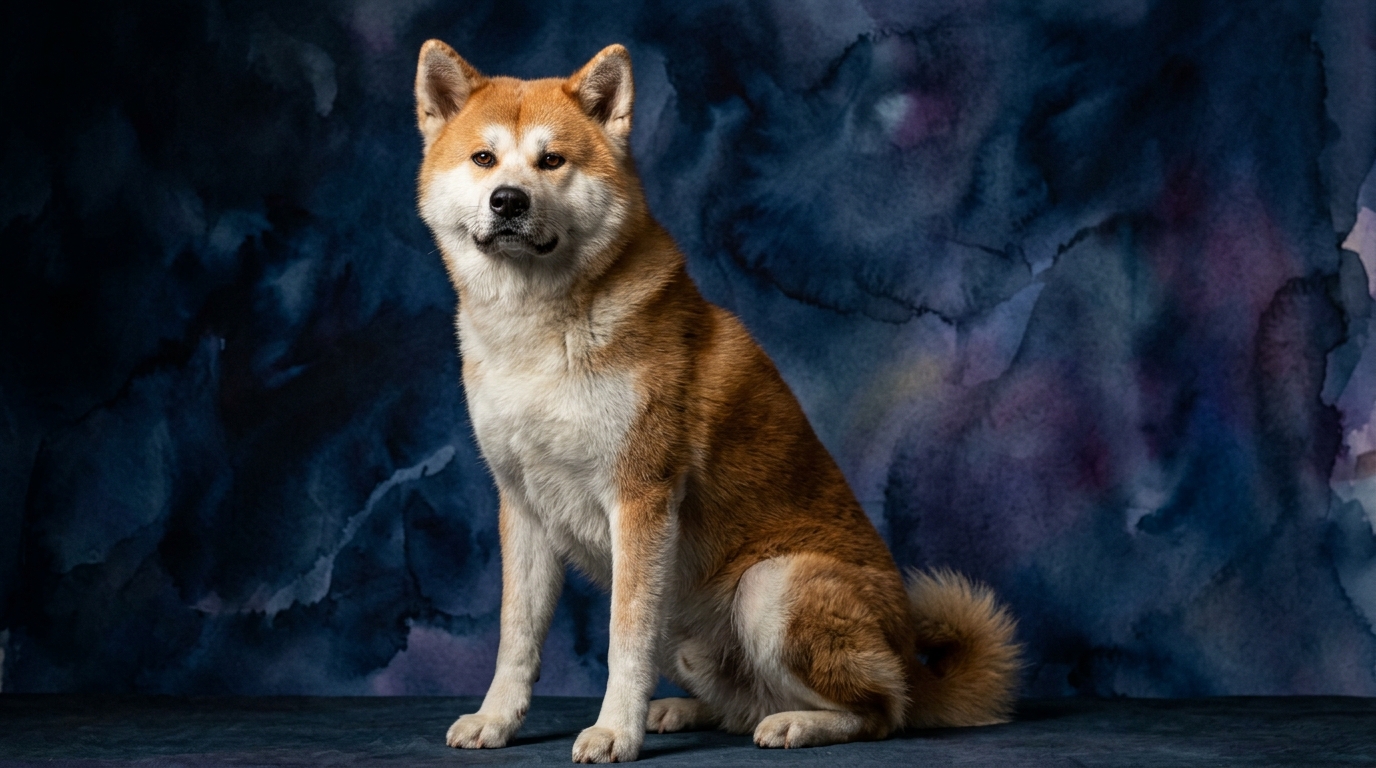
The Akita, a robust working dog ranking 54th on the Coren scale of canine intelligence, presents a cognitive architecture built for independence and guardianship. Its problem-solving ability, rated 3/5, often manifests as self-directed decision-making rather than seeking human guidance, a trait rooted in its historical role as a hunter of large game. Training speed is a deliberate 2/5, indicating a dog that learns at its own pace and on its own terms, often requiring significant motivation and consistency. Social intelligence stands at 3/5, reflecting a discerning nature that forms deep bonds with its inner circle but can be reserved with strangers. The breed's instinctive drive is a formidable 5/5, encompassing strong protective, territorial, and prey drives. Memory, at 4/5, is excellent, allowing the Akita to recall experiences, people, and boundaries with remarkable precision.
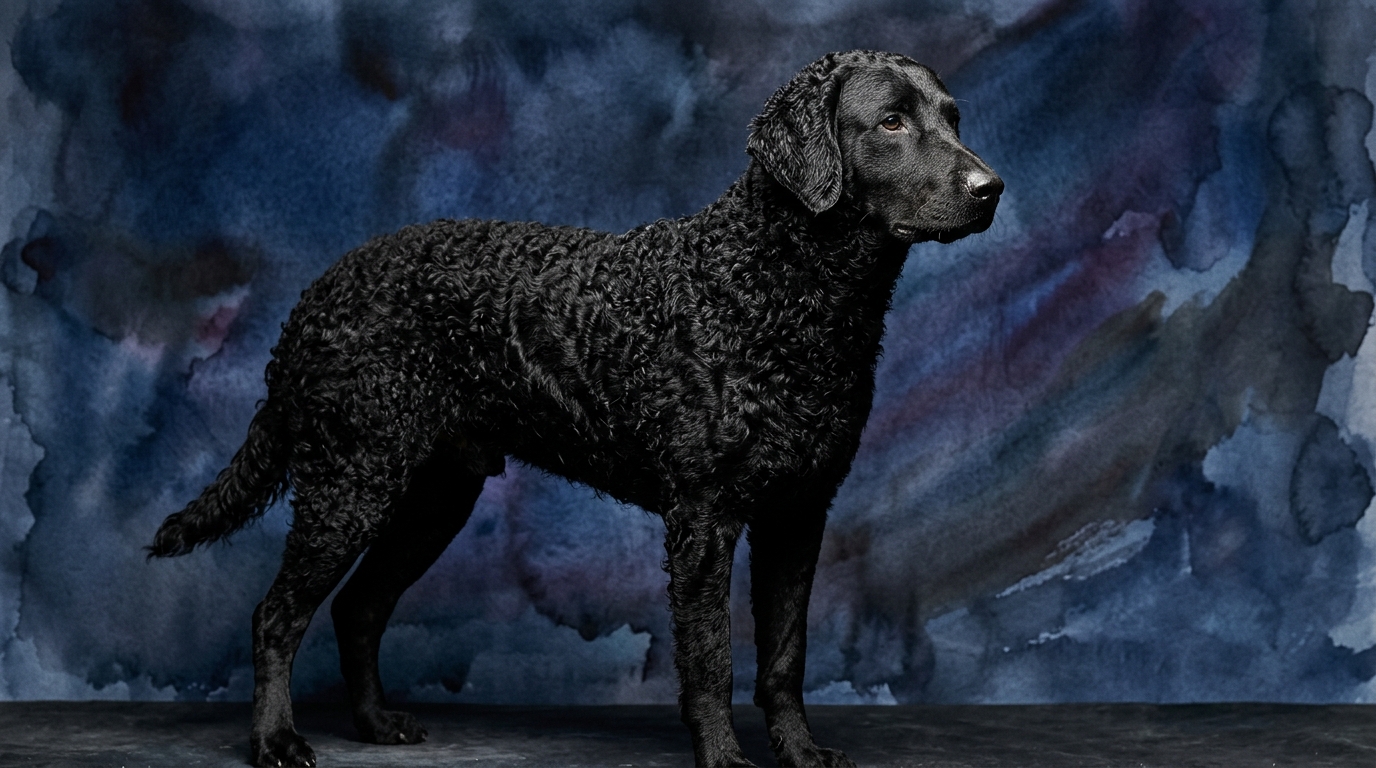
In contrast, the Curly-Coated Retriever, a member of the sporting group and ranked 41st on the Coren scale, showcases a mind geared for cooperative partnership. Its problem-solving, also 3/5, is typically applied to practical tasks, such as strategizing the retrieval of an object from a complex environment. Training speed is a more responsive 3/5, suggesting a greater eagerness to engage with and absorb human commands. Social intelligence, rated 3/5, is often expressed through keen observation and a desire to understand its human family's cues, though it can be aloof with unfamiliar individuals. The Curly's instinctive drive is a moderate 3/5, primarily focused on retrieving and working alongside a handler, rather than exhibiting strong territorial instincts. Like the Akita, its memory is a robust 4/5, enabling it to retain complex sequences of commands and routines with ease.
Where the Akita Wins Cognitively
The Akita's superior instinctive drive, rated a perfect 5/5, is arguably its most defining cognitive advantage. This profound internal motivation translates into an unwavering resolve and a deep-seated sense of purpose, particularly in roles requiring independent decision-making and guardianship. While its problem-solving is rated 3/5, this capacity is often applied to self-directed tasks, allowing the Akita to assess situations and act without constant human prompts. This self-reliance is a distinct cognitive strength, enabling them to navigate complex environments or potential threats by relying on their own judgment, a trait invaluable in their original roles as formidable hunters and protectors.
Furthermore, the Akita’s robust memory (4/5), when combined with its powerful instinctive drives, creates a formidable capacity for recalling specific threats, safe zones, and the intricate social hierarchies within its trusted circle. This isn't merely about remembering commands; it's about remembering *situations* and applying its strong, inherent drives to them. They excel in understanding and enforcing boundaries, remembering precisely who belongs and who doesn't, making them exceptionally discerning guardians. Their social intelligence, at 3/5, is expressed through this discerning memory, allowing them to form deep, nuanced understandings of their chosen family and their environment.
Where the Curly-Coated Retriever Wins Cognitively
The Curly-Coated Retriever clearly edges out the Akita in training speed, scoring 3/5 compared to the Akita's 2/5. This indicates a greater inherent receptiveness to human instruction and a more consistent eagerness to absorb and execute commands. This responsiveness is deeply rooted in their sporting heritage, where working cooperatively and precisely with a handler was paramount for successful retrieving. Their problem-solving, also 3/5, is often pragmatically geared towards overcoming practical obstacles in a task-oriented manner, demonstrating an intellectual flexibility that readily adapts to directed learning.
The Curly's slightly higher Coren rank (41st vs. Akita's 54th) further underlines a general ease of training and understanding novel commands, suggesting a mind that is more consistently open to human instruction and collaboration. While its social intelligence is rated similarly to the Akita (3/5), the Curly's expression of it is typically more affiliative within its family unit, keen to understand and respond to human cues in a collaborative context. This makes them quicker to grasp new concepts when presented in a structured, positive reinforcement environment, allowing for a broader range of activities and easier integration into various family dynamics.
Trainability: A Tale of Two Temperaments
When it comes to ease of training, the Curly-Coated Retriever generally presents a more straightforward experience than the Akita. The Curly's higher training speed (3/5) means it is typically more receptive to learning new commands and behaviors, often showing a keen desire to please its handler. Its moderate instinctive drive (3/5) is primarily channeled into retrieving, a highly trainable activity that aligns well with human-directed tasks. This breed tends to be more biddable, valuing the cooperative relationship with its owner and generally seeking to understand and follow instructions without significant internal conflict. Positive reinforcement methods work exceptionally well, building on their natural enthusiasm for engagement and activity.
The Akita, with its lower training speed (2/5) and exceptionally high instinctive drive (5/5), offers a more significant training challenge. Their strong independent nature and deep-seated drives—which include formidable guarding and hunting instincts—mean they often question commands or prefer to act on their own assessment of a situation. An Akita is not inherently 'eager to please' in the same way a retriever might be; they respect strong, consistent leadership and clear boundaries but will assert their own will if not properly guided. Training an Akita demands immense patience, unwavering consistency, and a profound understanding of their self-willed personality. Owners must be prepared to motivate, not merely command, and to manage their powerful instincts through early and continuous socialization and firm, fair training.
Matching Breeds to Lifestyles: Active vs. Relaxed Owners
For owners with a more relaxed lifestyle, the Akita can be a surprisingly suitable companion, provided their specific needs for mental engagement and structured leadership are met. While they possess a formidable instinctive drive (5/5), this doesn't always translate to a need for constant, high-impact physical exercise. Instead, Akitas thrive on purposeful walks, patrolling their territory, and mental stimulation that respects their independent problem-solving (3/5). They are often calm indoors, but require owners who understand and respect their discerning nature and can provide consistent, firm-but-fair guidance. A relaxed owner for an Akita is one who is mentally active in their dog's training and social structure, rather than physically exhausting them.
Conversely, the Curly-Coated Retriever is an ideal match for truly active owners who genuinely enjoy regular, vigorous physical exercise and participating in dog sports. Their moderate instinctive drive (3/5), focused on retrieving, means they thrive on activities like fetch, swimming, field work, and agility. They need consistent mental stimulation through training and tasks, making them excellent partners for owners who want to engage in a variety of canine activities. While they can be relaxed indoors after sufficient exercise, their temperament is generally more outgoing and playful, making them a fantastic fit for individuals or families who seek a canine companion for adventures and an active, collaborative lifestyle.
The Verdict
Choose the Akita if you seek a discerning, independent guardian with profound loyalty to its inner circle, and if you appreciate a dog that thinks for itself and offers a unique cognitive challenge in training.
Opt for the Curly-Coated Retriever if you are an active individual or family desiring a cooperative, responsive companion for outdoor adventures and dog sports, valuing a dog that embraces training and collaboration.
🧠 Find Your Pet's IQ Score
Our Pet IQ Lab assessment covers 25+ tests across 5 cognitive dimensions — personalized to your breed.
Take the Full IQ Test →Frequently Asked Questions
Does the Akita's strong instinctive drive make them aggressive?
An Akita's instinctive drive (5/5) means they possess powerful protective and territorial instincts. While this doesn't inherently equate to aggression, it necessitates early, thorough socialization and consistent training to channel these drives appropriately, ensuring they are discerning rather than reactive.
Can a Curly-Coated Retriever be a good apartment dog?
A Curly-Coated Retriever's moderate instinctive drive (3/5) and need for engagement mean they can potentially adapt to apartment living, provided their significant exercise requirements are met daily. Regular vigorous activity, mental stimulation, and training are crucial to prevent boredom and destructive behaviors in a smaller space.
How does Akita's memory (4/5) differ from a Curly-Coated Retriever's (4/5)?
While both breeds share a 4/5 memory rating, the Akita's memory often serves its independent and protective nature, recalling specific individuals, situations, and boundaries with precision. The Curly-Coated Retriever's memory, though equally strong, is frequently applied to remembering commands, routines, and complex retrieving tasks, reflecting its cooperative working background.