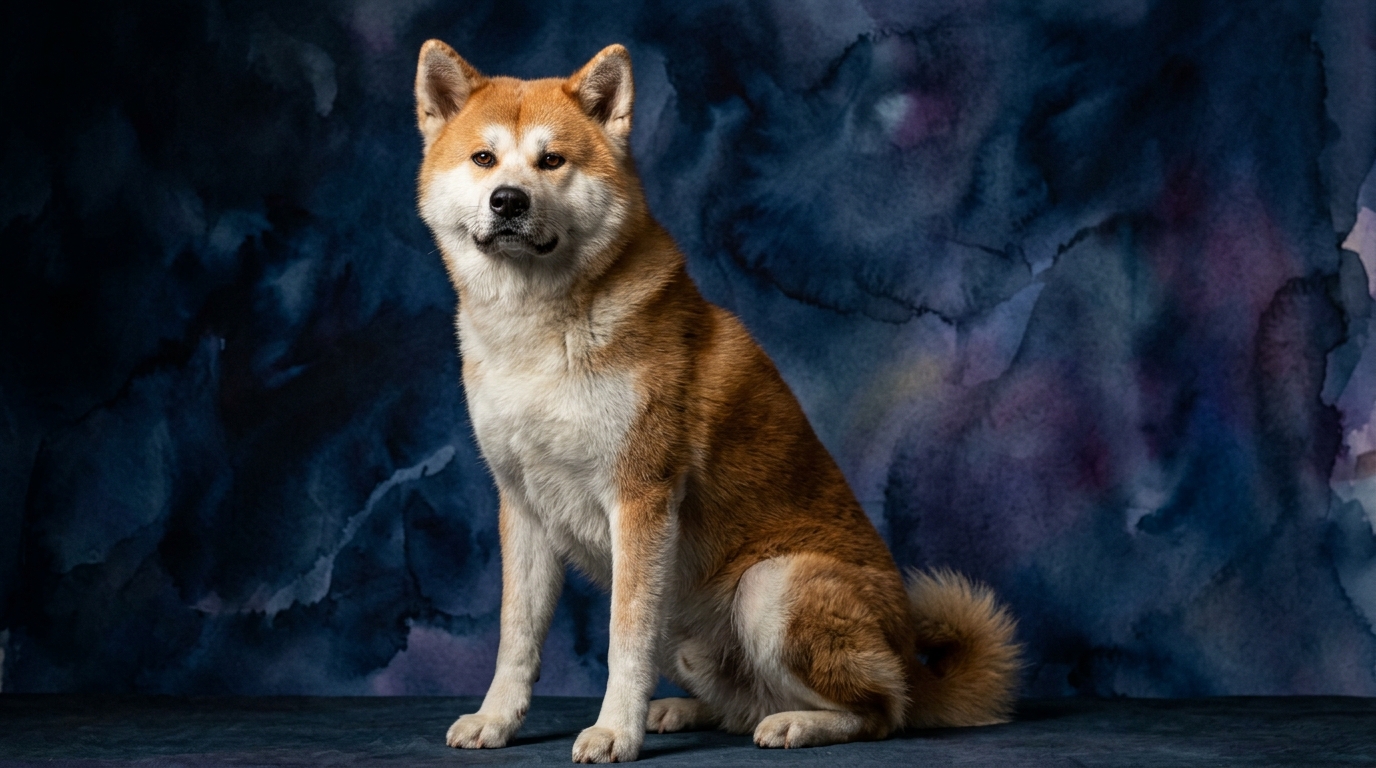

Side-by-Side Cognitive Profiles: Akita and Dandie Dinmont Terrier
To truly understand the mental landscapes of these two breeds, The Cosmic Pet Pet IQ Lab employs five key dimensions: problem-solving, training speed, social intelligence, instinctive drive, and memory. Each dimension offers a window into how these dogs perceive, process, and interact with their world, revealing the unique cognitive architecture shaped by their lineage and purpose.
The Akita, a breed historically rooted in hunting and guarding, exhibits a cognitive profile reflecting its independent and protective nature. Ranked #54 by Coren, its scores underscore a dog that is deliberate and deeply driven by its innate predispositions. In problem-solving, the Akita scores 3/5, indicating a thoughtful, often independent approach to challenges. They are not necessarily quick to look to their human for solutions, preferring to assess situations and devise their own strategies, which can sometimes manifest as stubbornness if their solution differs from your desired outcome. Their training speed is rated 2/5, a dimension where their independent streak truly shows. Akitas require significant patience and consistent repetition to internalize new commands, as their willingness to comply often hinges on their perception of the command's value or necessity, rather than an inherent desire to please. Learning new behaviors is a deliberate, not rapid, process for them. For social intelligence, the Akita scores 3/5. They are perceptive observers, capable of reading human moods and intentions, but their social engagement is typically selective and reserved. They understand social cues but might choose to act on their own terms, leading to a reputation for being aloof. A defining characteristic is their instinctive drive, rated a perfect 5/5. Akitas possess exceptionally strong natural predispositions, deeply rooted in their history as hunters and guardians, manifesting as formidable protective instincts, a pronounced territoriality, and a powerful prey drive. These drives are not merely behavioral traits but fundamental cognitive programs that dictate their responses to perceived threats or opportunities, making them intensely focused when these instincts are engaged. Finally, their memory scores 4/5, indicating a robust capacity for recalling experiences, commands, and individuals. They can recall past interactions vividly, whether positive or negative, which contributes to their consistent behaviors and long-lasting loyalties or aversions.
The Dandie Dinmont Terrier, while not on the traditional Coren ranking, embodies the classic terrier spirit: tenacious, independent, and geared towards specific tasks. Its cognitive scores reveal a different kind of mental agility, one focused on resourcefulness and persistence. In problem-solving, the Dandie also scores 3/5, similar to the Akita, but its approach manifests with a distinct terrier flair. They are persistent, resourceful, and often employ creative ways to get what they want, especially if it’s related to exploring or accessing a desired item, demonstrating a tenacious mental approach to overcoming obstacles. Their training speed is rated 3/5, indicating a quicker uptake of new commands and routines compared to the Akita. They tend to form associations between cues and actions with fewer repetitions, making initial training sessions often more fluid and responsive, supported by a moderate eagerness to engage. For social intelligence, the Dandie also scores 3/5. They are socially aware, capable of interpreting human moods and responding with affection or playful antics, engaging with their family members with charm, though retaining a typical terrier independence. They are attentive to their environment and the social dynamics within their household. Their instinctive drive is rated 3/5. While terriers are known for their drives, the Dandie’s is more balanced than the Akita’s. They possess a natural prey drive for small vermin and a moderate protective instinct towards their family and territory. These drives are present and influence their behavior but are generally more manageable and less overwhelming than those found in breeds with a 5/5 score. Lastly, their memory scores 3/5. Dandies have a good memory for routines, learned commands, and significant experiences, recalling familiar people and places, which contributes to consistent behavior patterns and effective adaptation to their environment.
Where the Akita's Cognition Excels
The Akita's cognitive profile reveals two standout strengths compared to the Dandie Dinmont Terrier: its profound instinctive drive and its robust memory. Scoring a perfect 5/5 in instinctive drive, the Akita possesses an unwavering, deeply ingrained commitment to its ancestral roles. This manifests as formidable protective behaviors, a strong territorial sense, and a pronounced prey drive, which are not merely learned responses but fundamental cognitive programs. This profound intrinsic motivation means an Akita will pursue a goal with exceptional resolve once its instincts are engaged, making them exceptionally steadfast in tasks aligned with their nature, such as guarding or tracking. This intensity is a hallmark of their mental make-up.
Furthermore, the Akita's superior memory, rated at 4/5 compared to the Dandie's 3/5, suggests a more comprehensive capacity for retaining complex information and experiences over time. This applies to remembering specific commands, the nuances of human interactions, and the precise layout of their environment. This strong recall contributes to their consistency in routines and their ability to learn from past encounters, whether positive or negative, shaping their future responses with enduring clarity.
Where the Dandie Dinmont Terrier's Cognition Shines
When examining cognitive advantages, the Dandie Dinmont Terrier's primary edge over the Akita lies in its quicker training speed. With a score of 3/5 compared to the Akita's 2/5, the Dandie demonstrates a more rapid uptake of new commands and concepts. This breed tends to form associations between cues and desired actions more readily, often requiring fewer repetitions to internalize a new behavior. Their slightly more eager engagement, combined with a terrier's inherent curiosity about their surroundings, means they can process and integrate new information into their behavioral repertoire with greater efficiency. This cognitive agility makes initial training sessions potentially more streamlined and often more immediately rewarding for both the dog and its owner, fostering a quicker path to learned compliance.
Training Dynamics: Which Breed is More Amenable?
Considering their respective cognitive profiles, the Dandie Dinmont Terrier generally presents as the more straightforward student. Their higher training speed score (3/5 compared to the Akita's 2/5) directly translates to requiring fewer repetitions to grasp new commands and routines. While both breeds share a 3/5 in problem-solving, the Dandie's terrier tenacity often manifests as a keenness to engage with training challenges, particularly when motivated by rewards or curiosity. The Akita's lower training speed, coupled with its profound independent streak and powerful instinctive drives, means it frequently assesses the necessity or personal benefit of a command. This independent thought process can extend the journey to consistent compliance, as an Akita may choose to act only when it perceives value in doing so, making training a more patient and persistent endeavor.
Matching Cognition to Lifestyle: Active vs. Relaxed Owners
Matching a dog's cognitive makeup to an owner's lifestyle is crucial. For active owners seeking a canine partner with deep purpose and a resolute spirit, the Akita's intense instinctive drive and robust memory make it suitable for structured activities such as protection work, advanced obedience, or even therapy roles where its steadfast presence is valued. They thrive with owners who understand and are prepared to channel their profound drives into purposeful, consistent mental and physical engagement. In contrast, the Dandie Dinmont Terrier, with its balanced instinctive drive and quicker training speed, can adapt to a wider range of activities. While they enjoy regular walks, interactive play, and opportunities to explore, their needs are less about intense, singular purpose and more about consistent companionship and varied mental puzzles. They suit owners who appreciate a lively, curious companion capable of enjoying both moderately active outings and relaxed home time, without the same level of management required for profound instinctive behaviors.
The Verdict
Choose the Akita if you seek a profoundly loyal, independent guardian with deep, unwavering instincts and a strong memory, and are prepared for a consistent, patient training journey.
Opt for the Dandie Dinmont Terrier if you desire an adaptable, charming companion with quicker training uptake and a balanced energy level, suitable for varied home environments.
🧠 Find Your Pet's IQ Score
Our Pet IQ Lab assessment covers 25+ tests across 5 cognitive dimensions — personalized to your breed.
Take the Full IQ Test →Frequently Asked Questions
Do Akitas learn tricks easily?
Akitas can learn tricks, but their lower training speed and independent nature mean it often takes more repetition and patience compared to breeds eager for quick compliance. They are more likely to learn tasks they perceive as purposeful.
Are Dandie Dinmont Terriers good at problem-solving?
Yes, Dandie Dinmont Terriers score 3/5 in problem-solving, often exhibiting a tenacious approach to figuring out how to achieve their goals, particularly when it involves accessing something desirable or exploring. This reflects their terrier heritage of independent hunting.
How does Akita's instinctive drive impact daily life?
An Akita's very high instinctive drive (5/5) means they possess strong protective, territorial, and prey drives. This requires dedicated socialization, consistent training, and secure containment to ensure these natural predispositions are managed safely and appropriately within a domestic setting.