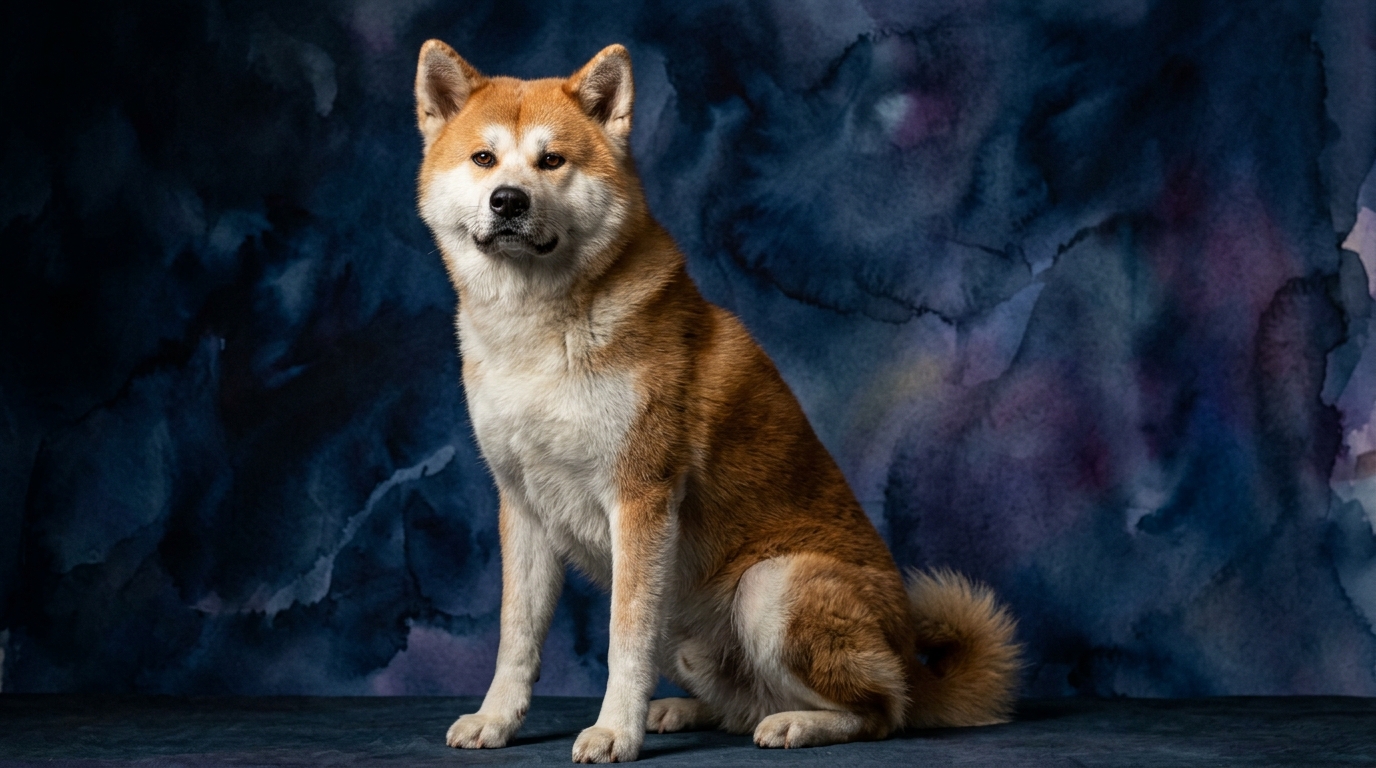
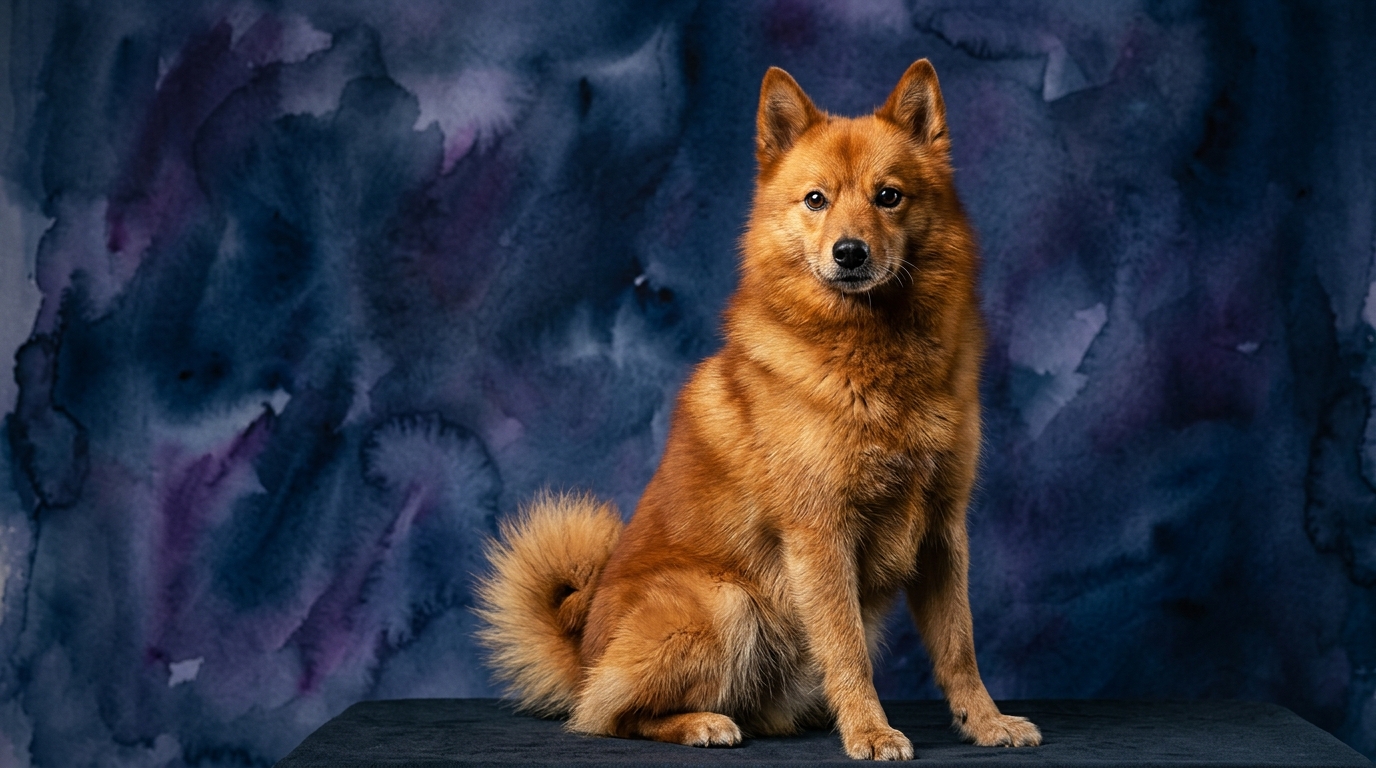
Side-by-Side IQ Profile: Akita vs. Finnish Spitz
The Cosmic Pet Pet IQ Lab employs a five-dimensional framework to assess canine intelligence, moving beyond simple obedience scores to reveal a breed's full cognitive tapestry. For the Akita, a Working group dog with a Coren rank of #54, its profile paints a picture of a discerning and driven thinker. Its Problem Solving is rated 3/5, indicating competence but often a preference for independent solutions rather than relying solely on human direction. Training Speed is 2/5, reflecting its deliberate and often skeptical approach to repetitive tasks. Social Intelligence stands at 3/5, demonstrating keen observation within its inner circle but a reserved demeanor towards outsiders. Where the Akita truly shines is its Instinctive Drive, a powerful 5/5, encompassing profound guarding instincts, a strong prey drive, and unwavering loyalty. Finally, its Memory is a robust 4/5, recalling experiences and associations with remarkable clarity.
In contrast, the Finnish Spitz, a Non-Sporting group dog without a Coren ranking, presents a more balanced and agile cognitive profile. Its Problem Solving mirrors the Akita at 3/5, suggesting resourcefulness in navigating its environment, often through persistent exploration. Its Training Speed is rated 3/5, indicating a moderate pace for learning new commands, generally more amenable to structured lessons than its Akita counterpart. Social Intelligence is also 3/5, showcasing an awareness of its human family's moods and intentions, coupled with an alert disposition. The Finnish Spitz's Instinctive Drive is 3/5, primarily focused on its ancestral role as a barking bird dog, rather than intense guarding or prey pursuit. Its Memory is 3/5, sufficient for retaining routines and learned behaviors, though perhaps not with the same depth of experiential recall as the Akita.
Where the Akita Wins Cognitively
The Akita's cognitive strengths are deeply rooted in its heritage as a formidable guardian and hunter, particularly evident in its Instinctive Drive and Memory. With a perfect 5/5 in Instinctive Drive compared to the Finnish Spitz's 3/5, the Akita possesses an unparalleled intensity in its protective and territorial behaviors. This drive translates into a profound, almost primal loyalty to its family and a vigilant awareness of its surroundings, making it an exceptional, albeit demanding, sentinel. This strong inner compass means the Akita often operates with a clear sense of purpose, which, while challenging for training, is a remarkable cognitive advantage in specific roles.
Furthermore, the Akita's Memory, rated 4/5 against the Finnish Spitz's 3/5, grants it a superior ability to recall past events, people, and specific situations. This acute memory allows the Akita to learn from single-instance experiences, whether positive or negative, shaping its future interactions with a deep-seated understanding. This cognitive edge contributes to its cautious nature and helps it assess potential threats or allies with a long-term perspective, solidifying its role as a discerning and self-reliant companion.
Where the Finnish Spitz Wins Cognitively
The Finnish Spitz demonstrates a distinct cognitive advantage in its Training Speed, scoring 3/5 compared to the Akita's 2/5. This moderate pace for learning new commands makes the Finnish Spitz generally more receptive and less resistant to structured training sessions. Their enthusiasm and slightly less independent nature mean they are more inclined to engage with their human counterparts during learning, readily responding to positive reinforcement and clear guidance. This quicker uptake means they can master a wider range of obedience cues and tricks with less repetition and perceived effort from the owner.
Beyond specific scores, the Finnish Spitz’s overall balanced cognitive profile suggests a greater adaptability to varied activities and environments. While not topping any single category (aside from training speed relative to Akita), its moderate scores across problem-solving, social intelligence, and instinctive drive mean it is less likely to be dominated by overwhelming singular urges. This cognitive flexibility allows the Finnish Spitz to integrate more seamlessly into diverse family routines and enjoy a broader spectrum of mentally stimulating activities beyond its core ancestral function, making it a more versatile companion for a wider array of lifestyles.
Which is Easier to Train and Why
When it comes to ease of training, the Finnish Spitz generally presents a more straightforward experience than the Akita. With a Training Speed of 3/5, the Finnish Spitz is moderately quick to grasp new commands and more eager to please, especially when positive reinforcement and engaging methods are employed. Their Instinctive Drive of 3/5, primarily centered on their vocal 'barking bird dog' heritage, means they are less likely to be sidetracked by overpowering protective or predatory urges during a training session. While their vocalizations require consistent management, their overall biddability and responsiveness to human cues make the training process feel like a collaboration rather than a constant negotiation.
The Akita, with its Training Speed of 2/5, demands a significantly more patient and experienced handler. Its profound Instinctive Drive of 5/5 means the Akita often prioritizes its own deeply ingrained perceptions and desires over human commands, particularly if it deems a command illogical or unnecessary from its perspective. This breed's independent problem-solving approach can lead to it 'thinking for itself' or simply ignoring instructions if it doesn't see the immediate value. Training an Akita requires unwavering consistency, clear boundaries, and a deep understanding of canine psychology, focusing on building respect and trust rather than expecting rote obedience. They are not quick to respond to every command but will follow a leader they deem worthy.
Which Suits Active Owners vs. Relaxed Owners
For owners with an active lifestyle, both breeds require significant engagement, but for different reasons. The Akita, with its powerful Instinctive Drive (5/5) and strong Memory (4/5), thrives with owners who can provide a sense of purpose and structure. This might involve long, purposeful hikes that allow them to observe and 'guard' their surroundings, scent work that engages their keen senses, or advanced obedience training that mentally challenges their independent nature. An Akita owner must be mentally active in managing their dog's strong personality and ensuring its powerful drives are channeled constructively, making them ideal for individuals who enjoy a 'working partnership' with their canine.
The Finnish Spitz, while still requiring daily exercise and mental stimulation, might be slightly more adaptable to a varied active lifestyle without demanding the same intensity of purpose as an Akita. Its moderate Instinctive Drive (3/5) means its energy can be satisfied through a mix of varied play, regular walks, and engaging scent games that tap into its bird-hunting heritage. Owners who enjoy active hobbies like hiking, jogging, or dog sports, but don't necessarily need their dog to be an intense, constant companion in those activities, could find the Finnish Spitz a suitable partner. They appreciate consistent activity but are less likely to become destructive if a day's routine is slightly less rigorous, provided their vocal needs are understood and managed.
The Verdict
Choose an Akita if you are an experienced owner seeking an intensely loyal, discerning guardian with a profound sense of purpose, prepared for dedicated training and management of its powerful independent streak.
Opt for a Finnish Spitz if you desire an engaging, vocal companion with a balanced cognitive profile, offering a more adaptable training experience and moderate exercise needs suitable for varied active lifestyles.
🧠 Find Your Pet's IQ Score
Our Pet IQ Lab assessment covers 25+ tests across 5 cognitive dimensions — personalized to your breed.
Take the Full IQ Test →Frequently Asked Questions
Is the Akita truly less intelligent than the Finnish Spitz given its Coren ranking?
Coren rankings primarily measure obedience and working intelligence, which aligns with training speed. The Akita's lower rank reflects its independent nature and slower training speed (2/5), not an overall lack of complex cognitive abilities. Its high instinctive drive and memory indicate a different, equally sophisticated form of intelligence centered on purpose and self-reliance.
Which breed is better with children?
Both breeds require proper socialization and supervision around children. The Akita's reserved nature and strong protective instincts mean it can be a devoted family member but may not tolerate rough play from unfamiliar children. The Finnish Spitz is generally more tolerant and playful, but its vocal nature might be startling to very young children and requires management.
Do Finnish Spitzes really bark a lot?
Yes, the Finnish Spitz is often called the 'barking bird dog' and has a strong natural inclination to bark, which is a key part of its hunting heritage. This is not a sign of poor training but a deeply ingrained instinctive drive (3/5) that owners must be prepared to manage and redirect with consistent training and appropriate outlets for their vocal energy.