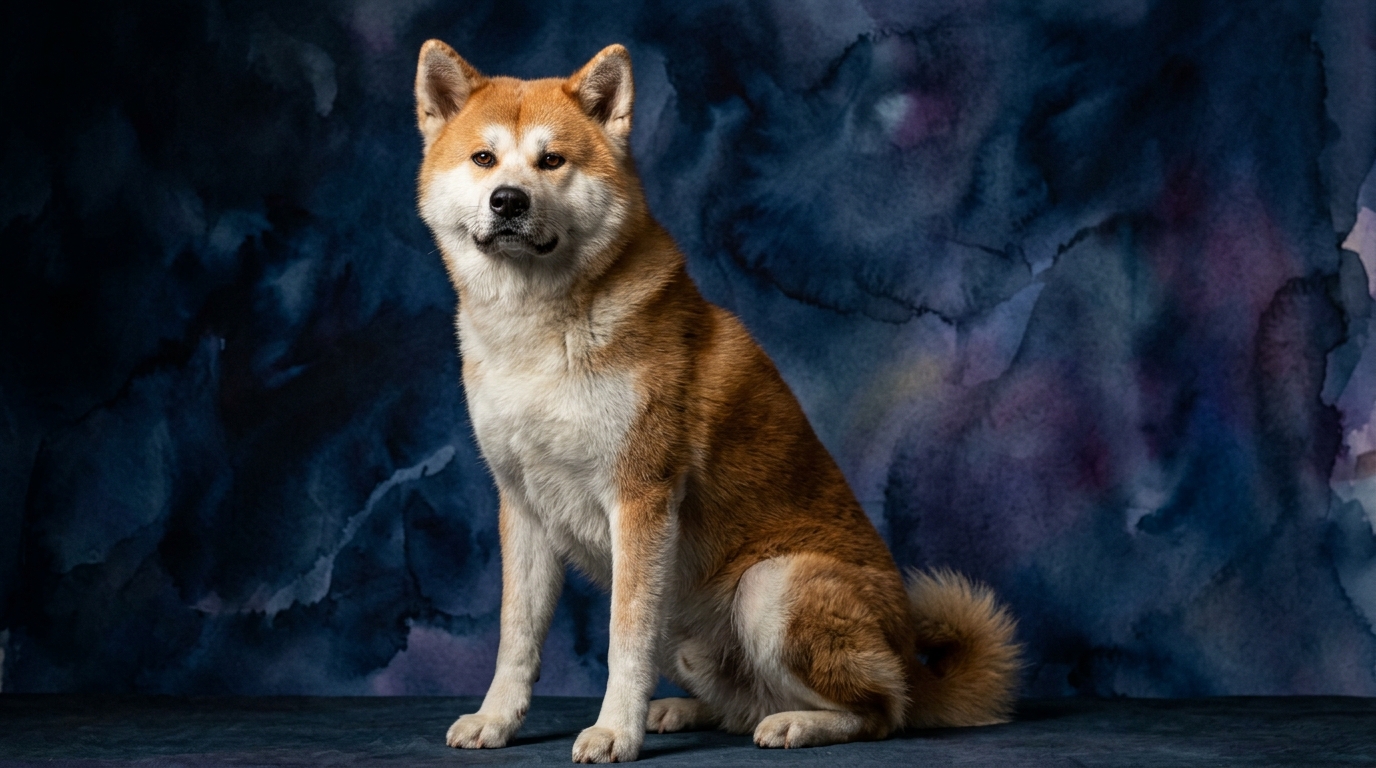
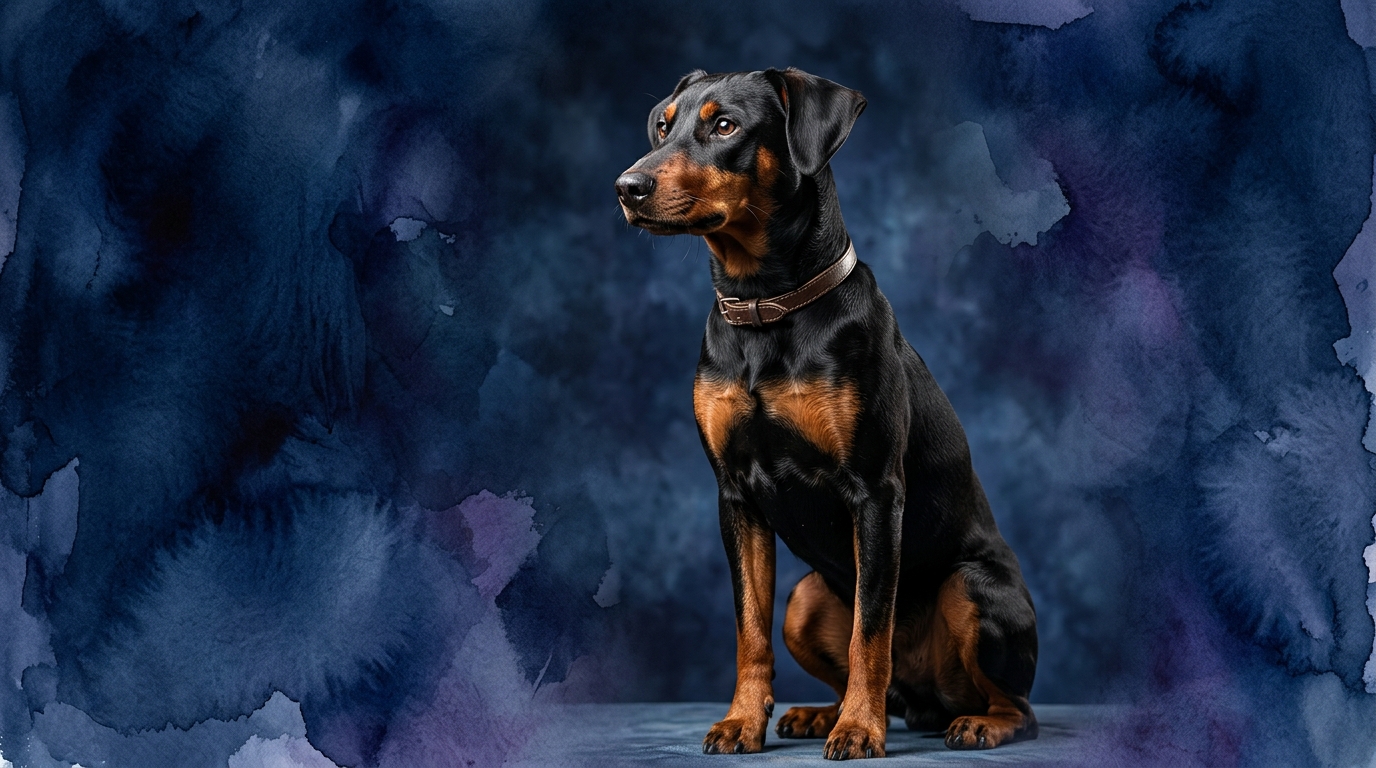
Side-by-Side Cognitive Profile: Akita vs. German Pinscher
The Cosmic Pet Pet IQ Lab employs a five-dimensional framework to assess canine intelligence, offering a nuanced understanding beyond simple obedience. For the Akita, ranked #54 by Coren, and the German Pinscher, which is not Coren-ranked, these dimensions highlight their unique mental architectures. Understanding these scores is crucial for appreciating their inherent capabilities and potential challenges.
The Akita's cognitive blueprint is marked by a Problem Solving score of 3/5, indicating a moderate ability for independent thought and finding solutions that often prioritize their own assessment of a situation. Their Training Speed is 2/5, reflecting a strong-willed nature that requires significant patience and consistent motivation for skill acquisition. Social Intelligence stands at 3/5, meaning they possess a discerning understanding of their immediate social circle but are often reserved with outsiders. A standout feature is their Instinctive Drive, a formidable 5/5, which underpins their powerful guarding and protective behaviors. Finally, their Memory is robust at 4/5, allowing them to retain complex information about their environment and experiences over extended periods.
In contrast, the German Pinscher presents a more balanced cognitive profile. Their Problem Solving is 3/5, indicating a similar capacity for independent thought to the Akita, but often expressed with a more adaptable curiosity. Their Training Speed is 3/5, suggesting a quicker grasp of commands and a greater willingness to engage in structured learning compared to the Akita. Social Intelligence also rates at 3/5, demonstrating alertness and responsiveness, though they can be wary of strangers like the Akita. The German Pinscher's Instinctive Drive is 3/5, a moderate level that encompasses a prey drive and territoriality without the overwhelming intensity seen in the Akita. Their Memory is 3/5, solid and reliable for retaining learned behaviors and routines.
The absence of a Coren ranking for the German Pinscher doesn't diminish its cognitive abilities but rather indicates its relative position outside the top tiers of breeds excelling in obedience-focused intelligence, which is what Coren's ranking primarily measures. Both breeds, despite their differences, are working dogs, meaning their intelligence is geared towards purpose and action, albeit with distinct approaches.
Where the Akita Wins Cognitively
The Akita's cognitive profile truly shines in areas demanding deep-seated instinct and long-term recall. Their instinctive drive, rated at a formidable 5/5, means they possess an unparalleled, innate understanding of protection and territoriality. This isn't a learned behavior but an intrinsic blueprint for vigilance and guardianship, making them highly effective at identifying and responding to perceived threats without explicit instruction. For instance, an Akita's decision to position itself between a family member and an unfamiliar visitor, or to alert to subtle changes in its environment, stems from this powerful, ancient drive to secure its pack and territory. This profound instinct translates into unwavering loyalty and a natural aptitude for discerning friend from foe, a cognitive strength invaluable in a guardian.
Furthermore, their memory, scored at 4/5, allows them to retain complex spatial information and recall past interactions with impressive accuracy. They remember faces, places, and specific cues over extended periods, which reinforces their protective instincts and contributes to their consistent, reliable presence within their established territory. An Akita will recall a negative experience with a specific individual or a particular route taken months prior, influencing their subsequent behavior. While their problem-solving is moderate (3/5), it often manifests as independent, situation-specific judgment rather than seeking human direction, which is a strength in tasks requiring self-reliance and the ability to make decisions without constant handler input, such as navigating a familiar property or figuring out how to bypass a minor obstacle to reach a preferred spot.
Where the German Pinscher Wins Cognitively
The German Pinscher demonstrates cognitive advantages rooted in its balanced and adaptable intellect, particularly in areas of training and social integration within a bustling family environment. Its training speed, rated at 3/5, is notably quicker than the Akita's, indicating a greater responsiveness to instruction and a quicker grasp of new commands. This means a German Pinscher is generally more amenable to learning a wide repertoire of skills and tricks, making them versatile companions for various activities like obedience trials, agility, or even trick training. Their eagerness to engage and relatively faster learning curve make them a rewarding partner for owners who enjoy active participation in their dog's mental development.
Their problem-solving ability, also 3/5, combined with their moderate instinctive drive (3/5), allows them to approach new challenges with an intelligent curiosity rather than rigid adherence to instinct. They are often more experimental in their approach to puzzles or novel environments, making them adept at navigating complex situations with a pragmatic mindset. For example, a German Pinscher might quickly learn to operate a puzzle toy or find a clever way to retrieve a dropped item. Moreover, while both breeds have a 3/5 in social intelligence, the German Pinscher's combined quicker training speed and more moderate drive often translate to a more easily integrated family member, capable of navigating diverse social settings with appropriate guidance. They are less prone to the Akita's reserved nature, generally displaying a more engaging and interactive demeanor once comfortable, making them excellent companions for families seeking an active and involved pet.
Which is Easier to Train and Why
When considering ease of training, the German Pinscher generally presents a more straightforward path for most owners. Its training speed of 3/5 directly contrasts with the Akita's 2/5, indicating a quicker uptake of new commands and a greater eagerness to engage in structured learning. German Pinschers are often highly motivated by positive reinforcement and enjoy the mental stimulation of training sessions, leading to more responsive and consistent performance. Their instinctive drive, rated at 3/5, is present but more manageable, meaning their natural urges are less likely to override learned behaviors or lead to strong-willed defiance. For example, a German Pinscher is often more likely to disengage from a squirrel chase on command than an Akita, whose 5/5 instinctive drive makes such redirection a significant, ongoing challenge requiring immense consistency and prior conditioning.
The Akita, with its 2/5 training speed, requires a different approach entirely. Its strong-willed personality and powerful independent judgment mean it often needs to perceive the value or logic behind a command before complying. Behavioral differences include an Akita's tendency towards 'selective hearing' or a stubborn refusal if a task seems pointless or beneath them, whereas a German Pinscher is often more inclined to cooperate for the sake of interaction or reward. Training an Akita demands exceptional patience, unwavering consistency, and a deep understanding of canine psychology, focusing on building mutual respect and trust rather than simply enforcing obedience. Owners must be prepared for a longer, more nuanced training journey with an Akita, recognizing that their intelligence manifests more in self-reliance and independent decision-making than in quick compliance to human directives. They are not dogs that will perform rote tasks without a strong internal motivation or bond.
Which Suits Active Owners vs. Relaxed Owners
The choice between an Akita and a German Pinscher hinges significantly on an owner's lifestyle and their capacity for engagement. The Akita, with its profound instinctive drive (5/5) and independent problem-solving (3/5), thrives with owners who are not just active, but also deeply committed to understanding and managing a powerful, self-possessed companion. These are not dogs for relaxed, hands-off owners. Akitas require consistent mental stimulation to channel their protective instincts and a structured environment that respects their need for autonomy while providing clear boundaries. Their need for early and extensive socialization, coupled with consistent, firm yet fair training, demands an experienced and dedicated owner prepared for a significant long-term investment in time and effort. An Akita is best suited for individuals or families who embrace a dog as a serious, lifelong commitment, understanding that their intelligence requires constant, thoughtful engagement to prevent undesirable behaviors stemming from boredom or unchallenged instincts.
Conversely, the German Pinscher, with its balanced instinctive drive (3/5) and quicker training speed (3/5), is better suited for active owners seeking an energetic and interactive companion. While they require significant daily exercise and mental engagement to prevent boredom and destructive tendencies, their energy is often more directed and less intensely focused than the Akita's raw drive. They excel in dog sports, agility, obedience, or as enthusiastic hiking and running partners, enjoying shared activities with their humans. A German Pinscher can adapt to a moderately active household, provided their needs for regular physical activity and mental challenges are consistently met. While not ideal for entirely relaxed owners who prefer a sedentary lifestyle, they are generally more adaptable and less demanding in terms of the sheer psychological management required compared to the Akita, making them a good fit for active individuals or families who enjoy regular, varied engagement with their dog and appreciate a companion eager to participate in daily life.
The Verdict
Choose an Akita if you are an experienced, patient owner seeking a fiercely loyal, independent protector with a profound memory and instinctual drive, prepared for a long-term commitment to consistent management and nuanced training.
Opt for a German Pinscher if you are an active individual or family desiring an energetic, versatile, and more readily trainable companion who enjoys participating in diverse activities and thrives on interactive engagement.
🧠 Find Your Pet's IQ Score
Our Pet IQ Lab assessment covers 25+ tests across 5 cognitive dimensions — personalized to your breed.
Take the Full IQ Test →Frequently Asked Questions
Is Akita stubborn or just independent during training?
Akitas are more independent than genuinely stubborn; their 2/5 training speed reflects a deep-seated need to understand the purpose behind commands rather than simple defiance. They learn best when training respects their self-reliant nature and builds mutual trust, often appearing 'stubborn' when they lack motivation or clear direction, or if they deem a task unnecessary.
How does German Pinscher's moderate instinctive drive affect daily life?
A German Pinscher's 3/5 instinctive drive means they possess natural alertness, a moderate prey drive, and territorial instincts, but these are generally manageable with consistent training and sufficient mental and physical exercise. Their drives are less likely to be overwhelming compared to breeds with higher scores, making them adaptable companions in various home environments, provided their needs for engagement are met.
Can a German Pinscher be a good guard dog like an Akita?
While both are working breeds with protective instincts, the Akita's 5/5 instinctive drive for protection makes it a more natural and formidable guardian. The German Pinscher's 3/5 instinctive drive and alertness mean it will certainly alert to intruders and can be protective of its family, but its protective instincts are generally not as intense, singular, or profoundly ingrained as the Akita's.