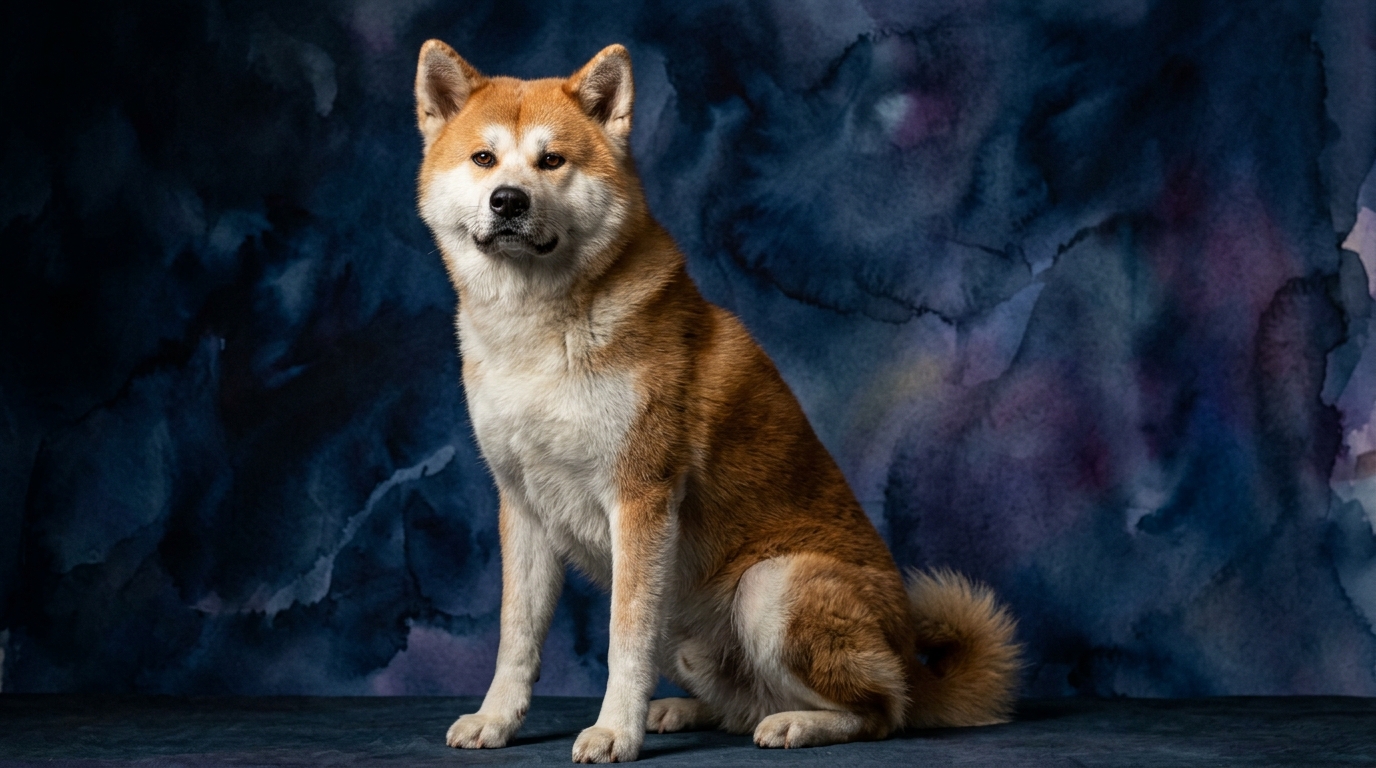
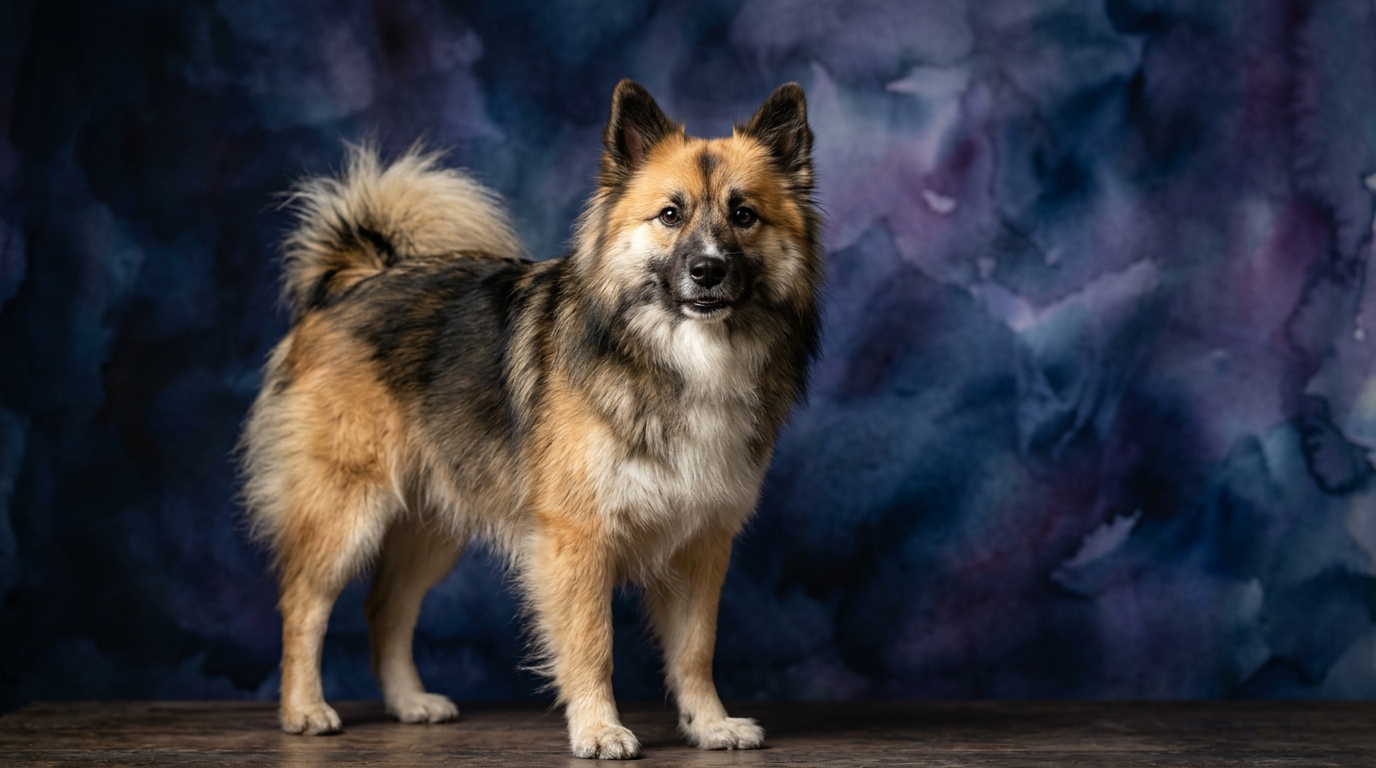
Side-by-Side Cognitive Profiles: Akita vs. Icelandic Sheepdog
The Akita, a robust Working breed, exhibits a cognitive profile tailored for independent guardianship. Its Problem Solving ability is rated 3/5, suggesting competence in navigating complex situations, often with a self-reliant approach. Training Speed stands at 2/5, reflecting a breed that learns but often requires significant motivation and consistency due to its independent streak. Social Intelligence, at 3/5, indicates a selective nature, forming deep bonds with its inner circle but remaining reserved with strangers. The Akita’s Instinctive Drive is exceptionally high at 5/5, manifesting as strong protective instincts and territorial awareness. Finally, its Memory is impressive at 4/5, enabling it to recall past experiences, routines, and boundaries with precision.
In contrast, the Icelandic Sheepdog, a lively Herding breed, presents a balanced cognitive toolkit geared for cooperative work. Its Problem Solving skill is also 3/5, but likely applied to dynamic, collaborative tasks rather than solitary decision-making. Training Speed is 3/5, indicating a more eager and responsive learner, readily engaging with human instruction. Social Intelligence is rated 3/5, similar to the Akita, yet often expressed as a more open and adaptable sociability, particularly within its family unit. Instinctive Drive is 3/5, a moderate score that channels into herding behaviors, alertness, and a desire for engagement. Its Memory, at 3/5, is solid, allowing it to retain commands and learned behaviors effectively within its working context.
Where the Akita Excels Cognitively
The Akita's exceptional Instinctive Drive (5/5) is a clear cognitive advantage when it comes to vigilance and protection. This isn't merely high energy; it's a deep-seated mental programming for monitoring surroundings and responding decisively to perceived threats or intruders, making them naturally alert guardians. Their memory (4/5) further enhances this role, allowing them to precisely recall which individuals belong and which do not, and to remember specific rules or boundaries consistently over time, contributing to their steadfast reliability. While their Problem Solving is rated 3/5, an Akita's application of this skill often involves strategic, independent decision-making in situations requiring self-reliance, such as determining the best defensive posture or navigating a complex environment to protect their territory. This independent problem-solving contrasts with the cooperative problem-solving often seen in herding breeds, highlighting a unique cognitive strength.
Where the Icelandic Sheepdog Shines Cognitively
The Icelandic Sheepdog truly shines in its Training Speed (3/5) and its application of Social Intelligence (3/5) in a cooperative context. Their eagerness to please and inherent responsiveness make them quicker to grasp new commands and routines, thriving on positive reinforcement and engagement. This speed in learning is a direct benefit of their herding heritage, where quick reactions to human signals were crucial for managing livestock. Their social intelligence is geared towards active communication and collaboration; they are adept at reading human body language and vocal cues, facilitating a harmonious working relationship. Furthermore, their Instinctive Drive (3/5), while lower than the Akita's, is perfectly channeled into purposeful herding behaviors and a strong desire for interactive play, making them highly motivated partners in activities like agility or obedience. Their Problem Solving (3/5) is often demonstrated in dynamic situations, such as figuring out how to move a flock or navigate an obstacle course, requiring quick mental adjustments and adaptability.
Ease of Training: A Tale of Two Temperaments
When evaluating ease of training, the Icelandic Sheepdog generally presents a more straightforward experience due to its higher Training Speed (3/5) and cooperative nature. These dogs possess a natural inclination to work alongside humans, making them highly receptive to instruction and eager to please. Their herding background has ingrained a strong desire for communication and partnership, meaning they respond well to positive reinforcement methods and clear, consistent guidance. They enjoy the process of learning and thrive on mental stimulation that comes from training sessions, often picking up new commands with relative speed and enthusiasm.
The Akita, on the other hand, with its Training Speed of 2/5 and profound independence, demands a different approach. Training an Akita requires immense patience, unwavering consistency, and a deep understanding of their motivations, which are not always centered on pleasing their owner. Their strong will and self-reliant nature, born from centuries of guarding, mean they will often question commands or decide if a task aligns with their own perceived goals. While capable of learning complex tasks, their compliance is earned through mutual respect and a well-established leadership dynamic, rather than an inherent desire to obey. Early socialization and consistent boundary setting are paramount to channeling their strong instincts productively.
Active Owners vs. Relaxed Owners: Matching Lifestyles
Neither the Akita nor the Icelandic Sheepdog are suitable for truly relaxed owners, but they demand different types of engagement. The Icelandic Sheepdog is an ideal match for active owners who relish physical participation and mental challenges. They thrive on long hikes, engaging in dog sports like agility or herding, and require consistent interactive play. Owners must be prepared to integrate their dog into a bustling, active lifestyle, providing ample opportunities for both physical exertion and cognitive stimulation to prevent boredom or destructive behaviors. Their moderate instinctive drive means they need outlets for their energy but are generally amenable to structured activities.
The Akita, while not requiring the same high-intensity cardio as a herding dog, demands an owner who is actively engaged in consistent leadership, boundary enforcement, and mental enrichment. Their high instinctive drive and protective nature mean owners must be proactive in socialization, training, and managing their environment to prevent unwanted guarding behaviors. A "relaxed" Akita owner might find themselves with an unmanageable dog; instead, they need an owner who is "actively calm" – someone who can provide a structured, predictable environment and confident guidance. Their independence means they can appear relaxed indoors, but this belies a strong internal drive that needs appropriate channeling through purposeful activities and clear expectations.
The Verdict
Opt for an Akita if you seek a loyal, independent guardian who will form a deep, protective bond, and you are prepared for consistent, patient training rooted in mutual respect and clear leadership.
Select an Icelandic Sheepdog if you desire an eager, cooperative, and physically robust companion for an active lifestyle, enjoying interactive training and a dog deeply attuned to its family's activities.
🧠 Find Your Pet's IQ Score
Our Pet IQ Lab assessment covers 25+ tests across 5 cognitive dimensions — personalized to your breed.
Take the Full IQ Test →Frequently Asked Questions
Are Akitas good with other pets?
Akitas, with their strong instinctive drive and selective social intelligence, often require careful, early socialization to coexist peacefully with other pets. Their natural prey drive and territorial instincts can make introductions challenging, and they may be best suited as the only dog in a household unless raised with others from a young age.
Do Icelandic Sheepdogs bark a lot?
Icelandic Sheepdogs, true to their herding heritage, are known for being quite vocal, using barks to communicate and alert. While not excessive if properly exercised and stimulated, their tendency to "speak" is a characteristic trait that potential owners should be prepared to manage through training and engagement.
Is an Akita a good first dog?
An Akita is generally not recommended as a first dog due to its independent nature, strong protective instincts, and demand for experienced, consistent training. Their low training speed and strong will require an owner who understands breed-specific challenges and is committed to dedicated leadership and socialization.