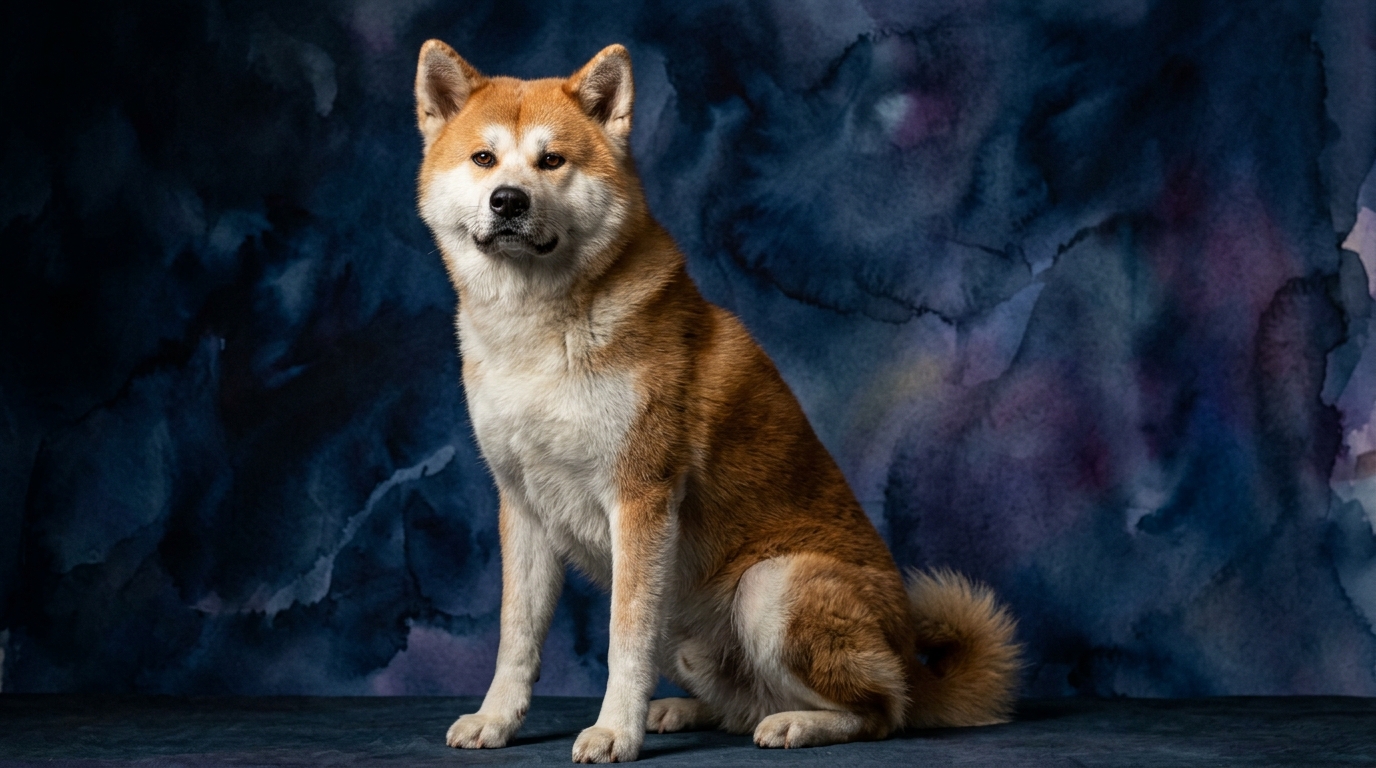

Side-by-Side IQ Profile: Akita vs. Komondor
At The Cosmic Pet Pet IQ Lab, we analyze breed intelligence across five key dimensions to provide a nuanced understanding of their cognitive capabilities. For the Akita (Coren rank #54), its profile includes Problem Solving (3/5), Training Speed (2/5), Social Intelligence (3/5), Instinctive Drive (5/5), and Memory (4/5). This combination paints a picture of a discerning and highly driven companion, capable of independent thought but requiring specific motivational approaches. Its strong memory and instinctual vigilance are defining features of its cognitive landscape, influencing its interactions and learning processes significantly.
The Komondor (Coren rank #67), on the other hand, presents a different cognitive blueprint with Problem Solving (3/5), Training Speed (3/5), Social Intelligence (3/5), Instinctive Drive (3/5), and Memory (3/5). This profile suggests a steadfast and independently minded guardian whose intelligence is largely channeled into its protective role. While sharing similar scores in some areas with the Akita, the Komondor's overall cognitive approach is often more pragmatic and focused on its ancestral duties, leading to distinct behavioral manifestations in a home environment.
Broken down further, the Akita displays a practical, often self-directed approach to navigating its environment; when faced with a novel situation, an Akita will typically assess the challenge independently, formulating a solution that prioritizes its own objectives or the safety of its perceived territory. Training an Akita demands extraordinary patience and consistency, as their strong will and inherent independence mean they do not typically learn new commands with rapid repetition or a strong desire to please purely for human approval. They possess a nuanced and often selective social intelligence, forming profound, almost telepathic bonds with their immediate family, but often displaying a reserved or even dominant demeanor towards strangers and other dogs. This breed exhibits an exceptionally potent instinctive drive, encompassing strong prey drive, territoriality, and protective instincts; they are acutely vigilant, constantly surveying their surroundings for anything amiss. Akitas also possess a robust and enduring memory, vividly recalling past experiences, both positive and negative, which profoundly impacts their future interactions and learning.
In contrast, the Komondor’s problem-solving skills are highly pragmatic and rooted in its ancestral role as a livestock guardian; when presented with a challenge, particularly one related to the security of its charges or territory, it will employ independent judgment to devise a solution. Komondors learn at a moderate pace, often displaying a practical intelligence in acquiring new skills; while they possess an independent nature, they can be receptive to training, especially when commands are presented as tools to fulfill their inherent guarding duties. This breed exhibits a discerning social intelligence, forming deep, protective bonds with their human family and any 'flock' they are charged with, but typically remaining reserved, watchful, and aloof towards strangers. The Komondor possesses a specialized and powerful instinctive drive for guarding, primarily expressed as vigilance, territoriality, and a strong protective instinct towards its family or charges. Komondors demonstrate a functional memory, retaining information relevant to their duties, routines, and the individuals within their perceived territory.
Where the Akita Wins Cognitively
The Akita’s superior instinctive drive, rated at a perfect 5/5, translates into an unparalleled level of situational awareness and readiness for protective action. This cognitive advantage means they process environmental stimuli with exceptional intensity, quickly identifying anomalies or potential threats. Their mental architecture is geared towards immediate, decisive responses to perceived intrusions, making them incredibly vigilant guardians who operate with a profound sense of purpose. This intense focus allows them to register subtle changes in their environment that others might miss, leading to their reputation for being acutely perceptive and hyper-aware of their surroundings.
Furthermore, the Akita’s robust memory, scoring 4/5, provides a significant cognitive edge in learning and retaining complex associations over extended periods. This powerful recall ability means they not only remember specific commands but also the context in which they were learned, the individuals involved, and the emotional nuances of past interactions. This allows for a deep, albeit selective, understanding of their human companions and their environment, enabling them to anticipate routines and react based on past experiences. This strong memory can make them incredibly attuned to their family's dynamics and emotional states, fostering a profound, albeit independent, bond that develops over time and consistent interaction.
Where the Komondor Wins Cognitively
While both breeds score 3/5 in Problem Solving, the Komondor's cognitive strength lies in its highly specialized, independent application of this skill, particularly within its guarding context. Their ancestral role has honed a unique capacity for autonomous decision-making in complex, dynamic situations involving their flock or territory. They excel at assessing multifaceted threats, strategizing optimal deterrents, and managing the safety of their charges without constant human direction. This self-reliance in practical, real-world scenarios represents a distinct cognitive advantage, allowing them to operate effectively as independent guardians, making complex judgments based on environmental cues rather than waiting for human input.
Moreover, the Komondor's slightly higher training speed of 3/5 compared to the Akita's 2/5 indicates a marginal, yet significant, cognitive edge in responsiveness to structured learning. While still independent thinkers, Komondors can integrate new commands and routines more readily when they perceive these skills as directly contributing to their inherent guarding purpose. This pragmatic approach to learning suggests a cognitive framework that prioritizes utility and effectiveness in their role, making them somewhat more amenable to consistent training that aligns with their fundamental instincts and allows them to perform their duties more effectively.
Which is Easier to Train and Why
Between these two formidable working breeds, the Komondor generally presents a marginally easier training experience, primarily due to its slightly higher training speed score of 3/5 compared to the Akita's 2/5. While both breeds are independent and require patient, consistent methods, the Komondor often exhibits a more pragmatic willingness to learn if the training directly enhances its ability to fulfill its guarding duties. They are less likely to question the 'why' behind a command if it clearly serves a functional purpose, making them somewhat more receptive to integrating new behaviors into their repertoire, especially when presented with clear, consistent leadership.
The Akita's training challenges stem from its profound independence and discerning nature. Their robust memory (4/5) means they vividly recall negative training experiences or inconsistencies, which can make remedial training more difficult and require a careful, positive approach to avoid creating lasting aversions. Furthermore, their strong will means they often comply only if they perceive value in the command or respect the trainer's leadership unequivocally. This requires an exceptional level of consistency, clear communication, and motivational engagement from the owner, making the training journey often more demanding and less straightforward than with a Komondor, demanding true partnership rather than mere obedience.
Which Suits Active Owners vs. Relaxed Owners
For owners who thrive on consistent activity and structured engagement, the Akita aligns more closely with an 'active owner' lifestyle. Their exceptionally high instinctive drive (5/5) and need for mental stimulation demand a companion who can consistently provide structured exercise, participate in advanced obedience or dog sports, and receive clear, assertive leadership. An Akita requires an owner prepared to actively manage its strong territorial and prey drives through consistent training, socialization, and a varied routine that taps into its intelligence and physical capabilities. They need an outlet for their focused energy and keen senses to prevent boredom and destructive behaviors.
Neither breed is truly suited for a 'relaxed owner' in the sense of a passive companion requiring minimal engagement; both are working breeds with significant needs. However, if we consider a spectrum of activity, a mature Komondor might be *relatively* more suited for an owner who appreciates a vigilant, independent guardian whose primary 'activity' involves patrolling and observing its territory, rather than intense physical exertion. Komondors are guardians, often content with a watchful presence and a steady routine, which is less about high-impact physical demands and more about consistent, low-level vigilance. Their satisfaction comes from fulfilling their duty, which doesn't always translate to hours of running, but rather a constant, quiet assessment of their surroundings.
The Verdict
Opt for an Akita if you are an experienced, assertive owner prepared to channel a powerful guardian with exceptional memory and a profound, selective loyalty into a structured, engaging lifestyle. This breed thrives with consistent mental stimulation and clear boundaries.
Select a Komondor if you seek an independent, steadfast guardian with a deep-seated protective instinct, valuing a companion that is more focused on watchful duty than constant physical exuberance. They excel with owners who appreciate their autonomous problem-solving and unique bond.
🧠 Find Your Pet's IQ Score
Our Pet IQ Lab assessment covers 25+ tests across 5 cognitive dimensions — personalized to your breed.
Take the Full IQ Test →Frequently Asked Questions
Are Akitas good with other dogs?
Akitas often exhibit selective social intelligence, meaning they can be dominant or reserved with other dogs, particularly those outside their immediate family. Early and consistent socialization is crucial, but they may always prefer to be the sole canine in a household due to their strong sense of hierarchy and territory.
Do Komondors bark a lot?
Komondors use barking as a primary tool in their guarding repertoire to deter perceived threats, reflecting their strong instinctive drive to protect their territory and family. While not incessantly vocal without cause, they will bark to alert or warn, so owners should expect a dog that communicates vigilance through sound.
What is the biggest training challenge for an Akita?
The biggest training challenge for an Akita often stems from their strong independent nature and discerning intelligence. They require patience and positive reinforcement, as they may not comply with commands if they don't perceive a clear value or if the training isn't engaging enough, making consistency and motivational techniques vital for success.