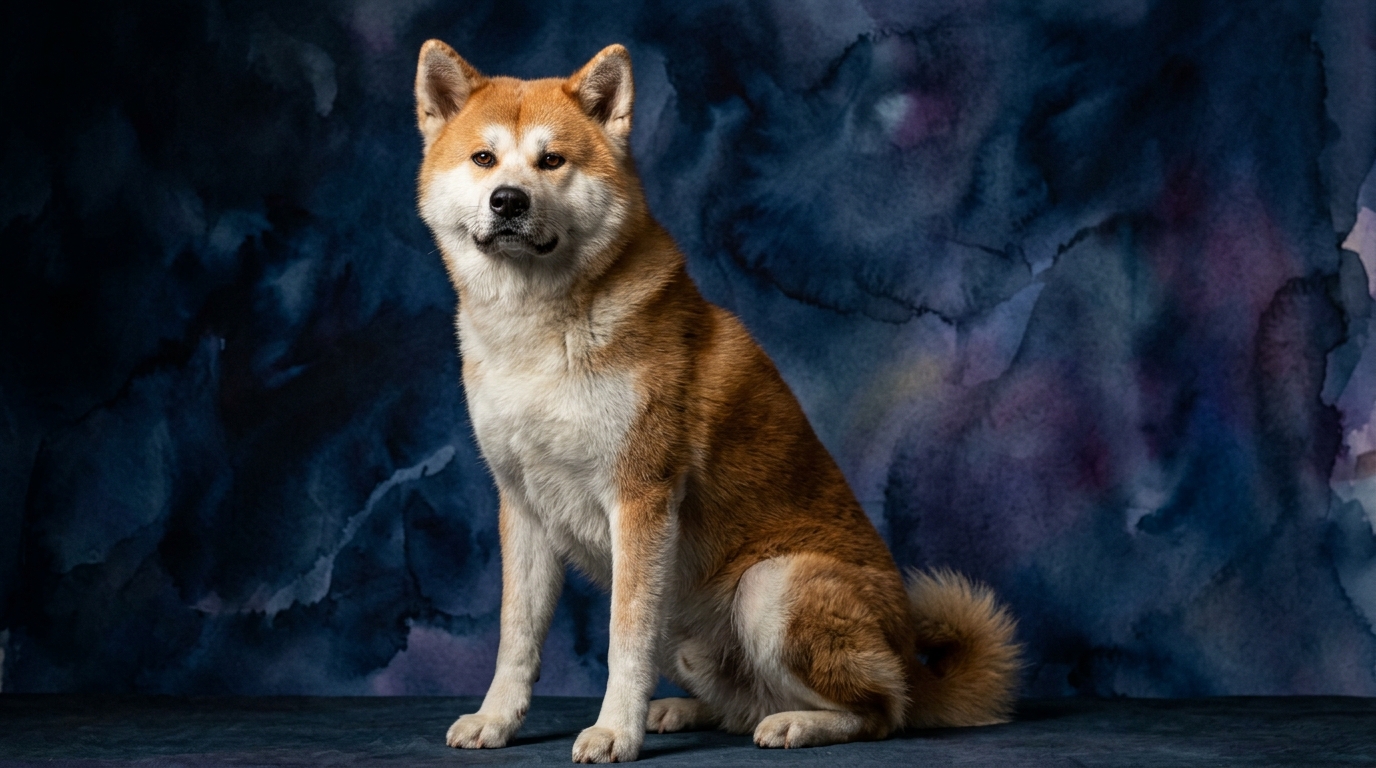

Side-by-Side IQ Profile: Akita vs. Parson Russell Terrier
Our Pet IQ Lab provides a detailed look at five key cognitive dimensions for each breed, offering a nuanced understanding beyond general perceptions. The Akita, a Working breed, holds a Coren rank of #54, indicating a moderate level of working and obedience intelligence. Its IQ profile shows a Problem Solving score of 3/5, suggesting a reasonable capacity for independent thought and navigating novel situations. Training Speed is rated 2/5, implying they may take longer to grasp new commands and require consistent, patient instruction. Social Intelligence is 3/5, reflecting an ability to understand human cues, though often expressed with a reserved demeanor. Notably, the Akita boasts an Instinctive Drive of 5/5, highlighting profound guarding instincts, a strong prey drive, and territorial awareness. Its Memory is 4/5, indicating a robust ability to recall past experiences and learned behaviors.
The Parson Russell Terrier, a spirited Terrier breed, is not specifically listed in Coren's rankings, but our IQ profile offers insight into its mental makeup. It shares the Akita's Problem Solving score of 3/5, meaning it also possesses a moderate aptitude for figuring things out and adapting to challenges. Where it diverges is in Training Speed, scoring 3/5, suggesting a quicker uptake of commands compared to the Akita. Social Intelligence is also 3/5, indicating a similar capacity for interpreting social cues and engaging with people, often with more overt enthusiasm. Its Instinctive Drive is 3/5, a moderate score reflecting its terrier heritage of hunting and digging, but without the intense guarding focus of the Akita. Finally, its Memory is 3/5, a solid ability to retain information, though perhaps not with the same depth as the Akita.
Where the Akita Wins Cognitively
The Akita distinguishes itself with a superior Instinctive Drive (5/5) and Memory (4/5) compared to the Parson Russell Terrier’s 3/5 in both categories. An Akita's powerful instinctive drive manifests in its historical role as a guardian and hunter, exhibiting an unwavering focus and intensity when engaged in these behaviors. This translates into a profound sense of purpose and a strong protective nature, often acting on inherent cues with remarkable conviction. Their elevated memory score means an Akita is more likely to retain complex sequences of events, recall past interactions with clarity, and remember specific training cues or boundaries over extended periods. For instance, an Akita might remember a specific threat or a positive experience with a particular person or animal with greater longevity and detail, influencing its future responses. This deep memory also contributes to their consistent adherence to established routines and understanding of household rules, once thoroughly learned. Their instinctive drive, combined with this memory, means they often learn the “why” behind certain behaviors and retain the resolve to act on them, whether it's patrolling a yard perimeter or remembering a specific command context.
Where the Parson Russell Terrier Wins Cognitively
The Parson Russell Terrier shines particularly in Training Speed (3/5), surpassing the Akita's 2/5. This indicates that a Parson Russell Terrier generally picks up new commands and routines at a quicker pace, often showing more immediate responsiveness to training sessions. Their moderate instinctive drive (3/5) also plays into this advantage; while they possess a definite drive, it's often more adaptable and less singularly focused than the Akita's intense guarding instincts. This means a Parson Russell Terrier is typically more inclined to engage with varied training exercises and less likely to be sidetracked by overpowering innate urges during a learning session. For an owner, this translates to potentially faster progress in obedience classes and a more fluid experience when introducing new tricks or behavioral modifications. They are eager to please and quick to connect actions with rewards, making the training process feel more dynamic and less like a sustained effort against ingrained predispositions.
Which Is Easier to Train and Why
Based on their cognitive profiles, the Parson Russell Terrier is generally easier to train than the Akita. The primary reason lies in their respective Training Speed scores: the Parson Russell Terrier clocks in at a 3/5, while the Akita registers a 2/5. This numerical difference translates into real-world behavioral distinctions. Parson Russell Terriers tend to be more receptive to new commands and cues, often grasping concepts in fewer repetitions. Their moderate instinctive drive (3/5) means that while they possess innate terrier tenacity and curiosity, these drives are typically more manageable and less likely to override a trainer's instructions. For example, a Parson Russell Terrier might be momentarily distracted by a scent but will often re-engage with training relatively quickly.
Conversely, the Akita's lower Training Speed score (2/5) suggests they require more patience and consistency. They are not necessarily incapable of learning, but they often take longer to internalize commands and may question the necessity of a task. Their formidable Instinctive Drive (5/5) also presents a significant training challenge. This drive encompasses strong guarding instincts, a high prey drive, and a profound sense of self-reliance. When an Akita's instincts are engaged – perhaps by a perceived threat or a small animal – these deep-seated urges can be incredibly difficult to redirect, often overshadowing any learned obedience. An Akita might understand a “stay” command but, given its powerful protective drive, might choose to ignore it if it perceives a genuine threat to its family or territory. Training an Akita demands an understanding of its independent nature and a very consistent, fair approach, often requiring more advanced handling skills to channel its powerful will rather than simply teaching commands.
Which Suits Active Owners vs. Relaxed Owners
The Akita and Parson Russell Terrier cater to distinctly different owner lifestyles, largely influenced by their inherent drives and physical needs. Akitas, despite their powerful build and high instinctive drive, can surprisingly suit relaxed owners who appreciate a calm, dignified presence indoors, provided their specific needs for structured exercise and mental engagement are met. While they possess a 5/5 instinctive drive, this often manifests as vigilance and territorial behavior rather than endless energy for play. They thrive on routine and benefit from consistent, moderate daily exercise like long, leashed walks or controlled playtime in a secure yard. Their social intelligence (3/5) means they understand their family well, but they are often reserved with strangers and other animals, requiring owners who are prepared for a dog that isn't universally outgoing. An Akita owner needs to be calm, confident, and capable of establishing clear boundaries without resorting to harsh methods. They are not dogs that demand constant high-intensity activity, but rather require an owner who can provide steady leadership, consistent training, and a secure environment to fulfill a dog's substantial physical and mental requirements in a structured manner.
In contrast, the Parson Russell Terrier is unequivocally suited for active owners. Their moderate instinctive drive (3/5), combined with a lively temperament, means they possess boundless energy and a persistent curiosity. These dogs were bred for hunting and require significant daily physical exertion and mental stimulation to prevent boredom and destructive behaviors. They need owners who enjoy long runs, vigorous games of fetch, agility training, or exploring new environments. Their problem-solving (3/5) and training speed (3/5) make them excellent candidates for dog sports like agility, earthdog trials, or obedience competitions, where their quick minds and physical prowess can be fully utilized. A relaxed owner who cannot commit to substantial daily activity would likely find a Parson Russell Terrier to be a handful, as their pent-up energy can lead to excessive barking, digging, or chewing. They thrive with owners who embrace an adventurous lifestyle and are prepared to engage their dog's mind and body consistently throughout the day.
The Verdict
Choose an Akita if you seek a loyal, dignified companion who will be a protective presence, and you are prepared for a demanding training commitment and structured management of their powerful instincts.
Opt for a Parson Russell Terrier if you lead an active lifestyle, desire an energetic and quick-witted partner for adventures and dog sports, and are ready to provide consistent mental and physical stimulation.
🧠 Find Your Pet's IQ Score
Our Pet IQ Lab assessment covers 25+ tests across 5 cognitive dimensions — personalized to your breed.
Take the Full IQ Test →Frequently Asked Questions
Is an Akita challenging to live with due to its high instinctive drive?
An Akita's high instinctive drive (5/5) means they possess strong guarding and protective instincts, which require diligent socialization and consistent training from a young age. While not inherently 'hard,' they demand an owner who can confidently manage these traits to ensure they are well-adjusted and safe companions.
Do Parson Russell Terriers require a lot of exercise?
Yes, Parson Russell Terriers have significant energy and require substantial daily exercise to thrive. Their moderate instinctive drive (3/5) and terrier heritage mean they benefit greatly from vigorous activities like running, hiking, or dog sports to keep their minds and bodies engaged.
How do their problem-solving abilities compare?
Both the Akita and the Parson Russell Terrier score a 3/5 in problem-solving, indicating they have a moderate capacity to figure out new situations. While neither is at the extreme end, they are capable of independent thought and can adapt to novel challenges given proper motivation and context.